
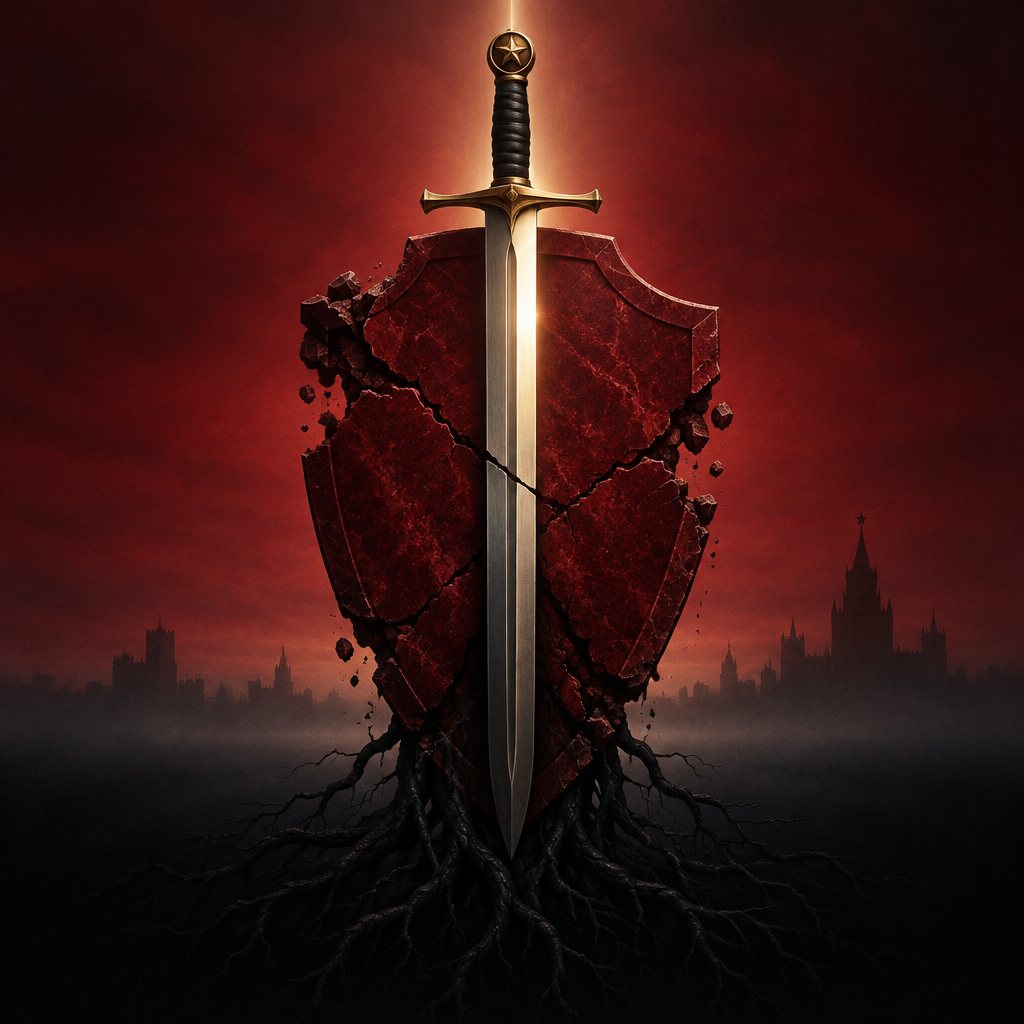
How the KGB Survived Its Collapse
This course traces the institutional ancestry of Russian state security from the founding of the Cheka in December 1917 through the height of the KGB's Cold War power, to its modern-day successors. The series begins with the Cheka's creation under Felix Dzerzhinsky at two Gorokhovaya Street in Petrograd, where the 'Sword and Shield' concept established state security as the Communist Party's primary instrument for internal control and regime survival. It examines the Red Terror, Operation Trust as a model for strategic deception, and the evolution through GPU, OGPU, and NKVD structures, including the Lubyanka headquarters and the psychological dimensions of Chekist identity during the Great Purge. The course continues through the 1954 establishment of the KGB, its First Chief Directorate's foreign intelligence operations, the Cambridge Five, active measures campaigns, and the 1991 August coup attempt that led to institutional fragmentation rather than dissolution. It covers the formation of the FSB for domestic security and counterintelligence, the SVR for civilian foreign intelligence, and the FSO for protective services, while noting the GRU's separate military intelligence role. The series concludes with the rise of former security officials under Vladimir Putin, contemporary internal repression, cyber operations, influence campaigns, and wartime roles connected to Ukraine through October 2026, emphasizing institutional continuity versus structural change across multiple agencies rather than a single modern replacement.
The Sword and the Shield: Foundations of Terror and Tradecraft
The Sword and the Shield: Foundations of Terror and Tradecraft
December twentieth, nineteen seventeen. The Bolshevik government had held power for less than seven weeks. And on that day, they created an institution they promised would be temporary. The Library of Congress records it plainly: the All-Russian Extraordinary Commission for Combating Counter-Revolution and Sabotage — the Cheka — was established as an emergency measure, a stopgap until the revolution was secure. It was never abolished. Its functions simply passed, again and again, into successor bodies that grew more powerful with each transfer. That is the first thing to understand, John, about the organization that eventually became the KGB. It was born as a lie about its own permanence.
Picture a man standing in a courtyard in Warsaw, sometime in the eighteen nineties. He is young, idealistic, and already marked by the tsarist secret police — the Okhrana — as a dangerous radical. His name is Feliks Dzerzhinsky. Over the next two decades, he will spend eleven years in tsarist prisons and Siberian exile. That experience did not break him. It educated him. A British government history notes that Dzerzhinsky learned aspects of clandestine practice from the very institution that imprisoned him. He studied the Okhrana's methods from the inside. When Lenin handed him the Cheka in December nineteen seventeen, Dzerzhinsky did not start from nothing. He started from a curriculum written by his jailers.
The key idea here is what that imprisonment produced psychologically. Dzerzhinsky became the model of what Soviet security culture would call the "cold-headed" Chekist. Not passionate. Not vengeful. Methodical. He famously described the ideal Chekist as someone with a warm heart, a cool head, and clean hands. Whether his own hands stayed clean is a separate question. But the psychological profile he established — the professional revolutionary who treats repression as a technical problem, not a moral one — that profile survived every name change the institution ever went through. It is still recognizable in the language Russian security services use about themselves today.
The organization Dzerzhinsky built was, at first, genuinely small. A handful of men in borrowed offices. But the Russian Civil War changed everything. The Bolsheviks faced armed domestic opponents and foreign intervention simultaneously. The Cheka's remit expanded fast. According to the Britannica account of the Civil War period, the Cheka became a powerful force in the Bolshevik state precisely because the state itself was fighting for survival. Emergency powers, once granted, are rarely returned. The Cheka was no exception.
Then came nineteen eighteen, and the violence escalated into something historians call the Red Terror. The trigger, documented by Michigan State University's Soviet history project, was a double blow: the assassination of Petrograd Cheka chief Moisei Uritsky, and an attempt on Lenin's life. The government's response was to authorize intensified operations against counter-revolutionaries and what it called "class enemies." The Cheka was now empowered to arrest, imprison, and execute without ordinary trial procedures. The Library of Congress is direct about this: the Cheka used summary justice. The death toll from the Red Terror is genuinely difficult to establish — the World History Encyclopedia notes that contemporary and later estimates vary so widely that no single total should be treated as settled. What is not disputed is the method. Speed, secrecy, and the deliberate bypassing of any legal check.
Now, the Cheka also became involved in running political prisons and camps. This is important because it means the institution was not just an investigative body. It was a custodial one. It controlled the physical infrastructure of repression: the cells, the interrogation rooms, the labor camps. That combination — investigation, arrest, detention, and execution all under one roof — is what made the Cheka's successors so formidable. And it is what made the building they eventually occupied so significant.
Think of the Lubyanka. Today it is one of the most recognized addresses in Moscow. But in nineteen seventeen it was the headquarters of an insurance company. A civilian office building. The Cheka moved in, and over the following decades the building was expanded, reinforced, and transformed. The basement became an interrogation and execution facility. The upper floors became administrative offices for an organization that, at its peak, employed hundreds of thousands of people. The Lubyanka did not become a symbol of terror because someone designed it that way. It became a symbol because of what happened inside it, year after year, across multiple institutional names. The building outlasted the Cheka, the GPU, the OGPU, the NKVD, the MGB, and the KGB. It is still in use today.
So how did the Cheka's foreign intelligence work begin? This is where the story gets counterintuitive. A CIA historical review, cited through Columbia University's international affairs archive, reports that during its first three years the Cheka had no foreign intelligence component. Its Foreign Section, when it was eventually created, was initially directed mainly against Russian counter-revolutionaries and their foreign supporters — not against foreign governments as such. The early Soviet security apparatus was, first and foremost, an instrument of internal control. Foreign intelligence came later, and it grew out of the same logic: find the enemies of the revolution, wherever they are.
That logic produced one of the most instructive early operations in the history of intelligence tradecraft. Operation Trust. The Cheka, and then its successor the GPU, constructed an entirely fictional monarchist organization inside Soviet Russia. They called it the Monarchist Union of Central Russia. It was a fabrication, staffed by Cheka agents. The purpose was to attract genuine anti-Bolshevik exiles back into Russia, where they could be identified, monitored, and neutralized. Foreign intelligence services — including British and French — were deceived into believing the organization was real. Some of their assets were fed into it and compromised. Operation Trust ran from roughly nineteen twenty-one to nineteen twenty-seven. It provided the blueprint for what Soviet security services would later call "active measures": the use of fabricated organizations, disinformation, and controlled channels to manipulate adversaries. That blueprint, John, did not expire with the Soviet Union.
Now, the Cheka itself was formally disbanded in nineteen twenty-two. The Library of Congress records this clearly: after the Civil War, its functions were transferred to the State Political Directorate, the GPU. And the Library of Congress also notes something important — repression lessened after the Civil War. The GPU was initially less powerful than the Cheka. This is the pattern that repeats across Soviet security history. The apparatus contracts slightly when the immediate crisis passes. Then it expands again when the next crisis arrives, real or manufactured.
The GPU became the OGPU in nineteen twenty-three, acquiring a broader mandate that extended across the entire Soviet Union rather than just Russia. Dzerzhinsky remained in charge until his death in nineteen twenty-six. His successors inherited an institution that had already established several durable features: the use of informants at every level of society, the penetration of foreign émigré communities, the operation of border forces, and the systematic use of psychological pressure in interrogation. These were not innovations of the KGB era. They were established practice by the mid-nineteen twenties. The KGB inherited a mature tradecraft, not a raw one.
Then Stalin arrived at the center of power, and everything accelerated. In nineteen thirty-four, the Library of Congress records, the state security organization was incorporated into the People's Commissariat for Internal Affairs — the NKVD. Under Stalin, the security apparatus again acquired extensive punitive powers. The NKVD under Genrikh Yagoda, and then under Nikolai Yezhov, became the instrument of the Great Purge. The purges of the late nineteen thirties consumed the Soviet military leadership, the Communist Party apparatus, and enormous numbers of ordinary citizens. The NKVD also consumed itself — Yezhov was eventually arrested and executed by the very machine he had operated.
The key idea about the Stalinist period is not just the scale of the violence, though the scale was staggering. The key idea is what the purges did to the institutional culture of Soviet security. They created an organization where the primary loyalty was not to the state, not to the law, not even to the Communist Party in any abstract sense. The primary loyalty was to whoever held power at that moment. Because the alternative — being on the wrong side of a purge — was fatal. That culture of personal loyalty to the leader, rather than institutional loyalty to a set of rules, is one of the most durable features of the Soviet security tradition. It did not disappear in nineteen ninety-one.
Now, before we reach the KGB itself, there is a question worth sitting with. What allowed the early Soviet intelligence apparatus to recruit assets of the quality of the Cambridge Five — before the KGB even existed as a formal entity? The recruitment of Kim Philby, Guy Burgess, Donald Maclean, Anthony Blunt, and John Cairncross happened in the early nineteen thirties, under the OGPU and then the NKVD. The answer is partly ideological. These were young men at Cambridge University who genuinely believed that Soviet communism represented the future. The recruiters who approached them were not offering money. They were offering meaning. That is a different kind of recruitment, and it produces a different kind of agent — one who does not defect when the money runs out, because money was never the point.
The Cambridge Five operated for decades. Philby rose to become head of the Soviet section of British intelligence. Maclean passed atomic secrets. Burgess and Blunt had access to material that shaped British policy. The damage they caused is still not fully quantified. And the, the thing that makes their story so resonant — and I think you'll feel this, John, given your interest in the mole-hunt genre — is not the espionage itself. It is the duration. These men spent their entire adult lives lying to their colleagues, their friends, their families. The psychological cost of that, and what it does to a person's sense of self, is the real subject underneath the tradecraft.
The NKVD's wartime operations added another layer to the institutional history. During the Second World War, Soviet military counterintelligence was reorganized into a separate body called SMERSH — a Russian acronym meaning "Death to Spies." SMERSH operated within the Red Army, hunting real and suspected traitors, deserters, and enemy agents. It reported directly to Stalin. Its methods were brutal even by the standards of wartime counterintelligence. SMERSH was eventually absorbed back into the security apparatus after the war, but its existence illustrates a recurring feature of Soviet security organization: the tendency to create parallel structures that compete with each other, all ultimately accountable to the leader at the top.
After the war, the security apparatus went through another reorganization. The MGB — the Ministry of State Security — emerged as the primary security body in the late nineteen forties and early nineteen fifties. Under Viktor Abakumov, and then under Semyon Ignatiev, the MGB ran the early Cold War espionage campaigns that produced some of the most significant intelligence successes of the twentieth century. Soviet penetration of the Manhattan Project — through agents including Klaus Fuchs and others — gave Moscow detailed information about American nuclear weapons design. The Venona project, the American signals intelligence effort that eventually decoded Soviet communications, confirmed the scale of this penetration. But Venona's results were not fully understood for years. In the meantime, Soviet nuclear capability advanced faster than Western analysts had predicted.
Stalin died in March nineteen fifty-three. And what happened next is, it's one of the most revealing moments in the entire institutional history. The security apparatus, which had been the instrument of Stalin's personal power, immediately became a threat to his successors. Lavrentiy Beria, who had run the NKVD and then the MGB, was the most powerful security official in the Soviet Union. He was also, in the eyes of the other Politburo members, the most dangerous man alive. Within months of Stalin's death, Beria was arrested, tried in secret, and executed. The security apparatus had to be cut down to size before normal politics — such as it was — could resume.
That is the direct context for the creation of the KGB in nineteen fifty-four. The Committee for State Security — Komitet Gosudarstvennoy Bezopasnosti — was established as a deliberate demotion. It was made a committee, not a ministry. It was placed under tighter Party supervision. Its first chairman, Ivan Serov, was a Party loyalist, not an independent power. The lesson the Politburo drew from the Beria episode was that the security apparatus needed to be powerful enough to protect the state, but not so powerful that it could threaten the leadership. That tension — between the security services as instrument and the security services as threat — runs through the entire history of the KGB and its successors.
Now, the emblem. The sword and the shield. The imagery goes back to the Cheka itself. A British government history notes that the shield-and-sword symbolism expressed a dual institutional ideal: defending the revolution and striking at its enemies. The shield for protection, the sword for offense. That emblem survived every name change, every reorganization, every purge of the leadership. It is still used by the FSB today. When Vladimir Putin, a former KGB officer, speaks about the security services, he uses the language of the Chekist tradition. Not as nostalgia. As identity. The emblem is not decorative. It is a statement about institutional continuity across a century of structural change.
And here is where the story gets genuinely complicated, in a way that matters for understanding the present. The KGB was not a single thing. It was a bureaucratic empire. It ran foreign intelligence through its First Chief Directorate. It ran domestic counterintelligence through its Second Chief Directorate. It operated border troops — actual military units. It ran signals intelligence. It had a directorate for surveillance, one for dissidents, one for protecting the leadership. When the Soviet Union collapsed in nineteen ninety-one and the KGB was dissolved, all of those functions had to go somewhere. They did not disappear. They were distributed across multiple successor agencies. The FSB took the domestic security and counterintelligence role. The SVR inherited the foreign intelligence functions of the First Chief Directorate. The FSO took the protective and secure-communications role. And the GRU — military intelligence — remained entirely separate, because it had never been part of the KGB at all. It predated the KGB and survived it.
There is a persistent misconception worth addressing directly. People ask: what is the modern KGB? The answer is that there is no single modern KGB. That is not a bureaucratic technicality. It reflects a genuine structural change. The KGB's power came partly from its concentration — one organization controlling foreign intelligence, domestic security, border forces, and leadership protection simultaneously. The post-Soviet fragmentation was deliberate. It was intended to prevent any single security chief from accumulating the kind of power Beria had held. Whether that fragmentation has actually constrained the security services under Putin is a different question, and a contested one.
The Cheka's founding marked a shift that the British government history describes precisely: from the Bolsheviks' earlier public claims that a workers' state would not need a conventional police force, toward the creation of a powerful coercive institution. That gap — between the stated ideology and the operational reality — is the defining feature of the entire lineage. Every successor organization inherited it. The GPU claimed to be less repressive than the Cheka. The NKVD claimed to be correcting the excesses of the purges. The KGB claimed to be a professional intelligence service, not a political police. The FSB today presents itself as a law enforcement and counterintelligence agency operating under legal authority. Each claim contains some truth. None of them is the whole story.
So here is where we are, John, at the end of this first account. The KGB was not just an intelligence agency. It was the sword and the shield of the Communist Party — an institution whose primary purpose was regime survival, and whose methods were shaped by a century of accumulated tradecraft, political violence, and bureaucratic self-preservation. That tradition did not end in nineteen ninety-one. It fragmented, adapted, and continued. The FSB, the SVR, the FSO — these are not the KGB reborn. They are the KGB's inheritance, divided among heirs who share the same institutional DNA, the same emblem, and the same foundational conviction: that the security of the state and the security of whoever leads it are, ultimately, the same thing. That conviction is what connects Dzerzhinsky's courtyard in Warsaw to the Lubyanka today. And it is what we will trace, in detail, across everything that follows.
Stalin died in March nineteen fifty-three. And what happened next is, it's one of the most revealing moments in the entire institutional history. The security apparatus, which had been the instrument of Stalin's personal power, immediately became a threat to his successors. Lavrentiy Beria, who had run the NKVD and then the MGB, was the most powerful security official in the Soviet Union. He was also, in the eyes of the other Politburo members, the most dangerous man alive. Within months of Stalin's death, Beria was arrested, tried in secret, and executed. The security apparatus had to be cut down to size before normal politics — such as it was — could resume.
That is the direct context for the creation of the KGB in nineteen fifty-four. The Committee for State Security — Komitet Gosudarstvennoy Bezopasnosti — was established as a deliberate demotion. It was made a committee, not a ministry. It was placed under tighter Party supervision. Its first chairman, Ivan Serov, was a Party loyalist, not an independent power. The lesson the Politburo drew from the Beria episode was that the security apparatus needed to be powerful enough to protect the state, but not so powerful that it could threaten the leadership. That tension — between the security services as instrument and the security services as threat — runs through the entire history of the KGB and its successors.
Now, the emblem. The sword and the shield. The imagery goes back to the Cheka itself. A British government history notes that the shield-and-sword symbolism expressed a dual institutional ideal: defending the revolution and striking at its enemies. The shield for protection, the sword for offense. That emblem survived every name change, every reorganization, every purge of the leadership. It is still used by the FSB today. When Vladimir Putin, a former KGB officer, speaks about the security services, he uses the language of the Chekist tradition. Not as nostalgia. As identity. The emblem is not decorative. It is a statement about institutional continuity across a century of structural change.
And here is where the story gets genuinely complicated, John, in a way that matters for understanding the present. The KGB was not a single thing. It was a bureaucratic empire. It ran foreign intelligence through its First Chief Directorate. It ran domestic counterintelligence through its Second Chief Directorate. It operated border troops — actual military units. It ran signals intelligence. It had a directorate for surveillance, one for dissidents, one for protecting the leadership. When the Soviet Union collapsed in nineteen ninety-one and the KGB was dissolved, all of those functions had to go somewhere. They did not disappear. They were distributed across multiple successor agencies. The FSB took the domestic security and counterintelligence role. The SVR inherited the foreign intelligence functions of the First Chief Directorate. The FSO took the protective and secure-communications role. And the GRU — military intelligence — remained entirely separate, because it had never been part of the KGB at all. It predated the KGB and survived it.
There is a persistent misconception worth addressing directly. People ask: what is the modern KGB? The answer is that there is no single modern KGB. That is not a bureaucratic technicality. It reflects a genuine structural change. The KGB's power came partly from its concentration — one organization controlling foreign intelligence, domestic security, border forces, and leadership protection simultaneously. The post-Soviet fragmentation was deliberate. It was intended to prevent any single security chief from accumulating the kind of power Beria had held. Whether that fragmentation has actually constrained the security services under Putin is a different question, and a contested one.
The Cheka's founding marked a shift that the British government history describes precisely: from the Bolsheviks' earlier public claims that a workers' state would not need a conventional police force, toward the creation of a powerful coercive institution. That gap — between the stated ideology and the operational reality — is the defining feature of the entire lineage. Every successor organization inherited it. The GPU claimed to be less repressive than the Cheka. The NKVD claimed to be correcting the excesses of the purges. The KGB claimed to be a professional intelligence service, not a political police. The FSB today presents itself as a law enforcement and counterintelligence agency operating under legal authority. Each claim contains some truth. None of them is the whole story.
So here is where we are, John, at the end of this first account. The KGB was not just an intelligence agency. It was the sword and the shield of the Communist Party — an institution whose primary purpose was regime survival, and whose methods were shaped by a century of accumulated tradecraft, political violence, and bureaucratic self-preservation. That tradition did not end in nineteen ninety-one. It fragmented, adapted, and continued. The FSB, the SVR, the FSO — these are not the KGB reborn. They are the KGB's inheritance, divided among heirs who share the same institutional DNA, the same emblem, and the same foundational conviction: that the security of the state and the security of whoever leads it are, ultimately, the same thing. That conviction is what connects Dzerzhinsky's courtyard in Warsaw to the Lubyanka today. And it is what we will trace, in detail, across everything that follows.
The Long Shadow: From the Golden Age of Spies to the New Grey Zone
Speaker 1
Alright, so last time we landed on something that I keep turning over — the idea that the KGB wasn't really abolished, it was divided. And I want to push on that, because I think the question most people bring to this topic is actually the wrong one.
Speaker 2
Say more. What's the wrong question?
Speaker 1
what replaced the KGB? As if there's a single heir. But that's, that's not what happened, is it.
Speaker 2
No. And that framing matters. The Congressional Research Service is direct about it: the KGB was divided among successor organizations, not replaced by one. The question that actually pays is — where did each function go?
Speaker 1
Right. So walk me through that.
Speaker 2
The First Chief Directorate — civilian foreign intelligence — became the SVR. Domestic security and counterintelligence went to the FSB. Protective services and secure communications went to the FSO. Three separate agencies, three separate chains of command.
Speaker 1
And the GRU?
Speaker 2
The GRU is the one everyone forgets to ask about. Military intelligence. It predated the KGB, it was never part of the KGB, and it survived the whole collapse entirely intact. Institutionally distinct from all three successors.
Speaker 1
So it just, it kept going.
Speaker 2
Kept going. Different ministry, different mandate, different history. The Congressional Research Service puts it plainly: the GRU collects at both tactical and strategic levels and is separate from the SVR and FSB.
Speaker 1
Okay, so the wrong answer — the one a reasonable person would arrive at — is that the FSB is basically the new KGB. I've heard that constantly.
Speaker 2
And it's not crazy. The FSB did inherit the broadest slice: domestic security, counterintelligence, and it has developed foreign-intelligence capabilities, particularly concerning former Soviet states. But calling it the new KGB flattens something important.
Speaker 1
Which is?
Speaker 2
The KGB's power came from concentration. One organization running foreign spies, domestic surveillance, border troops, and leadership protection simultaneously. The post-Soviet split was deliberate — designed so no single security chief could accumulate what Beria had held.
Speaker 1
Though whether that actually constrained anyone under Putin is a different question.
Speaker 2
A very different question. And a contested one. But let's, let's get to Putin in a moment, because the Cold War architecture matters first.
Speaker 1
Right. The KGB itself — established in nineteen fifty-four. What made it more than a conventional intelligence service?
Speaker 2
foreign intelligence, counterintelligence, internal security, technical intelligence, leadership protection, and frontier security — border troops, actual military units. No Western equivalent bundled all of that under one roof.
Speaker 1
Think of the CIA running the Border Patrol and the Secret Service simultaneously.
Speaker 2
Exactly. And the KGB also ran surveillance on dissidents, confined some in psychiatric institutions — the Library of Congress documents this — and penetrated every level of Soviet society with informants. It was, it was a total-coverage apparatus.
Speaker 1
Now, the Cambridge Five. They were recruited before the KGB even existed — under the OGPU and NKVD in the nineteen thirties. What does that tell us?
Speaker 2
It tells us the tradecraft was mature long before the KGB's founding. The National Archives is specific: the Five passed classified British information during the Second World War and afterward. Decades of access.
Speaker 1
And the recruitment method — that's the part that stays with me. It wasn't money.
Speaker 2
It was meaning. Young men at Cambridge who believed Soviet communism represented the future. That produces a different kind of agent — one who doesn't defect when the money runs out, because money was never the point.
Speaker 1
The damage they caused is still not fully quantified.
Speaker 2
No. And Philby rose to head the Soviet section of British intelligence. Maclean passed atomic material. The duration is what makes it so, so striking — entire adult lives spent in deception.
Speaker 1
Which connects to something I wanted to ask about — active measures. The KGB wasn't just collecting secrets.
Speaker 2
Right. The encyclopedia record is explicit: Soviet intelligence conducted activities abroad intended to influence political environments and perceptions. Forged documents, front organizations, agents of influence, covert funding.
Speaker 1
And that goes back further than the KGB, doesn't it — Operation Trust, the fictional monarchist organization the Cheka ran in the nineteen twenties.
Speaker 2
All the way back. The blueprint for active measures was written before the KGB existed. What the KGB did was industrialize it.
Speaker 1
Now, the Berlin Tunnel. Because this is the one that genuinely surprised me when I read it.
Speaker 2
It should. The CIA and MI6 dug a tunnel under East Berlin to tap Soviet communications. Tens of thousands of reels of recorded material, hundreds of thousands of transcribed conversations.
Speaker 1
And the Soviets knew.
Speaker 2
From the start. George Blake, a Soviet agent inside MI6, told them before the tunnel was even finished. But they let it run — to protect Blake.
Speaker 1
So they sacrificed the intelligence to protect the source.
Speaker 2
And here's the, the thing that makes it stranger: later studies cited by the CIA found the Soviets hadn't fed false information through the tapped lines. The operation still produced intelligence judged valuable. Both sides got something.
Speaker 1
That's almost elegant in how cynical it is.
Speaker 2
That's Cold War intelligence. Now, the August nineteen ninety-one coup — KGB chairman Vladimir Kryuchkov was a central organizer. When it collapsed in days, the KGB's institutional credibility collapsed with it.
Speaker 1
And then the formal dissolution.
Speaker 2
The KGB was formally dissolved after the coup's failure. Its functions were distributed — which brings us back to where we started. FSB, SVR, FSO. Three heirs, not one.
Speaker 1
And then Putin. Former KGB officer, rises to the presidency. What does that actually mean for the institutions?
Speaker 2
The siloviki — former security and military officials — moved into senior positions across government and business. That's documented. What it means institutionally is that the Chekist identity, the professional self-conception of the security services, became politically central rather than subordinate.
Speaker 1
Not just tolerated. Celebrated.
Speaker 2
Putin uses the language of the Chekist tradition openly. Not as nostalgia — as identity. The sword-and-shield emblem the FSB still uses goes back to the Cheka itself. Because I'd push back on the idea that it's just Soviet active measures with a laptop.
Fair push. The DIA has described Russian intelligence services' use of cyber operations and information warfare to advance Russian objectives and undermine confidence in Western institutions. The scale and speed are genuinely new.
Speaker 1
But the logic isn't.
Speaker 2
The logic isn't. Forged documents became fabricated social media. Front organizations became influence networks. The mechanism changed; the intent — shape the adversary's political environment — is continuous.
Speaker 1
And Ukraine? What's documented versus what's alleged?
Speaker 2
The Congressional Research Service describes Russian foreign-intelligence agencies as conducting both traditional espionage and grey-zone operations. Specific attribution of particular incidents — sabotage, assassinations — should be distinguished from established institutional roles. Some is documented. Some remains official allegation or contested assessment as of October twenty twenty-six.
Speaker 1
Which is itself a kind of answer.
Speaker 2
It is. The FSB has also developed foreign-intelligence capabilities specifically concerning former Soviet states — that's documented. The boundary between domestic security and foreign operations has blurred in ways the original post-Soviet split was meant to prevent.
Speaker 1
So here's where I'd land, and I want to hear if this survives the strongest objection. The KGB's real legacy isn't any single agency. It's the Chekist identity — the institutional conviction that state security and the security of whoever leads the state are the same thing.
Speaker 2
I'd defend that. The objection would be: the FSB operates under legal authority, the SVR has civilian oversight, these aren't the same as a party-controlled secret police. And that's true — structurally.
Speaker 1
But?
Speaker 2
But the personnel networks, the tradecraft, the foundational conviction — those crossed nineteen ninety-one intact. The institutions changed shape. The identity didn't. That's what connects Dzerzhinsky's Cheka to the agencies operating today.
Speaker 1
So the strongest objection to that framing — Chekist identity as the real continuity — is that the FSB operates under legal authority now. Civilian oversight, published statutes.
Speaker 2
And that's true, structurally. The objection is real. But here's the thing the polite version of this conversation leaves out: legal authority and political independence are not the same thing.
Speaker 1
Say more.
Speaker 2
The FSB's director reports to the president. Not to a legislature, not to an independent judiciary in any meaningful operational sense. The legal framework exists. The constraint it provides is, it's a different question entirely.
Speaker 1
Yeah.
Speaker 2
And remember — the KGB also had legal frameworks. Soviet law authorized everything it did. The question was never legality. It was accountability.
Speaker 1
Which brings us to the siloviki. Because that's the, the mechanism I want to understand. It's not just Putin. It's a whole class of people.
Speaker 2
Right. Former security and military officials moving into senior positions across government, state enterprises, regional administration. That's documented. Think of it as a personnel network that crossed nineteen ninety-one intact even when the institutions were being renamed.
Speaker 1
So the org chart changed. The address book didn't.
Speaker 2
That's a good way to put it. The tradecraft, the professional culture, the sense of who you trust — those travel with people, not with institutions.
Speaker 1
Now, the wrong answer here — and I want to name it because I think a lot of people land here — is that the FSB is just the KGB with a new logo.
Speaker 2
No. That's the wrong answer, and it matters that it's wrong. The KGB controlled foreign intelligence, domestic security, border forces, leadership protection, signals intelligence — all under one roof. The FSB does not have that.
Speaker 1
The fragmentation was deliberate.
Speaker 2
Deliberate, and specifically designed to prevent another Beria. One person accumulating the kind of power the security apparatus gave Beria in nineteen fifty-three. The post-Soviet split was a structural answer to that fear.
Speaker 1
But the FSB has been expanding its foreign reach anyway — particularly in former Soviet states.
Speaker 2
That's documented by the Congressional Research Service. The boundary between domestic security and foreign operations has blurred in ways the original split was meant to prevent. So the structure changed; the appetite didn't.
Speaker 1
Which is almost the same pattern as the Cheka expanding after the Civil War.
Speaker 2
It is. Emergency powers, once granted, tend to find new emergencies. The key idea is that institutional appetite and institutional mandate are not the same thing, and the gap between them is where the interesting history lives.
Speaker 1
Okay. Cyber. Because this is where I'd push hardest on the continuity argument. Fabricating a social media network is not the same as forging a document.
Speaker 2
The mechanism is genuinely new. The DIA has described Russian intelligence services using cyber operations and information warfare to undermine confidence in Western institutions. The speed, the scale, the reach — those are new.
Speaker 1
But?
Speaker 2
But the intent is continuous. Shape the adversary's political environment. Exploit divisions. Amplify doubt. For example, Operation Trust in the nineteen twenties used a fictional monarchist organization to do exactly that — manufacture a false picture of reality inside an adversary's decision-making. The tool changed. The logic didn't.
Speaker 1
So what would someone listening to this actually wager on — that the continuity wins, or that the structural change wins?
Speaker 2
I'd put money on continuity at the level of intent and tradecraft. I'd want odds on structural change actually constraining behavior. Because every time we've seen the constraint tested — Ukraine, dissident cases, the Salisbury poisoning — the legal framework didn't stop the operation.
Speaker 1
That's the reframe-as-bet version of the whole argument.
Speaker 2
some of what's attributed to the FSB and SVR in connection with Ukraine remains official allegation or contested assessment as of October twenty twenty-six. The Congressional Research Service is careful about that distinction. Attribution of specific incidents — sabotage, assassinations — is not the same as established institutional role.
Speaker 1
So where does that leave the takeaway? Because I want to land this in a way that survives the strongest objection.
Speaker 2
The KGB's real legacy is not any single agency. It's the Chekist conviction — that state security and the security of whoever leads the state are the same thing. That crossed nineteen ninety-one in the personnel, the tradecraft, the emblem.
Speaker 1
the FSB has legal authority, civilian oversight, published statutes. It's not a party-controlled secret police.
Speaker 2
That's the strongest version of the objection, and I'd defend the choice anyway. Because the question isn't whether the legal framework exists. The question is whether it binds. And the documented record — the expansion into former Soviet states, the blurring of domestic and foreign mandates, the siloviki in senior positions — that record suggests the framework describes the institution without fully constraining it.
Speaker 1
Which is, which is exactly what was true of every predecessor going back to the Cheka.
Speaker 2
Every single one. The GPU claimed to be less repressive than the Cheka. The NKVD claimed to be correcting the purges. The KGB claimed to be a professional service, not a political police. Each claim contained some truth. None of them was the whole story. The FSB's claim is the latest version of a very old sentence.
Speaker 1
And that's where the sword and the shield comes back. The emblem isn't decorative.
Speaker 2
It's a statement about what the institution believes it is. Dzerzhinsky's Cheka, the FSB today — same emblem, same foundational conviction, a century apart. That's the long shadow.
Speaker 1
And that's the sentence I keep coming back to. The FSB's claim is the latest version of a very old sentence. So for someone listening to this whole arc — what's the one thing they should carry forward?
Speaker 2
The KGB's real inheritance is not an agency. It's a conviction. That the security of the state and the security of whoever leads it are the same thing. That conviction crossed nineteen ninety-one intact.
Speaker 1
And it crossed in people, not in org charts.
Speaker 2
Right. The siloviki — former security and military officials in senior government positions, state enterprises, regional administration. The address book survived the renaming.
Speaker 1
Which is, which is the thing the polite version of this conversation tends to skip over.
Speaker 2
It does. Because naming it means saying that the personnel continuity matters more than the legal discontinuity. And that's uncomfortable if you want to believe the institutional reform was real.
Speaker 1
Was it real at all?
Speaker 2
Partially. The fragmentation was genuine — foreign intelligence to the SVR, domestic security to the FSB, protective functions to the FSO. Those are real structural divisions.
Speaker 1
But?
Speaker 2
But the Congressional Research Service notes that the FSB has been developing foreign-intelligence capabilities, particularly in former Soviet states. So the boundary the split was meant to enforce has been blurring.
Speaker 1
So the structure changed and then slowly un-changed.
Speaker 2
That's a fair way to put it. The appetite didn't fragment with the institution.
Speaker 1
Okay. I want to push on the cyber question one more time, because I think that's where someone listening might feel the continuity argument strains the most.
Speaker 2
Say more.
Speaker 1
Well — forging a document in nineteen sixty-five and running a coordinated social media operation in twenty twenty-five. Those feel categorically different.
Speaker 2
The mechanism is genuinely new. The DIA has described Russian intelligence using cyber operations and information warfare to undermine confidence in Western institutions. Speed, scale, reach — all new.
Speaker 1
So where's the continuity?
Speaker 2
Intent. Think of Operation Trust in the nineteen twenties — a fictional monarchist organization, designed to manufacture a false picture of reality inside an adversary's decision-making. The tool changed. The logic is the same sentence.
Speaker 1
Shape the environment. Exploit divisions. Amplify doubt.
Speaker 2
Exactly. And the Cambridge Five case adds another layer — Soviet intelligence didn't rely on short-term clandestine grabs. The National Archives record is clear: access over long periods, inside government and intelligence institutions. That patience is also continuous.
Speaker 1
Decades.
Speaker 2
Decades. Philby ran for years inside British intelligence. The damage is still not fully quantified.
Speaker 1
Now — the Berlin Tunnel. Because that's the case I'd use to test the other direction. The CIA and MI6 ran a major signals operation, and the Soviets knew about it the whole time.
Speaker 2
Through George Blake, yes — a Soviet agent inside MI6. The CIA's own account confirms it: the Soviets knew, and they let the tunnel run to protect Blake.
Speaker 1
And they didn't feed false information through the tapped lines?
Speaker 2
They did not feed false information through the tapped lines. Later studies cited by the CIA found the operation still produced intelligence judged valuable — tens of thousands of reels of recorded material, hundreds of thousands of transcribed conversations.
Speaker 1
So the Soviets sacrificed real intelligence to protect one asset.
Speaker 2
Which tells you something about how they valued long-term penetration over short-term disruption. That's the tradecraft priority, and it's the same one that produced the Cambridge Five.
Speaker 1
The, the reframe-as-bet version of all this — what would someone actually wager on? That the structural change wins, or that the continuity wins?
Speaker 2
I'd put money on continuity at the level of intent and tradecraft. I'd want long odds on the structural change actually constraining behavior. Because every time the constraint has been tested — the Salisbury poisoning, dissident cases, Ukraine — the legal framework didn't stop the operation.
Speaker 1
And on Ukraine specifically — what's documented versus what's still contested?
Speaker 2
The Congressional Research Service is careful here. Russian intelligence services conducting hybrid and grey-zone operations — that's the established institutional role. Attribution of specific incidents, particular sabotage acts, specific assassinations — those remain official allegations or contested assessments as of October twenty twenty-six.
Speaker 1
So the role is documented. The specific acts are not always proven.
Speaker 2
That's the honest line. And it matters, because collapsing that distinction is how analysis goes wrong in both directions — either dismissing everything or treating every allegation as confirmed.
Speaker 1
Which is, which is exactly the kind of epistemic discipline the KGB's active measures were designed to destroy.
Speaker 2
Yes. Flood the zone, make attribution feel impossible, make the careful analyst look naive for hedging. That's the operation.
Speaker 1
So the takeaway for everyone who's followed this whole arc — from Dzerzhinsky's courtyard to the FSB today —
Speaker 2
There is no single modern KGB. There are heirs — the FSB, the SVR, the FSO — each carrying a piece of the inheritance. The GRU was never part of it and predates it entirely.
Speaker 1
And the thing that connects them isn't the logo or the building.
Speaker 2
It's the Chekist conviction. The emblem on the FSB's door is the same sword and shield Dzerzhinsky used. That's not nostalgia. That's a statement about what the institution believes it is, a century on.
Speaker 1
The long shadow.
Speaker 2
The very long shadow.