
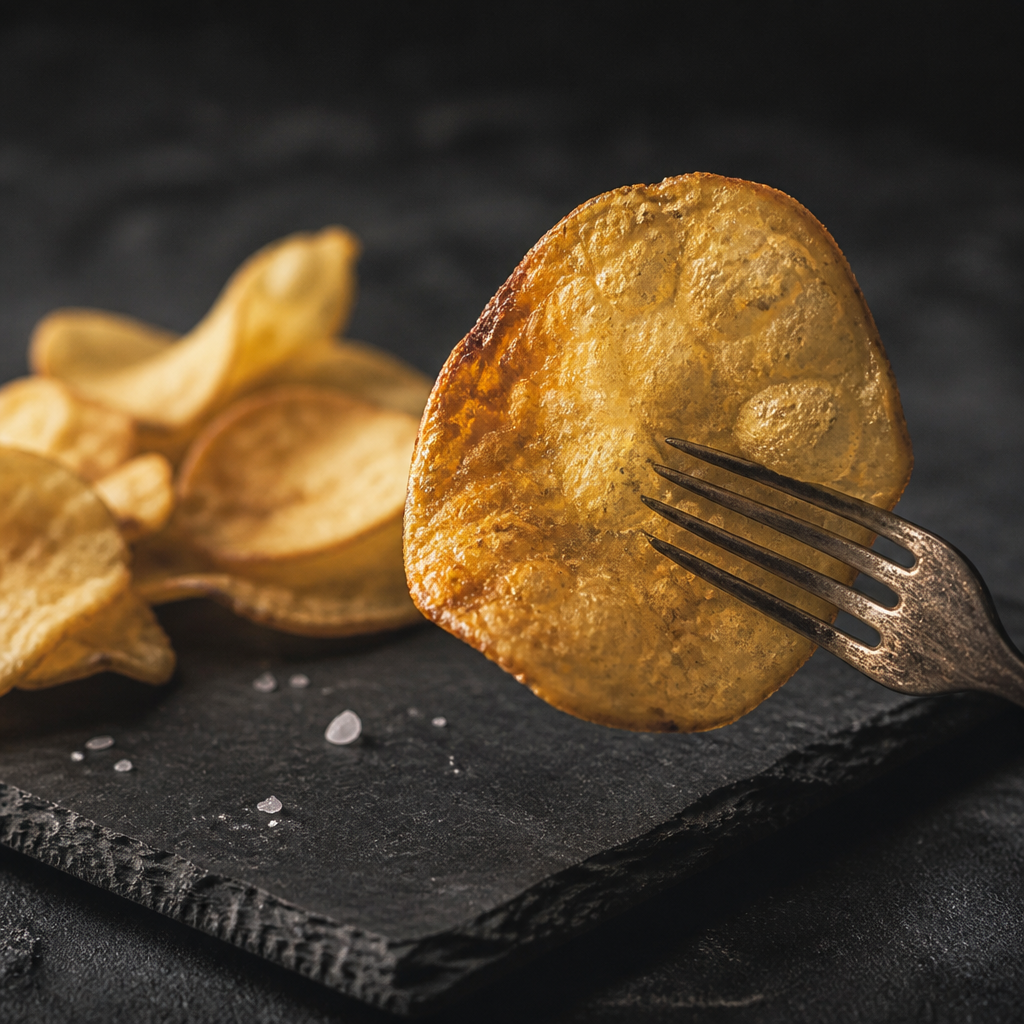
The Origin of Potato Chips: The George Crum Legend and the Historical Evidence
This nine-lecture audio course investigates the disputed origin of the potato chip, separating documented history from a famous American legend. The series opens with early 19th-century cookbooks—1840s American recipes for fried potatoes, an 1845 British "Pommes Frites" recipe, and an 1847 newspaper advertisement for thin-sliced potatoes—that prove the concept existed decades before the well-known Saratoga story. A dramatized re-enactment then brings the 1853 Moon's Lake House incident to life, featuring the exchange between chef George Crum and a dissatisfied diner often identified as Cornelius Vanderbilt, before stepping back to examine the primary sources: Crum's 1865 advertisement for "Saratoga Chips," the first 1863 newspaper mention, and the absence of chips on pre-1860 Moon's Lake House menus. The course also examines the 1885 patent for a potato-slicing machine and the overlooked role of Catherine Wicks, whose business ledgers and distributor correspondence suggest she managed the commercial side of the operation. The second half traces the chip's commercial rise from regional specialty to national staple. Listeners follow railway freight records showing shipments across the Adirondacks, an 1889 New York Times feature marketing chips as a tourist souvenir, and the first packaged brands of the 1890s. The course covers early commercialization—tin and paper packaging, the 1906 Pure Food and Drug Act's labeling requirements, and the first mass-production factory in 1914—then the advertising boom that followed, including the 1932 launch of Lay's, wartime radio campaigns, and the post-World War II sales surge. The final lectures draw broader lessons about how origin myths are constructed, how storytelling shapes brand building, and how modern entrepreneurs can use narrative without sacrificing accuracy, closing with current trends in health-conscious, sustainable, and globally flavored chips.
Crisp Beginnings: Setting the Table
Crisp Beginnings: Setting the Table
A cookbook recipe from 1817, "potatoes fried in slices or shavings." That's more than three decades before the famous George Crum story even supposedly happened. Think about that for a second. The snack we've been told was invented in a fit of kitchen rage in 1853? Somebody was writing down how to make it in 1817. That recipe appears in an edition of William Kitchiner's The Cook's Oracle, and the Smithsonian has documented it. So right away, Muhammad, our origin story has a problem. A delicious problem.
Now, the key idea here. The potato chip did not necessarily begin with a single inventor or a single moment. The evidence says thin fried potato slices appear in recipes long before the famous Saratoga story took hold. And it gets better. In 1849, the New York Herald ran a report praising a Saratoga cook named Eliza for her potato-frying reputation. Four years before the legendary incident. That means Saratoga, this upstate New York resort town, was already known for fried potatoes before the disputed episode ever allegedly occurred. So the, the question isn't just who invented the chip. It's why we needed an inventor at all.
Let's set the scene for you. Moon's Lake House, summer, a wealthy diner, one angry cook. The best-known version of the 1853 tale goes like this. A diner complains his fried potatoes are too thick. Cook George Crum, annoyed, slices potatoes paper-thin out of spite. He fries them until crisp. He serves them. The diner loves them. The story commonly names that diner as Cornelius Vanderbilt, the railroad and shipping magnate. But here's what the evidence shows. The Vanderbilt identification isn't established by any contemporary source. Historians examining the legend have noted he was touring Europe with his family in the summer of 1853. Which, yeah, undermines the whole thing. And the earliest known mention of Crum's involvement in the chip story? It dates to 1885. Decades after the alleged event. Nobody wrote it down when it supposedly happened.
Here's where it gets interesting for you, Muhammad. Remember that Kitchiner recipe, the 1817 one? It instructed cooks to fry potatoes "shaved as thin as possible." Does that count as a true potato chip? Some would say it's close enough — thin, fried, salty. Others argue the Saratoga version was distinct somehow. But honestly, the documentary trail suggests cooks on both sides of the Atlantic knew this technique decades before Crum. And the cast of characters keeps growing. Crum was a real cook, associated with Moon's Lake House, who later ran his own restaurant. But his sister, Catherine "Kate" Speck Wicks, also worked as a cook, and a competing account credits her. In her version, a thin slice accidentally fell into hot fat while she was cooking — fat being used to fry crullers, in one telling. Crum tasted it. He approved. A 1917 obituary credited Wicks as the inventor, while Crum's own obituary credited him. So even the family couldn't, uh, settle it. The Moons, Eliza, Crum, Wicks — multiple competing characters, no single uncontested inventor.
So what's the takeaway? The famous account is best treated as a later origin legend, not a securely documented record. That's not to say Crum meant nothing — his clearest historical significance may be popularizing the chips at Saratoga, where the name "Saratoga chips" stuck and spread. But the contrast between Kitchiner's printed recipe and the angry-chef tale teaches us something bigger about how food origin myths get made. A good story beats a cookbook page almost every time. The accident, the complaint, the spite — that's memorable. A recipe in a British cookbook? Not so much. Over the coming lectures we'll follow this snack from those early printed instructions to restaurant fame to the packaged, mass-market bag you know today. And along the way, we'll keep asking the same question: what's documented, and what's just a great story? Bring your appetite for both.
The Saratoga Showdown: A Dialogue Re‑Enacted
Speaker 1
Summer, 1853. Moon's Lake House, Saratoga Springs. A plate of fried potatoes comes back to the kitchen.
Speaker 2
And that's where our listener left us last time — the recipe trail that beat the legend by decades. Now we walk into the dining room.
Speaker 1
So play it out for me. The diner's complaint — what was it?
Speaker 2
Too thick. The fried potatoes were too thick. And the cook, George Crum, supposedly responds by slicing the next batch very thin and frying it crisp.
Speaker 1
Out of spite, in other words.
Speaker 2
That's the tale. The crisp potatoes were intended as a prank — but the diner enjoyed them, and other customers started asking for them.
Speaker 1
Wait. He wanted to punish the guy and invented a hit snack instead?
Speaker 2
That's the irony that made the story stick. And the legend names the diner as Cornelius Vanderbilt, the railroad and shipping magnate.
Speaker 1
But is Vanderbilt actually documented there?
Speaker 2
No. The Smithsonian account presents his identity as part of the story, not as established fact. That distinction matters.
Speaker 1
So the whole showdown might be theater. Who was Crum, really?
Speaker 2
Born George Speck. A chef of Native and African American descent, known at Moon's Lake House. In 1860 he opened a restaurant near Saratoga, known as Crum’s House or Crum’s Place.
Speaker 1
And chips at his restaurant?
Speaker 2
Reportedly a basket of potato chips sat on every table. He ran it for more than thirty years, until his death in 1914.
Speaker 1
Thirty years of chips on tables — that's real association.
Speaker 2
It is. But association isn't invention. The Smithsonian is explicit: Crum was not the sole inventor, maybe not even an early one — he helped popularize them.
Speaker 1
Now, here's the version I cannot dismiss. Thin fried potatoes existed before 1853 —
Speaker 2
Right. Kitchiner's Cook's Oracle, 1817. 'Potatoes fried in slices or shavings.' Thirty-six years before the famous episode.
Speaker 1
So if I were defending the legend, I'd say — maybe Crum perfected a distinct Saratoga style.
Speaker 2
That's the strongest version of the legend's case. And there's a real anchor: an 1849 New York Herald report praised a Saratoga cook named Eliza for her potato‑frying reputation.
Speaker 1
1849? Four years before the, the supposed invention?
Speaker 2
Exactly. Now, that doesn't prove Eliza made modern chips. But it proves Saratoga's fried‑potato fame predated the Crum‑Vanderbilt story.
Speaker 1
So the joint where it breaks — the town was already frying before the showdown.
Speaker 2
That's it. The evidence separates two things: thin fried potatoes existed first, and Crum's role was possibly popularizing a Saratoga style.
Speaker 1
And there's a rival in the family, right? The sister?
Speaker 2
Catherine 'Katie' Speck Wicks. One tradition credits her with accidentally dropping a potato slice into hot fat while making doughnuts or crullers.
Speaker 1
And Crum tastes it and approves?
Speaker 2
That's the telling. But like the prank tale, it's a later origin narrative — attribution, not contemporary proof of who made chips first.
Speaker 1
So even the family has two legends.
Speaker 2
Two legends, zero contemporary receipts. And here's the detail nobody leads with: Crum did not claim the invention during his lifetime.
Speaker 1
He didn't say it?
Speaker 2
Not so far as the available record shows. The strong claims crediting him surfaced years after his death. Other people invented the inventor.
Speaker 1
So the man the myth celebrates didn't tell the myth himself.
Speaker 2
That's the line worth keeping. What Saratoga did securely was popularization — the name 'Saratoga Chips' tied the crisp potatoes to the resort town and spread the dish.
Speaker 1
Think of how that works — the town as the brand, not the cook.
Speaker 2
Exactly. And the snack stayed a restaurant specialty for a long time. In 1895 William Tappenden in Ohio began supplying grocery markets — chips in barrels, delivered by horse‑drawn wagon.
Speaker 1
Barrels. Wagons. And then somebody puts them in a bag?
Speaker 2
1926. Laura Scudder in California, wax‑paper bags, a freshness date, and the slogan 'the Noisiest Chips in the World.'
Speaker 1
The noisiest chips. That's, that's honest advertising.
Speaker 2
It is. So for our listener, the takeaway: the 1853 showdown is a legend — a good one — but the paper trail says the dish predates it, and the fame came from the town, not one angry kitchen.
Speaker 1
One plate sent back to the kitchen — that's the unit this whole story weighs.
Speaker 2
And next time we put the documents on the table — the menus, the ads, the first newspaper mentions — and see what survives contact with the record.
Separating Legend From Documentation
A courtroom. Here we are now. Last time we played out the famous scene, the angry diner, the spite‑thin slices. Now the dramatization ends and the documents take the stand. Here's the version of the legend I cannot dismiss. A real cook, George Crum, a real resort, Moon's Lake House, a real complaint about thick potatoes. It's a coherent story. It has a motive. It has a punchline. And now here is where it stops. The familiar story places the chip's creation at Moon's Lake House in 1853. But that story is not supported by contemporary documentation. Nothing written down in 1853. No newspaper item. No menu note. No letter. The scene we dramatized, the complaint, the retaliation, should be treated as folklore, not a verified event.
So how do historians actually weigh evidence? Think of it like a ladder of trust. Patents and printed recipes sit near the top. They're dated, public, verifiable. Advertisements follow. Then come menus. And way down at the bottom? Retrospective interviews, the stories people tell decades later. Human memory is a, a terrible notary. Now remember the recap from last time: the paper trail beat the legend by decades. That's the insight we build on here. The 1817 cookbook *The Cook's Oracle* by William Kitchiner includes a recipe for potatoes fried in slices or shavings. It describes potatoes fried in slices or shavings. That's thirty‑six years before the alleged Crum incident. The recipe proves thin fried potato slices were known before Crum's time. But, and this matters, it does not establish who first made a modern potato chip.
And Saratoga itself betrays the legend. A July 1849 report in the New York Herald described a Saratoga Springs cook named Eliza, whose potato frying had become a local attraction. Four years before the supposed incident. So notable fried potatoes were already associated with Saratoga Springs before the Moon's Lake House tale even starts. Now, be careful with Eliza. The report identifies her, not Crum, as the cook drawing attention. But it does not prove she invented potato chips either. What does that mean? It means the town was frying before the showdown. The Vanderbilt detail collapses the same way. The popular version names Cornelius Vanderbilt as the complaining diner. But authoritative accounts describe that identification as part of the legend, not established fact.
Now, the sister question. Some later, unverified accounts mention Crum's sister Catherine. But there is no reliable evidence that she invented potato chips. No contemporary source records a recollection by a sister named Catherine Wicks describing an accidental chip creation. That anecdote appears only in later retellings. And there is no known obituary for a Catherine Wicks crediting her with the invention. That claim appears to be unfounded. So any alternative origin narrative attributed to her is folklore, not evidence. Even folklorists who examined potato‑chip origin stories were studying the stories as stories.
So what survives the cross‑examination? Crum himself. He was real, born George Speck, with a documented career at Moon's Lake House. The uncertainty concerns the invention anecdote, not his existence or his cooking. The Smithsonian notes that historians do not regard Crum as an early maker of chips. But they credit him with helping popularize them. He helped establish Saratoga chips as a popular specialty. Popularization is supportable. Sole invention is not. That's the line. And the branding lesson runs forward too: packaging innovations helped preserve the freshness of chips.
Here’s the unsaid thing in this whole debate. Nobody wanted the answer to be a cookbook page. We wanted a villain, a complaint, a flash of kitchen rage. The evidence gives us something quieter. A recipe from 1817. A frying cook named Eliza in 1849. A real chef who made chips famous rather than making them first. The takeaway, Muhammad: contemporary records, the recipes, the reports, the documented career, show the chip existed before the Crum story became popular. Crum's role was branding, not invention. This is how the legend measures. In the next episode, we’ll explore the overlooked figure who may have been the real catalyst behind the chip's popularity.
Catherine Wicks: The Unsung Partner
While Catherine Wicks often gets spotlighted as the lone female inventor, the historical record shows she was one of several kitchen figures linked to early thin‑fried potatoes. Beyond Wicks, we have evidence of an 1849 newspaper mention of a cook named Eliza preparing crisp potato slices at a Saratoga resort, and a 1817 recipe in *Cook’s Oracle* for “thin fried potatoes.” These fragments suggest a collective kitchen practice rather than a single eureka moment. In this segment we’ll broaden the lens to these unsung contributors—cook Eliza, unnamed kitchen staff, and early commercial packagers like William Tappenden—showing how the Saratoga chip emerged from shared experimentation.
This broader view helps us move past the repetitive Wicks‑Crum narrative and sets the stage for the next lecture, where we follow the chips from Saratoga specialty to mass‑market snack, featuring pioneers such as Laura Scudder.
Now here's where the steelman stops. That obituary said Wicks was born in Ballston Spa in 1814 and came to Saratoga in 1861. Eighteen sixty‑one. Several years after the chips were supposedly invented. This highlights the problem. If she arrived in 1861, she wasn't at Moon's Lake House in 1853. The same obituary also reported her age as 102, which, given the 1814 birth, doesn't quite add up either. So the document that crowns her also undermines her.
Think of it like a family argument carried out in obituaries. Crum's obituary reportedly said he was said to have been the actual inventor. Note that wording. Said to have been. Cautious. The obituary later made a bolder claim for her. The earlier dated claim for Wicks predates both: the Saratogian published her profile before the connection to Crum was mentioned in a source. But Crum's own connection to the invention wasn't mentioned in any source until 1885. Decades after the event. Nobody was writing any of this down when it happened.
So who was she really? The obituary said she worked as a cook at the Sans Souci Hotel in Ballston Spa before cooking at the lake. It said she first married in 1846. Accounts render her name differently, Kate, Catherine, even Aunt Kate, which is exactly why you check the underlying newspaper records instead of trusting retellings. Her reported role rests on later profiles and obituaries, not contemporary documentation from the invention period.
And here's the unsaid thing. Nobody wanted the answer to be a woman in the kitchen. The lone male inventor, the angry genius, the flash of spite, that template sells. A sister, a cook, a collective kitchen staff, that doesn't. Wicks's claim matters precisely because it complicates a story that later centered on her better‑known brother. And recipes for thin fried potato slices existed in print before either of them was associated with Saratoga chips, so neither can securely be called an early person to fry potato slices.
So what would honest attribution look? Not one inventor. A kitchen. The evidence supports treating Wicks as a plausible contributor or claimant, not a definitively proven sole inventor. Same standard we applied to Crum. The safest conclusion: Saratoga popularized the chips. The precise inventor stays uncertain. That is how her claim weighs. In a future episode, we follow the chips themselves as they travel beyond Saratoga.
From Saratoga to the Adirondacks: Regional Fame
Now that we've seen how Saratoga’s name traveled with tourists, let's move on to how the town turned a regional specialty into a lasting brand.
With that recap in mind, we now explore how Saratoga Springs helped the chip become famous beyond its origin.
Think of Saratoga Springs in the 1870s as a stage. A Gilded Age resort, drawing summer crowds who came to drink the waters, see the races, and eat. The town's dining scene gave thin fried potatoes a setting where visitors could taste them and attach a name to them. And the name mattered more than the cook. In the 1870s, you could order them as Saratoga Fried Potatoes or Saratoga Chips. Both names circulated, according to Saratoga County historical research.
Here's the version of the single-inventor argument I cannot dismiss. George Crum, real cook, real resort, real career. He opened his own restaurant near Saratoga in 1860, after working at Moon's Lake House. The Smithsonian reports patrons came asking for his Saratoga Chips. That's documented popularity. Now here's where it stops. Popularity is not invention. And the name itself, Saratoga Chips, tied the food to the town, not to one man. A Saratoga County History Center exhibit describes the region's role in popularizing the chip and notes the name was an early generic term. The town became the brand.
And the legend kept mutating even while Crum was alive. An early printed attribution to him appears in an 1885 Hotel Gazette account, decades after the alleged 1853 event. And that account locates the invention at Montgomery Hall. Not Moon's Lake House. The early written versions couldn't agree on the venue. Meanwhile, a reported 1899 interview credited Catherine Wicks, while Crum was still living. Folklore scholars William S. Fox and Mae G. Banner studied exactly this, how the origin stories accumulated and changed over time.
So why didn't the chips ship out in bulk right away? Simple. They went stale. They broke. For example, a tourist carrying chips home in the 1870s had maybe days before the crispness died. No packaging, no shelf life. So the chip spread as a recipe and a name, carried by cooks and by word of mouth. That means the credit went to a place, not a person. The town got the trademark nobody filed.
The takeaway, Muhammad. By the late nineteenth century, Saratoga Springs had done something no inventor did. It made thin fried potatoes famous across the region, through resort dining, through tourists, through a name that traveled. The groundwork for national distribution was laid, not in a factory, but in a dining room. Next time, we watch the snack jump from restaurant specialty to the packaged food industry of the early twentieth century.
A train pulls out of Saratoga Springs. Summer heat, packed cars, and somewhere in the luggage, a tin box. Inside, thin fried potatoes. A tourist heading home, carrying a taste of the resort town. That box is the story of this whole lecture. Because the chip didn't travel as a product. It traveled as a memory.
A quick recap, because it sets everything up. Last time we weighed Catherine Wicks, and the honest verdict was: plausible contributor, not proven inventor. The safest conclusion stands. Saratoga popularized the chips. The precise inventor stays uncertain. Now we ask a different question. Not who made them. How did they get famous?
Think of Saratoga Springs in the 1870s as a stage. A Gilded Age resort, drawing summer crowds who came to drink the waters, see the races, and eat. The town's dining scene gave thin fried potatoes a setting where visitors could taste them and attach a name to them. And the name mattered more than the cook. In the 1870s, you could order them as Saratoga Fried Potatoes or Saratoga Chips. Both names circulated, according to Saratoga County historical research.
Here’s the version of the single‑inventor argument I cannot dismiss. George Crum, real cook, real resort, real career. He opened his own restaurant near Saratoga in 1860, after working at Moon’s Lake House. The Smithsonian reports patrons came asking for his Saratoga Chips. That’s documented popularity. Now here’s where it stops. Popularity is not invention. And the name itself, Saratoga Chips, tied the food to the town, not to one man. A Saratoga County History Center exhibit describes the region’s role in popularizing the chip and notes the name was an early generic term. The town became the brand.
And the legend kept mutating even while Crum was alive. An early printed attribution to him appears in an 1885 Hotel Gazette account, decades after the alleged 1853 event. And that account locates the invention at Montgomery Hall. Not Moon’s Lake House. The early written versions couldn’t agree on the venue. Meanwhile, a reported 1899 interview credited Catherine Wicks, while Crum was still living. Folklore scholars William S. Fox and Mae G. Banner studied exactly this, how the origin stories accumulated and changed over time.
So why didn’t the chips ship out in bulk right away? Simple. They went stale. They broke. For example, a tourist carrying chips home in the 1870s had maybe days before the crispness died. No packaging, no shelf life. So the chip spread as a recipe and a name, carried by cooks and by word of mouth. That means the credit went to a place, not a person. The town got the trademark nobody filed.
The takeaway, Muhammad. By the late nineteenth century, Saratoga Springs had done something no inventor did. It made thin fried potatoes famous across the region, through resort dining, through tourists, through a name that traveled. The groundwork for national distribution was laid, not in a factory, but in a dining room. Next time, we watch the snack jump from restaurant specialty to the packaged food industry of the early twentieth century.
Packaging the Crunch: Early Commercialization
A grocery clerk dips a tin scoop into a wooden barrel. Chips rattle. Half of them are already broken. Two days from now, the rest will be soft. That barrel is where this lecture starts, because the chip had a fame problem and a physics problem. Previously we discussed how the snack became a recognizable name. Now the name needed a container.
Here's a brief recap. Saratoga made the chip famous, but the town couldn't make it fresh. Tourists carried tins home, and the crispness died within days. So the chip spread as a recipe and a reputation, not a product. The key idea today: the chip became a commodity only when packaging, machines, and branding arrived together.
Now, the first documented push out of the restaurant came from an Ohio entrepreneur. In 1895, William Tappenden began selling chips to local markets. The Smithsonian describes his first production operation starting in his own kitchen, before he converted a backyard barn into a factory. A barn. That was the industry's first scale-up.
But think of what Tappenden was actually selling. Bulk. Chips sat in barrels or glass containers, weighed out per customer. The moment that container opened, the clock started. Stale chips weren't a defect, they were a schedule. And in transit, bulk packing meant breakage. That's why distribution stayed local or regional for decades. The product physically couldn't travel.
Here’s the version of the single‑inventor argument I cannot dismiss. Maybe one clever businessman cracked packaging alone. Now here’s where it stops. The fixes came from different people, in different decades, on different continents. In the UK, Smiths began selling crisps in 1925, in greaseproof‑paper bags with a separate twist of salt. Not pre‑salted. A salt twist. You seasoned them yourself.
Then, in 1926, Laura Scudder. Her team took two pieces of waxed paper, fused them into a bag, and sealed it. The Los Angeles Times reports employees formed and sealed those bags by ironing the paper. By hand. With irons. And Scudder’s company marketed them as, quote, the Noisiest Chips in the World. Turning the crunch itself into the sales pitch.
The 1920s also changed the factory side. Mechanical potato peelers let manufacturers process far larger quantities. The continuous fryer replaced small‑batch frying with constant flow. Machines made volume. Packaging made shelf life. Waxed paper was later followed by cellophane and glassine bags, which kept chips fresher still.
And the unsaid thing in this story. Nobody wanted the answer to be a bag. We wanted an inventor, a kitchen, a flash of rage. But the honest answer is that the chip went national because of irons, waxed paper, and peelers. Grocery distribution, packaging, processing technology, and branded sales all contributed. No single leap.
The takeaway, the late nineteenth and early twentieth centuries turned a fragile restaurant specialty into a shelf‑stable product, through preservation advances, branding, and mass‑marketing technique. The barrel got replaced. That sums up the revolution. In the next episode, we’ll explore the chip’s ascent to national fame, including Herman Lay’s early sales efforts and the impact of advertising.
National Brands and the Advertising Boom
A smiling potato dances across a television screen. Animated. Grinning. Selling chips. The year is 1944, and that grinning tuber is one of the earliest television campaigns by a snack-food company. Think about what had to happen first. Last time we watched Laura Scudder seal waxed paper by hand, irons flattening the seams. The bag solved freshness. But a bag sitting quietly on a shelf sells nothing. Now the chip needed a voice. And a face. And a name people could ask for by name.
Quick recap. Packaging made the chip shippable, but the industry stayed scattered. By the middle of the 1930s, chip factories were spread across the United States, and most were small or regional businesses. Think of it like a quilt. Hundreds of little squares, each covering one town. Local names, local routes, local loyalty. The key idea: nobody had gone national yet, because nobody could.
Here's the version of the single-inventor story I cannot dismiss. One clever businessman with a national ad campaign from day one. Now here's where it stops. Herman Lay began with distribution, not advertising. In 1932 he was distributing chips for Atlanta's Barrett Potato Chip Company in Nashville, then expanded through sales routes across the American South. He sold someone else's chips first. The manufacturing base came second. The truck came first.
Then, 1944. H. W. Lay & Company changed its chip trademark. That matters more than it sounds. A trademark is a promise a shopper can carry in their head. And that same year, Lay's television advertising featured an animated smiling potato mascot, often called the Happy Potato. A potato, selling potatoes. Bold move. Television gave packaged snack companies a way to put memorable characters before a broad audience. Local barrel-scoopers couldn't follow them there.
Meanwhile, a parallel story was running in Texas. The Frito Company used color advertisements in national magazines, Life, Ladies' Home Journal, Better Homes and Gardens, plus radio and early television sponsorships. Frito granted Lay's company an exclusive franchise to make and distribute Fritos across the Southeast. That relationship matured. The two firms merged to form Frito-Lay, combining their distribution capabilities. Four principal brands at the start: Fritos, Lay's, Ruffles, and Cheetos. And following the merger, Lay's became an early potato-chip brand sold nationally.
Then the scale changed again. In 1965, Frito-Lay merged with Pepsi-Cola to form PepsiCo, linking the snack business to a much larger company and expanding its potential reach. That means, Muhammad, a chip company now sat inside a beverage empire. Shared trucks. Shared shelf power. Shared advertising budgets no regional fryer could match. And here's the unsaid thing. Nobody wanted the answer to be a distribution network. We wanted an inventor. But the national chip was built by franchise agreements, trademark changes, and magazine color spreads.
The takeaway. Companies like Lay's leveraged television, print, and mergers to cement the chip as an American staple. The smiling potato did what the barrel could not. In a future episode, we step back from the ads and ask what this contested origin, the legend, the evidence, and the mythmaking teach us about business stories and historical truth.
Myths, Markets, and Meaning: Lessons From the Chip Story
A boardroom. A marketing team. Someone asks the question many companies dread. Where did our product come from? And the honest answer is boring. Recipes drifted. Cooks tinkered. Nobody took notes. So the room reaches for the better story. The angry diner. The spiteful chef. The flash of genius. We've spent seven lectures watching that exact trade happen with the potato chip. Now we step back and ask what it costs.
Here's a brief recap. Last time we watched the smiling potato sell a national brand. Packaging, trucks, television. The chip went from barrel to billboard. The key idea today: origin legends are not accidents. They're built, and they follow a pattern. Think of the Crum story like a machine. Input: a real cook, a real resort, a real dish. Output: one angry customer, one moment, one genius. The famous tale places the invention at Moon's Lake House in 1853. A diner keeps sending back thick fried potatoes. Cook George Crum slices them paper‑thin out of spite.
Here's the version of the legend I cannot dismiss. Crum was real. Also known as George Speck. A genuine Saratoga cook and restaurateur. Now here's where it stops. The dates. The earliest known printed attribution to Crum appears in an 1885 Hotel Gazette article. Some accounts cite 1886. That's more than three decades after the supposed event. Nobody wrote it down when it happened. And the Vanderbilt detail? The story names railroad magnate Cornelius Vanderbilt as the diner. But biographer T. J. Stiles reported Vanderbilt was in Europe during the alleged 1853 encounter.
And the paper trail runs deeper than the legend. An 1817 cookbook includes a recipe titled Potatoes fried in Slices or Shavings. Slice, dry, fry in fat until crisp. That's thirty‑six years before Saratoga. Though here's a wrinkle. Those slices were described as about a quarter‑inch thick. So the book documents fried potato slices, not necessarily the wafer‑thin modern style. A reported 1849 newspaper account even describes a crispy potato dish at Loomis' Lake House near Saratoga. Local versions may have preceded the famous story.
Now the uncomfortable part. The record doesn't settle who deserves credit. Crum, his sister Catherine Kate Wicks, another worker, or someone earlier. Wicks's obituary credited her as the inventor. Crum's obituary credited him. Competing claims, preserved in death notices, resolving nothing. And here's the unsaid thing. Nobody wanted the answer to be a kitchen. A collective. We wanted one name. The Smithsonian draws the honest line: Crum may not have been early to make chips, but he helped popularize them. A New York Herald writer even called him the best cook in America in 1889. Reputation, not invention.
So why does the legend survive? Because it works. For example, think of what a founder myth does for a brand. It gives customers a scene to replay. A spite‑sliced chip has drama. A gradual, collaborative kitchen practice lacks a single origin. The real history was an existing technique, a resort town's restaurant culture, and then commerce. Tappenden making chips for grocery stores in 1895. Packaging became part of the product's story, not just a wrapper. A good story often beats a cookbook page. That is the mechanism. Vivid beats verified.
So what do you carry out of this, Muhammad? Three tests for any origin story you hear. One: when was it first written down? If the answer is decades later, be suspicious. Two: does the paper trail run earlier? Recipes, reports, receipts. Three: who benefits from the clean version? The chip's disputed origin shows how narratives get crafted, why credible documentation matters, and what storytelling does for a brand. That is the unit this whole legend weighs. In the next session, the chip's future. Flavor, technology, and what comes after the bag.
Future Crunch: Innovation and Cultural Impact
A supermarket aisle, Muhammad. Hundreds of bags. Baked, kettle, lentil, chickpea, exotic flavors from around the globe. Hold one bag up to the light. Each product still chases the same goal a Saratoga cook pursued in the 1850s: the perfect crisp. The packaging changed. The quest did not.
Quick recap: we have traced the chip from a restaurant specialty to a national brand, examined the disputed 1853 story, and saw how packaging turned a fragile snack into a shelf‑stable commodity. The key pattern emerged: a recipe, a place, and a container. Those three elements still define successful food‑tech ventures.
Today we look forward. The chip market is expanding beyond the classic potato. Alternative ingredients—legumes, root vegetables, even seaweed—are being processed with the same thin‑cut, high‑temperature technique. Companies such as Pulsin and Better Than Chips use lentils or chickpeas, achieving comparable crunch while offering higher protein and fiber. The core technology—precise slicing, controlled frying or baking, and rapid cooling—remains the same, but the raw material base is diversifying to meet health and sustainability demands.
Sustainable packaging is the next frontier. Waxed paper gave way to cellophane, then to grease‑proof glassine, and now to compostable films made from plant‑based polymers. Brands like Terra and Loop are testing fully biodegradable bags that retain freshness for weeks without generating plastic waste. The challenge is balancing barrier properties (oxygen, moisture) with environmental impact. Advances in nanocoatings and bio‑derived laminates are promising, but they require capital investment and regulatory approval.
Flavor development has entered the digital age. AI platforms analyze consumer reviews, social media trends, and chemical flavor databases to generate novel combinations. For example, a 2025 partnership between a major chip maker and a flavor‑tech startup produced a "Miso‑Maple Bacon" profile in under three months, cutting traditional R&D cycles by 60 percent. Machine‑learning models predict which volatile compounds will survive the high‑heat process, allowing chefs to design flavors that remain vivid after frying.
"We start with a data set of 10,000 flavor descriptors," says Dr. Lina Patel, head of R&D at CrunchLab, a boutique chip innovator. "Our algorithm narrows it to 50 candidates, then we prototype and test for crunch integrity, oil absorption, and shelf life. The result is a flavor that feels both familiar and unexpected, and it reaches market faster than a traditional focus group would allow."
How do the historical lessons apply? First, the recipe lesson reminds us that a solid, reproducible process is essential. Whether slicing potatoes or chickpeas, consistency in slice thickness (often 0.5 mm) and moisture control determines the final texture. Second, the place lesson shows the power of branding tied to a location or story. Modern brands create narratives—"grown in the Andes," "sourced from family farms"—to give consumers a sense of origin, echoing the Saratoga identity that helped the original chip spread. Third, the container lesson underscores that without a reliable packaging solution, even the best product cannot reach a mass market. Today's biodegradable films are the contemporary answer to the wax‑paper bag that Laura Scudder pioneered.
Entrepreneurs should therefore focus on three parallel tracks: refine the core processing technology, build a compelling origin story that resonates with target consumers, and invest early in packaging that meets both shelf‑life and sustainability criteria. Skipping any of these steps risks a product that is either technically flawed, poorly differentiated, or quickly discarded as waste.
Actionable takeaways: 1. Prototype with a single, well‑controlled slicing method before scaling to multiple ingredients. Consistency beats variety at the early stage. 2. Craft a narrative that links your chip to a tangible place or community—farm, region, or cultural tradition—to create brand equity. 3. Partner with a packaging specialist who can provide compostable or recyclable films that meet barrier requirements; test shelf life under real‑world conditions. 4. Leverage AI‑driven flavor tools to accelerate development, but validate with sensory panels to ensure the flavor survives the cooking process. 5. Track regulatory trends on food‑contact materials; early compliance avoids costly redesigns.
The chip’s future will be shaped by the same three forces that turned a thin slice of potato into a global snack: a reliable recipe, a memorable place, and a protective container. By applying those lessons with modern technology—alternative bases, sustainable bags, and AI‑crafted flavors—food‑tech founders can create the next generation of crunchy products that satisfy both palate and planet.
Remember, the story of the potato chip is not a single invention but a series of improvements. Each improvement required a new recipe, a new venue for exposure, and a new way to keep the product fresh. Your venture will follow the same pattern. Embrace the history, use the tools of today, and the next chip legend will be yours.