
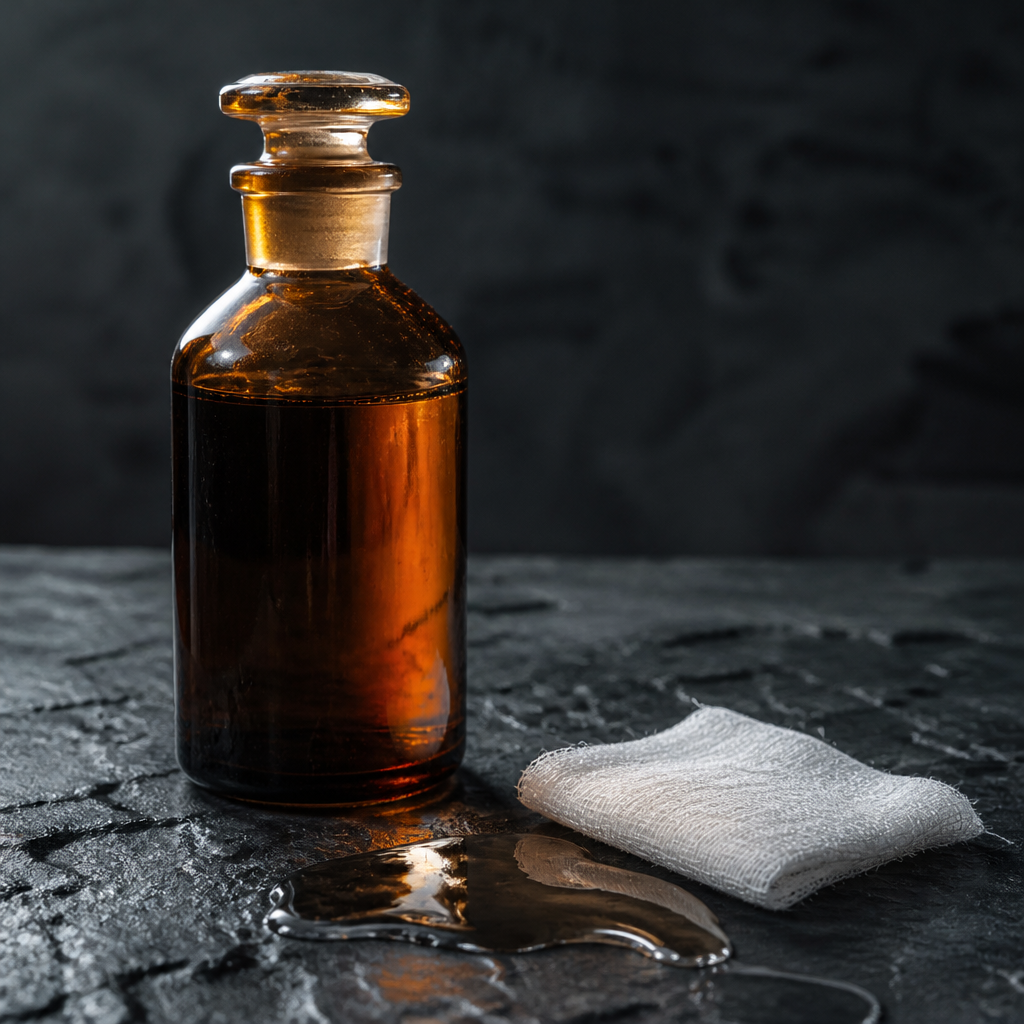
How Listerine Invented Bad Breath
This course traces the full history of mouthwash, from ancient oral rinses to modern commercial products, over nine lectures. It begins with the earliest documented practices: Egyptian fermented barley water around 1500 BCE, Hippocratic honey-vinegar mixtures, Roman myrrh and frankincense rinses, Tang dynasty tea-leaf decoctions, and Ayurvedic neem and clove oils described in the Sushruta Samhita. The course then moves through medieval and Renaissance remedies, including 14th-century sweetening powders, Paracelsus's alcohol-based rinses, and early silver nitrate disinfectants. A major turning point comes with 19th-century germ theory and antiseptic chemistry: Louis Pasteur's work, Joseph Lawrence's 1879 phenol-based formula, and Jordan Wheat Lambert's branding of Listerine as a surgical antiseptic. The course examines how 1920s advertising manufactured halitosis as a social fear, transforming a surgical product into a daily hygiene staple through celebrity endorsements and fear-based messaging. The second half covers the scientific and commercial evolution of modern mouthwash. It distinguishes cosmetic breath fresheners from therapeutic rinses, explaining the 1960s introduction of fluoride for cavity prevention, 1970s chlorhexidine as a prescription anti-plaque agent, and 1990s alcohol-free and herbal formulas. A dedicated lecture weighs the actual evidence: meta-analyses showing chlorhexidine reduces gingivitis by roughly 30 percent, weak support for cosmetic rinses beyond temporary odor masking, and risks including mucosal irritation, tooth staining, and dry mouth. The course closes by extracting broader lessons about product repositioning, FDA labeling rules, and how advertising shapes public perception of health problems, then looks ahead to probiotic rinses, nanoparticle drug delivery, and biodegradable packaging. Throughout, documented facts are separated from colorful myths.
From Spit to Science: Why We Started Rinsing Our Mouths
From Spit to Science: Why We Started Rinsing Our Mouths
One historical review dates a written mouth-rinse recommendation to Chinese medicine around 2700 BCE. And the remedy? A child's urine, for gum disease. Now, before you wince, hold that thought. Because that detail tells you something important. People were rinsing their mouths thousands of years before anyone knew why teeth went bad. A modern review in the dental literature puts it plainly: oral cleaning existed long before we understood how dental disease develops. Rinsing was part of a much older human search. Cleaner mouths. Fresher breath. Better standing with the people around you. That's where our story starts, Muhammad. Not with a bottle on a shelf. With a very old instinct.
Let's ground this properly. Ancient Mesopotamian clay tablets hold some of the earliest written references to oral care, including remedies for dental and gum problems. Then Egypt. Egyptian oral care leaned on aromatic substances, myrrh among them. Why aromatics? Because bad breath was, well, social. It marked you. Greek and Roman medicine followed with mouth-cleaning remedies and flavored substances too, though the formulas varied across sources and traditions. Hippocrates is often credited with recommending honey and vinegar blends for gum trouble and bad breath. And here's the thing — that's, that's surprisingly close to antiseptic thinking. Vinegar is acidic. Honey has soothing properties. They were guessing. But they were guessing in a direction that, centuries later, science would vindicate in spirit, if not in detail.
East and South Asia ran parallel experiments. Ancient Chinese and Indian medical texts describe preventive oral-care approaches — herbal treatments, rinses, a whole tradition of maintenance rather than reaction. And Ayurveda gives us something remarkable. The Charaka Samhita, a foundational Ayurvedic text, recommends mouth rinsing, and modern reviews describe sesame-oil rinsing in that tradition. Think of what that means. Oil pulling, the practice you can find discussed in wellness aisles right now, traces back through a documented medical lineage thousands of years old. Not everything old is wisdom, mind you. Remember the urine rinse. Traditional practice was a mixed record, and the reviewers are careful on this point: rinsing served cleaning, soothing, and breath purposes, but that does not establish the rinses prevented disease. Those are two different claims. Keep them separate.
Medieval and early-modern Europe carried the same anxieties forward. People reached for spices, herbs, wine — whatever could sweeten the breath. What this tells us is that breath was already a social currency, long before germs entered the picture. Nobody had a microbial explanation. What they had was embarrassment. Reputation. The awareness that other people noticed. That's the, the key idea I want you to sit with. The demand for fresh breath is ancient. The scientific supply came much later. And into that gap — between an old, persistent human worry and the absence of any real explanation — stepped commerce, eventually. But not yet.
Because the actual transformation arrived in the nineteenth century. Germ theory and antiseptic chemistry changed medical practice, and that shift made antiseptic mouth products possible. Suddenly, mouth rinses weren't just perfume. They could, in principle, kill microorganisms. And that brings us to the hinge of this entire course. In 1879, Joseph Lawrence and Jordan Wheat Lambert created Listerine. Now, here's what most people get wrong. Listerine began as a surgical antiseptic. It was not born as a breath freshener. Its very name points to Joseph Lister's antiseptic ideas. Only later was it promoted for oral use — a product moving from one intended purpose to another. And once advertisers got involved, in the 1920s, the word "halitosis" entered popular vocabulary, framing bad breath as a medical-sounding social problem a branded bottle could fix. So here's your takeaway, and it's the spine of everything ahead: mouth rinsing is an ancient human practice, rooted in health, hygiene, and social signaling — and that deep old instinct laid the groundwork for everything modern mouthwash became. Next time, we watch a surgical antiseptic become a bathroom staple. Trust me. You'll never look at that bottle the same way.
East Meets West: Ancient Egyptian, Greek, Roman, Chinese, and Ayurvedic Rinses
Speaker 1
So last time we established the why — people rinsed for thousands of years before anyone understood dental disease. Today I want the how. What were these civilizations actually putting in their mouths?
Speaker 2
That's the right question, because the recipes are wildly different. And here's the trap our listener needs to avoid: calling all of these ancient rinses 'mouthwash' erases real differences between them.
Speaker 1
Right, like they're all versions of one modern product—
Speaker 2
Exactly. And they weren't. The sources describe varied rinses and gargles for treating complaints, cleaning, or freshening breath. Different goals, different ingredients.
Speaker 1
Okay, start me somewhere concrete. Egypt?
Speaker 2
The Ebers Papyrus. An Egyptian medical text dating to about 1550 BCE, with remedies for oral and dental conditions. And one prescription for gum trouble is wonderful — chewing and spitting out a mixture that includes bran and sweet beer.
Speaker 1
Sweet beer.
Speaker 2
Chewed, not drunk. And Egyptian priests reportedly chewed natron pellets as part of a mouth‑cleansing purification ritual. So this was partly religious, partly medical.
Speaker 1
But does the papyrus prove Egyptians had a daily standardized rinse?
Speaker 2
No — and this matters. The papyri include prescriptions for mouthwashes, but the surviving evidence doesn't establish common daily use of a standardized rinse. Think of it like a recipe book. A recipe's existence doesn't mean it was used by everyone all the time.
Speaker 1
That's a good distinction. And the ingredients themselves — were they effective?
Speaker 2
we can't say. Egyptian remedies drew on plant, mineral, even animal‑derived materials. Their presence in a prescription doesn't by itself prove clinical effectiveness.
Speaker 1
So the, the recipe is documented, the result isn't. And what do we know about Greek practices? I keep seeing Hippocrates and honey‑vinegar.
Speaker 2
Careful there. Historical accounts do attribute salt, alum, and vinegar rinses to Hippocratic medicine. But the Hippocratic Corpus is a collection by multiple authors. A remedy in it shouldn't automatically be treated as Hippocrates' own work.
Speaker 1
So 'Hippocrates recommended' might really mean 'some anonymous Greek physician recommended.'
Speaker 2
Often, yes. The Greek physician Dioscorides wrote about medicinal plants and is associated with plant‑based rinses — olive, pomegranate. The Greek evidence is simply less uniform than what we have for later commercial products.
Speaker 1
And Rome? Pliny the Elder is reported to have mentioned this practice.
Speaker 2
Roman‑era sources describe salt‑water rinsing. Pliny the Elder is reported to have recommended rinsing with salty water in uneven mouthfuls. Uneven mouthfuls — very specific.
Speaker 1
Why uneven?
Speaker 2
Unclear, honestly. But the key idea is that Roman and Greek rinses sat alongside mechanical cleaning. Ancient mouth rinses were one part of oral care, not the whole thing.
Speaker 1
Now China — because last time we touched on that 2700 BCE urine rinse for gum disease.
Speaker 2
Right, the earliest written reference commonly cited for mouth rinsing as a treatment practice, attributed to ancient Chinese medicine. And remember — that's a historical recommendation, not evidence it worked.
Speaker 1
What else survives from the Chinese record?
Speaker 2
A few striking things. The Shiji — a Chinese medical text — is reported to describe treating toothache with acupuncture alongside a daily rinse of bitter‑root decoction. The exact plant formula isn't known.
Speaker 1
So a rinse plus needles, not a rinse alone—
Speaker 2
Exactly. And a Chinese medical compilation dated to 652 CE records putting salt in the mouth, adding warm water, then wiping or knocking the teeth. Knocking the teeth. There's a whole‑morning ritual in that one line.
Speaker 1
That sounds less like a product and more like a daily discipline.
Speaker 2
It is. And Ayurveda takes that daily‑discipline idea furthest. Daily oral‑care routines include procedures called kavala and gandusha, alongside tooth cleaning and tongue cleaning.
Speaker 1
I've seen those terms — kavala and gandusha. What's the actual difference?
Speaker 2
Kavala means taking a manageable amount of liquid or paste into the mouth, moving it around, then spitting it out. Gandusha fills the mouth so completely the liquid can't be moved at all.
Speaker 1
So the distinction is literally whether you can swish.
Speaker 2
Partly practical, yes. And the substances varied — oils, water, milk, herbal preparations. Ayurvedic texts place all this within daily‑regimen guidance, not as packaged products.
Speaker 1
Okay, so step back for me. Various cultures—including ancient Egypt, Greece, Rome, China, and the Ayurvedic tradition—each had their own rinsing practices. What does that convergence tell us?
Speaker 2
Oral disease affected many peoples, and multiple civilizations independently turned to rinsing as a response. Same pain, same instinct, different ingredients.
Speaker 1
And they did not have germ theory to explain why.
Speaker 2
That's right. Which is why the rationales differ so much — purification rituals, bodily balance, toothache spirits. Describing them all as one ancient 'mouthwash' would erase exactly those differences.
Speaker 1
So the takeaway for our listener is... what, exactly?
Speaker 2
That the instinct to rinse is ancient and cross‑cultural, but the product in today's bathroom cabinet is a modern invention. The gap between those two things — that's where our story goes next.
Speaker 1
Which means next time we look at what filled that gap. Medieval Europe, superstition mixing with early chemistry—
Speaker 2
And breath remedies that get, well, let's say creative. It only gets stranger from here.
Medieval and Early‑Modern Breath Remedies
Get the history of mouthwash wrong and you end up believing fresh breath was invented in a laboratory. It wasn't. Picture a fourteenth-century European merchant at a dinner table. He can't mask his breath with anything from a bottle. So he reaches for what the wealthy reached for: a powder of sugar and rose petals, meant to sweeten the mouth. [fact:f01_00]
Now, remember where we left off. Last time we saw that Egypt, Greece, Rome, China, and Ayurveda each rinsed differently, with different ingredients and different rationales. The key idea was this: the instinct to rinse is ancient, but the product is modern. [fact:f01_00]
So what fills the gap between those ancient rinses and the modern bottle? Centuries of masking. Think of it like spraying air freshener in a room and calling the smell solved. Medieval Europe kept the practice alive, but the understanding stayed thin. [fact:f01_00]
The fourteenth century gives us documented sweetening powders, sugar and rose petals among the ingredients, and breath lozenges besides. These were not cheap. Spices and sugar cost real money, which meant the remedies clustered among those who could afford them. For example, a courtier could carry perfumed lozenges; a peasant chewed whatever herb grew nearby. Same worry, different budgets. [fact:f01_00]
Monastic herbal traditions helped preserve and pass down oral-care recipes, and certain herbs appear again and again in these formulations. That transmission mattered. It kept a body of breath remedies alive across generations, even when nobody could explain why teeth rotted. [fact:f01_00]
And here's the strange part. Medieval thinking often treated bad breath as a sign of moral or spiritual failing, not just a physical complaint. At court, where closeness to power meant everything, chronic bad breath carried real social consequences. Your breath could cost you standing. It could cost you favor. [fact:f01_00]
Then the Renaissance nudges things forward. The physician-philosopher Paracelsus is often credited with recommending alcohol-based rinses, and barber-surgeons began applying alcohol solutions to the mouth too. Did they have rigorous chemical reasoning? Not really. Not by our standards. But alcohol was a step toward something real: a substance that could do more than perfume. [fact:f01_01]
By the sixteenth century, practitioners were also using silver nitrate as a disinfectant. They observed it had effects, and they observed drawbacks. That tension, helpful but harsh, is a preview of every antiseptic debate to come. [fact:f01_02]
Meanwhile, professional apothecaries rose through the sixteenth and seventeenth centuries, and printed books of secrets spread recipes beyond elite households. That means breath remedies stopped being the private property of the rich. Knowledge moved. Access widened. [fact:f01_00]
But notice what didn't move. Understanding. No genuine advance in explaining tooth decay or gum disease arrived in these centuries. The missing piece was the cause itself. Without germs, without microbiology, oral care stayed stuck masking symptoms. [fact:f01_00]
So the takeaway, Muhammad: during the Middle Ages and the early modern era, breath-masking herbs and early chemical concoctions kept the practice alive, but scientific understanding remained limited. The demand never went away. The explanation just hadn't shown up yet.
Which raises the question the next lecture has to answer: what happens when someone finally sees the invisible killers living in our mouths? Because when germ theory arrives, everything changes. [fact:f01_00]
Get the history of mouthwash wrong and you end up believing fresh breath was invented in a laboratory. It wasn't. Picture a fourteenth-century European merchant at a dinner table. He can't mask his breath with anything from a bottle. So he reaches for what the wealthy reached for: a powder of sugar and rose petals, meant to sweeten the mouth. [fact:f01_00]
Now, remember where we left off. Last time we saw that Egypt, Greece, Rome, China, and Ayurveda each rinsed differently, with different ingredients and different rationales. The key idea was this: the instinct to rinse is ancient, but the product is modern. [fact:f01_00]
So what fills the gap between those ancient rinses and the modern bottle? Centuries of masking. Think of it like spraying air freshener in a room and calling the smell solved. Medieval Europe kept the practice alive, but the understanding stayed thin. [fact:f01_00]
The fourteenth century gives us documented sweetening powders, sugar and rose petals among the ingredients, and breath lozenges besides. These were not cheap. Spices and sugar cost real money, which meant the remedies clustered among those who could afford them. For example, a courtier could carry perfumed lozenges; a peasant chewed whatever herb grew nearby. Same worry, different budgets. [fact:f01_00]
Monastic herbal traditions helped preserve and pass down oral-care recipes, and certain herbs appear again and again in these formulations. That transmission mattered. It kept a body of breath remedies alive across generations, even when nobody could explain why teeth rotted. [fact:f01_00]
And here's the strange part. Medieval thinking often treated bad breath as a sign of moral or spiritual failing, not just a physical complaint. At court, where closeness to power meant everything, chronic bad breath carried real social consequences. Your breath could cost you standing. It could cost you favor. [fact:f01_00]
Then the Renaissance nudges things forward. The physician-philosopher Paracelsus is often credited with recommending alcohol-based rinses, and barber-surgeons began applying alcohol solutions to the mouth too. Did they have rigorous chemical reasoning? Not really. Not by our standards. But alcohol was a step toward something real: a substance that could do more than perfume. [fact:f01_01]
By the sixteenth century, practitioners were also using silver nitrate as a disinfectant. They observed it had effects, and they observed drawbacks. That tension, helpful but harsh, is a preview of every antiseptic debate to come. [fact:f01_02]
Meanwhile, professional apothecaries rose through the sixteenth and seventeenth centuries, and printed books of secrets spread recipes beyond elite households. That means breath remedies stopped being the private property of the rich. Knowledge moved. Access widened. [fact:f01_00]
But notice what didn't move. Understanding. No genuine advance in explaining tooth decay or gum disease arrived in these centuries. The missing piece was the cause itself. Without germs, without microbiology, oral care stayed stuck masking symptoms. [fact:f01_00]
So the takeaway, Muhammad: during the Middle Ages and the early modern era, breath-masking herbs and early chemical concoctions kept the practice alive, but scientific understanding remained limited. The demand never went away. The explanation just hadn't shown up yet.
Which raises the question the next lecture has to answer: what happens when someone finally sees the invisible killers living in our mouths? Because when germ theory arrives, everything changes. [fact:f01_00]
Germ Theory, Antiseptic Chemistry, and the Birth of Listerine
Speaker 1
So last time we left off in medieval Europe, where people masked their breath with sugar and rose petals because nobody knew why teeth rotted. Today we finally get the explanation.
Speaker 2
Right, and here's the stake. If we miss this point, our listener might think mouthwash was scientific from the start. It wasn't. It became science in the 1800s, marking that transition.
Speaker 1
Okay, so where does it start? Pasteur?
Speaker 2
Louis Pasteur, mid‑nineteenth century. His research helped establish that microorganisms cause fermentation and putrefaction. Which overturned the old idea of spontaneous decay and, what did they call it, bad air.
Speaker 1
Miasma. So the invisible killers finally had a mechanism.
Speaker 2
Exactly. And once germs were real, you could fight them with chemistry. That's the hinge everything turns on.
Speaker 1
And the surgeon who took that into the operating room was Joseph Lister.
Speaker 2
He applied the microbial explanation to surgery. His reasoning: germs entering wounds cause infection, so chemical antisepsis could prevent it. He began using carbolic acid on surgical wounds in 1865.
Speaker 1
Carbolic acid. Is that the same stuff as—
Speaker 2
Stop. No, and this is the trap. Carbolic acid is also called phenol, and it's chemically distinct from the essential oils later associated with Listerine. People blur those constantly.
Speaker 1
So Listerine isn’t derived from his chemistry?
Speaker 2
Not his formula, no. His system was carbolic‑acid dressings, attention to hands, instruments, the surroundings. He published his results in The Lancet in 1867, so other surgeons could use the method.
Speaker 1
So the name. Why is a mouthwash, of all things, called Listerine?
Speaker 2
Because it was named in his honor. The relationship is inspirational, not inventor‑to‑invention. Lister did not create the mouthwash. That's a documented distinction, not a technicality.
Speaker 1
Then who actually made it?
Speaker 2
Joseph Lawrence. He formulated it in St. Louis in 1879 as an antiseptic, drawing on the era's new interest in germ control. And here's the part most people get wrong.
Speaker 1
It wasn't a mouthwash?
Speaker 2
It was first conceived and promoted as a surgical antiseptic and general disinfectant. Not specifically a commercial mouthwash for everyday breath care. The Smithsonian's National Museum of American History is clear on this.
Speaker 1
Wait. So the, the most famous mouthwash in America started as a surgical product?
Speaker 2
It did. And Lawrence didn't commercialize it alone. Jordan Wheat Lambert acquired the rights and marketed it through Lambert Pharmacal Company. He didn't co‑formulate it.
Speaker 1
So one man made the chemistry, another made the business. What was actually in the bottle?
Speaker 2
The formula is associated with eucalyptol, menthol, methyl salicylate, and thymol. Modern U.S. labeling still lists those as active ingredients in Listerine Original Antiseptic.
Speaker 1
And the alcohol? Everyone talks about the alcohol burn.
Speaker 2
Alcohol served as a solvent in that essential‑oil formula. Current U.S. labeling lists it at 26.9 percent by volume, as an inactive ingredient. It carries the oils; it's not the germ‑killer.
Speaker 1
Now here's what I want our listener to picture. How did this actually differ from the honey‑vinegar rinses we covered in lecture two?
Speaker 2
Think of it this way. The old rinses were guesses in the dark. This was a guess with a theory behind it. Germ theory finally gave rinsing a testable rationale. You could ask: does it kill microorganisms? That question didn't exist before.
Speaker 1
So the same swishing motion, but a completely different claim.
Speaker 2
That's the key idea. The behavior was ancient. The justification was brand new. And the early uses show how wide they cast the net.
Speaker 1
How wide?
Speaker 2
The Smithsonian documents promotion as a floor cleaner, a hair tonic, a deodorant, a dandruff treatment. Even for diseases like diphtheria and gonorrhea.
Speaker 1
A floor cleaner.
Speaker 2
A floor cleaner that later taught America to fear its own breath. But we're getting ahead of ourselves. The oral‑care move came first. Lambert's company promoted it to the dental profession as an oral antiseptic by 1895.
Speaker 1
So sixteen years after formulation, it enters dentistry.
Speaker 2
Right. And the Smithsonian holds a Listerine bottle from the late nineteenth century, providing a physical anchor for that commercial history.
Speaker 1
And when could ordinary people just buy it as a mouthwash?
Speaker 2
1914. Over the counter in the United States, per the Smithsonian's account. Then came the 1920s, and everything changed again.
Speaker 1
The halitosis campaign. That's the famous part.
Speaker 2
The campaign reframed unpleasant breath as halitosis and used anxieties about social and romantic rejection. One 1928 ad explicitly warned that even friends might not tolerate someone's halitosis.
Speaker 1
Selling embarrassment, not chemistry.
Speaker 2
And here's a detail that surprises people. Halitosis wasn't invented by the advertisers. The dentist Joseph William Howe first used the term in his 1904 book, decades before the campaign.
Speaker 1
So they borrowed a real medical‑sounding word and amplified it.
Speaker 2
The Smithsonian attributes Listerine's dramatic commercial growth in the 1920s to that advertising, especially the transformation of bad breath into a named social and health concern.
Speaker 1
Which is the lesson, isn't it. The success wasn’t just the antiseptic chemistry.
Speaker 2
It depended on repositioning the product and shaping how consumers understood the problem. The chemistry was 1879. The fortune was the reframing.
Speaker 1
germ theory turned rinsing from folklore into testable science, and Listerine rode that wave from surgery to the bathroom cabinet.
Speaker 2
That's it. A surgical antiseptic, named for a surgeon who didn’t create it, that found its true market forty years later.
Speaker 1
Which leaves me with the question I can't shake, though. If the bottle's real job was selling a fear... what does that mean for every claim on the label today?
Speaker 2
Now that's the next conversation.
From Surgery to the Bathroom Shelf: Listerine’s Marketing Revolution
Get this story wrong and you'll believe a company invented bad breath. It didn't. But it did something almost as remarkable. It taught a country to fear its own mouth.
Now, remember where we stopped last time. Listerine was born in 1879 as a surgical antiseptic, named in honor of Joseph Lister, and it spent decades as a general‑purpose product. The Smithsonian documents it being promoted as a floor cleaner, a hair tonic, a deodorant, even a foot soak. So here's the puzzle. How does a, a jack‑of‑all‑trades antiseptic become the mouthwash your grandmother kept in her medicine cabinet? That's today's story.
The timeline matters, so hold onto it. The company began promoting Listerine to dentists as an oral antiseptic in the early 1900s. It went over the counter as a mouthwash later. The oral‑care identity preceded the later mass‑market advertising campaign. The famous campaign came decades later. By the early 1920s, the company wanted a sharper way to sell it. And they found one. Bad breath.
Here's the subtle move. The advertisers didn't invent bad breath. They didn't even invent the word halitosis. It had appeared in a medical book years before the campaign. What they did was popularize that scientific‑sounding label in consumer advertising. Think of it like this. You have a minor embarrassment. You might be given a clinical diagnosis in Latin. Suddenly it's not a smell. It's a condition.
And the ads were ruthless. One recurring story featured a fictional woman, often called Mrs. L. H. L., described as often a bridesmaid, never a bride. Her romantic failure? Linked to halitosis. The ads implied something crueler still. Your friends won't tell you. They'll just quietly avoid you. An ad warned that friends couldn't be expected to tolerate halitosis indefinitely. Advertising historian Carolyn de la Peña has described the campaign as playing directly on social insecurity.
So what did all this actually build? The Smithsonian describes it as medicalizing bad breath.
A familiar concern became a problem framed as requiring treatment. And that's the key idea. The product didn't change. The perception did. An antiseptic with a dozen advertised uses was given one durable identity, breath freshener, and it stuck.
The takeaway, Muhammad: aggressive advertising created the modern perception of halitosis, turning a surgical antiseptic into a daily hygiene staple. The chemistry was old. The fear was new. But the market they built didn't stay theirs alone. Next, we’ll explore how competing formulations—fluoride, chlorhexidine, and alcohol‑free options—entered the market and what modern evidence says about their efficacy.
Therapeutic vs. Cosmetic: The Rise of Fluoride, Chlorhexidine, and Alcohol‑Free Rinses
Speaker 1
So last time we watched Listerine's advertisers turn a surgical antiseptic into a breath cure. Today I want the chemistry that came after the marketing.
Speaker 2
Right, and here's what breaks if our listener gets this wrong. They stand in the store aisle, see a wall of bottles, and assume they're all doing the same job.
Speaker 1
And they're not. That's the whole point of today.
Speaker 2
Two tracks. Cosmetic rinses freshen breath or leave a pleasant taste, but they don't provide the chemical or biological effects of therapeutic rinses. Therapeutic rinses carry active ingredients meant to address decay, plaque, gingivitis.
Speaker 1
So the minty tingle is not the medicine.
Speaker 2
Exactly the trap. The tingle is a sensation. The question is what's actually in the bottle.
Speaker 1
Okay, walk me through the therapeutic track. Where does fluoride fit?
Speaker 2
Fluoride rinses help prevent cavities by leaving fluoride on tooth surfaces and in saliva. Sodium fluoride is the most common compound. Over-the-counter daily rinses commonly run 0.05 percent sodium fluoride, about 230 parts per million fluoride.
Speaker 1
Two-thirty. And that tiny amount actually does work?
Speaker 2
A Cochrane review of 35 trials found an average 27 percent reduction in decayed, missing, or filled permanent-tooth surfaces in children and adolescents.
Speaker 1
Twenty-seven percent. That's, that's a real number, not marketing.
Speaker 2
It's one of the better-supported numbers in oral care. But note the guardrails. Not generally for children under six, because they may swallow it, and repeated swallowing raises fluorosis risk.
Speaker 1
So a parent hears
Speaker 2
And the CDC says target fluoride rinse to people at high risk of decay, not everyone. Think of it like sunscreen, right, you use it when the exposure justifies it.
Speaker 1
That makes sense. Now the heavy hitter, chlorhexidine. When did that arrive?
Speaker 2
It's used to treat gingivitis, and in the United States it's prescription-only. It's the gold standard anti-plaque agent, and the reason is how it behaves after you spit.
Speaker 1
After you spit? I assumed the rinse was gone.
Speaker 2
That's the elegant part. It binds to oral tissues and releases slowly over hours. The rinse keeps working after the swishing stops.
Speaker 1
So it's like a time-release, the, the swish is just the loading dose.
Speaker 2
That's a fair picture. And Cochrane found high-quality evidence it reduces plaque alongside usual oral hygiene. But it's an adjunct, not a substitute for brushing and cleaning between teeth.
Speaker 1
But here's what I keep hearing, the staining. Is that real?
Speaker 2
Real and documented. Four weeks or longer of use can cause extrinsic staining of teeth. Some people also get calculus buildup or altered taste.
Speaker 1
Brown teeth from the medicine.
Speaker 2
And here's the surprising part. Cochrane found the staining wasn't limited to higher concentrations. Low-concentration rinses showed it too.
Speaker 1
Even the weak version stains? So diluting doesn't save you.
Speaker 2
No. And one more surprise from that same review. In people whose gingivitis was mild, the average reduction in gingivitis was modest, not considered clinically important, despite the large plaque reduction.
Speaker 1
Wait. Less plaque but the gums don't improve? That seems, I mean, that seems backwards.
Speaker 2
Less plaque, same gums. In mild cases, the gums were already near baseline, so the measurable win was small.
Speaker 1
Okay, so chlorhexidine is powerful but situational. Now the alcohol question, because everyone asks about the burn.
Speaker 2
Alcohol-free formulations exist as an option for people who prefer to avoid ethanol. And the ADA notes alcohol can be drying, so an alcohol-free rinse may be prudent for people managing dry mouth.
Speaker 1
Who's that person, concretely?
Speaker 2
For example, someone on medication that dries their mouth, or a patient in recovery who wants zero ethanol in the house. Low saliva also raises cavity risk, so a fluoride rinse may help there too.
Speaker 1
But does removing the alcohol weaken the rinse?
Speaker 2
A six-month randomized study found essential-oil rinses with and without alcohol both reduced plaque and gingivitis compared with mechanical care alone, with no significant efficacy difference between the two.
Speaker 1
No difference.
Speaker 2
And a 2021 study comparing selected alcohol-based and alcohol-free rinses over 60 days found no significant adverse clinical or cytological responses in either group. Though that applies to the products and conditions examined.
Speaker 1
The burn wasn't the active ingredient. It's, it's theater.
Speaker 2
The burn is a sensation people read as proof. The ADA lists cetylpyridinium chloride and essential oils, alongside chlorhexidine and fluoride, as therapeutic ingredients. CPC carries its own staining risk, by the way.
Speaker 1
One more thing that nags me. If these rinses kill bacteria, does stronger mean better?
Speaker 2
Stop. That's the wrong-then-right trap. The obvious answer is nuke the mouth. The better answer is that evidence supports some antiseptic rinses as additions to home care for plaque and gingivitis, but doesn't establish they prevent periodontitis or slow its progression.
Speaker 1
So the takeaway for our listener is what, exactly?
Speaker 2
Modern mouthwash split into two tracks. Cosmetic bottles freshen breath temporarily. Therapeutic ones, fluoride, chlorhexidine, essential oils, CPC, carry active ingredients with evidence behind specific claims. The label matters more than the tingle.
Speaker 1
Which leaves me with the question I can't shake, though. If the evidence is this specific, this conditional, why do most people still buy mouthwash on fear?
Speaker 2
That's exactly where we go next. What the research actually says about benefits, limits, and safe use.
What the Science Says: Benefits, Limitations, and Safety
Stand in that store aisle long enough and you'll believe the burn is the medicine. It isn't. Get the evidence wrong and you'll rinse twice a day, skip the floss, and call it dental care. That's the mistake this lecture exists to stop. Because the science on mouthwash is, it's genuinely good in places. And genuinely narrower than the bottle suggests.
Now, remember where we stopped. Last time we sorted the shelf into two tracks. Cosmetic rinses freshen breath temporarily. Therapeutic rinses carry active ingredients, fluoride, chlorhexidine, cetylpyridinium chloride, essential oils, peroxide, meant to help control oral conditions. So today we ask the harder question. When the trials are actually run, what do these ingredients deliver?
Start with fluoride, because it has the strongest numbers. A Cochrane review, thirty‑seven trials, over fifteen thousand children and adolescents, found supervised regular fluoride rinse use linked to about a twenty‑seven percent reduction in decayed, missing, or filled permanent‑tooth surfaces. Twenty‑seven percent. This represents a real effect. But notice the fine print. Most of that evidence came from supervised school programs. The benefit in your bathroom is less certain. And the rinse helps prevent decay in permanent teeth, it doesn't replace fluoride toothpaste.
Chlorhexidine is next, and here's where the wrong‑then‑right trap springs. The obvious answer is, it's the gold standard, so rinse forever. The better answer is limited duty. Cochrane found moderate‑quality evidence it reduces plaque over four to six weeks when added to usual cleaning. Among people with mild gingivitis, the gum improvement was real but, on average, not considered clinically important. Powerful, yes. Situational, also yes. And no concentration proved more effective than another.
Now the costs, because overuse has a face. Think of someone who swigs chlorhexidine daily for months because the burn feels like proof. Four weeks or longer can stain their teeth. Add calculus buildup, temporary taste disturbance, irritation, even shedding of the mouth lining. The staining, the taste changes, those reverse when you stop. But why pay them at all? The rinse should be spat out, not swallowed, and not exceed the recommended dose. And one more thing. A serious allergic reaction is possible. Swelling of the face or tongue, wheezing, breathing trouble? That's urgent medical attention, not a wait‑and‑see.
Here's the key idea underneath everything today. Mouthrinse is an adjunct to brushing and interdental cleaning, not a substitute for them. There's even a lesser‑known win worth knowing. Chlorhexidine rinsing before and after a tooth extraction, starting the post‑op rinsing twenty‑four hours after, probably reduces dry‑socket risk. Cochrane put the odds ratio at zero point three eight across six trials. That's a specific dental‑procedure use, though. Not a reason to rinse daily forever.
And then there's the newest worry. Antibacterial rinses can disrupt oral bacteria that help convert dietary nitrate to nitrite. Does that raise blood pressure? A review of five controlled trials found no statistically significant increase overall, but the studies were small and inconsistent. So hold that one loosely. Same with alcohol and oral cancer. The reviewed epidemiological evidence has been described as weak and inconclusive. No causal link established.
So the takeaway, Muhammad. Clinical trials show modest reductions in plaque and gingivitis for therapeutic rinses, but overuse can cause irritation, staining, or disrupt the oral microbiome. The swish is a supplement. The brush and the floss are the story. Which leaves the question the next lecture has to sit with. If the science is this conditional, this narrow, then what did a century of advertising actually sell us?
Lessons Learned: Science, Branding, and the Power of Perception
Speaker 1
So last time we laid out the evidence, and the honest answer was, the swish is a supplement, the brush and the floss are the story. Today I want to zoom out.
Speaker 2
Right. Because if our listener walks away thinking this was just a story about one bottle, they've missed it. This is a case study in how science, branding, and anxiety get braided together.
Speaker 1
Okay, so let's pull the braid apart. Three strands?
Speaker 2
Three. Scientific discovery, product repositioning, and manufactured demand. Each one shows up at a different moment in the Listerine story.
Speaker 1
Start me with the science strand.
Speaker 2
Nineteenth-century antiseptic medicine, growing attention to germs and infection. Joseph Lister's surgical antisepsis inspired the naming of Listerine. That's the science leg, and it's real.
Speaker 1
And the second strand, repositioning?
Speaker 2
Joseph Lawrence formulated it in 1879, Jordan Wheat Lambert became his business partner in selling it. And here's the key idea, the original product was a surgical antiseptic. Not a consumer mouthwash.
Speaker 1
Right, that still gets me.
Speaker 2
It should. The early product was promoted for antiseptic uses beyond routine oral rinsing. A product's original purpose can differ completely from the market where it later becomes famous.
Speaker 1
So the same bottle, different identity. That's the repositioning lesson.
Speaker 2
Exactly. Commercial success followed a change in how the product was presented, not a change in the product itself.
Speaker 1
Which brings us to strand three. The 1920s.
Speaker 2
The halitosis campaign. Advertising popularized that medical-sounding term and framed bad breath as a threat to social and romantic success.
Speaker 1
Now here's where I want to be careful. Did they invent bad breath?
Speaker 2
No. And that's the trap. Listerine did not invent bad breath. Its advertising helped reshape public perception of it, as a problem a commercial product could solve.
Speaker 1
So the concern existed, the label was new.
Speaker 2
That's the documented playbook. Advertising amplified an existing concern by giving it a memorable label and linking it to social consequences. The Smithsonian's account is clear on this.
Speaker 1
Give our listener the modern translation. What does that look like this week?
Speaker 2
Think of someone standing in a store aisle, holding a bottle, remembering an ad about being avoided. That's the 1920s machinery, still running. The medium changed. The lever didn't.
Speaker 1
And the lever is shame, basically.
Speaker 2
Shame and fear of rejection. The product was real, the chemistry was real, but the fortune came from the framing.
Speaker 1
Okay, but here's my pushback. If the product works, does the manipulative marketing even matter?
Speaker 2
It matters because it distorts what people think they're buying. A scientifically legitimate product can still be sold on an invented problem.
Speaker 1
So how does anyone tell the difference? Real benefit versus invented problem?
Speaker 2
Start with the question the ADA's guidance implies. What is this rinse for? Breath freshening, fluoride delivery, antiseptic treatment. Three different goals, and they should not be conflated.
Speaker 1
Because the shelf isn't one product.
Speaker 2
Right. Some are cosmetic, mainly freshening breath. Therapeutic ones carry active ingredients meant to address specific oral-health needs. The label matters more than the tingle.
Speaker 1
And the evidence side? What's actually proven?
Speaker 2
Fluoride mouthrinse can help prevent tooth decay. A Cochrane review found supervised regular use reduced caries in the permanent teeth of children and adolescents in the included trials.
Speaker 1
But that's supervised use, in trials.
Speaker 2
Exactly the caveat. That figure applies to the studied populations and conditions, not automatically to every user. Evidence-informed means reading the fine print.
Speaker 1
So the checklist for our listener is, who funded the study, what's the claimed mechanism, how big is the benefit—
Speaker 2
And what are the alternatives. Because mouthrinse is an adjunct, not a replacement for brushing and cleaning between teeth. The ADA describes it as one part of oral care, not a substitute.
Speaker 1
Which is the whole course in one sentence, honestly.
Speaker 2
It took us eight lectures to say what the label should say plainly.
Speaker 1
One more thing. The safety angle. Because the fear-based buyer might overuse.
Speaker 2
That's the cost in a person. Picture someone swigging chlorhexidine daily for months because the burn feels like proof. Staining, taste changes. It's used for short-term treatment in dental settings, not forever.
Speaker 1
Yeah. And kids?
Speaker 2
Mouthrinse shouldn't generally go to children younger than six unless a dentist directs it, partly because they may swallow it. Safe use means following the label.
Speaker 1
So, the takeaway for everyone listening.
Speaker 2
Mouthwash history shows how scientific discovery, clever branding, and cultural anxiety intertwine to shape what consumers buy. The science was real. The repositioning was shrewd. The fear was manufactured.
Speaker 1
Which leaves me with the question I can't shake, though. If the playbook worked a century ago and still works now...
Speaker 2
Then what does the next century of oral care look like? That's where we go next. Future innovations, and whether sustainable oral-care trends can escape the old machinery.
The Future of Mouth Rinse: Probiotics, Nanotech, and Sustainable Formulations
Buy the wrong futuristic mouthwash and you'll pay premium prices for laboratory promises. That's what breaks if you get this lecture wrong. The shelf is changing. New bottles talk about balancing your microbiome. Adding bacteria. On purpose. To your mouth. After a century of products built on killing everything in there. The future of mouthwash may be seeding life, not sterilizing it. And the evidence? Still catching up to the labels.
Now, remember where we stopped. Last time we pulled the braid apart: real science, shrewd repositioning, manufactured fear. The chemistry was old. The fortune was the framing. So today, the forward question. What comes after the antiseptic century? Probiotic rinses are the headline answer. Instead of killing microbes, they introduce them. Researchers have studied strains including *Streptococcus salivarius*, plus species of *Lactobacillus* and *Bifidobacterium*. Here's the catch, though. Effects are strain‑specific. Not a general property of all probiotics. One strain's result doesn't transfer to the bottle next to it.
So what did the trials actually find? Think of it like this. A meta‑analysis pulled together seven probiotic mouthwash studies. It found possible reductions in volatile sulfur compounds, the, the malodor markers, lasting less than four weeks. Short‑lived. Not a lasting fix. And the reviews are blunt about the gaps. Many clinical studies do not measure how the products change the oral microbial community. Some studies reported better plaque or bleeding scores. But different strains, different designs, you can't assume those results apply to every product on the shelf. Promising is not proven.
And there's a cousin idea. Prebiotics. Rather than adding new bacteria, you feed the beneficial ones already living in your mouth. A mouthwash that's, what's the word, fertilizer. Either way, the thinking reverses a century of antiseptic logic. Reviews say the evidence and optimal delivery methods remain unsettled. Then there's nanotech. Research covers nanosilver, mineral nanoparticles, chitosan‑based materials, nanoemulsions. Chitosan nanoparticles show antimicrobial, antibiofilm, and mineralization‑related properties in early research. A study tested a rinse with silver, zinc oxide, and oyster‑shell‑derived material, in vitro and in vivo.
But hold on. Lab findings and animal studies don't demonstrate clinical benefit or long‑term safety in people. A future product can be innovative without being proven. Now the other pressure: sustainability. A proper environmental assessment considers the full life cycle. Ingredients, manufacturing, packaging, transport, use, disposal. A 2023 review identifies bottle production, transport, energy, and ingredients as footprint contributors. And here's the surprising part. One modeled five‑year daily regimen carried an estimated carbon footprint around 300 times that of water fluoridation. Model‑specific, yes. But it shows how repeated use dominates.
So what does that mean for you, standing in the aisle? The obvious answer is, buy the eco bottle, the microbiome‑friendly one. The better answer is, read harder. Vague microbiome claims, no published trials, proprietary blends. Those are red flags. Marketing over science. The old machinery, new vocabulary. And environmental claims face the same problem. Research on the environmental effects of mouthwash chemicals is limited, so claims about particular formulations stay uncertain. Even the sustainability of a rinse isn't determined by its ingredient label alone. Packaging, production, transport, use frequency, disposal. All of it matters.
The takeaway, emerging research points to probiotic rinses, targeted nanocarriers, and greener formulations as the next frontier. But the future value of all of it depends on well‑designed human trials. Meaningful outcomes, measured harms, microbiome effects. The next frontier is real. The proof isn't here yet. And notice the arc we've traveled. From urine rinses in ancient China. To Lister's carbolic acid. To a bottle that might one day add bacteria instead of killing them. Scientific consensus on what clean means flipped within a single century. So hold the labels loosely. Trust the trials. And keep brushing.