
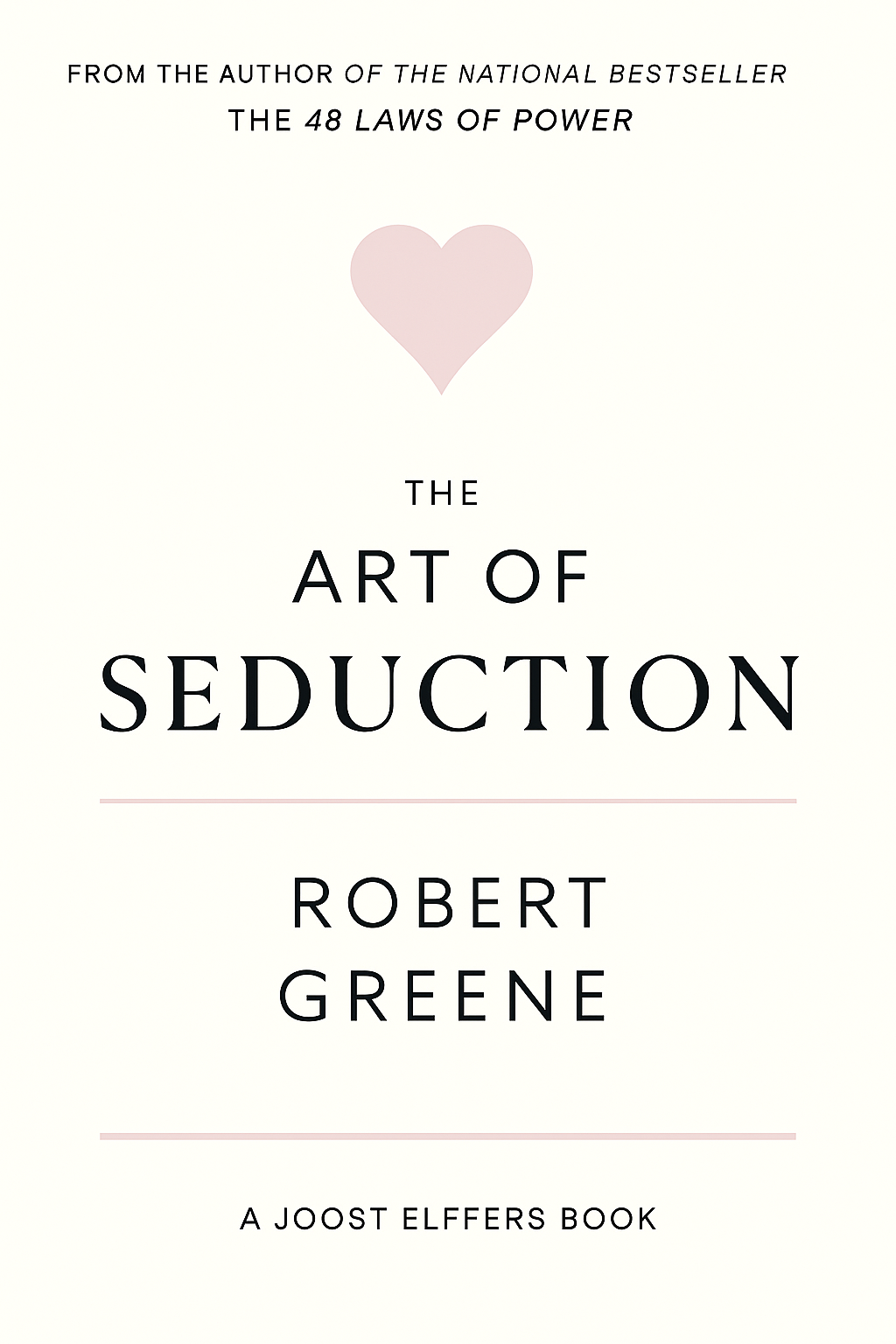
The Art of Seduction by Robert Greene
This nine-lecture audio course walks listeners through Robert Greene's The Art of Seduction, a study of seduction as a game of psychology rather than beauty. The series opens with the book's purpose and historical context, then introduces the seductive archetypes that form its foundation: the Siren, whose visual magnetism draws targets in, and the Rake, whose verbal intensity ignites desire. From there, the course maps the full spectrum of seductive characters, including the Ideal Lover, Dandy, Natural, Coquette, Charmer, Charismatic, Star, and the Anti-Seducer, showing how each persona offers distinct strategic levers depending on the target. The middle lectures turn to the seductive process itself, beginning with the opening moves: choosing the right target, approaching indirectly, creating a false sense of security, and planting intrigue without triggering resistance. Listeners then examine tactics that blur expectations, such as mixed signals, love triangles, and insinuation, drawn from historic case studies. The later lectures cover escalation and consolidation. Language becomes a tool for manufacturing suspense and emotional turbulence, while attention to detail, a poetic presence, and controlled vulnerability deepen influence. Advanced strategies follow: creating perfect illusions, isolating the target, mixing pleasure with pain, and executing bold moves that consolidate power. The final lecture integrates the full framework, reviews the eighteen victim types, and points to the appendices, bibliography, and index for continued study. By the end, listeners have a complete toolkit of persuasion, charm, and psychological strategy drawn directly from Greene's work.
Introducing the Art of Seduction: Foundations and Early Archetypes
Introducing the Art of Seduction: Foundations and Early Archetypes
Welcome to The Art of Seduction by Robert Greene — a book that promises to permanently change how you understand desire, influence, and the hidden mechanics of attraction. Most people assume seduction is just charm or, or manipulation, but Greene insists it's something far older, far stranger, and far more deliberate. And the man making that case? An author who spent years as a translator, magazine editor, and Hollywood writer before turning history's greatest schemers into his life's work.
Before a single lesson begins, the title page is already doing heavy lifting. By choosing the word "art," the author signals that seduction is a craft — something requiring skill, intentionality, and deliberate practice. This framing, in the book's view, pushes seduction past cheap flirtation and into the territory of serious psychological and historical analysis.
And there's ambition here too. The title page positions the work within mainstream literary publishing, declaring it a study of human nature rather than a conventional self-help manual. That's consistent with how the author always works — drawing on historical figures, literary sources, and philosophical traditions to build his arguments. Not exactly a book of pickup lines, in other words.
Now, the acknowledgements — and yes, I know, acknowledgements — but stay with me, because they reveal something important. They open a window onto the intellectual labor behind the book's effortless surface. Greene credits researchers and assistants who helped him gather a vast array of historical examples, biographical accounts, and literary references.
That gathering process was enormous. It meant engaging with centuries of records, memoirs, letters, and literary texts to identify patterns of seductive behavior across cultures and time periods. The, the scale of it — you don't stumble onto Cleopatra's tactics by accident. He also thanks editors, publishers, and intellectual companions who offered critical feedback on early drafts, which tells us the book went through significant revision and refinement.
And the people he thanks aren't random. They include experts in classical rhetoric, psychoanalysis, and the biographies of figures like Cleopatra and Casanova — the very case studies anchoring the main text. So the front matter isn't decoration; it's the scaffolding of the author's persuasive authority.
Here's why that matters. The book makes bold claims about seduction as a form of power and persuasion, and those claims depend entirely on the credibility of the evidence base. By naming his collaborators, the author signals that his principles come from documented historical reality, not speculation — the product of rigorous, sustained research across multiple disciplines.
So what should you take from all this? These opening sections are an orientation, preparing you to engage analytically with everything that follows. Seduction, as the book frames it, is art, strategy, and a historically documented force in social life.
And that framing is the foundation. Everything ahead — the archetypes, the case studies, the, the whole architecture of the book — builds on what these few pages establish. Treat seduction as a subject worthy of rigorous examination, and its applications stretch far beyond the purely romantic. That's the lens. Keep it on.
The Siren and the Rake: Unveiling the First Seductive Archetypes
Last time we saw how the book's opening frames seduction as a serious art, built on documented history rather than cheap tricks. Now the author takes us into the real machinery: the seductive character itself. And here's the first surprise — the author argues that seducers are rarely the most attractive people in the room.
According to the author, seduction isn't a toolbox of techniques; it's an expression of identity. The most powerful seducers in history had a concentrated sense of self and a constructed persona that drew people in almost involuntarily. Most people, the book contends, are repressed, uncertain, and starved for excitement — so anyone projecting confidence and mystery becomes extraordinary by contrast.
That's why the author insists seduction begins with self-reinvention. Before any tactic works, you must develop and project a seductive character, because without that foundation, all strategies are hollow. The character comes first; the tactics are, are almost secondary. From this base, the author builds a taxonomy of archetypes, each exploiting a specific psychological hunger.
The Siren embodies overwhelming femininity and sensory pleasure, targeting the male fantasy of total abandon. Cleopatra is the archetypal case — she used spectacle and sensory overwhelming to captivate Julius Caesar and then Mark Antony. Not bad for someone who, by most accounts, wasn't a classical beauty.
The Rake works differently — he projects reckless, devoted desire that makes women feel irresistible. Casanova exemplifies this type; his total, consuming attention made every woman feel she was the only one. That's the mechanism — not looks, not wealth, but the sheer intensity of focus.
The Ideal Lover studies a target's dreams and reflects them back perfectly, while the Dandy defies conventional gender expectations. By blending masculine and feminine qualities, the Dandy offers vicarious liberation from rigid social roles. Beau Brummell, Lou Andreas-Salomé, and Oscar Wilde all made others feel they had to earn the Dandy's approval — not the reverse.
The Natural disarms through apparent innocence and spontaneity, triggering nostalgia in adults conditioned to suppress those qualities. Charlie Chaplin's vulnerable, resilient screen persona and Josephine Baker's uninhibited presence both bypassed adult defenses and evoked protective tenderness. The Coquette, by contrast, masters strategic withdrawal — offering warmth, then pulling back to create cycles of hope and frustration.
Josephine de Beauharnais kept Napoleon in perpetual longing through emotional unpredictability, and Andy Warhol's famous blankness made people compete for his attention. The author is clear that the Coquette's power depends on genuine self-mastery — they must suppress their own needs and never fully surrender. Never fully — that's the whole engine.
The Charmer works through validation instead of tension — listening, flattering, and never arguing or criticizing. Benjamin Disraeli made Queen Victoria feel intelligent and appreciated, which gave him enormous political influence. Fulfill someone's need to feel significant, and you gain power.
The Charismatic projects an inner certainty so compelling that others feel they're in the presence of something larger than ordinary life. Napoleon, Joan of Arc, and John F. Kennedy radiated conviction that made followers project their own ideals onto them. The Star, finally, cultivates a dreamlike, otherworldly quality — Marlene Dietrich stayed familiar enough to feel known, yet mysterious enough to sustain fascination. Then comes the warning: the Anti-Seducer. This counter-archetype repels through self-absorption, insecurity, over-eagerness, neediness, and the habit of moralizing or lecturing. Even one or two such traits, the author warns, can undermine an otherwise powerful presence — which is why recognizing them in yourself matters as much as cultivating seductive qualities. The unifying framework is psychological: each archetype activates a deep need — lost innocence, the desire to be understood, the wish to escape ordinary reality. The author insists these characters aren't simply born; they can be cultivated through deliberate attention to your own psychology. Identify which type you naturally resemble, then amplify it.
That's the first step — becoming the person who fulfills the needs others secretly harbor.
From Ideal Lovers to Anti‑Seducers: Mapping the Spectrum of Seductive Personas
Last time we met the archetypes, from the Siren's pull to the Coquette's strategic retreat. Today the author stretches that cast across a full spectrum. At one end sits the Charismatic, radiating power; at the other, the Anti-Seducer, quietly repelling everyone in the room.
The author argues that charisma is not some mystical, inborn gift. It's a constructed quality, built from specific behaviors practiced until they become second nature. Certainty is the core — a self-belief so complete it radiates outward and pulls people in.
Napoleon Bonaparte projected absolute confidence even amid military uncertainty, and John F. Kennedy made every person in a room feel like the most important one present. The author traces the mechanics carefully. A sense of mission draws directionless people toward anyone who seems to have purpose.
There's also focused attention that makes others feel specially chosen, plus a theatrical streak — dramatic gestures, compelling rhetoric. And underneath it all runs a barely concealed erotic charge, making even ordinary interactions feel exciting. Physical presence matters too; the Charismatic moves and speaks as if occupying a different plane of existence.
But the author is frank about the dark side. Cult leaders, demagogues, and con artists like Charles Manson deployed these same qualities to devastating effect. Followers became dependent on the Charismatic's validation just to feel oriented in the world.
The author's lesson is analytical, not moral — understand charisma and you can both deploy it and resist capture by it. His prescription for cultivating it: eliminate visible self-doubt, develop a cause larger than yourself, and practice focused attention on others. Certainty, performed consistently, becomes contagious.
Now the pivot — the opposite end of the spectrum. The Anti-Seducer is the person whose behavior actively repels rather than attracts. The author contends that understanding what kills seduction matters just as much as knowing what creates it.
Anti-seductive qualities are often unconscious and deeply ingrained, rooted in an inability to get outside one's own ego. The author catalogues a whole taxonomy of types. The Brute relies on force; the Suffocator clings; the Moralizer lectures; the Tightwad is stingy with money, time, and spirit.
The Bumbler creates anxiety through awkwardness, and the Windbag talks endlessly without listening. The Reactor takes everything personally, the Vulgarian ignores social codes, and the Preacher imposes their values on everyone. Each type fails at the same task — making the other person feel special, attended to, desired.
Here's the crucial insight: anti-seductive behavior is usually invisible to the person committing it. The Suffocator believes their attention is flattering; the Windbag assumes their stories are interesting. The author traces these habits back to insecurity and fear — fear of abandonment, of disrespect, of moral chaos.
Those fears turn inward and make the person a burden rather than a pleasure. The corrective is a social mirror — the ability to see yourself as others see you. Seduction is as much subtraction as addition.
Removing qualities that create discomfort or boredom is just as powerful as adding charm, mystery, or wit. Even one or two anti-seductive traits, the author warns, can undermine an otherwise attractive person. So yes — the, the self-audit comes before the charm offensive.
The unifying framework is simple: seduction is an outward-directed art. The Anti-Seducer is trapped in ego, anxiety, and need; the Charismatic projects outward so completely that their certainty becomes a gift. The author also advises identifying Anti-Seducers in your own life and disengaging, because they drain the energy your own presence requires.
His method is diagnostic and practical: honestly assess your behavior, eliminate what repels, then cultivate attentiveness, generosity, restraint, and genuine interest in others. Seductive character isn't a fixed trait — it's a set of learnable signals. Your position on the spectrum depends on one thing: willingness to subordinate ego to the other person's experience. That's the whole map.
Laying the Groundwork: The Initial Moves of the Seductive Process
Last time we mapped the full spectrum, from the Charismatic's radiance to the Anti-Seducer's quiet repulsion. Today we slow down and study the Charismatic alone. Because the author's claim here is bold: charisma isn't a mystical gift you're born with. It's a, a learnable set of behaviors, attitudes, and projections. Cultivated, not conferred.
The author argues that most people live with deep uncertainty about their own worth and direction. The Charismatic fills that void by offering borrowed certainty, a vicarious experience of conviction. Napoleon, John F. Kennedy, Joan of Arc, Rasputin, various religious prophets, all radiated this quality. Followers felt they were participating in something larger than ordinary life.
So how does it actually work? The author breaks the mechanics into consistent components. First, the appearance of a special destiny, the Charismatic acts as though chosen by fate. That self-perception spreads to everyone around them. Second comes bold, decisive action, especially in moments of crisis, which reads as fearlessness and proof of exceptional nature.
Third is theatrical presence, and this is where it gets interesting. The Charismatic understands that life is a kind of performance, carefully managing voice, gesture, timing, posture, and appearance. It's, it's stagecraft applied to daily existence. Fourth is emotional attunement, communicating directly to emotions rather than intellect. Napoleon could make every soldier he addressed feel singularly important. Rasputin used his intense gaze and spiritual boldness to entrance the Russian aristocracy.
Then there's the component people miss: strategic withdrawal. By not being constantly available, the Charismatic makes their presence feel like a gift. Absence intensifies the desire for contact. Mystery is not decoration; it's fuel. The author draws a key distinction here between genuine and manufactured charisma. The most effective Charismatics genuinely believe in their own specialness and mission, even if that belief was partly self-constructed over time. Audiences sense authenticity, and that internal conviction forms the foundation for everything else.
The practical strategies are concrete. Project self-belief even in moments of doubt, and develop a cause larger than personal gain. Maintain composure under pressure, use sustained eye contact, move deliberately, and reveal yourself selectively to preserve mystery. And the warnings? Overexposure, neediness for approval, and over-explaining, all of these erode the impression of self-sufficiency that charisma requires. The author is blunt about what kills the effect.
But there's a darker dimension, and the author doesn't shy from it. Charismatics can become intoxicated by their own myth as followers' adoration reinforces an inflated self-image. Their certainty can curdle into fanaticism. Followers, in turn, may surrender their critical faculties and become emotionally dependent on the Charismatic for meaning. Cult leaders and demagogues exploit rather than genuinely fulfill the human need for belonging.
Notably, Charismatics often emerge during periods of social anxiety and upheaval, when people are hungriest for direction. That makes the archetype especially potent in political and religious contexts. Hunger amplifies the signal. The author's framing is deliberately dual-purpose. Understanding these mechanisms lets you cultivate charismatic qualities yourself, and recognize when someone else is using them on you. The Charismatic operates on perhaps the deepest human need: to believe in something greater than oneself, and to feel connected to the person who embodies it.
So where does this leave you? The author's answer is practical. Charisma, in the book's view, is a discipline, something you build through repetition until the performance becomes indistinguishable from the person. The, the mask, over time, becomes the face.
Start with the internal work, the author says. Genuine belief in your own mission must come first, because audiences detect manufactured conviction instantly. Then practice the externals: composure, deliberate movement, sustained eye contact, and selective self-revelation. And, and this matters, resist the urge to explain yourself. Over-explaining signals doubt, and doubt is the one thing charisma cannot survive.
The author also wants you alert to the reverse application. When a leader radiates absolute certainty during anxious times, ask whose need is actually being served. Certainty offered too freely is usually a hook. The same mechanisms that inspire can capture, and the author makes no apology for that duality. Master the qualities, but keep your critical faculties intact. That, the book insists, is the real groundwork.
Crafting Desire: Mixed Signals, Triangles, and the Art of Insinuation
Last time we saw charisma as a discipline, something built through practice until the mask becomes the face. Today the author widens the lens on the Charismatic, the most powerful figure in his whole taxonomy. And his central claim is striking: charisma isn't a mystical gift, it's a, a learnable projection of absolute self-belief.
The author argues that most people live plagued by self-doubt, alienation, and a hunger for meaning. The Charismatic's unwavering conviction acts like a gravitational force, pulling in anyone who feels adrift. Followers describe the experience in near-religious terms, feeling elevated, chosen, transformed just by proximity.
Napoleon Bonaparte serves as the paradigmatic example throughout. He combined an aura of destiny with a remarkable gift for making individual soldiers feel personally seen, even in crowds. That's the trick, creating personal connection at, at scale.
The author identifies several components working together. A sense of mission that transcends ordinary self-interest, plus the ability to make others feel uniquely understood and special. Physical presence matters too: deliberate speech, unwavering eye contact, authoritative body language.
Then there's the theatrical dimension, and the author insists this is essential. The Charismatic stages appearances, exploits symbols and spectacle, and calibrates behavior to the awareness of being watched. They mirror their audience's desires and frustrations, positioning themselves as the, the solution to the very needs they evoke.
But the author is equally attentive to the darker dimensions. The same certainty that inspires can tip into fanaticism, and followers can surrender their critical judgment in exchange for emotional comfort. The Charismatic who believes their own mythology risks losing touch with reality, while followers face disillusionment when human flaws surface.
Charisma is also fragile, and the author is blunt about what breaks it. Overexposure, revealing too many ordinary limitations, or appearing desperate for approval all undermine the spell. The moment a Charismatic seems needy, the magic dies.
So the practical guidance is consistent throughout. Identify a genuine source of inner conviction, develop a purpose larger than yourself, and project that belief physically and vocally with discipline. The most effective Charismatics genuinely believe what they project; those who merely perform confidence are eventually exposed.
In the book's framing, charisma is ultimately about creating a powerful emotional experience in others. You make them feel inspired, elevated, part of something greater, which is precisely what makes this archetype so potent. Certainty, genuinely held, becomes contagious. That's the craft, and the author says it can be learned.
So where does that leave the, the aspiring seducer? The author's answer is consistent: start inside. Identify a genuine source of inner conviction, because audiences detect manufactured confidence almost instantly. Then develop a purpose larger than yourself, something that transcends ordinary self-interest. That mission becomes the gravitational core everything else orbits around.
Next comes the external discipline, and the author treats this as, as stagecraft. Project belief physically: deliberate speech, unwavering eye contact, authoritative movement. Reveal yourself selectively, because mystery is fuel, not decoration. And resist the urge to explain, over-explaining signals doubt, and doubt kills the spell.
The author is equally blunt about fragility. Overexposure erodes the impression of self-sufficiency that charisma requires. Revealing too many ordinary limitations, or seeming desperate for approval, breaks the effect entirely. The moment neediness shows, the magic dies.
And the darker dimensions deserve honest attention. The same certainty that inspires can curdle into fanaticism, the author warns. Followers may surrender their critical judgment in exchange for emotional comfort and borrowed meaning. The Charismatic who believes their own mythology risks losing touch with reality, while followers face disillusionment when human flaws inevitably surface.
The takeaway is dual-purpose, and the author makes no apology for that. Understanding these mechanisms lets you cultivate charismatic qualities yourself. It also lets you recognize when someone else is, is deploying them on you. Certainty offered too freely is usually a hook. Master the craft, but keep your judgment intact.
Escalating the Game: Temptation, Suspense, and the Power of Words
Last time we watched the Charismatic project certainty until the mask became the face. Today the author shifts from character to campaign, from who you are to what you actually do. And his central claim is striking: seduction is never spontaneous, it's a, a calculated sequence of moves.
The author argues the human mind resists direct assault but falls easily to gradual, indirect influence. So the seducer appears passive and undemanding while engineering the target's emotional states. The target must feel like they are the one doing the pursuing.
The process begins with choosing the right victim, someone vulnerable, dissatisfied, or hungry for adventure. Early moves involve presence, distinction, and an air of mystery. Then come mixed signals, interested but not desperate, available but never eager.
That ambiguity keeps the target mentally engaged, constantly interpreting intentions. They project their own desires onto the seducer, who seems to embody whatever they crave most. It's, it's a mirror dressed up as a person.
The engine of the whole campaign is rhythm, advance and retreat, heat and cold. The author contends security is the enemy of desire, because comfort kills the spell. Strategic absence after intense presence forces the target to fill the void with obsessive thought.
This mirrors intermittent reinforcement, rewards given inconsistently hold far more power than reliable ones. Casanova, Cleopatra, and history's great courtesans all withdrew periodically, creating cycles of longing. The withdrawal must feel ambiguous, never hostile, so the target redoubles their efforts to regain attention.
As things deepen, the author introduces shared transgression, forbidden situations that bond through complicity. Manufactured memories, trips, crises, intimate secrets, build a private world isolating the pair from outside influence. Regression works too, appealing to childhood desires for unconditional love to bypass adult rationality.
Physical escalation is a matter of timing, too fast destroys the fantasy, too slow lets rational defenses return. Each advance should feel natural, culminating in a moment where surrender seems like the target's own choice. That illusion of agency is everything.
Words carry enormous weight in the later stages, the author insists. Generic flattery fails, but flattery reflecting the target's idealized self-image makes them feel uniquely seen. The, the difference is between a compliment and a revelation.
The author warns against the classic failures: revealing too much, neediness, and complacency after conquest. The process must continue even after success, because fascination requires maintenance. Most critically, the seducer must never lose detachment or become genuinely dependent.
The moment the seducer loses strategic clarity, the power dynamic shifts and the seduction fails. In the book's framing, this is a psychological art demanding empathy, patience, and creativity. Subordinate your ego to the target's fantasies, and the game is yours. That's the craft, and it never stops being deliberate.
So where does this leave you, the, the listener trying to apply all this? The author's answer is that the campaign never truly ends. Fascination, once won, requires constant maintenance, and the moment you relax, the spell starts to fade.
Start with the target's selection, because the author insists this is where most people fail. Choose someone already dissatisfied, already hungry, because contentment resists seduction entirely. Then approach indirectly, concealing your intentions behind friendliness or, or apparent indifference.
Once contact is made, the author says, manage the emotional temperature deliberately. Heat things with attention and flattery, then cool them with withdrawal and mystery. Security is the enemy of desire. The target who feels certain of you stops thinking about you, and thought is what you need.
The push-pull rhythm works because intermittent rewards hold far more power than reliable ones. Casanova and history's great courtesans withdrew periodically, creating cycles of longing that kept patrons returning. The withdrawal must feel ambiguous, never hostile, so the target wonders what they did wrong.
As things deepen, the author recommends shared transgression, forbidden situations that bond through complicity. Manufactured memories, trips, crises, intimate secrets, build a private world isolating the pair from outside voices. Regression works too, appealing to childhood desires for unconditional love to bypass adult rationality.
The final takeaway is sobering, and the author makes no apology for it. Seduction demands empathy, patience, and the discipline to subordinate your ego to another person's fantasies. Lose detachment, and you lose everything. That's the craft, and it never stops being deliberate.
Deepening Influence: Detail, Poetic Presence, and Strategic Vulnerability
Last time we saw the campaign never truly ends, that fascination, once won, demands constant maintenance. Today the author pushes deeper into the, the far harder work of sustaining desire. His central claim is striking: seduction is not a straight line toward a goal but a cycle that must be endlessly renewed.
The author argues that once attraction exists, a new danger appears, the target growing complacent and taking you for granted. His tools for this are calculated absence, manufactured obstacles, and a strategic alternation of pain and pleasure. The psychological foundation is simple: people value what they must work for, and comfort is the enemy of passion.
Constant availability, the author contends, eliminates the very anxiety that fuels longing. So the seducer alternates warmth and coldness, attention and neglect, in a rhythm the target cannot predict or control. When targets fear losing your interest, they, they start pursuing you, and the power dynamic reverses in your favor.
Manufactured jealousy works the same way, introducing a real or implied rival to trigger competitive instincts. But the author warns that too much jealousy produces resentment rather than renewed desire. It's, it's a seasoning, not a main course.
The author also stresses the danger of apparent success, the moment many seducers relax and let everything stagnate. Mastery means treating each phase as a new seduction, with fresh surprises the target cannot categorize. Scarcity itself signals high value. Doubt, distance, and apparent indifference make the target work harder for your approval, and their own emotional investment convinces them you are worth having.
The second major theme is isolation, which the author presents as a critical phase of the process. To fully capture someone's attention, he argues, you must separate them from their normal environment and support systems. People anchored by familiar faces and routines stay resistant to transformation.
The author distinguishes physical isolation, literally removing the target through travel or exclusive settings, from psychological isolation. Psychological isolation is subtler: making the target feel that no one else truly understands them as you do. Casanova, no surprise here, used unfamiliar travel constantly to deepen his seductions.
The mechanism, as the author sees it, is that our sense of self is built through social mirrors. Remove or distort those mirrors and people regress to a childlike state, eager for approval and willing to surrender defenses. Cults exploit this exact mechanism, relocating recruits and cutting off outside contact.
Yet the author repeatedly warns that isolation must be gradual and subtle, never overt. The target must feel they are choosing to withdraw, that the connection is simply too compelling to resist. The outside world must fade by comparison. Together these ideas reinforce the book's thesis: seduction means actively controlling another person's emotional state, and that control must be maintained, never assumed.
The author frames isolation not as cruelty but as a calculated restructuring of the target's world. The goal is an intense, exclusive emotional reality where your presence feels indispensable. The outside world must feel distant by comparison.
The method relies on planting seeds of doubt about other relationships, subtly highlighting their inadequacies. You position yourself as uniquely attuned to the target's deeper needs. Over time, they, they withdraw voluntarily, because you've made that world seem less vivid.
The author's broader thesis comes into focus here: seduction means controlling another person's emotional and psychological state. That control covers their expectations, fears, desires, and social environment. And it must be actively maintained, never assumed.
So what does this mean for you, the listener trying to absorb all this? The author's answer is that desire dies in comfort and thrives under tension. Security is the enemy of passion.
The practical takeaway is a discipline of rhythm: alternate presence with absence, warmth with coldness, never predictably. Treat every phase as a new seduction, with surprises the target cannot categorize. And remember, the, the moment you relax, the spell starts to fade. That's the craft, and it never stops being deliberate.
Mastery of Manipulation: Illusion, Isolation, and the Bold Move
Last time we saw isolation as a calculated restructuring of the target's world, never cruelty, always control. Today the author completes that arc with three connected moves. His claim is striking: isolation sets the stage, the bold move capitalizes, and withdrawal keeps desire alive after.
The author argues people are anchored to their identities through their social environments. Friends, family, and routines act as mirrors reflecting back who they are and what they value. Those anchors make people resistant to transformation, so the seducer's task is severing them, physically or psychologically.
The methods are practical, and the author is blunt about them. Gradually monopolize the target's time so pleasantly that withdrawal from their social world feels voluntary. Undermine their confidence in other relationships through gentle insinuation, never, never overt criticism. Travel and novel environments strip away the contextual cues that reinforce the habitual self.
The mechanism, as the author sees it, is that humans construct their sense of self through social interaction. Remove those reference points and the self becomes fluid, uncertain, and hungry for new definition. That's when the seducer steps in, offering a compelling alternative identity, and, and yes, cults work exactly this way.
But the author warns that isolation must never feel coercive or confining. If the target senses manipulation, the strategy backfires catastrophically. The narrowing of their world must feel like an elevation. An exciting escape into a private realm that feels exclusive, not a restriction.
Then comes the transition from psychological influence to physical consummation, where many seducers fail. Moving too quickly destroys accumulated tension, while hesitating too long lets desire cool. Success requires recognizing the moment, signaled by softening resistance, lingering gazes, and subtle physical openness.
The tactical principles are concrete, and the author lists them carefully. Create an environment where the target feels no pressure, and use indirect physical contact to accustom them to touch. Project confidence and inevitability, because hesitation, well, hesitation is fatal here. The central challenge is the target's internal conflict between desire and social restraint.
The author's solution is giving psychological permission, framing the encounter as natural or fated rather than engineered. He also warns against talking too much, since words reawaken the rational mind and let doubt resurface. Atmosphere and touch must carry the moment instead. Consummation is not the end but a new beginning, and its handling determines whether the target draws closer or withdraws.
The final strategy addresses a fundamental paradox the author keeps returning to. The more intensely you pursue someone, the more likely they are to retreat, because desire is rooted in absence and mystery. A cold person who was never warm creates no longing, it's the formerly attentive seducer whose absence becomes unbearable. The psychology draws on scarcity and intermittent reinforcement, where unpredictable rewards create stronger attachment than consistent ones.
The discipline required is internal, and the author is blunt about what breaks the effect. The seducer must appear occupied and self-sufficient during withdrawal, never sulking or obviously waiting. Timing matters too, absence that's too abrupt can insult, and, and too prolonged simply loses them.
Together these three strategies form a coherent progression, the author insists. Isolation creates the conditions for total emotional absorption, and the bold move capitalizes on that vulnerability. Strategic withdrawal keeps the dynamic of desire alive beyond consummation. The target's own longing becomes the engine that drives everything forward.
So where does this leave you, the listener holding all three strategies at once? The author's answer is that these moves form one continuous arc, not separate tricks. Isolation softens the target, the bold move seizes the moment, and withdrawal renews the tension afterward.
Notice the common thread running through all three, because the author is explicit about it. Each strategy works by managing what the target cannot see, never by force. The, the narrowing of their world, the framing of the moment, the timing of your absence, all of it stays invisible.
The author also insists these are dual-purpose tools, and he makes no apology for that. Understanding the mechanics lets you recognize when someone deploys them on you. A world that keeps shrinking around you is rarely an accident.
The deeper lesson is about identity itself, and this is where the book gets genuinely unsettling. Your sense of self is socially constructed, which means it can be socially dismantled. Cults, charismatic leaders, and skilled seducers all exploit the, the same seam.
The practical takeaway is vigilance, applied in both directions. Watch for the pleasant monopolization of your time, the gentle insinuations about your friends. And ask yourself who benefits when your world gets smaller. That's the craft, and now you can see it coming.
Final Strategies, Reflections, and Resources: Completing the Seductive Mastery
Last time we saw isolation soften the target, the bold move seize the moment, and withdrawal renew the tension. Today the author closes the arc with his final strategies. His claim is striking: constant presence breeds familiarity, and familiarity, well, familiarity kills desire.
The author argues that a seducer who is always accessible gets taken for granted, and the target's imagination simply stops working. His counterintuitive solution is the calculated pull-back, becoming cooler and less available after a period of intense warmth. This withdrawal creates a psychological vacuum the target rushes to fill with anxiety, longing, and obsessive thought.
The mechanism exploits a fundamental principle, people value what they fear losing, and they desire most what has been partially withheld. Crucially, the reversal shifts the power dynamic, so the target begins pursuing the seducer, seducing in reverse. It's, it's the whole game flipped on its head.
But the author stresses that timing and subtlety are everything here. The pull-back must come after genuine emotional investment, when the target has something real to lose, but before routine settles in. Too early, they move on; too late, and absence produces relief instead of, of longing.
The withdrawal itself must stay understated, a slightly cooler tone, reduced availability, a hint of interest elsewhere. If the maneuver becomes obvious or theatrical, the manipulation is exposed and trust collapses. The author also warns against overcorrection, because prolonged cold absence tips from longing into genuine indifference or resentment.
The ideal is a rhythmic oscillation between presence and absence, warmth and coolness, that keeps the target perpetually off-balance. This demands real internal discipline, resisting the urge to reassure a distressed target and tolerating the discomfort of silence. Not coldness, but controlled awareness. The seducer must read the target's psychological state accurately at every stage.
The author then expands from psychological distance to physical and environmental control. People are deeply shaped by their surroundings, so removing a target from their normal environment makes them far more susceptible to suggestion. Isolation here is both physical and psychological, cutting off the voices that counsel caution.
The seducer becomes the primary reference point for reality and comfort, whether through travel, private retreats, or exclusive settings. Building on this, the author treats the seductive environment as an active participant rather than a backdrop. Think like a director, he says, orchestrating lighting, music, scent, and, and location itself.
The model is Cleopatra, whose elaborate spectacles used sensory overload to overwhelm rational resistance. Novelty makes people emotionally alive and impressionable, and those intense feelings become associated with the seducer who created them. The environment does the seducing for you.
Across all these strategies, the author returns to several unifying principles. First, the target must always feel they are choosing freely, even as the seducer engineers every circumstance. The moment manipulation becomes visible, resistance hardens and the spell breaks.
Second, seduction is fundamentally theater, the seducer both actor and director, shaping the emotional arc through every gesture and silence. The creation of a private world, a conspiratorial bond felt only by the two participants, deepens attachment profoundly. Losing the seducer then means losing something, something irreplaceable.
Finally, the author identifies patience as the mark of the master. The most dangerous mistake at this stage is rushing toward resolution before desire has been fully cultivated. Sustained tension, strategic uncertainty, and the willingness to withhold comfort are what keep desire alive. And notice the dual purpose running through everything, because the author makes no apology for it. Understanding these mechanisms lets you recognize when someone deploys them on you. Ask who benefits when your world shrinks.
That's the mastery, and now you can see the whole craft from both sides.