Franco and the Iron Curtain of the Mediterranean
The Rock's Decree: A History of the Gibraltar Treaty
The Rock and the Signature: An Introduction to the Treaty of Utrecht
Walls of Defiance: The Early Challenges to Article X
The Strategic Pivot: Gibraltar in the Age of Sail
The Great Siege: Testing the Limits of Law and Endurance
Franco and the Iron Curtain of the Mediterranean
The People's Will: 1967 and the Conflict of Rights
The European Layer: Integration and Friction
Brexit and the Unfinished Parchment

Transcript
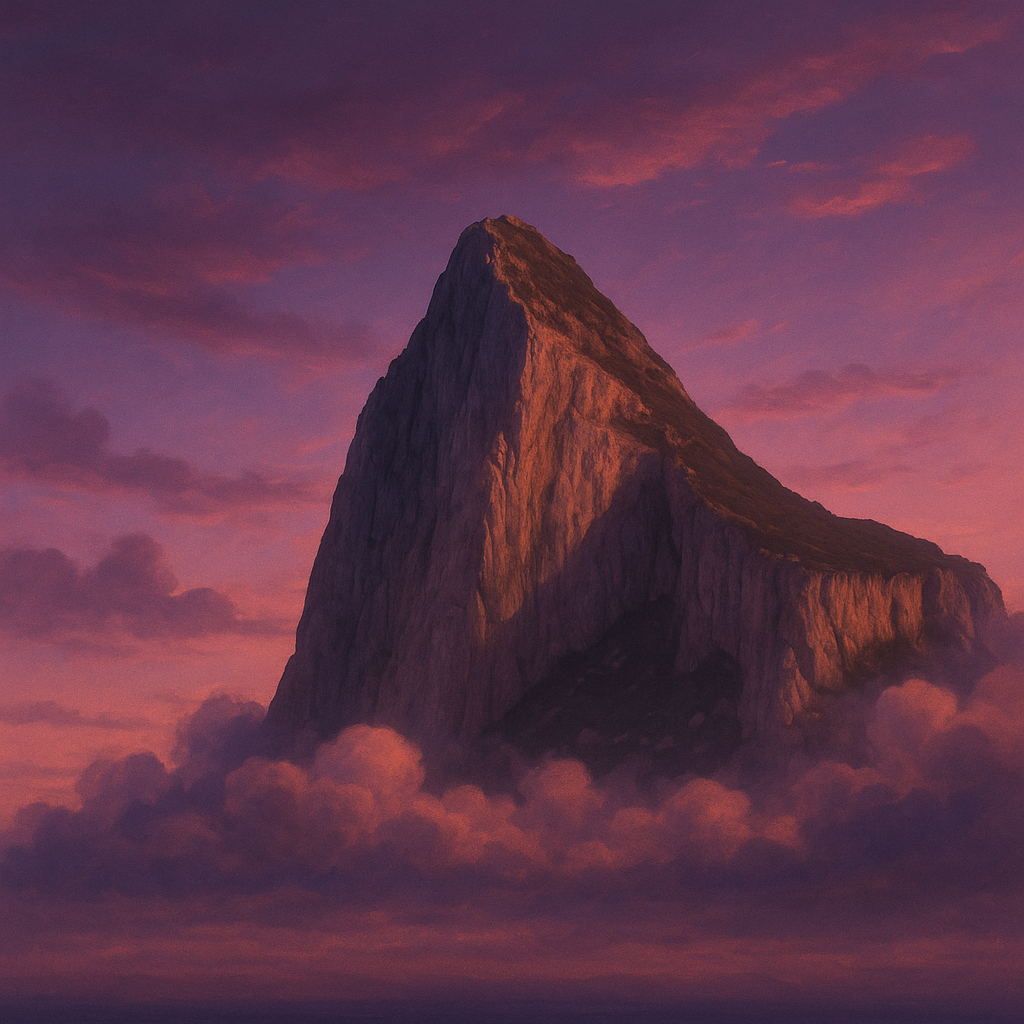
Francisco Franco seriously considered invading Gibraltar by force — then abandoned the plan, not out of principle, but because the Rock's defenses were simply too formidable and the risks to Spain's Canary Islands and Morocco too great. Historian Paul Preston, whose biography of Franco remains the definitive English-language account, argues that this calculated restraint defined Franco's entire approach to Gibraltar: when brute force was unavailable, he reached for the treaty instead. While the Great Siege of 1779 to 1783 had already made Gibraltar non-negotiable for Britain, Franco's era introduced a new dynamic with his strategic use of the border closure as a tool of economic and social pressure. Born in 1892, he rose through Spain's Army of Africa in Morocco, negotiated with Nazi Germany and Fascist Italy for aircraft to airlift 30,000 troops across the Strait in 1936, and by October 1, 1936, had been appointed Generalísimo and head of state. The Civil War ended April 1, 1939, at a cost of roughly 500,000 lives. Franco met Hitler at Hendaye in 1940 and demanded Gibraltar among his territorial prizes for joining the Axis. Hitler refused the terms; he reportedly said he would rather have teeth pulled than negotiate with Franco again. So Franco sent the Blue Division of Spanish volunteers to fight Germany's war on the Eastern Front — enough cooperation to stay useful, not enough to trigger Allied retaliation. Gibraltar sat just across the Strait, visible from Spanish soil, a daily reminder of the 1713 cession Franco could not undo by force or alliance. The 1960s gave Franco a new weapon: the United Nations decolonization framework. Spain argued before the UN that Gibraltar was a colonial remnant, that Article X of Utrecht was incompatible with modern self-determination principles, and that the territory must be returned. The UN General Assembly passed Resolution 2231 in 1966, calling on Britain and Spain to negotiate. Britain's response was to put the question directly to Gibraltarians. The 1967 referendum produced a result that demolished Spain's argument — 12,138 votes to remain British, 44 for integration with Spain. Franco's strategic closure of the border on June 9, 1969, had profound socio-economic impacts. Approximately 4,800 Spanish workers lost their jobs, families were divided, and communication lines severed, lasting until 1985. Rather than breaking Gibraltarian resolve, the blockade forged something Franco had not anticipated: a distinct, defiant Gibraltarian identity, neither fully British nor Spanish, shaped by isolation and self-sufficiency. Economically, Gibraltar adapted by expanding port services, financial sectors, and eventually gaming and tourism, fostering a resilient economy independent of Spain. Neil, the border closure that was meant to strangle the Rock instead taught it to breathe on its own. Franco died in 1975 with Gibraltar still British, the Treaty of Utrecht still intact, and a population more determined than ever to stay exactly where they were. His greatest miscalculation was treating a legal document as a lever and a border as a weapon — and discovering that both, in Gibraltar's case, cut the wrong way.