
Transcript
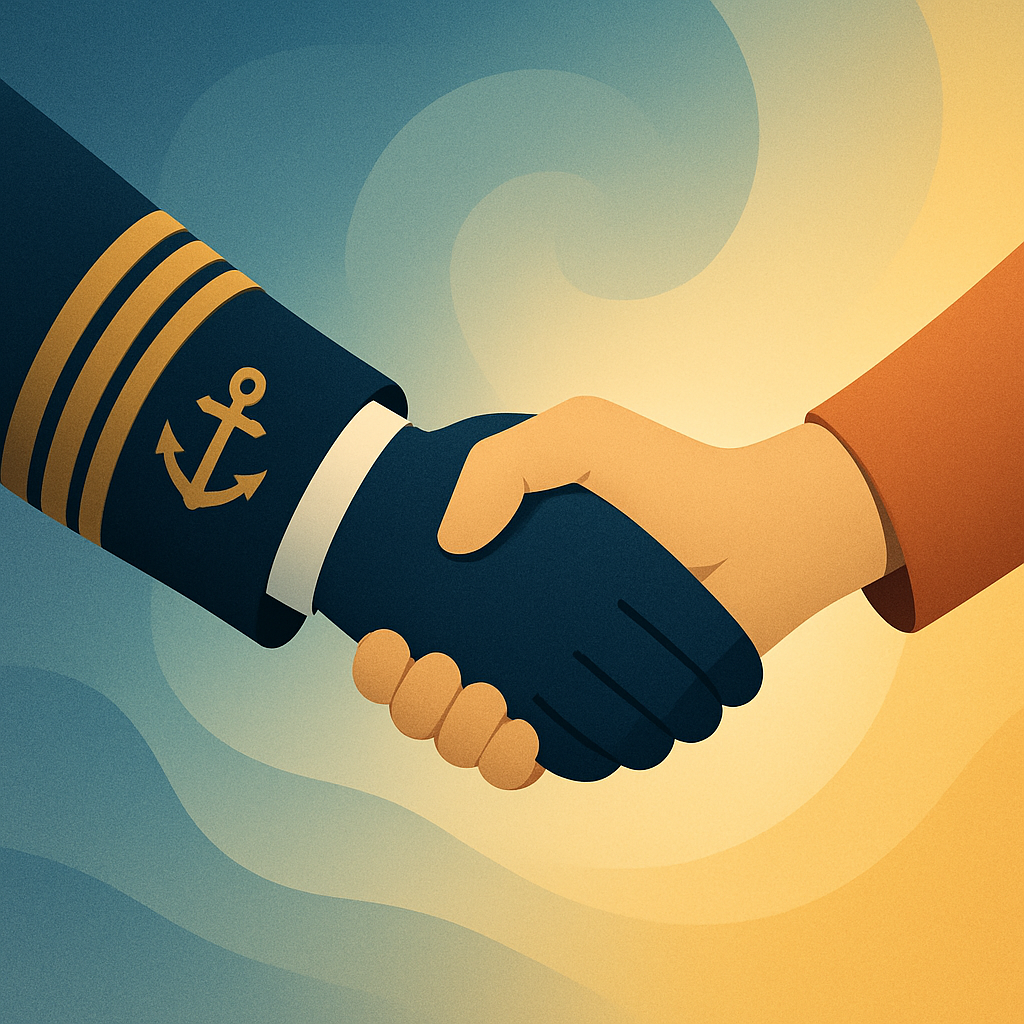
Every time you pick up a phone and say "hello," you are unknowingly repeating a choice made by one man in 1877. Not Alexander Graham Bell, the person who actually invented the telephone. The other guy. Thomas Edison wrote a letter dated August 15, 1877, to the president of a telegraph company, and in it he suggested "hello" as the word people should use when answering the new device. That single letter, documented by NPR and confirmed by multiple historical sources, quietly rewired the social habits of an entire civilization. Now, here is where it gets genuinely strange, Miquel. Before the telephone existed, "hello" was not a greeting at all. Think of it less like a salutation and more like a shout across a field. The word appeared in mid-19th century texts spelled as "Hullo" or "Halloa," and its job was simple: attract attention from a distance. It carried the same energy as yelling "Hey!" at someone far away. It was abrupt. It was loud. It was not the kind of thing a well-mannered person said to a neighbor on the street. Formal street greetings leaned on phrases rooted in courtesy and social rank. "Hello" had none of that polish. It was a noise, not a nicety. Bell himself understood this distinction perfectly, and he rejected Edison's suggestion entirely. The key idea here is that Bell had a competing vision for telephone etiquette. He was so committed to the maritime greeting "Ahoy-hoy," borrowed from sailors hailing other ships, that he used it for the rest of his life. For Bell, the telephone was a kind of long-distance vessel crossing invisible waters, and "Ahoy" fit that mental model. It had precedent. It had dignity. It signaled that something important was about to be communicated. Edison disagreed. He wanted something short, sharp, and impossible to mishear on a crackling early telephone line. "Hello" won on pure practicality. The battle was not just between two inventors. It played out in the very first telephone directories, Miquel. The first telephone exchange in New Haven, Connecticut, published a manual in 1878 that listed "Hulloa" as the official greeting for subscribers. That is a documented institutional endorsement of the Edison camp, even if the spelling still wobbled. The BBC has reported on how these early manuals shaped user behavior at a moment when nobody had any instinct for how to operate a telephone. People genuinely did not know what to say. The directory told them. And what it told them, in that slightly archaic spelling, was a direct descendant of Edison's August 1877 suggestion. For example, a subscriber in New Haven opening that manual for the first time would have had no cultural script to fall back on. The manual was the script. That means the standardization of "hello" was not organic. It was instructed. The takeaway here is sharper than it first appears. You did not inherit "hello" from centuries of human tradition. You inherited it from a competitive disagreement between two inventors, resolved not by elegance or history but by the practical demands of a noisy new technology. Bell's "Ahoy" was arguably more poetic, more grounded in real maritime use, and championed by the man who built the device. It lost anyway. Edison's word was blunt, easy to hear, and easy to repeat. Remember this the next time you answer a call: the word on your lips is a relic of a specific industrial moment, a letter written on August 15, 1877, that quietly defeated a sailor's greeting and became the most spoken word in the modern world. That is the Edison influence, and it is still running, every single day, through every phone call you make.