Shadows of the Fin De Siècle: The Occult Revival
The Veiled Canvas: A History of Occult Aesthetics
The Architecture of Mystery: Why the Occult Looks the Way It Does
Alchemical Art: The Laboratory as Theater
The Masonic Template: Geometry of the Enlightenment
Shadows of the Fin De Siècle: The Occult Revival
Celluloid Sorcery: The Occult on the Silver Screen
The Neon Sigil: Esoterica in the Digital Age

Transcript
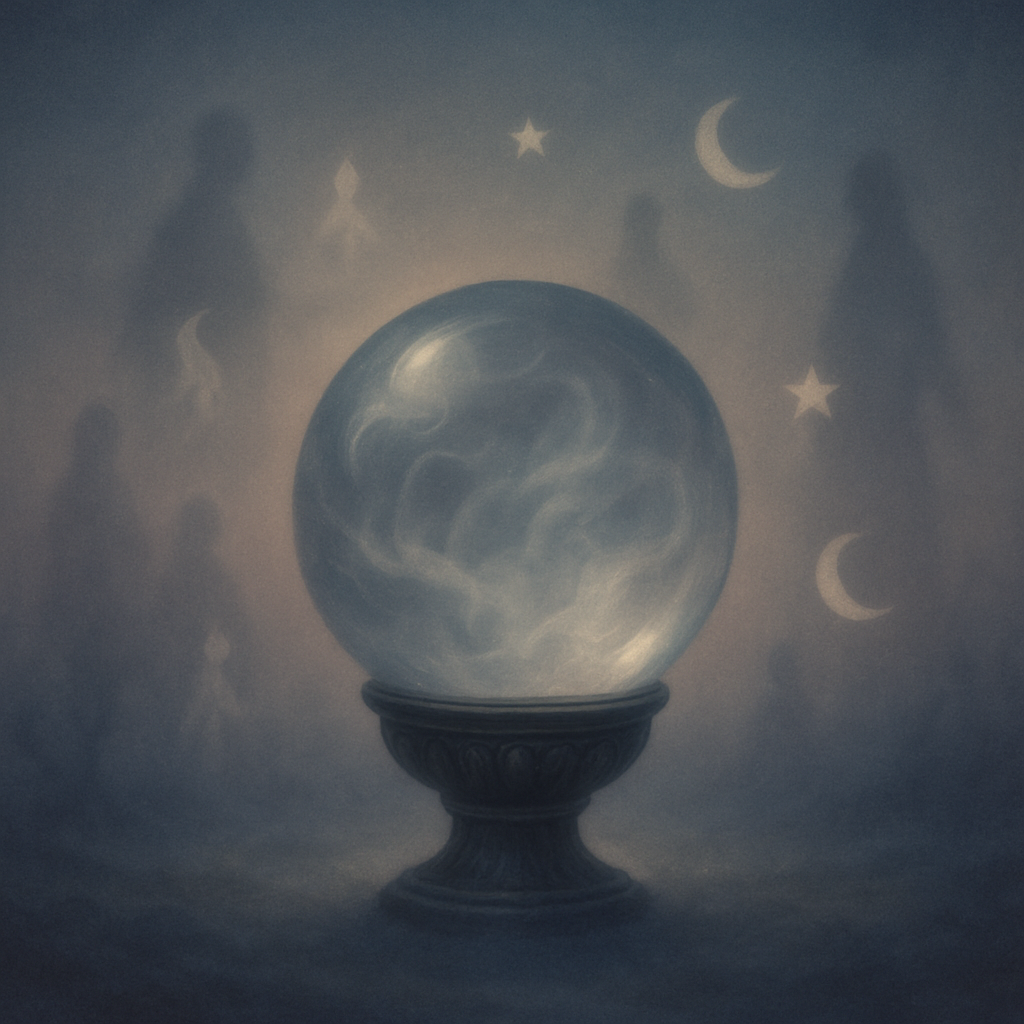
SPEAKER_1: We've seen how esoteric ideas can turn abstract beliefs into visual and ritual systems. Now something almost reverses that a century later. SPEAKER_2: It does reverse it. The fin de siècle — roughly the 1880s through the 1910s — was marked by a unique cultural shift where the rational order's failure to provide meaning led to a search for alternative spiritual experiences. SPEAKER_1: So the occult revival was filling a gap left by weakening religious authority? SPEAKER_2: Exactly. Historians frame it as part of a wider religious crisis — traditional Christian authority was losing its grip. And crucially, print culture had expanded. Esoteric books, periodicals, lecture circuits all reached a new middle-class reading public in ways that simply weren't possible before. SPEAKER_1: Where does Blavatsky fit? She keeps coming up whenever this period gets discussed. SPEAKER_2: She's central. Blavatsky founded the Theosophical Society in New York in 1875, soon active across Europe and India. Her works — 'Isis Unveiled' in 1877 and 'The Secret Doctrine' in 1888 — blended Western esoteric traditions with reinterpretations of Asian religions. The pitch was a universal esoteric wisdom underlying all faiths. SPEAKER_1: That sounds culturally complicated — borrowing Eastern traditions and repackaging them for Western audiences. SPEAKER_2: Very complicated. Fin-de-siècle occultism romanticized what it called Eastern wisdom while filtering it through Western esoteric categories. There was also a deliberate effort to look scientific — reinterpreting concepts like vibration and evolution through occult frameworks, because science was the prestige currency of the age. SPEAKER_1: Now, the Golden Dawn is where the aesthetic story really accelerates. What were they actually building visually? SPEAKER_2: The Hermetic Order of the Golden Dawn, founded in Britain in the late 1880s, innovated ceremonial magic with unique visual and ritual elements, such as colored diagrams and temple layouts, influencing modern art and literature. SPEAKER_1: And the membership wasn't obscure — W. B. Yeats was in there, Aleister Crowley too. SPEAKER_2: Which tells us something important about the social appeal. The Golden Dawn used hierarchical, initiatory structures and elaborate rituals to create intense group identities — exclusive access to hidden knowledge. For a poet like Yeats, that wasn't separate from his literary work. The occult imagery fed directly into his writing. SPEAKER_1: So what does that look like on the art side? Think of a concrete case for everyone following along. SPEAKER_2: Joséphin Péladan's Salon de la Rose+Croix exhibitions in the 1890s exemplified the era's aesthetic shift, transforming art exhibitions into ritual spaces that emphasized esoteric and mystical content over realism. SPEAKER_1: Using the prestige of the art world to consecrate occult content — that's a striking move. SPEAKER_2: And it worked because Symbolist artists were already drawn to esoteric motifs. Some occultists at this moment deliberately styled themselves as 'magicians' and 'mages' — a direct response to what they saw as the disenchantment of the world brought on by scientific materialism. The aesthetic was a counter-argument to modernity. SPEAKER_1: There's a social dimension here that often gets overlooked — women's roles in this revival. SPEAKER_2: Significantly overlooked. Women played visible roles in spiritualist circles and theosophical lodges, which sometimes offered greater leadership opportunities than mainstream religious institutions. And the Society for Psychical Research, founded in London in 1882, included leading scientists and intellectuals — showing that interest in paranormal phenomena extended well into mainstream elite culture. SPEAKER_1: So for everyone following this course — what's the through-line connecting all of this to what comes later? SPEAKER_2: The key idea is that this revival wasn't marginal. It was intertwined with modern art, literature, psychology, and religious change. New movements like Thelema drew directly on Golden Dawn rituals and texts. The imagery fed into modern astrology, New Age spirituality, and neopagan movements through reprinted texts and organizational lineages. Remember: this moment created the visual and ritual grammar that still defines how most people picture the supernatural.