
Transcript
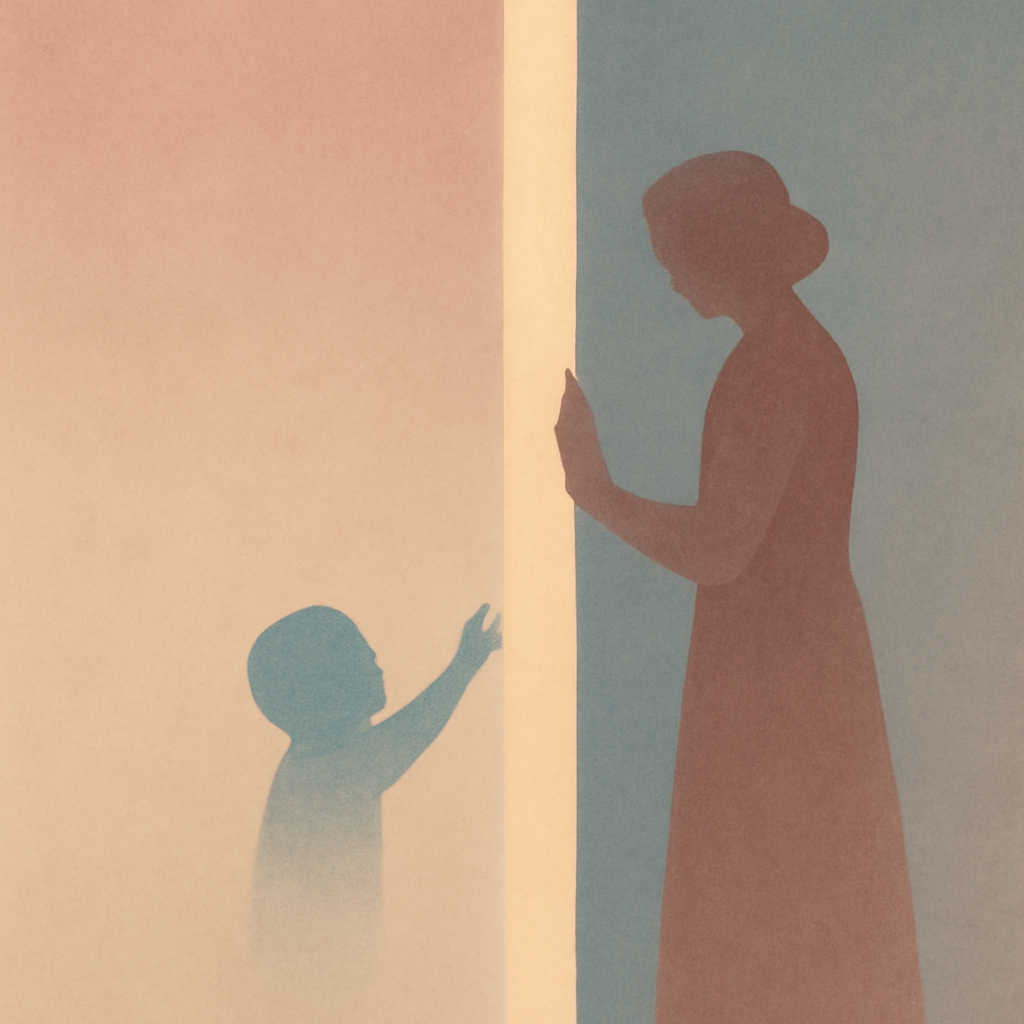
SPEAKER_1: So last time we traced why a mother may comply — loyalty binds, dependency, the system absorbing protest as proof the arrangement is necessary. Now I want to move inside the person who got pushed out. SPEAKER_2: Right. And what's happening inside the adult son is not just hurt feelings. Research on estrangement describes feelings that closely resemble bereavement — yearning, anger, identity disruption — even though the person lost is still alive. SPEAKER_1: Grief without a death. No ritual, no flowers. SPEAKER_2: And no social recognition. The official story says the distance is his fault — so he can't even name it as loss. That's what makes it so disorienting. SPEAKER_1: So what is attachment injury, specifically? SPEAKER_2: The mother-son bond can carry deep attachment meaning. When it's abruptly rerouted through a third party — or effectively ended — the nervous system responds as if something essential has been removed. Panic, disbelief, obsessive sense-making. That's not metaphor. That's disruption at the attachment level. SPEAKER_1: And role collapse is different from ordinary disappointment? SPEAKER_2: Significantly. Role collapse is when a son's place in the family — his history, his standing, the role he understood himself to have — gets erased without honest acknowledgment. No conversation. Just a slow rewrite where he no longer fits the current story. SPEAKER_1: And moral injury sits on top of all that. SPEAKER_2: [short pause] Yes. Psychologists describe moral injury in estrangement as betrayal by someone in a trusted role — specifically when the adult child believes the parent violated core values like protection or honesty. The pain isn't just 'I was excluded.' It can become 'someone I trusted failed to protect me or be honest with me.' SPEAKER_1: And that kind of betrayal can feed the obsessive sense-making loop. Qualitative research documents years of it — trying to figure out whether their version of events is even valid. SPEAKER_2: And that loop is exhausting and understandable. But it can also feed the system's narrative. Activated contact attempts tend to confirm the story that the person is unstable. So the key idea is: interrupt the loop before sending anything. SPEAKER_1: So what's the practical interrupt? What does a grounded response actually look like? SPEAKER_2: The 72-hour stabilization rule. Before any major contact attempt, write the message — get it all out — then wait three full days. One grounded person reviews it during that window. Not someone who will just validate the anger. Someone who can ask: is this brief, factual, and does it protect the sender's dignity and legal safety? Only if yes does it get sent. SPEAKER_1: Wait — what makes someone grounded enough to be that reviewer? SPEAKER_2: Not a family member inside the same system. Not someone with a stake in the outcome. Ideally a therapist, or a trusted friend who can hold the person's long-term interest over short-term urgency. The reviewer's job isn't to agree — it's to ask whether the message serves the sender's stability or just their need to be heard right now. SPEAKER_1: And for someone being told their pain about exclusion proves they deserve exclusion — what's the self-validation counter to that? SPEAKER_2: 'My grief about this loss is proportionate to what was lost. It does not prove I am dangerous. It proves I am human.' Clinical guidance is clear: healing starts with validating the estranged person's subjective experience, not immediately pushing for reconciliation. The pain is real. The response to the pain is what can be regulated. SPEAKER_1: And the research does show that some adult children reach greater resilience after establishing firm boundaries — even when full reconciliation never happens. SPEAKER_2: [exhale] That's the takeaway for everyone sitting with this. The goal isn't to force the system to admit what it did. The goal is to stop the system from defining who the person is. Document the pattern. Pause before sending. Find one grounded reviewer. Remember — having at least one supportive relationship outside the family system is associated with meaningfully better well-being. The wound is real. The way back to stability runs through the self, not through the system's approval.