Sustainable Discipline for Long-Term Success
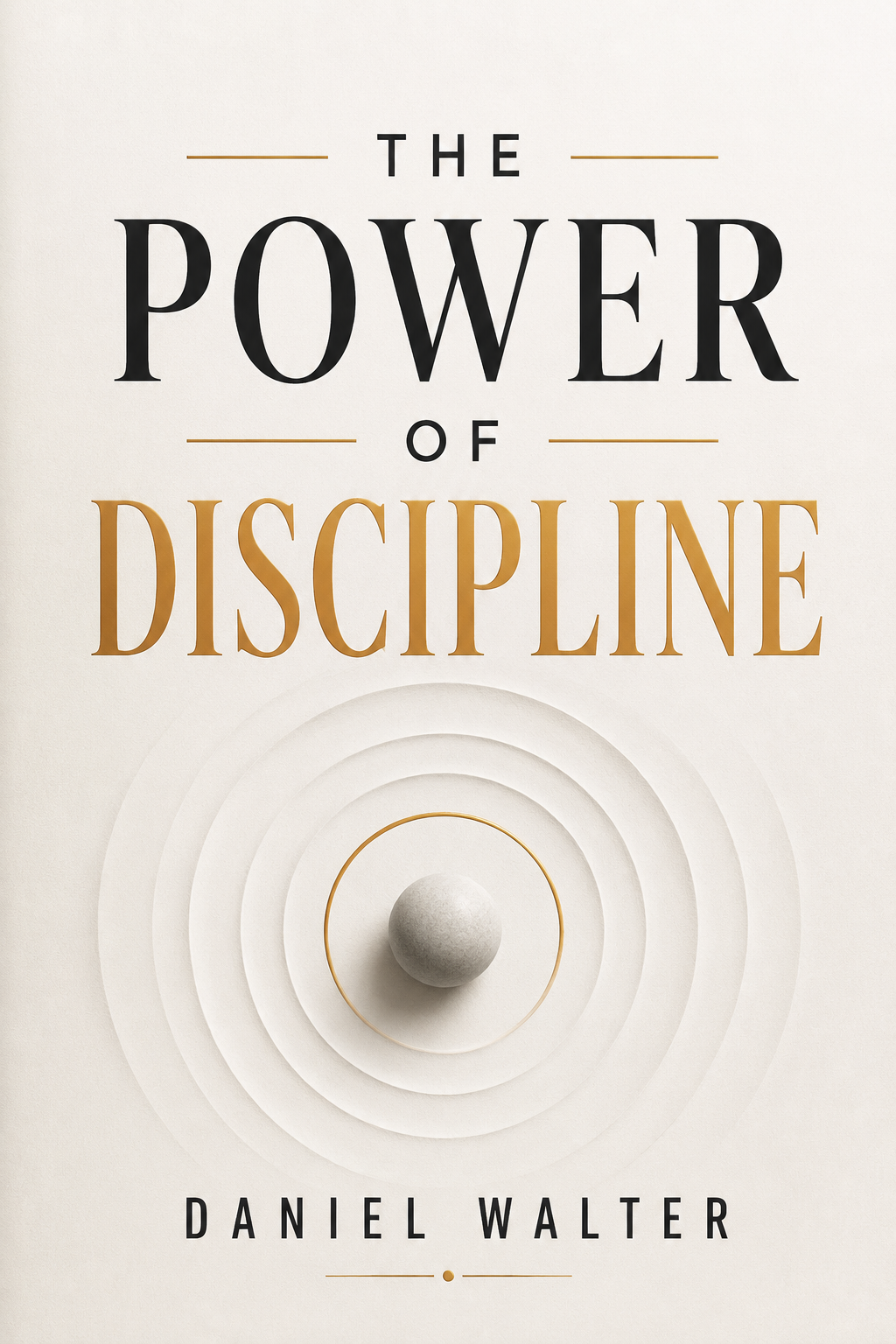
The Power of Discipline: How to Use Self Control and Mental Toughness to Achieve Your Goals by Daniel Walter
Self-Discipline as the Master Key
Why Change Feels Hard and How to Begin Anyway
Building Habits That Survive Discomfort
Systems, Stillness, and Focused Action
Commitment, Identity, and Loving the Work
Sustainable Discipline for Long-Term Success

Transcript
The previous lecture established that discipline stops being a struggle when commitment, identity, and process-love form a self-reinforcing loop. That insight sets the stage for the book's final argument: sustainable discipline is not about brute force. It is about intelligent resource management across every dimension of life. The author argues that negative emotions — fear, anger, frustration, anxiety — are not obstacles to discipline. They are signals. Fear indicates something meaningful is at stake; frustration signals that a current approach needs adjustment; anger, properly redirected, can fuel focused effort rather than destructive reaction. According to the author, people who feel emotions intensely are often those who care most deeply about their outcomes. That intensity, when managed deliberately, becomes a competitive advantage rather than a liability. Building this capacity requires journaling, mindfulness, and structured reflection after emotionally charged events. The author contends that the Pareto Principle — eighty percent of results come from twenty percent of efforts — exposes a costly mistake most people make. Spreading effort evenly across all tasks dilutes the impact of the most valuable work. The disciplined response is to audit activities honestly, protect time spent on high-leverage work, and eliminate or delegate the rest. Sturgeon's Law reinforces this selectivity from a different angle: ninety percent of available information, advice, and strategies is mediocre. The author argues that discernment — identifying the exceptional books, mentors, and habits that actually produce results — is itself a discipline practice. Together, these two frameworks redefine discipline not as doing more, but as doing less with greater precision. Burnout, the author contends, is not a sign of weakness — it is the predictable consequence of treating energy as unlimited. Highly disciplined individuals are paradoxically at greatest risk because their commitment can blind them to early warning signs: persistent fatigue, declining motivation, and emotional detachment. Scheduled recovery, adequate sleep, and intentional downtime are not indulgences; they are structural requirements for sustained high performance. The author draws a direct parallel to elite athletes, who build recovery cycles into training as deliberately as they build effort. Avoiding burnout also means reconnecting with purpose and building social environments that replenish rather than drain energy. Managing workload through deliberate prioritization completes that protective structure. The book's conclusion delivers a clear and direct message: discipline is a learnable skill, not an innate trait, and it compounds over time exactly as financial investments do. Small, consistent acts of self-control strengthen the overall capacity for discipline, and the results that accumulate from sustained effort would be impossible through sporadic bursts of motivation. The author challenges readers to stop waiting for ideal conditions and begin immediately with whatever capacity they currently have. Motivation is fleeting; discipline, once established, becomes self-reinforcing. The author frames the power of discipline as ultimately the power to become the deliberate architect of your own life. No longer reactive to impulses or circumstances, but purposefully building toward meaningful goals through intelligent effort, emotional mastery, strategic selectivity, and sustainable recovery. That architecture of intelligent effort, emotional mastery, and strategic selectivity is what the author calls the foundation of a self-directed life. Discipline, in this final view, is not a personality trait you either possess or lack. It is a skill you build deliberately, one small act at a time. The author challenges readers to stop waiting for ideal conditions and begin immediately with whatever capacity they currently have. Motivation is fleeting; discipline, once established, becomes self-reinforcing and compounds exactly as financial investments do. Small, consistent acts of self-control accumulate into results that sporadic bursts of motivation could never produce. The power of discipline, as the author frames it, is ultimately the power to become the deliberate architect of your own life. No longer reactive to impulses or circumstances, you build purposefully toward meaningful goals. Emotional mastery, strategic selectivity, and sustainable recovery are not separate tools — they are one integrated practice.