Fragile Alliances: Urarina Kinship in a Changing World
The Debt That Holds Urarina Marriage Together

Transcript
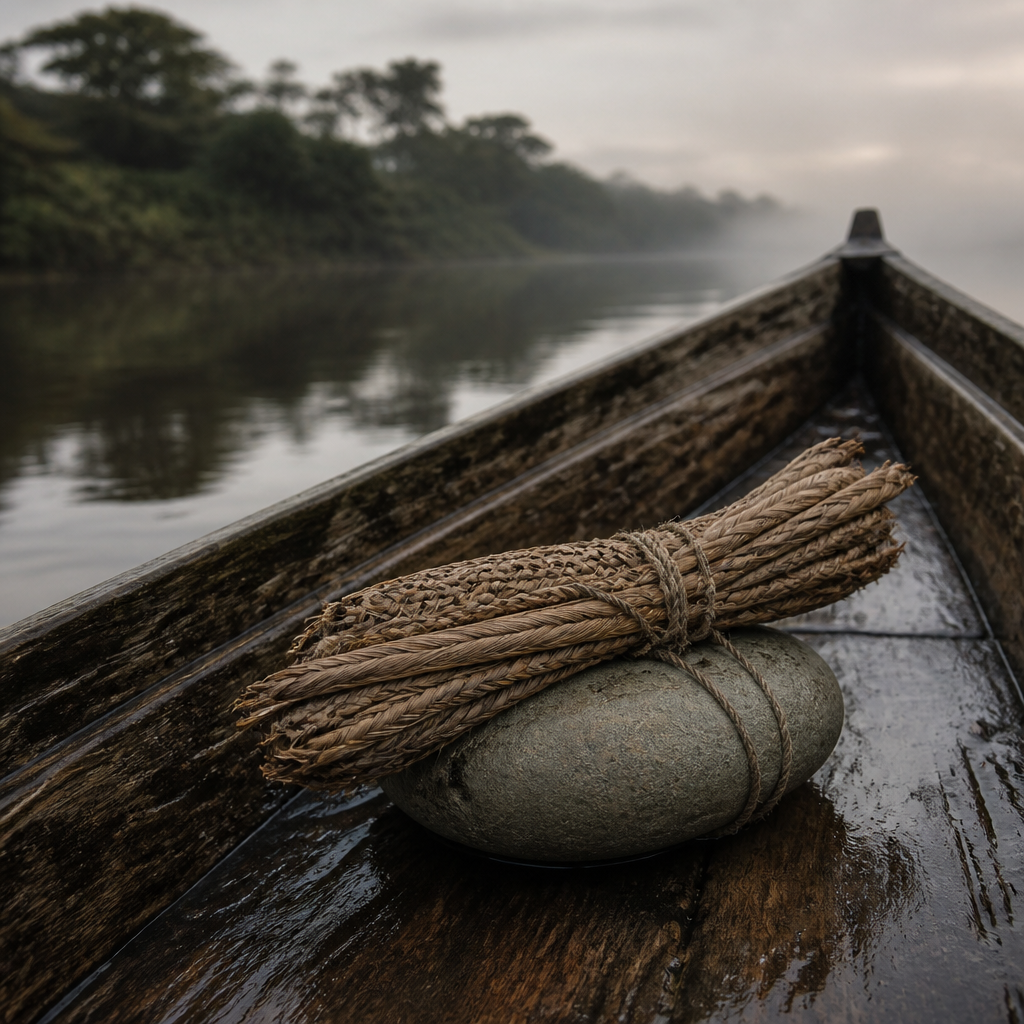
SPEAKER_1: Alright, so last time we established that the father-in-law's authority isn't formal or titled — it lives entirely inside the household relationship. The son-in-law's labor is the mechanism of control. Let's explore how external economic forces, like logging and oil companies, challenge the traditional kinship obligations of the Urarina. SPEAKER_2: This is where the broader pressures around Urarina kinship come into focus. And the key idea is this: the Urarina moral economy isn't just a set of marriage customs. It's a protective framework. The web of kinship obligation — brideservice, uxorilocal residence, and long-term debts between affinal kin — can keep households organized around kin commitments even as outside markets press in. SPEAKER_1: Wait — so the very thing that looks like a burden on the son-in-law is also shielding him from something worse? SPEAKER_2: Exactly. Think of a young man who gets a wage offer from a logging operation upriver. He could take it. But if he does, he's absent from his father-in-law's household. His brideservice obligations go unmet. His alliance frays. He loses standing in the kin network that feeds him, protects him, and gives his children a social identity. The kinship debt, counterintuitively, is what keeps him from becoming fully disposable to an extractive employer. SPEAKER_1: So the obligation is also a kind of anchor. SPEAKER_2: A very deliberate one. Dean situates Urarina kinship within a long history of entanglement — missionaries, traders, colonial authorities, the Peruvian nation-state. The Urarina have developed adaptive strategies to maintain their social structure amidst external pressures, emphasizing the concept of reflexive modernization. What's changed is the intensity. Frontier expansion, debt relations, unequal exchange — these are actively reshaping brideservice and uxorilocal residence right now. SPEAKER_1: And what about women specifically? Because we've talked a lot about the son-in-law's position. What does external economic pressure do to women's standing inside this system? SPEAKER_2: [sigh] That's where the picture gets harder. Urarina women historically controlled the circulation of palm-fiber goods — a key wealth item they produced. That sphere of value gave them real autonomy. But commodity peonage has eroded it. Dean's research shows that debt peonage, the old habilitación system, reinforced local models of male dominance precisely by pulling that female-controlled economy apart. SPEAKER_1: So the outside economy doesn't just add pressure — it restructures who holds power internally. SPEAKER_2: Right. And that's one of Dean's sharpest contributions. He shows that extractive industries alter the balance between senior men, sons-in-law, traders, and state actors — not by replacing kinship, but by warping it. The father-in-law's authority doesn't disappear. It gets renegotiated under new conditions. SPEAKER_1: For everyone following this series, I think the concept of reflexive modernization is worth naming here. What does Dean mean when he frames Urarina adaptation that way? SPEAKER_2: It means the Urarina aren't simply abandoning older practices under pressure, and they're not frozen in place either. They're selectively adapting. A household might send one son-in-law into wage labor while keeping another close to fulfill brideservice. They're reading the pressures and calibrating. That is reflexive — it's an active negotiation with changing conditions. SPEAKER_1: Mm-hmm. And what about the vulnerabilities? Because this system sounds resilient, but Dean doesn't romanticize it. SPEAKER_2: No, he absolutely doesn't. The vulnerabilities are real. When cash-debt or store credit competes with kinship-debt as the main organizer of labor, the whole grammar shifts. A young man who owes a trader is answerable to a different logic than one who owes a father-in-law. And daughters, elders, affinal groups — they can all pursue different interests under changing conditions. The alliances are fragile, as the lecture title says. SPEAKER_1: So not X — not a stable traditional system — but Y: a system under constant internal and external negotiation. SPEAKER_2: Precisely. And Dean's ethnography challenges the assumption that Indigenous resistance has to look like public protest or legal confrontation. The Urarina case shows resistance can be intimate. Staying in the uxorilocal household, maintaining brideservice obligations, refusing to let kinship-debt be replaced by cash-debt — these are political acts, even when they look like ordinary domestic life. SPEAKER_1: [inhale] So when we step back and look at Dean's full contribution — the Harvard dissertation in 1995, the monograph on Urarina society, cosmology, and history, the decades of fieldwork since 1988 — what's the through-line? SPEAKER_2: The through-line is that the micro and the macro are inseparable. The intimate arrangements — who lives where, who hunts for whom, who owes what to a father-in-law — are directly connected to large-scale questions about Indigenous autonomy, resource extraction, and Amazonian survival. Dean's work, grounded in participant observation, linguistic data, ethno-ecological research, and oral narratives, gives that connection an unusually deep empirical base. SPEAKER_1: And the Urarina language itself — a linguistic isolate spoken by a few thousand people — that distinctiveness matters for how kinship is even talked about, right? SPEAKER_2: It does. The language carries the categories. The way Urarina speakers describe brideservice — as feeding, as nurture, not as purchase — that's not just rhetoric. It's a different ontology of obligation. Dean's insistence on recording oral narratives and shamanic chants is part of why his kinship analysis holds. The words themselves are evidence. SPEAKER_1: So the takeaway for everyone who's followed this series from the beginning: the forest of debt isn't a metaphor for backwardness. It's a sophisticated moral architecture — one that has absorbed centuries of outside pressure and is still being negotiated today. SPEAKER_2: And that's what makes Dean's work matter beyond Amazonia. The Urarina case asks us to look at any society and ask: what is the actual currency of obligation here? Who owes whom, and why? When you answer that, you understand the politics. The Chambira Basin is the field site. The question is universal.