
Transcript
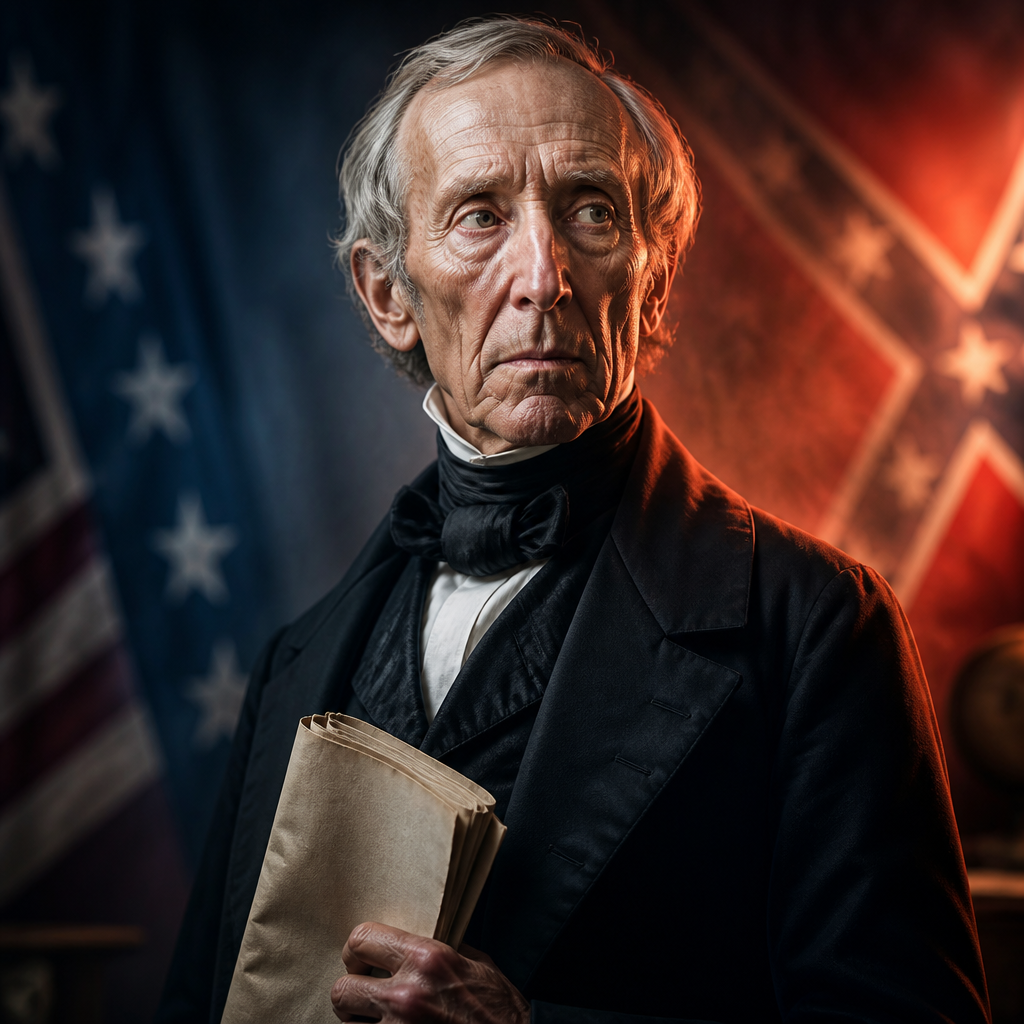
January 1862. A former president of the United States lies dead in Richmond, Virginia. His coffin is draped not in the Stars and Stripes, but in the Confederate battle flag. Jefferson Davis stands nearby. Washington says nothing. No official mourning. No flags lowered at the Capitol. The U.S. government simply ignores the death of its own tenth president. That silence is one of the most damning verdicts in American political history. John Tyler had made his choice. And that choice had consequences that outlasted him. To understand Tyler's final act, Mitch, you have to understand what shaped him from the start. He was born into Virginia's planter class. He owned enslaved people his entire adult life. His politics were built on one core conviction: the federal government had no right to override the states. He served as the tenth president from 1841 to 1845, taking office after William Henry Harrison died just one month in. That transition itself was a constitutional fight. Tyler insisted he was the full president, not a mere acting one. He won that argument. It became known as the Tyler Precedent. But his presidency also ended in near-total isolation. His own Whig party expelled him. He had no political home. What he did have was Virginia. And for Tyler, Virginia was everything. Think of Tyler's presidency as a slow fuse. On his last day in office, March 3, 1845, he signed the joint resolution annexing Texas. It was his signature achievement. But historians note that annexing Texas deepened the sectional divide over slavery's expansion. More territory meant more conflict over whether slavery would spread. Tyler helped light the fuse he would later try to extinguish. That irony is central to understanding the man. He was not a simple villain. He was a product of his world, a world where Virginia identity, slaveholder interest, and constitutional principle were all the same thing. Now, here is where the story gets genuinely complicated. In February 1861, after Abraham Lincoln's election and the first wave of Southern secessions, Tyler did not immediately run toward the Confederacy. He ran toward the negotiating table. He chaired the Washington Peace Conference, a last-ditch effort to hold the Union together through constitutional compromise. Delegates from across the country gathered. Tyler presided. The goal was to find a formula, likely around slavery's status in the territories, that would satisfy the South without breaking the nation apart. For a brief moment, a former president was the most prominent voice for peace in America. The conference failed. The deep-South states that had already seceded sent no delegates. The proposals that emerged went nowhere in Congress. Lincoln took office with no compromise in place. Then came Fort Sumter. Confederate forces fired on the federal garrison in April 1861. Lincoln called for troops. That call was the breaking point for Tyler. He had tried compromise. It had not worked. Now Virginia had to decide, and so did he. On April 17, 1861, Tyler voted with the majority at the Virginia secession convention in favor of leaving the Union. The mediator became a secessionist. Tyler did not just vote and step back. He became a central figure in Virginia's secession process. He presided over the Virginia convention itself. He headed a key committee that negotiated the terms of Virginia's entry into the Confederate States. On June 14, 1861, he signed Virginia's Ordinance of Secession. That signature was not symbolic. It was a formal, legal endorsement of his state's break from the country he had once led. After that, the convention unanimously elected him to represent Virginia in the Provisional Confederate Congress. He helped shape the new Confederate government in its earliest months. The key idea here is what Tyler's arc reveals about antebellum identity. He was subsequently elected to the Confederate House of Representatives. He never took that seat. He died in Richmond on January 18, 1862, before it convened. The Confederacy gave him a state funeral. Jefferson Davis attended. A Confederate flag covered his coffin. Washington gave him nothing. He was buried at Hollywood Cemetery in Richmond, in a Presidents Circle near James Monroe, his grave a rare intersection of presidential and Confederate memory. Mitch, the takeaway is this: Tyler did not see himself as a traitor. He saw himself as defending the same constitutional principles he had always held. But the record is clear. He is the only former U.S. president to have openly served a government at war with the United States. That choice, driven by Virginia loyalty, slaveholder interest, and states' rights ideology, defines his legacy more than anything he did in the White House. [emphasis] Some choices cannot be walked back. Now, think about what that silence actually meant. Washington did not lower a flag. It did not issue a statement. It did not send a representative. For the U.S. government, John Tyler had simply ceased to exist as a former president. The Confederacy, by contrast, treated his death as a state occasion. Jefferson Davis stood at the funeral. A Confederate flag covered the coffin. The contrast was not accidental. It was a verdict. Tyler had made a choice that put him outside the national story entirely. He remains the only former U.S. president to have openly served a government at war with the United States. That distinction is not a footnote. It is the defining fact of his legacy. To understand how a former president ends up there, you have to trace the logic backward. Tyler was not radicalized late in life. His worldview was consistent from the beginning. Born into Virginia's planter class, he owned enslaved people his entire adult life. His politics rested on one foundation: states hold sovereign authority, and the federal government must not override them. Think of it this way. Every major act of his presidency followed that logic. He fought his own Whig party to block a national bank. He insisted on full presidential authority when Harrison died. He annexed Texas, expanding the slaveholding republic. Each move was coherent with the same underlying principle. By 1860, that principle pointed in one direction. Here is where the story gets genuinely surprising. In February 1861, Tyler did not rush toward the Confederacy. He chaired the Washington Peace Conference, a serious attempt to hold the Union together through constitutional compromise. For a brief moment, a former president was the most prominent mediator in America. Delegates arrived from across the country. Tyler presided. The goal was a formula, most likely around slavery's status in the territories, that could satisfy the South without fracturing the nation. That is not the behavior of a man who had already decided. It is the behavior of a man who still believed negotiation was possible. The key idea is that Tyler's shift was not inevitable. It was conditional. He was waiting to see if the system could save itself. It could not. The deep-South states that had already seceded sent no delegates. The proposals that emerged from the conference went nowhere in Congress. Lincoln took office with no deal in place. Then Fort Sumter happened. Confederate forces fired on the federal garrison. Lincoln called for troops. That call was the breaking point. Tyler had tried the peaceful path. It had closed. Now Virginia had to choose. On April 17, 1861, Tyler voted with the majority at the Virginia secession convention in favor of leaving the Union. The mediator became a secessionist. [short pause] That transition happened fast. And it was not reluctant. Once the door to compromise shut, Tyler walked through the other one without hesitation. He did not just cast a vote and step aside. Tyler became a central architect of Virginia's departure. He presided over the Virginia convention. He headed the key committee that negotiated Virginia's entry into the Confederate States. On June 14, 1861, he signed Virginia's Ordinance of Secession. That signature was not ceremonial. It was a formal legal act endorsing his state's break from the country he had once led. After that, the convention unanimously elected him to represent Virginia in the Provisional Confederate Congress. He helped shape the new Confederate government in its earliest months. Mitch, that sequence matters. Each step was deliberate. Each one moved him further from the Union and deeper into the Confederate project. Now, here is the question worth sitting with. How did Tyler see himself? Not as a traitor. He saw himself as consistent. The same constitutional logic that made him fight the Whig party in 1841 was, in his mind, the same logic that made secession defensible in 1861. States had rights. The federal government had overstepped. He was defending the Constitution, not betraying it. Historians note that his push to annex Texas had deepened sectional tensions decades earlier, helping create the very crisis he later tried to avert. That irony is sharp. Tyler helped build the conditions for the Civil War, tried briefly to stop it, then joined one side of it. His ideology was not a mask. It was the engine. Tyler was subsequently elected to the Confederate House of Representatives. He never took that seat. He died in Richmond on January 18, 1862, before it convened. The Confederacy gave him a state funeral far grander than he had wanted. Jefferson Davis attended. A Confederate flag covered the coffin. He was buried at Hollywood Cemetery in Richmond, in a Presidents Circle near James Monroe. His grave is among the rare sites where presidential and Confederate memory openly intersect. Washington said nothing. [emphasis] That silence was the verdict. Between February 1861 and January 1862, Tyler went from leading a last peace effort to dying in Confederate Richmond as the only former U.S. president elected to Confederate office. Virginia loyalty, slaveholder interest, and states' rights ideology pulled him there. Some choices cannot be walked back, Mitch. His could not. And history has not forgotten it. Now, think about what that silence actually meant. Washington did not lower a flag. It did not issue a statement. It did not send a representative. For the U.S. government, John Tyler had simply ceased to exist as a former president. The Confederacy, by contrast, treated his death as a state occasion. Jefferson Davis stood at the funeral. A Confederate flag covered the coffin. The contrast was not accidental. It was a verdict. Tyler had made a choice that placed him outside the national story entirely. He remains the only former U.S. president to have openly served a government at war with the United States. That distinction is not a footnote. It is the defining fact of his legacy. The takeaway is this. Between February 1861 and January 18, 1862, Tyler moved from leading a last peace effort to dying in Confederate Richmond as the only former U.S. president elected to Confederate office. Virginia loyalty, slaveholder interest, and states' rights ideology pulled him there. He was buried at Hollywood Cemetery, in a Presidents Circle near James Monroe, under a Confederate flag. His grave is among the rare sites where presidential and Confederate memory openly intersect. Washington said nothing. [emphasis] That silence was the verdict. Some choices cannot be walked back, Mitch. His could not. And history has not forgotten it.