
Transcript
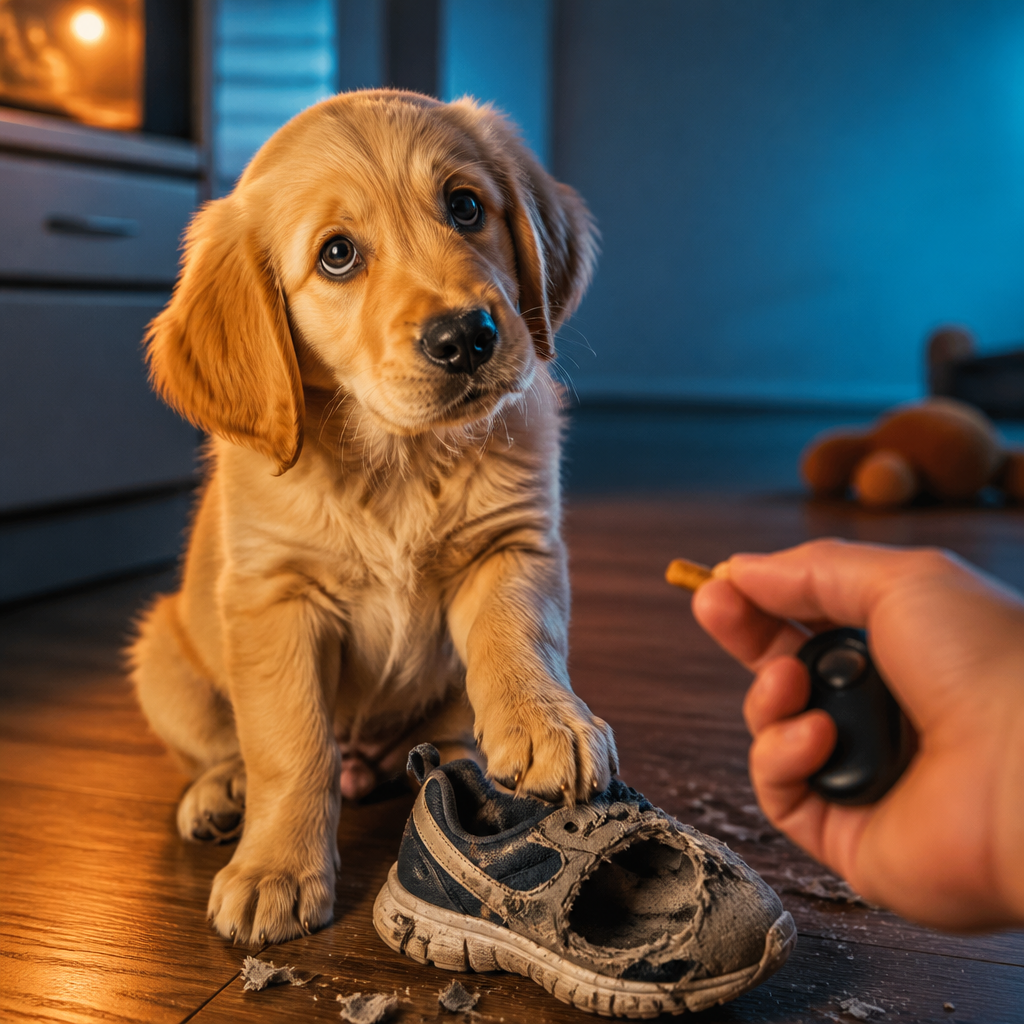
SPEAKER_1: So Scout is out of the crate, back in the room, and now the energy is completely different. This is a puppy who has slept, gone outside, and is ready to engage. And that window — curious, not overstimulated, not desperate for a bathroom — that's actually the best moment to start talking to Scout. SPEAKER_2: And when I say talking, I don't mean a training session you've blocked out on your calendar. I mean the commands are already woven into what you're doing. Scout hears their name before the back door opens. Scout sits before the food bowl goes down. That's it. The commands live inside the routine you've already built. SPEAKER_1: Which changes how you think about them. Name recognition isn't a trick — it's the first link in every other behavior. If Scout doesn't orient to you when you say their name, nothing else lands. So you say 'Scout,' Scout looks at you, and that look gets rewarded. Every single time, at least in the beginning. SPEAKER_2: And sit is the same idea. It's not obedience for its own sake. It's a pause button. Scout is bouncing at the food bowl — you ask for a sit, the bowl goes down the moment the bottom touches the floor. Scout just learned that sitting makes good things happen. SPEAKER_1: You've already seen how the lure works — treat near the nose, arc over the head, bottom goes down. The part most people get wrong isn't the lure. It's what happens next. SPEAKER_2: The timing. SPEAKER_1: The timing. Because by the time you've said 'good girl' and reached into your pocket, Scout has already stood back up, sniffed the floor, and wandered two steps to the left. The behavior you're rewarding is no longer the sit. It's whatever Scout is doing right now. SPEAKER_2: So you're not teaching sit. You're teaching 'stand up and sniff the floor.' SPEAKER_1: Exactly. The reward has to land on the exact behavior — like when Scout's bottom touches the floor, that's the moment. Not after a pause, not after you've said something encouraging, not after you've fished the treat out. Right there. SPEAKER_2: Which is why having the treat already in your hand before you ask for the behavior matters so much in the early stages. You're not scrambling. You're ready. SPEAKER_1: And then you release the pressure. Scout sits, gets the reward, and you're done with that repetition. You don't hold Scout in the sit and wait for something. You mark the behavior, reward it, and let Scout move. Then you ask again in thirty seconds if you want another rep. SPEAKER_2: This is where I see new owners accidentally undo their own work. They get one good sit, and then they just keep saying 'sit, sit, Scout sit, sit.' No reward, no release, just the word repeated until it stops meaning anything. SPEAKER_1: The command becomes background noise. SPEAKER_2: Right. Say it once. If Scout doesn't respond, help them with the lure. Reward the behavior. Then stop. Three clean repetitions in a row is a good session. You don't need ten. SPEAKER_1: Come works the same way, but the context matters more. You want Scout's first experience of 'come' to be in a low-distraction space — not across a yard with Miso walking by and a squirrel in the tree. A hallway, a quiet room. You crouch down, you say 'Scout, come,' and the moment Scout moves toward you, that's what you're rewarding. The movement, not the arrival. SPEAKER_2: And you never call Scout to come and then do something Scout doesn't like. Bath time, nail trim, end of play — don't use 'come' for those. If Scout learns that 'come' sometimes means fun is over, they'll start hedging. You want 'come' to be the best word Scout knows. SPEAKER_1: Now, leave it is the one that directly protects Miso. Because Scout is going to find Miso's food bowl, Miso's toys, Miso's favorite corner of the couch — and 'leave it' is how you redirect that curiosity before it becomes a conflict. SPEAKER_2: [short pause] And honestly, leave it might be the most practical command in a multi-pet household. You don't need to walk through the whole closed-fist mechanic right now — the principle is the same as everything else. Scout moves toward something, you say 'leave it,' Scout pauses or looks away, that pause gets rewarded. Miso's space stays intact. Scout learns there's a boundary without anyone getting stressed. SPEAKER_1: And all of this — name, sit, come, leave it — none of it requires a dedicated training hour. It's two minutes before breakfast. It's the thirty seconds before the back door opens. It's the moment Scout wanders toward Miso's water bowl and you redirect it. The commands are already inside the day you're running. SPEAKER_2: Which is what makes them stick. Scout isn't learning commands in a vacuum and then trying to apply them to real life. Scout is learning them in real life, in the exact moments they matter. SPEAKER_1: So by the end of the first week, you've got a puppy who knows their name, who pauses before the food bowl, who's starting to understand that moving toward you is always worth it. That's not nothing. That's a communication system. SPEAKER_2: But here's what nobody tells you — you can run this whole system correctly and still have a morning where everything falls apart. Scout has an accident, ignores every command, and Miso is hiding under the bed. So what do you actually do when it does?