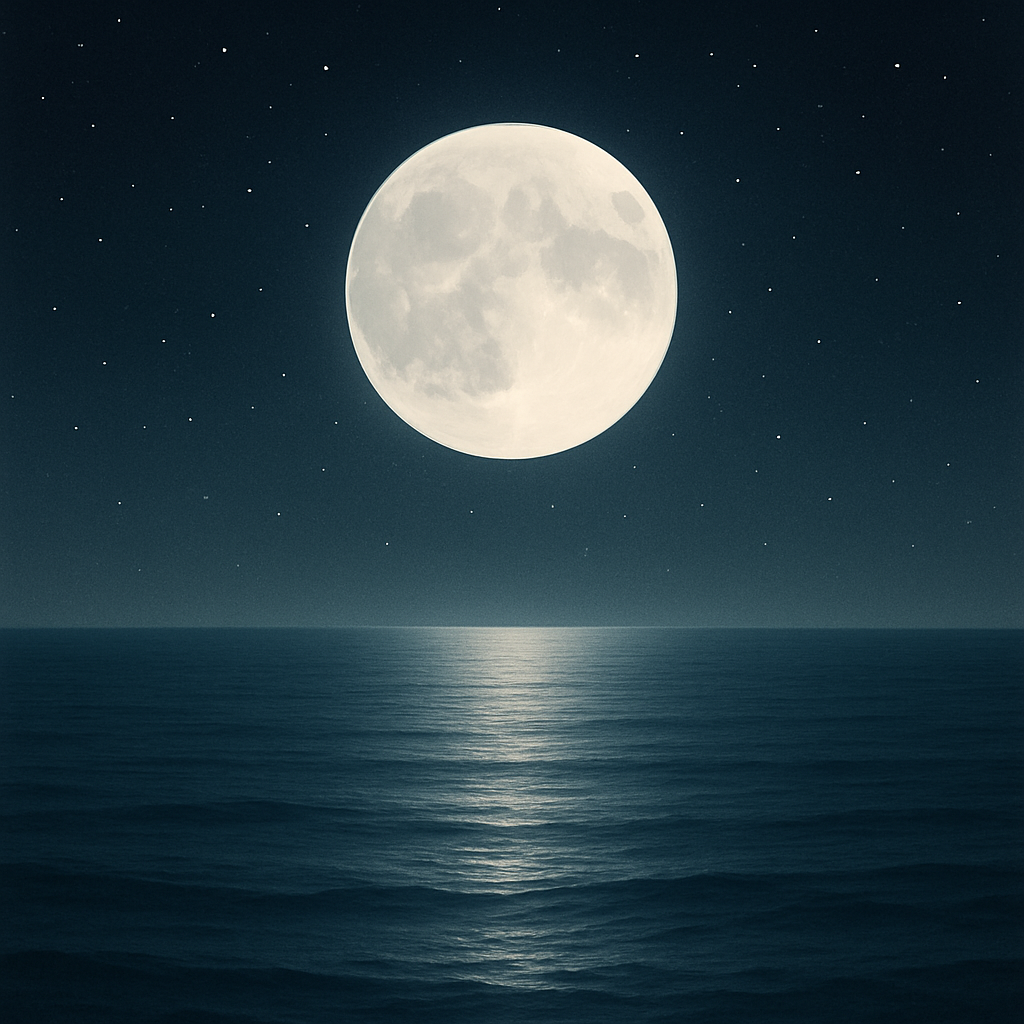
Scars of the Past: Mapping the Lunar Surface
Moon: Our Eternal Companion and Future Frontier
The Cosmic Collision: Origins of the Moon
Scars of the Past: Mapping the Lunar Surface
Celestial Rhythms: Tides, Phases, and Time
Silver Muse: The Moon in Culture and Myth
One Giant Leap: The Apollo Legacy
Cold Traps and Hidden Ice: The New Lunar Gold
Living on the Edge: Establishing a Lunar Colony
Artemis and Beyond: The Moon as a Launchpad

Transcript
SPEAKER_1: Alright, so last time we established that the Moon isn't just a rock—it's essentially a stabilizer that made Earth livable, born from a catastrophic collision with a Mars-sized body called Theia. That's a wild foundation to build on. Today I want to get into what the Moon actually looks like up close, because I think most people just see a grey blob. SPEAKER_2: Right, and that grey blob is actually one of the most information-dense surfaces in the solar system. Every feature on it is a record of something that happened—an impact, a volcanic eruption, a protoplanet strike. The Moon has no atmosphere, so nothing erodes. What hit it billions of years ago is still sitting there, perfectly preserved. SPEAKER_1: So when our listener looks up and sees that classic 'Man in the Moon' face, what are they actually looking at? SPEAKER_2: They're looking at ancient volcanic plains called maria—from the Latin for 'seas.' Early astronomers thought they were actual oceans. They're not. They're dark basaltic plains, formed when lava flooded enormous impact basins billions of years ago. The 'face' is a misreading of geology. Those dark patches are solidified magma, not water, not shadow. SPEAKER_1: And the bright regions surrounding them? SPEAKER_2: Those are the highlands—older, more heavily cratered terrain made of a mineral called anorthosite. We actually mentioned anorthosite in the first lecture as evidence of the Moon's ancient magma ocean. The highlands are the original crust that crystallized from that ocean. They're brighter because anorthosite reflects more light than basalt. SPEAKER_1: So the dark maria are younger than the highlands? SPEAKER_2: Exactly. The highlands are the Moon's original skin, roughly 4.4 billion years old. The maria filled in later, between about 3 and 4 billion years ago, when residual heat drove volcanic activity through the crust. Mare Imbrium, one of the largest, spans 1,250 kilometers in diameter and formed around 4 billion years ago from an oblique impact by fragments of a protoplanet. SPEAKER_1: Wait—a protoplanet hit the Moon and created Mare Imbrium? How do we know it was oblique and not a straight-down strike? SPEAKER_2: The ejecta patterns. If something hits vertically, debris sprays outward symmetrically. But the grooves and scars around Mare Imbrium—called the Imbrium Sculpture—point northwest of the basin center. That asymmetry is the fingerprint of an oblique strike. And on March 10, 2026, a team from Brown published 3D models using LRO data that confirmed the impactor was a protoplanet fragment, not a single asteroid. SPEAKER_1: LRO—that's the Lunar Reconnaissance Orbiter? SPEAKER_2: Correct. It's been the workhorse of lunar mapping. And on January 15, 2026, its latest high-resolution mosaic revealed new micro-groove networks extending 500 kilometers from Mare Imbrium that no prior mission had detected. Those grooves were long misattributed to tectonic activity. LRO proved they all trace back to one oblique impact. SPEAKER_1: How big was this impactor? Because 1,250 kilometers is an enormous basin. SPEAKER_2: The Imbrium impactor is now estimated at 250 kilometers in diameter—about 30 times more massive than earlier models assumed. And in December 2025, neutron spectroscopy data showed elevated rare earth elements inside those Imbrium grooves, chemical signatures from the protoplanet itself, embedded in the lunar surface. SPEAKER_1: So the Moon is literally carrying pieces of a dead protoplanet. That's remarkable. Now, our listener might be wondering—why does the far side of the Moon look so different? More craters, right? SPEAKER_2: Much more cratered. The near side has those large maria basins that absorbed and resurfaced impact zones. The far side has a thicker crust, so volcanic flooding never happened there to the same degree. Every impact just stayed as a crater. The South Pole-Aitken basin on the far side is one of the largest impact structures in the entire solar system—covering roughly one-fifth of the Moon's surface. SPEAKER_1: And why do we only ever see the near side? Is that just coincidence? SPEAKER_2: Not at all—it's tidal locking. Earth's gravity has been pulling on the Moon for billions of years, gradually slowing its rotation until the Moon's rotation period exactly matched its orbital period. Now it takes the same amount of time to spin once as it does to orbit Earth once, so the same face always points toward us. It's a gravitational synchronization, and it's actually common among large moons in the solar system. SPEAKER_1: Let's talk about individual craters. Tycho is the one with those dramatic bright rays shooting out from it—how old is it, and how do we know? SPEAKER_2: Tycho is relatively young, around 108 million years old, determined by radiometric dating of Apollo samples that contained glass beads created by the impact's heat. Its central peaks are still about a mile tall and razor-sharp—no erosion to round them off. Those bright rays are ejecta, pulverized rock sprayed outward, still visible because the Moon has no weather to fade them. SPEAKER_1: And those rays connect to the Late Heavy Bombardment? Because I keep hearing that term and I want to make sure our listener understands the timeline. SPEAKER_2: The Late Heavy Bombardment ran roughly 4.1 to 3.7 billion years ago—a period when the inner solar system was pelted by an unusually intense wave of impacts. The evidence is in the lunar rocks: Apollo samples cluster around that age window for impact-melt signatures. The Imbrium event itself may have contributed debris that seeded part of that bombardment, with some fragments even reaching Earth-crossing orbits. SPEAKER_1: So the Moon's surface is essentially a timeline—older craters in the highlands, younger maria, and then individual craters like Tycho marking more recent events. SPEAKER_2: That's exactly the right mental model. And China's Chang'e-7 orbiter added another layer on February 20, 2026, imaging faint Imbrium debris rays that were invisible to prior missions. Each new instrument reveals another layer of that timeline. Even Shackleton crater at the south pole tells a story—its peaks are in permanent sunlight while its floor may not have seen light for 2 billion years. SPEAKER_1: So what should someone listening take away from all of this? What's the single most important thing to hold onto? SPEAKER_2: That the distinction between the dark maria and the bright highlands isn't cosmetic—it's a record of two completely different chapters in lunar history. Volcanic flooding versus ancient bombardment. For our listener, the key insight is this: every time they look up at the Moon, they're reading a geological diary that spans 4 billion years, written in craters and lava plains, and preserved perfectly because there's nothing up there to erase it.