From Values to Action: Connecting What You Care About With What You Do
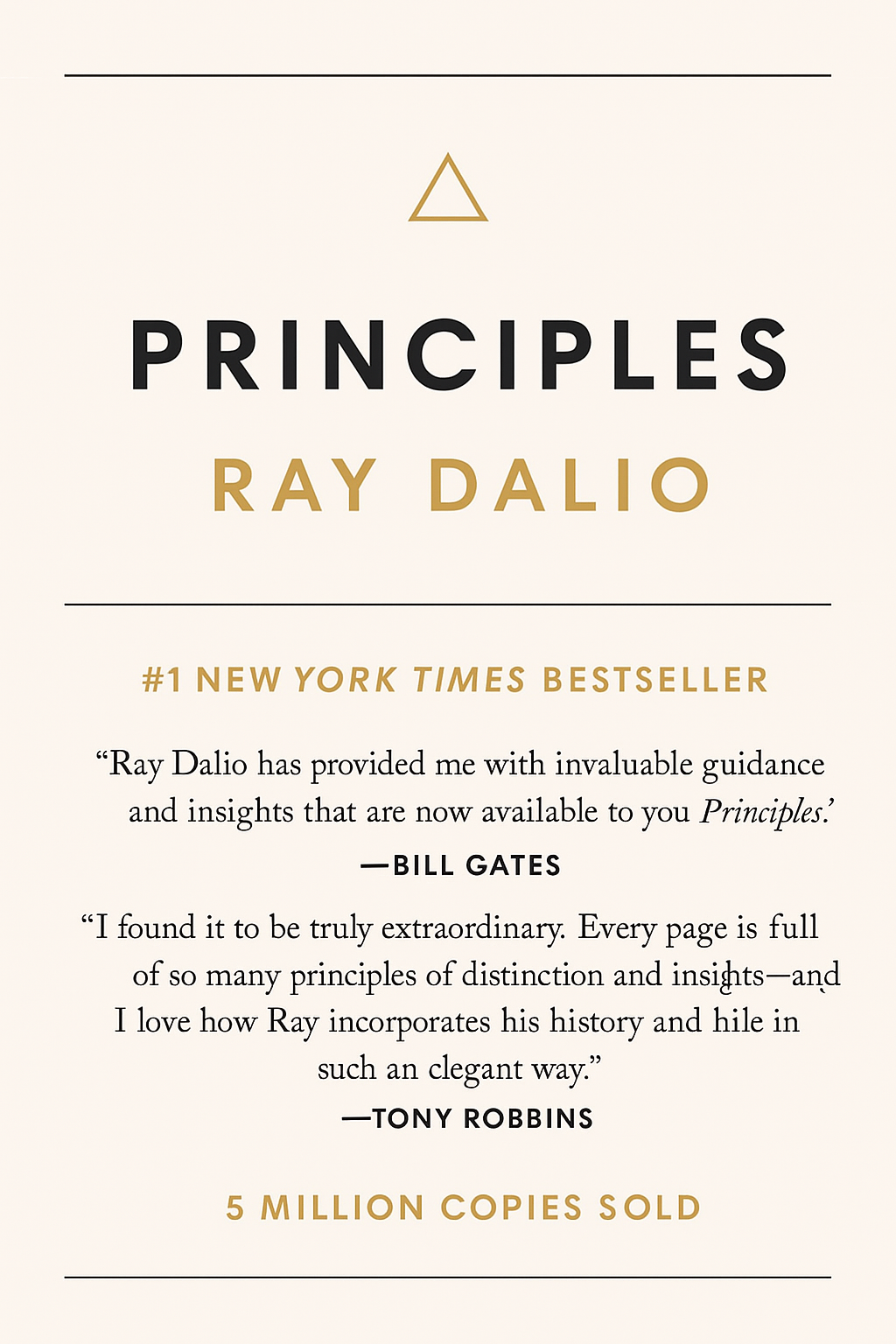
Principles by Ray Dalio
Why Principles Matter: The Foundation of Success
The Anatomy of a Good Principle
From Values to Action: Connecting What You Care About With What You Do
Building a Personal Principle Library
Testing and Refining Your Principles
The Cost of Ignoring Principles
Fundamental Life Principles
Learning From Reality
Self-Reflection and the Evolution Process
Dreams, Goals, and the Hyper-Realist Mindset
The Core Truth Principle
Management Principles: Foundations of Excellence
Decision-Making at Scale
Building a Culture of Radical Truth and Transparency
Putting It All Together

Transcript
Last time, we explored how writing principles forces clarity and creates a feedback loop where consistency in application coexists with evolution in content. Ray Dalio's transformation from catastrophic failure to systematic success began with his devastating 1982 market prediction, when he incorrectly forecast an economic depression and lost nearly everything. This crisis forced him to rebuild Bridgewater from scratch, but more importantly, it taught him that being wrong wasn't the problem—how he responded to being wrong was what mattered. Dalio recognized that his audacity to make bold predictions was simultaneously his greatest strength and weakness, requiring a counterbalance of radical open-mindedness and systematic decision-making processes. Rather than viewing mistakes as failures, he began treating them as essential learning opportunities, developing frameworks to navigate uncertainty more effectively. This shift led him to create believability-weighted decision-making, where he actively sought out and weighted opinions from the most credible people, especially those who disagreed with him. Overcoming his ego to embrace intellectual humility, Dalio understood that recognizing what he didn't know was more valuable than demonstrating what he did. He began systematically recording his decision-making principles, converting experiences into algorithms that could guide future choices, reduce repeated mistakes, and preserve lessons from both successes and failures. The documentation process itself proved valuable, forcing greater precision about his beliefs and creating accountability—others could now identify inconsistencies between stated principles and actual behavior. As his approach matured, Dalio observed that most situations, while appearing unique on the surface, were actually variations of recurring patterns. By identifying these patterns and developing principles to address them, he could make better decisions more efficiently; however, he emphasized that principles should function as thoughtful guidelines rather than rigid rules, requiring contextual application. This understanding drove him to build a culture at Bridgewater based on radical truth and radical transparency, where people were expected to share honest opinions and challenge each other's thinking regardless of hierarchy. The iterative nature of principle development became central to his methodology: principles informed decisions, decisions produced outcomes, and outcomes refined principles. When encountering new situations, he would handle them, reflect on whether his approach was optimal, then either create new principles or refine existing ones. Dalio addressed the critical balance between adherence and flexibility, warning against both rigid dogmatism—applying principles mechanically without thinking—and unprincipled flexibility, abandoning principles whenever convenient. As Bridgewater grew, codifying principles became essential for scaling his decision-making approach; he couldn't be involved in every decision, so documented principles allowed others to make choices consistent with his thinking while maintaining organizational coherence. The transformation this principle-based approach created at Bridgewater demonstrates the power of converting personal experience into institutional knowledge. Shared principles created alignment across the organization, enabling effective collaboration even amid disagreement by providing a common framework for resolving disputes and making decisions. This reduced politics and personal conflicts while creating a self-selecting culture—new employees either embraced this approach or departed quickly. Dalio emphasizes that the true power of principles comes not merely from articulating them, but from the discipline of actually following them, especially when doing so proves difficult or uncomfortable; this commitment to living by principles, even when inconvenient, built credibility and trust throughout the organization.