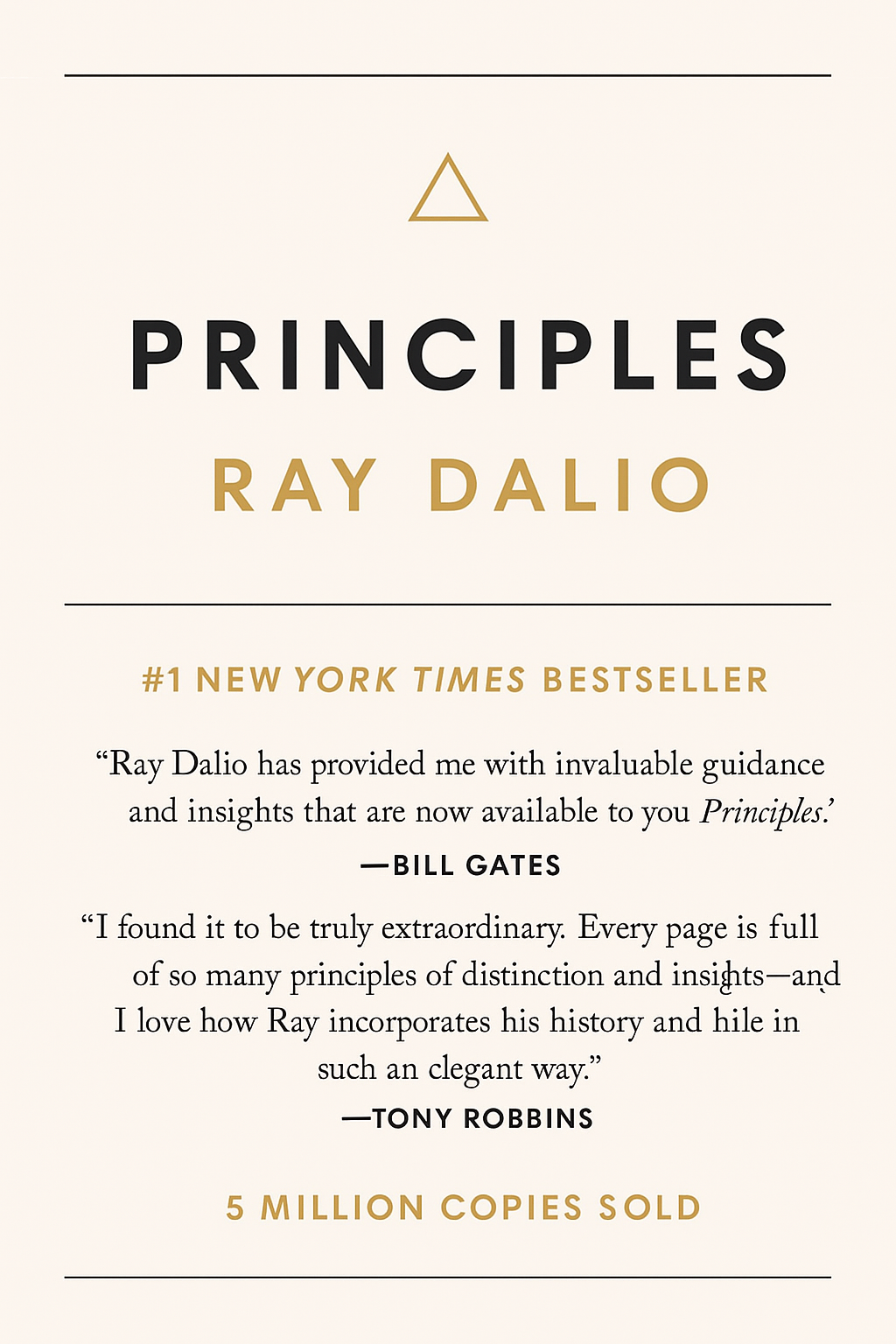
Why Principles Matter: The Foundation of Success
The Anatomy of a Good Principle
From Values to Action: Connecting What You Care About With What You Do
Building a Personal Principle Library
Testing and Refining Your Principles
The Cost of Ignoring Principles
Fundamental Life Principles
Learning From Reality
Self-Reflection and the Evolution Process
Dreams, Goals, and the Hyper-Realist Mindset
The Core Truth Principle
Management Principles: Foundations of Excellence
Decision-Making at Scale
Building a Culture of Radical Truth and Transparency
Putting It All Together

Transcript
Last time, we examined how Dalio's fundamental life principles translate into practical tools through radical open-mindedness, believability-weighted decision-making, and systematic reflection on mistakes. The author now presents his comprehensive framework for achieving success through radical engagement with reality, built on the foundational equation: dreams plus reality plus determination equals a successful life. Rather than avoiding painful problems or allowing wishful thinking to cloud judgment, Dalio advocates embracing difficulties as essential signals for growth and change. Central to this approach is the transformative principle that pain plus reflection equals progress, requiring individuals to step back from immediate emotional reactions and view challenges as opportunities for improvement. This perspective demands treating life like a game or puzzle where each problem solved yields rewards in personal growth and achievement, combined with radical transparency in all interactions. Dalio identifies a fundamental internal conflict between two competing selves: the emotional, lower-level you that reacts instinctively to pain and pleasure, and the rational, higher-level you that can make decisions based on superior long-term outcomes. Success requires training the higher-level self to maintain control even when experiencing discomfort, transforming mistakes and failures from setbacks into learning opportunities that build capability and strength. The author provides a systematic five-step framework for effective decision-making and goal achievement: identify your goals clearly, identify the problems preventing their achievement, diagnose these problems to uncover root causes, design plans to overcome them, and execute those plans. Most people fail at one or more of these steps because ego barriers and blind spots prevent them from seeing reality accurately. To overcome these limitations, Dalio introduces the powerful metaphor of viewing yourself and your life as a machine, with you serving as both the machine operator and designer. As the designer, you must diagnose problems with radical honesty about your capabilities and limitations, identify root causes, design solutions, and implement changes; as the operator, you must distinguish between your role within the machine and your ability to step back and assess its performance from a higher vantage point. This requires seeking input from others who can identify your blind spots and provide honest feedback, then finding the right people to complement your weaknesses—those who are capable, share your values, and possess strengths where you have limitations. The practical application of these principles centers on believability-weighted decision making, where opinions are valued based on the track record and expertise of those offering them rather than treating all perspectives equally. This approach, combined with thoughtful disagreement where people openly share reasoning and work through differences, helps overcome ego-driven judgment errors. The author illustrates these concepts through examples from Bridgewater Associates, where employees openly criticize ideas regardless of hierarchy and conversations are recorded to ensure accountability and learning. This culture of extreme honesty and transparency, though initially uncomfortable, produces better decisions, accelerated learning, and more meaningful relationships. Dalio acknowledges this environment does not suit everyone, but maintains that those with the courage and discipline to embrace radical truth-seeking and radical open-mindedness will achieve far more than in traditional cultures prioritizing politeness over truth. These principles are not merely theoretical constructs but practical tools applicable to any domain—business, relationships, or personal development—provided individuals commit to implementing them consistently and confronting reality as it actually exists rather than as they wish it to be.