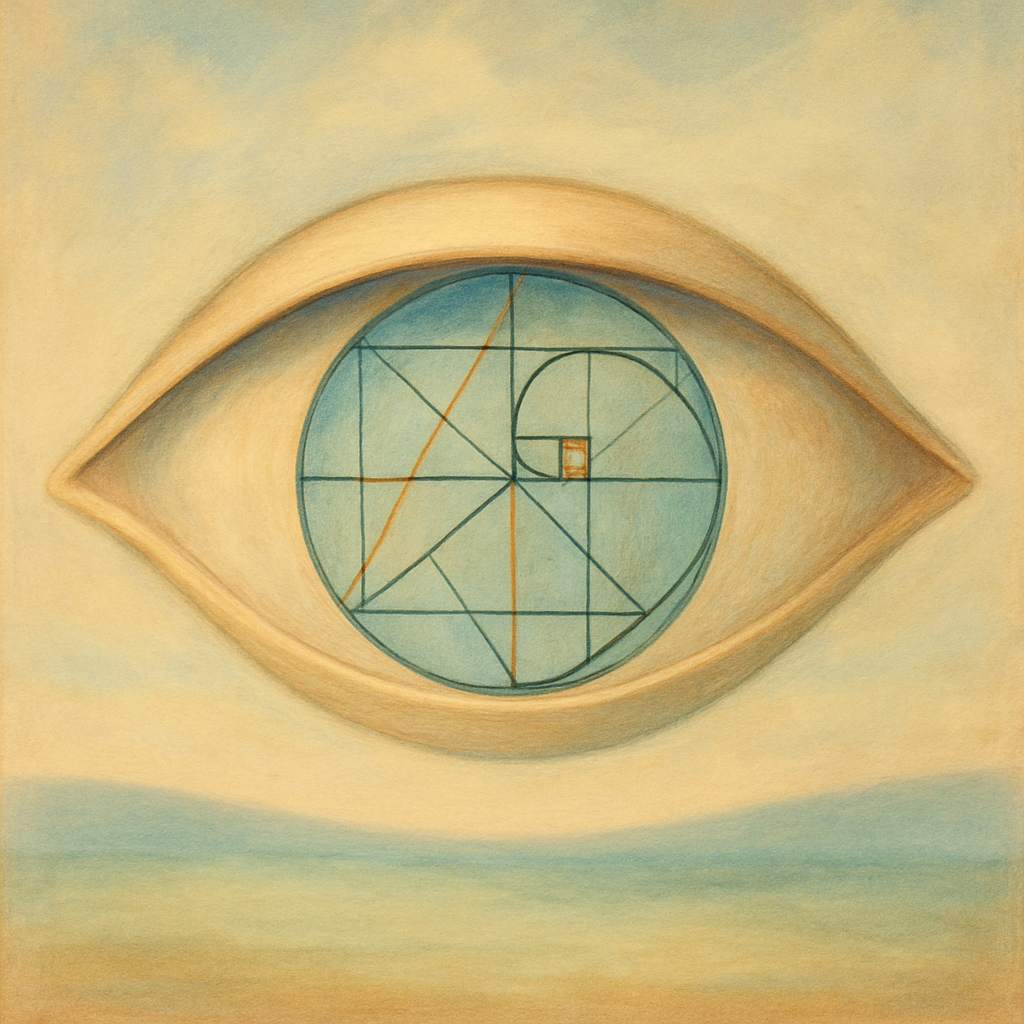
The Mathematical Eye: Finding Truth in Plain Sight
12 min • 6 lectures
This curriculum examines the mathematical foundations that structure daily life. It provides a framework for recognizing the geometric order and functional logic present in the physical world. Participants learn to cultivate a "mathematical eye" by making small, incremental shifts in their daily perception. The curriculum investigates the invisible architecture of reality, focusing on recurring patterns such as the Fibonacci sequence and the Golden Ratio. These concepts are presented as nature's blueprints for maximum efficiency and balance. By identifying these ratios in biological systems and man-made designs, learners understand how the universe solves problems of space and resource allocation. The series further explores the mathematical principles governing growth and interconnected systems. It addresses the mechanics of compounding logic, demonstrating how consistent increments result in exponential outcomes rather than linear progress. The study of probability challenges the concept of randomness, applying the law of large numbers to show how coincidences are predictable statistical certainties. Additionally, the program introduces network theory and topology to explain the structural rules of social circles, traffic, and information flow. By viewing the world through nodes and edges, individuals can identify their place within larger systemic structures. This mathematical perspective offers a grounded method for finding clarity and objective truth within complex or chaotic environments.
