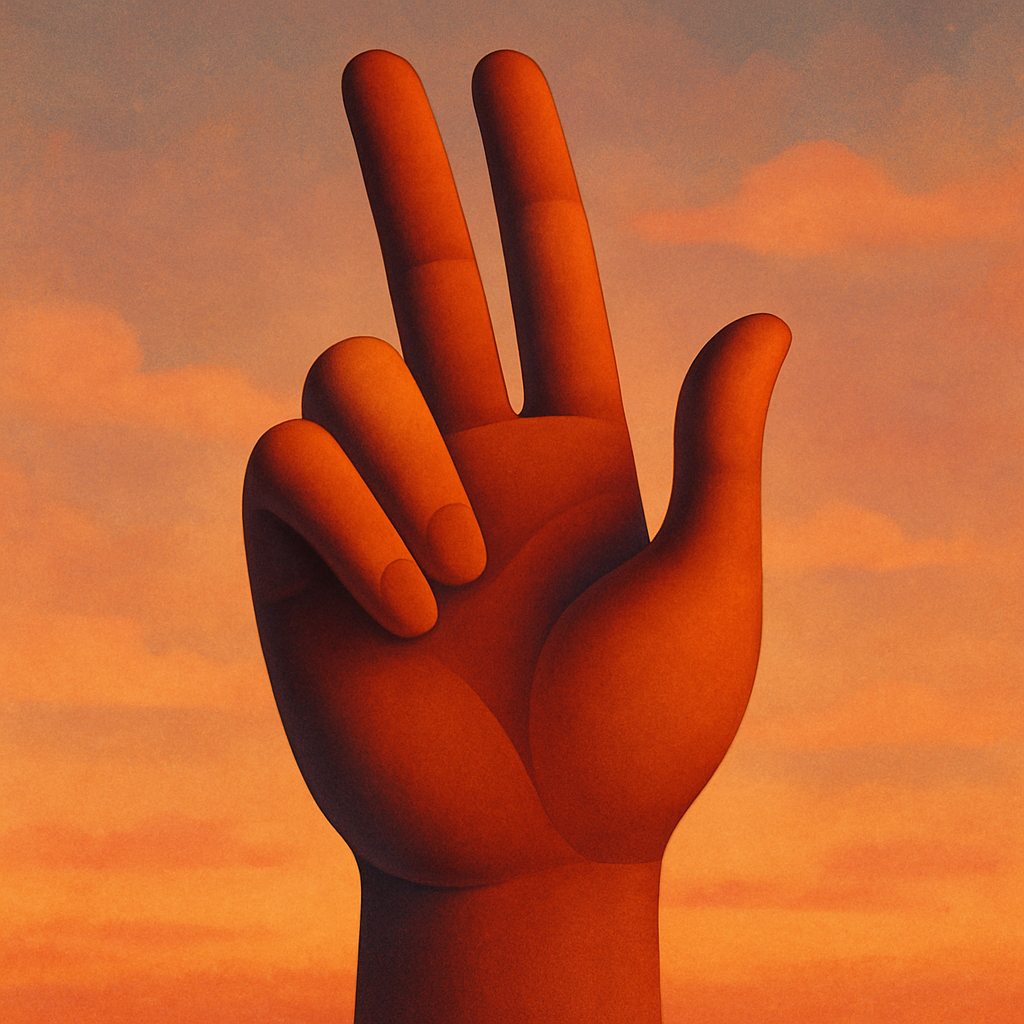
The Surprising Evolution of Hello
Slap It There: The Birth of the High-Five
I Come in Peace: The Warrior's Handshake
Beyond the Touch: Global Bows and Gazes
The Fist Bump Revolution
The Future of the 'Hi'

Transcript
Now I want to look at something equally ordinary that everyone assumes is ancient: the high-five. SPEAKER_2: Same instinct applies. People assume it's timeless. It isn't. The most widely cited origin traces it to a single moment — October 2, 1977, at Dodger Stadium. SPEAKER_1: October 2, 1977 — that's remarkably specific. What actually happened? SPEAKER_2: Los Angeles Dodgers against the Houston Astros. Dusty Baker had just hit his 30th home run, making the Dodgers an early MLB team with four players each hitting at least 30 home runs in a single season. As Baker crossed home plate, his teammate Glenn Burke stood on deck with his hand raised. Baker instinctively slapped Burke's palm. SPEAKER_1: So Burke just had his hand up and Baker reacted. It wasn't choreographed. SPEAKER_2: Not at all — and then it happened again in the same game. Burke hit a home run shortly after, and Baker returned the gesture as Burke crossed home plate. Britannica describes that exchange as the 'generally accepted' origin of the high-five as a named and recognized gesture in modern popular culture. SPEAKER_1: Is that the whole origin story? With something this simple, I'd expect multiple people to land on it independently. SPEAKER_2: There's a second well-documented claim. During a University of Louisville men's basketball practice in the 1978–1979 season, player Wiley Brown went to give Derek Smith a low five. Smith reportedly said, 'No. Up high.' Brown raised his hand, Smith slapped it — and that program later claimed it as their own origin of the gesture. SPEAKER_1: So baseball in '77, basketball in '78. But was slapping palms actually new? That's the key idea I keep circling back to. SPEAKER_2: It wasn't new at all. Think of jazz musicians and entertainers like Cab Calloway and the Andrews Sisters. A gesture called the 'low five' — also known as 'slapping skin' — was common in African American communities during the jazz age and mid-20th century. The physical act of slapping palms as approval long predates the term 'high five.' What was new in the late 1970s was the raised hand and the name. SPEAKER_1: So the gesture literally evolved upward. That means it didn't appear from nowhere — it grew out of something already embedded in vernacular culture. SPEAKER_2: Right. That's why most historians conclude there's no single definitively proven inventor. The Baker–Burke moment remains the most widely cited in encyclopedias, but the deeper roots are multiple and overlapping, grounded in African American vernacular culture and earlier palm-slapping traditions. SPEAKER_1: I've heard a story about a Vietnam veteran's unit called 'The Fives' — a soldier named Lamont Sleets who supposedly invented it. Is that real? SPEAKER_2: That one is documented fiction. ESPN reporting revealed the Lamont Sleets story was a fictional backstory created as a prank by the co-founders of National High Five Day. It spread for years because it fit so neatly into what people expected a heroic origin to look like — a textbook case of how an attractive myth can outrun the actual record. SPEAKER_1: And Glenn Burke — there's more to his story beyond that one moment at home plate. SPEAKER_2: Significantly more. Burke was openly gay among his teammates. After he was traded to the Oakland Athletics and spent time in San Francisco, the high-five was embraced in the Castro district. Later writers noted it became associated with his legacy as one of the early openly gay athletes in Major League Baseball — a symbol of joyful defiance, not just athletic celebration. SPEAKER_1: So a gesture born in a baseball stadium carried that whole history with it as it spread into everyday life. SPEAKER_2: And spread it did. Dictionaries now define the high-five as a standard informal gesture of greeting, admiration, or celebration used across many cultures. Now, remember — it even has its own annual observance: National High Five Day in the United States, held every third Thursday in April. A late-1970s sports gesture became a recognized cultural event. SPEAKER_1: That's the same arc as 'hello,' isn't it — something recent gets adopted so completely it starts to feel timeless. SPEAKER_2: Exactly. The high-five needed a home run in 1977. It spread through high-energy, high-visibility sports moments, and it is now embedded enough in everyday life that people may not think to ask where it came from. For everyone listening, the takeaway is this: the most ordinary gestures often have the most specific, traceable birthdays — if you know where to look.