The Surprising Evolution of Hello
Slap It There: The Birth of the High-Five
I Come in Peace: The Warrior's Handshake
Beyond the Touch: Global Bows and Gazes
The Fist Bump Revolution
The Future of the 'Hi'

Transcript
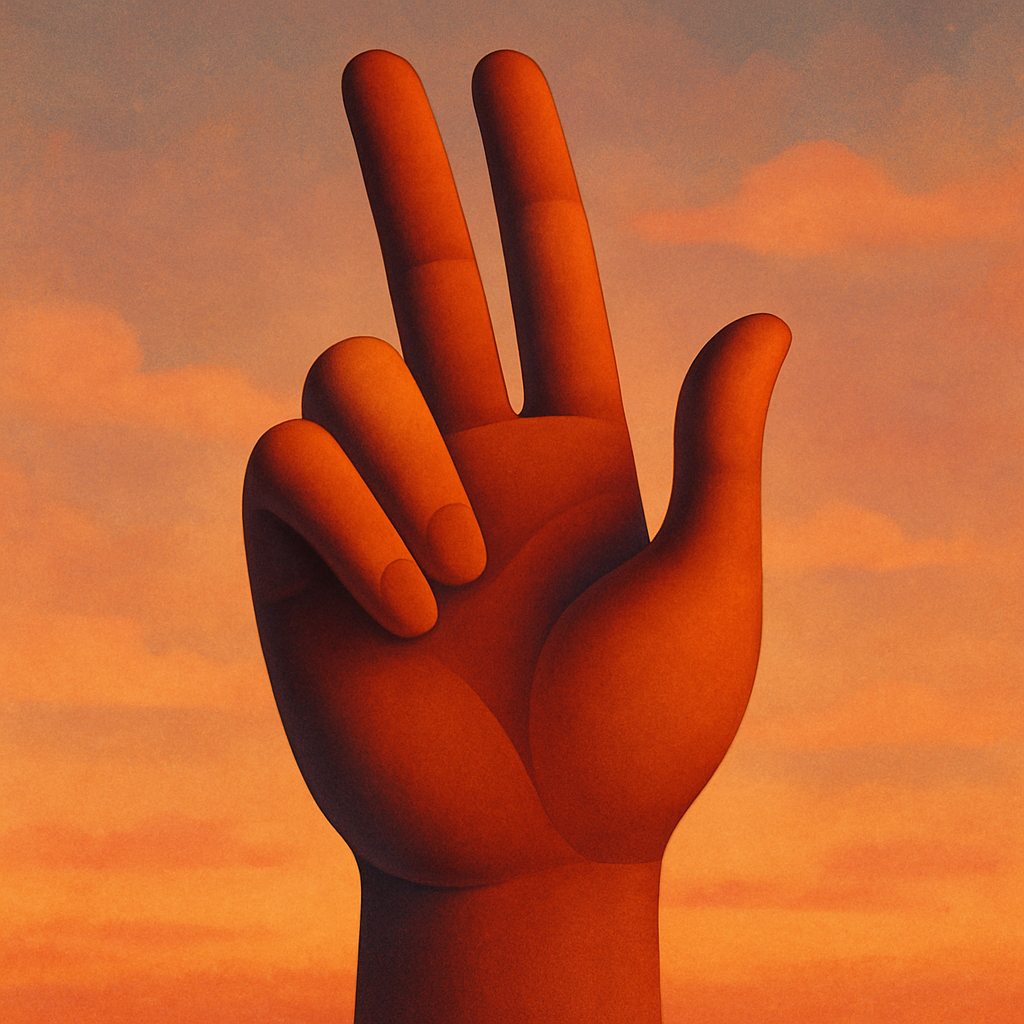
Two armed strangers meet on a road. One extends his right hand, open, palm forward, signaling no hidden weapon. The other reciprocates. They grip, shake, and walk away alive. This is the handshake's origin: a visible security check. The handshake dates back millennia, originating as a survival gesture. Archaeological evidence from Mesopotamia and Greece shows clasped hands, symbolizing farewell, union, and mutual recognition, indicating its solemn significance beyond a mere greeting. Now, think of the actual motion. You don't just hold hands. You shake. That pumping movement, researchers have suggested, was itself a practical check — dislodging any weapon that might be concealed up a sleeve. The right hand is extended specifically because most people are right-handed. A right hand gripped is a sword hand neutralized. The key idea is that every element of the gesture had a function. Nothing was decorative. For centuries, the handshake stayed relatively niche. Then something shifted. Historical research on Britain between 1700 and 1850 shows the handshake gradually replacing more hierarchical gestures — bowing, curtseying — as more egalitarian social norms spread through urban centers. That means the handshake didn't just survive antiquity. It thrived precisely when societies started treating people as equals. A warrior's safety check became a democratic statement. What's fascinating is this. The ancient power logic still lingers in the gesture. Sociological analyses show that handshakes still encode subtle status signals. Who initiates. How long it lasts. Grip strength. All of it communicates something. Professional guidelines today recommend a firm, whole-hand grip — neither limp nor crushing — because people read confidence and respect directly from that contact. The weapon check evolved into a character assessment. The handshake, rooted in classical antiquity, evolved from a weapon check to a symbol of equality and diplomacy, serving as a powerful public symbol of truce and reconciliation. [short pause] Every time you extend your right hand, you are performing a gesture that warriors, diplomats, and strangers on dangerous roads have used for thousands of years. The takeaway is simple. Every handshake, from daily interactions to televised summits, is a calculated gesture rooted in history, signaling peace with an open hand. Formal handshakes between leaders have functioned as powerful public symbols of truce and reconciliation throughout diplomatic history. The gesture carries that weight because it earned it — on ancient roads, in medieval courts, and in urbanizing Britain between 1700 and 1850, where it gradually replaced bowing and curtseying as egalitarian norms spread. Keep this in mind. The handshake is a long-surviving signal of peaceful intent with roots reaching back at least to classical antiquity. It began as proof that your killing hand was empty. It became a symbol of equality. Then a tool of diplomacy. And today, professional guidelines still recommend a firm, whole-hand grip — because people read confidence and respect directly from that contact. The weapon check evolved into a character assessment. The key idea is this: the most peaceful gesture you make every day was designed for the most dangerous moment imaginable.