
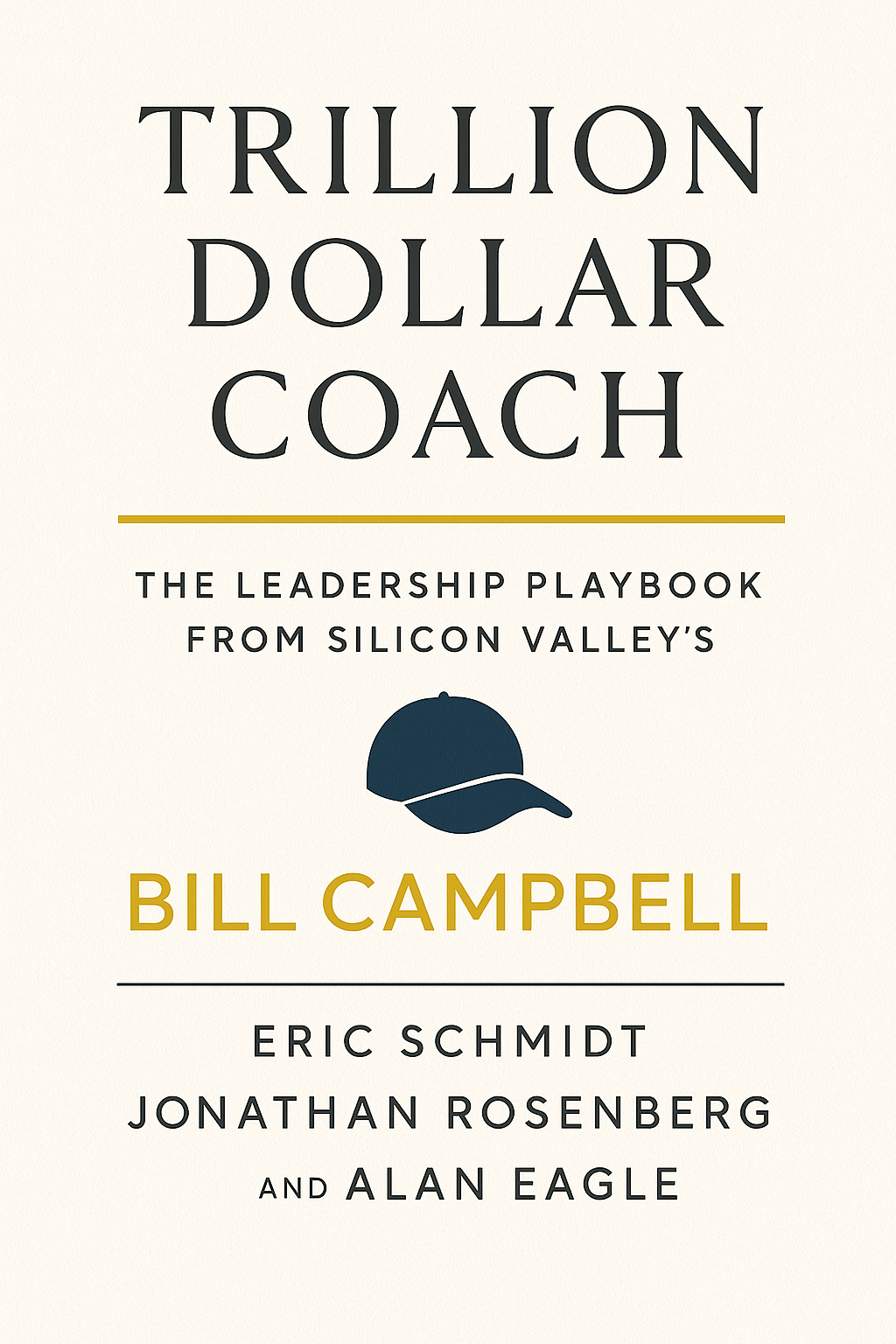
Trillion Dollar Coach
This audio course unpacks the leadership practices and business philosophies of Bill Campbell, the executive coach respected by leaders at Google, Apple, and Intuit. Drawing on insights from 'Trillion Dollar Coach,' it examines Campbell’s transition from football coach to trusted business mentor, highlighting how his focus on relationships and trust became the foundation for his impact in Silicon Valley. The series covers the importance of building trust-based relationships, strategies for developing high-performing teams, and the value of empathetic leadership, all supported by practical examples and clear steps for implementation. Key lectures outline how leaders can make effective decisions, foster honest conversations, and create cultures that support growth through coaching and feedback. The case study on Campbell’s work at Google offers a real-world view of his influence in scaling company culture and innovation. By the end of the course, listeners receive actionable guidance on applying Campbell’s principles—such as prioritizing teams, encouraging debate, giving meaningful feedback, and leading with empathy—to their own organizations. The course presents a rigorous, structured framework for cultivating people-focused leadership at every level.
Who Was Bill Campbell and Why He Matters
Who Was Bill Campbell and Why He Matters
To understand the profound impact of Bill Campbell, it's essential to start with his unique journey from the world of sports to being a transformative figure in the tech industry. Known as the 'Trillion Dollar Coach', Campbell's influence spanned organizations valued collectively at over a trillion dollars, with a legacy rich in leadership wisdom.
Bill Campbell began his professional career, interestingly enough, on the football field as a coach at Columbia University. His understanding of team dynamics and leadership was cultivated here, setting the stage for his transition into the corporate world. Slow is the transition from football to the tech realm usually perceived, Campbell's background significantly shaped his unconventional approach to business coaching. Campbell brought a team-centric mindset to the tech industry, a sector not particularly known for such values at that time.
Campbell served as CEO of Intuit and had professional stints at Apple and Go Corporation. But his most significant contribution perhaps was not from the positions he held, but from the advice he offered as a coach to some of tech’s most influential leaders. Known for his candid and staunchly loyal coaching style, Bill mentored top technology leaders, including Steve Jobs (Apple), Eric Schmidt, Larry Page, and Sergey Brin (Google), and Sheryl Sandberg (Facebook).
His nickname, the 'Trillion Dollar Coach', originated from Google’s leaders, who attributed much of their phenomenal growth to his mentorship. Beyond this label, Campbell’s influence was distinctively quiet yet profound, with many outside the tech industry unaware of his pivotal roles.
One key factor that distinguished Campbell’s coaching was his emphasis on people over processes. He believed strong, personal relationships formed the bedrock of successful organizations. This people-first mentality is why leaders at Google, Apple, and Intuit credit a significant part of their success to Campbell's guidance. He was instrumental in fostering a collaborative management culture in Silicon Valley, advocating for transparency, directness, and honest communication.
Building trust and credibility was central to Bill’s method. He managed to establish deep trust with high-profile executives through candid advice and unwavering loyalty—something many found rare in the fiercely competitive tech industry. Campbell’s coaching didn’t just influence individual executives but also had a profound impact on organizational culture across Silicon Valley.
Campbell often insisted leadership is earned through followership, not just granted by title. His philosophy centered on serving and supporting teams, which fundamentally shaped how many leaders approached their roles. Being 'made a leader by your people', as Campbell saw it, meant executives should be more focused on their team's needs than their own personal advancement.
Campbell’s leadership philosophy combined authority with empathy, a blend that helped him balance being supportive with maintaining high standards of accountability. He was known for resolving high-stakes conflicts, such as those at Google and Apple, by bridging differences and finding common ground.
Throughout his career, many notable executives regarded Campbell as their mentor for his ability to address complex issues swiftly. He used informal settings, like Sunday morning walks, for coaching, showing how unconventional methods could lead to significant breakthroughs. Despite his monumental influence, Campbell never basked in the spotlight, preferring to nurture growth and innovation in organizations quietly.
Campbell's lasting influence continues today, as business leaders still draw from his methods documented by Google executives in the book "Trillion Dollar Coach". He modeled ethical leadership, emphasizing a selfless approach and persistence on the company’s mission rather than personal gain. By aligning a leader’s success with their ability to inspire and follow through a shared vision, Campbell made an indelible mark on how leadership is perceived and practiced.
Understanding Bill Campbell’s style and principles offers vital lessons for business leaders today. His life exemplifies that the heart of leadership lies in relationships, empathy, and a relentless focus on the greater mission. Campbell taught us that real leadership transforms organizations through the collective potential and trust of its people, a lesson that holds intrinsic value in today's evolving business landscapes.
Building Trust-Based Relationships
Think about the most successful team you've ever been part of. Was it the skills, the strategy, or the shared goals that made it exceptional? According to Bill Campbell, dubbed the ‘Trillion Dollar Coach’, it was trust that formed the bedrock of greatness. In the world of business, Campbell believed that trust is more than just a feeling; it’s the glue holding high-performing teams together.
Campbell defined trust as displaying consistent integrity, honesty, and concern for others over time. He emphasized that trust doesn’t sprout overnight. It is cultivated through ongoing actions and behaviors. In business relationships, the importance of trust cannot be overstated; it forms the foundation from which communication, collaboration, and innovation rise. Without it, teams falter, and organizations struggle to harness their full potential.
In trust-based organizations, employees feel safe to take risks, share ideas, and lean into creativity. Campbell knew that when people trust each other, they collaborate more effectively and drive productivity. This isn’t merely conjecture; high-performing teams are not just about skills or talent, but rather about mutual respect and understanding.
How can leaders build such an environment? Campbell’s answer was simple yet profound: through genuine care for people. He demonstrated this by remembering personal milestones, celebrating life events with his colleagues, and extending help beyond what was professionally required. An illustrative story of Campbell’s care was when he quietly paid for an employee’s urgent personal need, highlighting his philosophy that genuine concern trumps grand gestures.
At the heart of Campbell’s approach was honesty. Transparent communication—whether it’s about company decisions or admitting one’s own mistakes—opened doors to trust. He believed leaders should match their words with actions, thereby showing consistency, an essential element for building trust.
Campbell urged leaders to see their employees as people, not just workers. By investing time to understand them personally, leaders could foster an authentic connection that fuels trust. This investment grows especially crucial during employees’ difficult times. Campbell practiced what he preached, often supporting employees through personal crises, demonstrating that trust is built through actions of empathy and support.
Open communication and visible transparency are indispensable. Campbell advocated tackling issues head-on and committing to resolve them, which are key steps in repairing broken trust. He also advised companies to integrate trust-building into their hiring, onboarding, and promotion processes, making it an institutionalized practice rather than an afterthought.
However, even the best leaders risk eroding trust by making promises without follow-up. Campbell warned against this common mistake, emphasizing that consistency and follow-through are core to maintaining trust. When conflicts occurred, he focused on reconciliation, insisting that teams work through and beyond disagreements to restore and strengthen their relationships.
In practical terms, Campbell encouraged the cultivation of empathy—understanding coworkers’ perspectives to nurture a climate of trust. He organized team phenomena such as group meals and regular check-ins as opportunities to build trust. Unique experiences like outdoor retreats or volunteering days were his innovative methods to foster genuine connections.
Monitoring trust levels regularly was not just advisable but necessary. Campbell recommended soliciting feedback to check the pulse of trust in teams, while also recognizing and correcting missteps to rebuild when trust was damaged.
The long-term benefits of a trust-centered culture are extensive and enduring. Enhanced collaboration, increased innovation, and improved productivity are only the surface-level outcomes. Trust affects retention, employee satisfaction, and long-term success, forming a symbiotic loop of positive reinforcement within a company.
Trust is particularly delicate in the context of remote or distributed teams, which makes Campbell’s lesson more relevant than ever. Model trustworthiness by showing up when needed, listening carefully, and maintaining honesty irrespective of the medium of communication.
Campbell’s methods were not just theoretical ideals but practical, lived experiences. His emphasis on relationships over short-term results, modeling behaviors of trustworthiness, and promoting a culture of empathy and support left a lasting legacy in the businesses he coached. His story serves as a testament to the power of trust as a pivotal force across industries.
Developing High-Performing Teams
Bill Campbell, a legendary figure in leadership, was driven by a core belief: the power of 'the team, the team, the team.' His philosophy emphasized that the success of a collective unit always surpasses individual accomplishments. Organizations often risk their long-term health by only spotlighting top performers. Campbell recognized that while individual talents are essential, prioritizing team success is crucial for true organizational growth. This philosophy underscores the idea that teams can overcome challenges collectively more efficiently than individuals working in silos.
Campbell found that aligning team members around shared goals and a clear purpose was vital. He helped teams define what they were working towards, ensuring everyone moved in tandem towards the same objectives. Teams with unaligned goals often flounder, wasting energy and missing opportunities to excel. To help teams clarify their purpose, Campbell encouraged open dialogue, creating an environment where everyone, from senior staff to junior employees, felt empowered to contribute their thoughts and ideas.
An essential element in building high-performing teams is fostering collaboration among diverse members. Campbell believed in the power of diversity in driving better decisions and spurring innovation. He facilitated this through routines and clear structures, such as regular check-ins and retrospectives that promoted accountability. In such environments, psychological safety is critical. Campbell encouraged leaders to cultivate spaces where team members felt secure enough to voice their thoughts, knowing they would not be ridiculed or dismissed.
Addressing conflicts or rivalries within a team, Campbell often stepped in as a mediator to refocus energy on shared outcomes rather than individual disagreements. Effective team dynamics rely on open communication, which Campbell actively promoted. He structured meetings inclusively, ensuring that even dissenting voices were acknowledged and considered. His approach encouraged both group and individual growth, balancing the nurturing of high achievers without compromising team unity.
Campbell understood the importance of each team member feeling heard. Inclusive practices ensure that ideas come from varied perspectives, making solutions richer and more robust. Maintaining team cohesion involves deliberate effort, from organizing team-building events to recognizing both group and individual contributions. Rituals, such as celebrating small wins, help maintain motivation even during setbacks, building resilience for future challenges.
Evaluation of team health was another area where Campbell focused his efforts. He implemented both formal methods, like surveys, and informal ones, such as personal conversations, to gauge team dynamics and ensure they remained healthy and effective. As work environments evolved, Campbell adapted his strategies to virtual teams by utilizing regular video check-ins and maintaining consistent routines, thereby reinforcing unity despite physical separation.
To tackle dysfunction, Campbell discouraged rewarding 'brilliant jerks'—individuals whose skills were not worth their negative impact on team morale. Feedback cycles were integral to his method, normalizing the practice of giving and receiving feedback within teams. He promoted team-based problem solving, encouraging leaders to draw from all team members’ insights and experiences. Campbell balanced celebrating individual achievements while emphasizing collective success to ensure lasting impact.
The role of diversity of thought was fundamental to Campbell's approach. It fueled innovation and allowed for reflection on organizational structures that support high-performing teams. Examples from Campbell’s career illustrate his commitment to effective team building. He involved employees at various levels in discussions, breaking down silos and injecting fresh perspectives into decision-making processes. For managers struggling with retaining top performers while keeping team unity intact, he advised embracing cross-functional projects and rotating team leadership to prevent stagnation.
By following Campbell's guidance, organizations can build environments where teams not only achieve their goals but thrive together. These principles, adaptable to virtual settings, ensure that teams remain cohesive, motivated, and capable of meeting future challenges with collective strength.
Leading with Empathy and Compassion
Empathy was a foundational principle in Bill Campbell’s leadership philosophy. He believed that empathy was not a mere accessory to effective leadership but a non-negotiable quality. In Campbell's view, organizations rise or fall based on how they treat their people, not just the bottom line. This belief set the stage for a leadership style that genuinely values people and profoundly impacts workplace culture.
Campbell saw each employee as a whole person and not just a resource, emphasizing the importance of leaders showing authentic interest in their teams' lives. His approach resulted in a more connected, engaged, and motivated workforce. A leader’s genuine interest in people can transform workplace culture, promoting trust and reducing turnover.
Leading with compassion in daily practice means integrating care and concern for employees into every decision. Campbell demonstrated this by regularly checking in on his team’s personal challenges and milestones. Leaders often struggle to balance business objectives with caring for employee well-being, but Campbell showed it was possible to do both.
Actions speak louder than words. To better understand their employees’ lives and challenges, leaders can emulate Campbell by listening carefully and without interruption, making individuals feel heard and understood. During difficult times, Campbell listened, supported, and even visited employees in hospitals or homes.
Empathetic leadership is not just about feel-good moments; it also yields tangible business benefits. Increased employee engagement, loyalty, and team performance often result from an empathetic leadership style. Yet, compassion does not mean a lack of accountability. Campbell taught that leaders could demand excellence while caring deeply, proving that compassion and accountability are not mutually exclusive.
One challenge leaders might face in practicing empathy is the temptation to avoid difficult conversations. However, Campbell modeled transparency by admitting his flaws to build authentic connections, suggesting that vulnerability enhances leadership. He also empowered others through empathetic communication, building a culture that fostered vulnerability, with leaders admitting their struggles.
Practical ways leaders can model vulnerability and humility include publicly acknowledging individual contributions and reinforcing a sense of belonging. For Campbell, noticing and celebrating individual efforts was crucial. Empathetic leaders handle emotional crises by offering support, safeguarding personal matters, and ensuring their actions match their empathetic intentions.
An example from Campbell’s career that exemplifies his empathetic leadership is his approach to layoffs and transitions. He would offer help with job searches or provide references to those affected. This care extended beyond the workplace as Campbell sometimes reached out to families, reinforcing a culture of compassion.
To encourage this culture within organizations, Campbell set an example from the top, inspiring leaders to prioritize empathy. Effective tools and processes that help leaders practice empathy include mentoring systems combining professional guidance with emotional support.
Empathy also plays a critical role in conflict resolution and difficult conversations. Campbell believed empathy could be cultivated by paying attention to individuals’ feelings and needs. He dealt with the challenges of maintaining empathy in fast-paced environments by setting boundaries while leading compassionately.
The difference between empathy and sympathy in leadership is significant. Empathy involves understanding and sharing feelings, whereas sympathy is more about pity and detachment. The long-term effects of an empathetic leadership style include sustained organizational success, achieved through loyal and engaged teams.
In conclusion, empathy must be intertwined with business and personal interactions, leading to a more cohesive, productive, and compassionate workplace. Campbell's legacy reminds us that when leaders genuinely care for their teams, the entire organization thrives.
Effective Decision-Making and Honest Conversations
Bill Campbell, known to many as the 'Trillion Dollar Coach,' emphasized the critical role of decision-making and honest conversations in successful teams and organizations. His approach to facilitating decision-making within teams was rooted in the belief that open debate leads to great decisions. He insisted on honest, sometimes intense debates to ensure all perspectives were voiced, underscoring the importance of fostering open debate before making any decisions. This approach prevented unresolved tension or suppressed opinions, which could otherwise lead to poor decision-making and inaction.
At the heart of Campbell's approach was the principle of 'disagree and commit.' In practice, this meant that once a decision was reached, everyone in the organization would align behind it, regardless of any prior disagreements. This commitment post-decision ensured unity and consistency throughout the organization, avoiding the pitfalls of having factions or divided loyalties.
Leaders who worked with Campbell learned to encourage constructive disagreement without creating lasting conflict. He taught them to structure conversations in a way that even junior employees felt empowered to challenge executives productively. This approach not only democratized discussion but also ensured that all voices were heard before a decision was made. By intervening if quieter individuals were being overlooked, Campbell ensured that every stakeholder had an opportunity to contribute meaningfully.
Once a decision was reached, Campbell advocated for a clear summary of the discussion, clarity on who owned the decision, and ensuring clear next steps. This transparent approach was particularly important when leaders had to own and explain tough decisions. Campbell believed that transparency, especially for unpopular decisions, was crucial for maintaining trust and buy-in from all team members.
Campbell's methods for moving teams from debate to action involved teaching ground rules that emphasized focusing on ideas rather than personalities and keeping discussions respectful. These rules helped maintain a culture of open, honest dialogue. He also used humor and light moments to diffuse tension during heated discussions, ensuring debates remained respectful and solution-focused.
Campbell's involvement didn't end with the decision-making process. He was a proponent of fast course correction if a decision turned out to be wrong, advocating for adjustments without blame. He also debriefed both successful and failed decisions, promoting learning from past experiences. This regular reflection and the question, 'What are we missing?' ensured ongoing feedback and learning within the organization.
The importance of psychological safety was a cornerstone of Campbell’s philosophy. Employees needed to feel safe to challenge leaders without fear of retribution. This safety was strengthened by Campbell's personal involvement in intense meetings, where he modeled healthy disagreement and facilitated respectful conflict. Such environments encouraged open feedback and honest conversations.
Campbell also recognized the risks associated with avoiding tough conversations or honest debate. Warning signs such as side conversations or the infamous 'meeting after the meeting' indicated that not all opinions were being voiced openly. By addressing these issues head-on, Campbell helped mitigate the risks of suppressed dialogue.
Campbell knew that clarity on who holds decision-making authority prevents confusion. By documenting decision discussions and holding participants accountable, he ensured transparency and clarity in decision-making processes. Additionally, he emphasized the need for periodic offsite meetings to allow space for deeper conversations on complex issues.
In conclusion, leaders who adopt Campbell’s methods will find themselves better equipped to make effective decisions while fostering a culture of honesty and openness. By balancing quick decisions with thorough discussion, encouraging critical thinking without fostering negativity, and ensuring unity around decisions, leaders can drive their teams toward success and resilience.
Coaching and Feedback: Growing Individuals and Organizations
Think of managing and coaching as two sides of the same coin, tied together but distinctly different. According to Bill Campbell, managing involves directing people—setting goals, organizing work, and measuring output. On the other hand, coaching delves deeper into the development of individuals, unlocking their potential through guidance and feedback. Campbell championed coaching, not as a specific role or task, but as an ongoing mindset essential for growth. This mindset shift from simply managing to coaching enabled teams not just to function, but to thrive and innovate.
Campbell saw the act of coaching as a continuous dialogue rather than a singular event. Feedback was not something to dread or to be delivered once a year during performance reviews. Instead, he made feedback a natural and regular part of his teams' culture by delivering it consistently. Integrating this practice made feedback normal and expected, embedding it into the fabric of the organizations he influenced.
Effective feedback, Campbell believed, was both timely and actionable. Avoiding the pitfalls of judgment or blame, he focused on specific, observable behaviors and suggested improvements rather than generalized criticisms of character. For instance, if an employee missed a deadline, rather than accusing them of being lazy, Campbell's style was to discuss what specific barriers might have caused the delay and how said barriers could be managed in the future. This approach not only encouraged personal growth but also built trust and openness.
Feedback's power also lies in its ability to spark questions and reflection, leading to self-awareness. Campbell often asked his team reflective questions such as ‘What’s holding you back?’ or ‘What help do you need to move forward?’ By fostering an environment that encouraged honest self-assessment, Campbell helped individuals identify their own paths toward improvement.
The coaching culture Campbell nurtured had lasting implications for organizational performance. He fundamentally believed that a culture rich in feedback and coaching outperformed those ruled by compliance or fear. Feedback helped create a more agile organization, ready to adapt and succeed amid changes. One testimony to this was Google's integration of 360-degree feedback, a practice Campbell advocated well before it became common. This involved obtaining feedback from multiple sources, allowing for a well-rounded view of performance and areas of improvement.
Criticism, when done constructively, became a foundation for learning rather than a barrier. Campbell saw mistakes not as failures but as learning opportunities. Turning failures into teaching moments ingrained a growth mindset within his teams. His empathy and directness struck a balance that ensured feedback was motivating rather than demoralizing.
Leaders learned to ask for feedback themselves, which not only modeled vulnerability but also signaled to their teams that everyone's growth was important. Campbell encouraged leaders to bravely seek and act upon constructive feedback about their own leadership—reinforcing the culture of transparency and trust he was known for.
On developing new leaders, Campbell assigned practical coaching tasks such as shadowing or reverse mentoring. These experiences provided budding leaders with the opportunity to learn through real-world experience, fostering their development.
An important part of coaching is knowing when to offer feedback. The timing of feedback matters; it should be specific to situations and useful while the memory is fresh. Regular rituals like weekly check-ins or one-on-ones made coaching a habit rather than an exception.
Campbell's tailored approach was notable. He understood each team member's unique strengths, aspirations, and struggles. By framing feedback for underperformers as opportunities rather than threats, he managed to inspire and motivate rather than intimidate.
For Campbell, the growth journey also meant holding people accountable while being supportive. Leaders were charged with the responsibility to guide others' development in addition to achieving their goals. Mistakes made by leaders were openly corrected, and public apologies were encouraged to reinforce transparency and accountability.
Ultimately, for feedback to be truly transformative, it must be a part of everyday team habits. By weaving coaching seamlessly into the organization’s processes and grounding it in the genuine pursuit of development, Campbell highlighted the paramount importance of coaching and feedback in shaping individuals and impacting organizational success.
Case Study: Bill Campbell at Google—Scaling Culture and Innovation
When Google began its journey of rapid expansion in the early 2000s, it faced significant challenges in maintaining its unique culture. The circumstances were ripe for an intervention, and the talented yet growing team was in need of a guiding force. Enter Bill Campbell, one of Silicon Valley's most respected advisors and coaches. Google turned to Campbell as it struggled to scale its culture while experiencing intense growth.
Google's executive team, including its founders Larry Page, Sergey Brin, and then CEO Eric Schmidt, required guidance to tackle the specific challenges of scaling their human-intensive organization. At the time, Google was expanding from mere hundreds to tens of thousands of employees. Campbell's role was crucial in coaching Google's leadership through this rapid growth phase.
Campbell helped Google define and protect its organizational culture by articulating and reinforcing company values. As an advocate of a people-first culture, Campbell encouraged Google to retain top talent even in a competitive market. This approach was essential as Google grew; it was critical to the company's ongoing success that its employees remained motivated and aligned with its core principles.
One of Campbell's key principles was institutionalizing feedback rituals. He introduced all-hands meetings and open forums to ensure that Google's culture remained inclusive. These platforms allowed employees at every level to voice their thoughts and concerns, maintaining open lines of communication across the organization.
Campbell's coaching extended beyond cultural preservation. He played a pivotal role in aligning Google's top leaders, ensuring they understood and supported the company's mission and values. He made it safe for leaders to challenge each other, fostering an environment where dissenting views could be shared without eroding trust.
Moreover, Campbell influenced Google's focus on innovation. He encouraged experimentation and risk-taking, but with a balance of operational discipline. Campbell's model was to pair ambitious goal-setting, such as OKRs (Objectives and Key Results), with robust team support. This method was credited for many of Google's breakthroughs.
Recruitment was another area where Campbell’s influence was notable. He advised on recruiting practices, ensuring that candidates were not only excellent in their fields but also fit well with Google’s culture and principles. By doing so, Campbell helped Google build teams that were aligned with its goals and values.
Campbell's coaching prowess was evident in how he helped Google’s founders transition into strong organizational leaders. He catered his mentoring to both technical founders and experienced executives, adapting his style to each individual's needs. Regular walks and informal conversations provided opportunities for big-picture coaching and reflection, which were valuable for the founders' growth.
In terms of maintaining culture during rapid growth, Campbell suggested mechanisms such as peer celebration rituals and transparent feedback sessions. These practices rooted in Campbell’s philosophy helped in honoring contributions and maintaining morale while the company expanded.
Conflicts among strong executives were inevitable at Google. Campbell was known for mediating relationships and resolving tensions between key leaders. His focus remained on the company's shared mission, ensuring conflicts did not derail Google’s strategic goals.
Several significant decisions at Google benefited from Campbell's guidance. He was instrumental in steering the company through acquisitions, helping integrate new teams while maintaining cultural consistency. During strategic pivots, Campbell supported Google, guiding its leaders through both successes and setbacks.
Campbell's influence extended to Google’s HR practices as well. His people-first philosophy contributed to shaping HR strategies that recognized and rewarded top performers, further entrenching the company’s appreciation for talent.
Today, Campbell’s legacy at Google is undeniable. His coaching left an indelible mark on the culture and innovation at the company. Google's leaders frequently extol Campbell's impact on their leadership styles. Campbell’s principles have been institutionalized, with many practices that originated from his counsel persisting at Google.
For other growing organizations, Campbell’s story with Google offers valuable lessons. His coaching model, with its focus on culture, leadership alignment, feedback, and innovation under operational discipline, provides actionable insights that can be applied broadly. These lessons highlight the power of blending strong leadership with cultural relevance to achieve sustainable success.
Applying Bill Campbell’s Principles in Your Organization
Imagine you're at a bustling startup in Silicon Valley, where ideas buzz and innovation is key. But as many leaders learn, the true catalyzing force isn't technology; it’s people. Bill Campbell, dubbed the 'Trillion Dollar Coach,' distilled leadership into principles of trust, empathy, honest communication, and collective goals. Campbell’s philosophy pivots on simple truths: building trust, fostering empathy, and emphasizing a team-first mindset.
So, where should leaders start? Gauging trust is fundamental. Feedback loops, pulse surveys, and direct check-ins are invaluable indicators of your organization’s trust levels. They highlight areas that need attention, enabling actionable insights. Once you understand where the organization stands, the next step is to actively foster trust. This is no one-time set of actions but a sustained commitment, demonstrated through consistent reliability, genuine care, and openness to feedback.
Bill Campbell did not chase heroic individual achievements. Instead, he championed a team-focused mindset, where group accomplishments overshadowed individual successes. This approach can be translated into organizations of any size by continually recognizing and rewarding team efforts. Celebrate every collective success: use rituals like regular team meetings, peer recognition events, and open Q&As to maintain momentum and unity.
Managers play a vital role in embodying empathy—check in regularly on the mental and physical wellbeing of employees, support their work-life balance, and demonstrate flexibility. This fosters a supportive environment where people feel valued. Campbell’s emphasis on transparent dialogue encourages honest communication. Start by initiating these conversations with openness and clarity. With the right systems, such as informal feedback channels or after-action reviews, teams can address issues and build solutions instantly. This immediacy not only resolves challenges but also empowers teams to move forward confidently.
A people-first leadership style thrives on support systems. Beyond formal reviews, methods such as rotating mentorship programs, anonymous suggestion platforms, and 360-degree feedback promote a culture of learning and development. For managers, embedding Campbell’s values goes beyond organizational culture—it requires behavior modeling. Leaders must act as coaches, actively seeking input and treating all interactions as growth opportunities.
When behaviors deviate from a people-first culture, leaders must address it immediately by showcasing model behavior themselves. This reinforces the importance of alignment and shared values. Similarly, fostering open debate while maintaining alignment is crucial. Campbell believed in discussing tough decisions upfront, but once consensus is built, the responsibility is a unified support of those resolutions.
Tools such as storytelling and recognition of daily exemplifications help reinforce Campbell’s lessons. Sharing stories of resilience not only keeps these ideals relevant but also can create a lasting cultural impact, going beyond any single leader's tenure. Organizations can support peer coaching and mutual development to further cement these principles, turning teams into communities focused on collective growth.
The adaptation of Campbell’s methods has traditionally seen challenges such as skepticism or resistance from entrenched hierarchies or insufficient buy-in from senior leadership. Overcoming these requires persistence, clarity, and demonstrating tangible benefits over time. Make feedback processes supportive by focusing on actionable insights rather than subjective critiques.
Consider a practical roadmap to create high-performing teams: (1) Start by building trust, (2) involve teams in co-creating values, (3) establish open feedback channels, (4) prioritize continuous learning, (5) celebrate progress, and (6) tackle issues promptly. This sequence helps embed Campbell’s mindset effectively.
In remote or hybrid settings, Campbell’s principles can enhance team experiences by ensuring consistent communication and fostering inclusivity across distances. To measure the effectiveness of these approaches, track engagement levels, employee feedback, and overall organizational results. Responding to resistance towards a people-first approach requires tact and proof—demonstrate the long-term positive outcomes of such cultural shifts.
While Campbell’s techniques have roots in Silicon Valley, they’ve been transformative in diverse contexts worldwide, from hospitals and educational institutions to nonprofits. The key to sustaining these practices lies in systematic embedding through rituals, which ensure they endure beyond individual leadership.
Bill Campbell’s philosophy complements other frameworks by maintaining a balanced blend of empathy and strategic focus on collective goals. As organizations grow, scaling these values involves proportionate structures that support peer coaching and cross-team learning. Ultimately, Campbell’s guidance lights the way for lasting cultural and business success.