
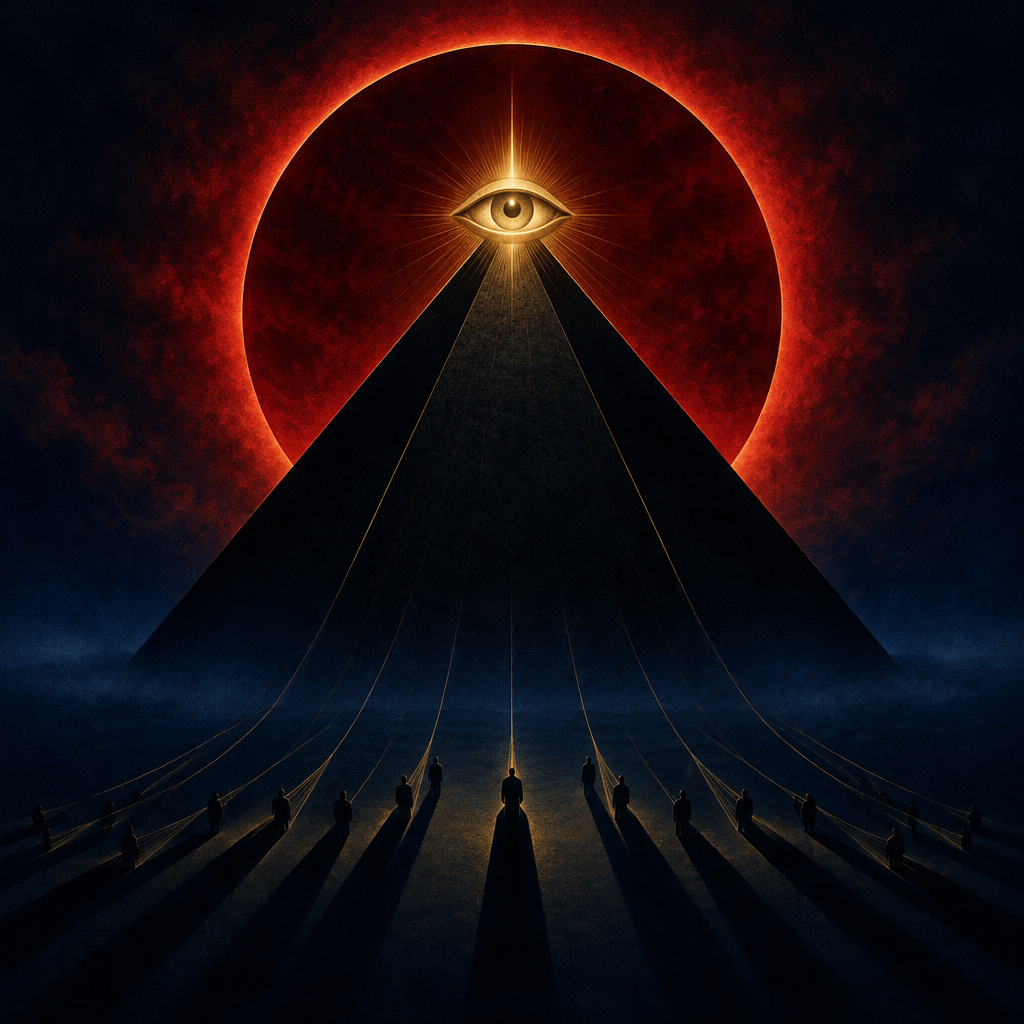
Devils, Illuminati, and the Power Elite: Unraveling Modern Conspiracy Myths
This three-lecture audio series examines why conspiracy theories linking the devil and the Illuminati to world leaders persist, and how critical thinking dismantles them. The opening lecture traces the devil's evolution from medieval religious art to modern pop-culture villain, and separates fact from fiction about the real Illuminati, a short-lived Bavarian Enlightenment society founded in 1776 and disbanded within a decade. It identifies three psychological hooks that keep these myths alive: the demand for simple explanations, the appeal of secret knowledge, and the comfort of blaming hidden enemies for complex events, illustrated through early 20th-century newspaper and radio stories that first tied elites to secret societies. The second lecture stages a structured debate between two competing claims, that a hidden cabal secretly directs world leaders versus leaders acting independently, applying both interpretations to identical evidence from the 2008 financial crisis, Bilderberg meetings, 2016 election interference narratives, and 2022 energy price spikes. Listeners watch the same data support opposite conclusions, exposing how selective interpretation and cherry-picked patterns sustain conspiracy belief. The final lecture follows investigators, including journalist Maya Patel tracing symbol memes to 19th-century pamphlets, and historian Dr. Luis Ortega mapping alleged meeting sites to public conferences, as they expose a hoax email and apply falsifiability tests that collapse the theory. Together, the series provides transferable tools: source verification, network analysis, and asking whether a claim makes testable predictions.
The Dark Narrative Begins: How Devils and the Illuminati Enter the Public Imagination
The Dark Narrative Begins: How Devils and the Illuminati Enter the Public Imagination
You're scrolling your phone on a Tuesday night, half asleep, and a video appears claiming a certain hand signal proves the world's presidents answer to a secret cabal. You keep scrolling. But a piece of it sticks, like gum on your shoe, and by Thursday you catch yourself wondering whether there's something to it. That's not a weakness, Bitan. That's your brain doing exactly what brains do. What I want to show you is how a real, small, eighteenth-century club became the star of that video, and why the devil keeps getting cast as the villain behind powerful people.
The actual Illuminati existed. A professor of canon law in Ingolstadt, Bavaria, named Adam Weishaupt, founded a secret society in 1776 that promoted Enlightenment ideals and pushed to change entrenched political and religious institutions. His followers originally called themselves Perfectibilists, which, honestly, I find delightful. The group recruited partly through Masonic lodge networks, and it used internal ciphers, coded writing that gave the whole thing an aura of mystery. But the documented history is remarkably short. Bavarian authorities banned the society in 1785, and the historical record doesn't show it continuing after that. Nine years, done. So that means a group that barely outlasted a decade somehow gets blamed for coordinating events in our own time. The gap between those two facts is where the myth lives.
So how does a dead society stay so alive? Part of the answer is the devil himself, or rather, the idea of him. The word Satan carries a long religious history, and different traditions understand it differently, so the devil is not one uniform figure across cultures. But he's flexible, and that's his power. For example, when medieval authorities faced unrest they couldn't explain, alleging devil worship turned confusing events into a story with a face and a motive. A claim that politicians worship the devil sounds like an accusation, but it's a claim about real people and actions, and a story is not evidence of those actions by itself. What gets me is how old that trick is, and how well it still works on a Tuesday-night feed.
Now, the psychology, because this is the part that surprised me. Researchers who study conspiracy beliefs point to a few engines running underneath. There are epistemic motives, the desire to understand and feel certain. There are existential motives, wanting safety and control. And there are social motives, protecting your group and its identity. On top of those sit two mental habits: pattern perception, where you spot connections in coincidences, and agency detection, the instinct to look for an actor behind events. Both are useful in ordinary life, and both can misfire. A perceived connection does not prove that events were coordinated. Threat detection works the same way, making hostile coalitions feel real even when the evidence doesn't establish one. And one careful review makes a point I want you to keep: belief feels satisfying, but the research doesn't show it reliably delivers the certainty or control it promises.
Which brings us back to your Thursday-night doubt. When a scandal erupts and someone whispers about a hidden hand, you don't have to choose between naive trust and total cynicism, Bitan. You have a third move: separate verifiable evidence from inference, symbolism, and speculation. Secrecy alone doesn't demonstrate control over governments, and a symbol or an anonymous accusation about a named leader is a starting question, not a verdict. The motives behind a belief are not evidence for it. Ask what the claim rests on, not how good the story feels. The Illuminati gave us ciphers and a name; the myth machine gave them centuries they never lived. When you can tell those two apart, the shadow play loses its grip.