
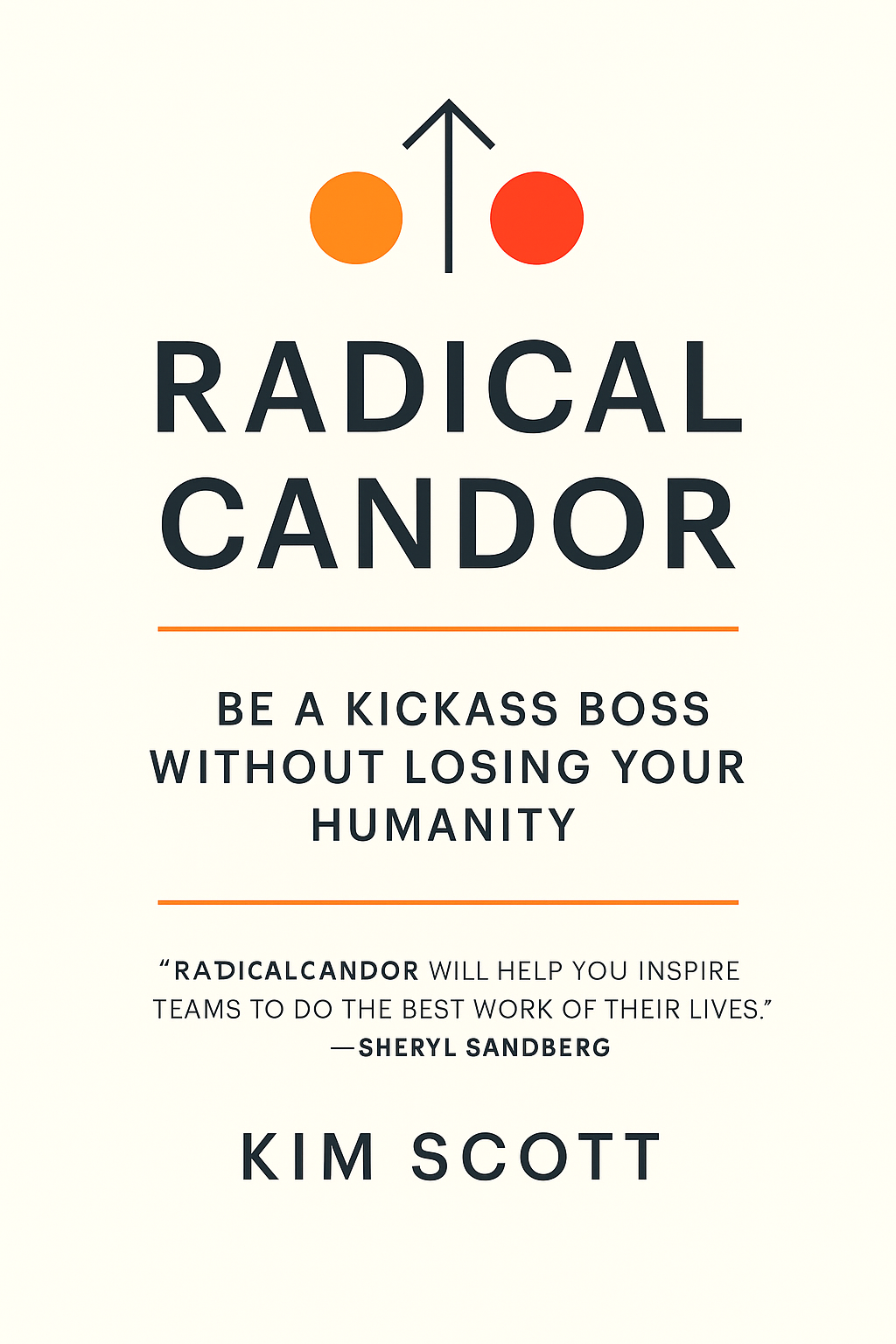
Radical Candor
This audio course offers a structured analysis of "Radical Candor" by Kim Scott, focusing on the book’s two chapters through six targeted lectures. The course begins by establishing the foundational context, clarifying the book’s purpose, and outlining the main questions it addresses. Listeners then examine the most significant stories and lessons, identifying which narratives carry the greatest impact and why. The course continues by unpacking the core concepts and frameworks that underpin Scott’s approach, emphasizing how these ideas interconnect to provide clarity in complex situations. Subsequent lectures address the challenges highlighted in the book and the solutions Scott proposes, encouraging listeners to relate these to their own experiences. Practical application is a central theme, with guidance on translating the book’s insights into actionable steps for both personal and professional growth. The final lecture prompts reflection on the overall impact of "Radical Candor" and supports learners in planning their next steps for continued development. Each lecture is designed to maximize understanding by focusing on a distinct aspect of the book, ensuring a comprehensive and actionable learning experience.
Foundations and Context: Chapters 1-2
Foundations and Context: Chapters 1-2
Radical Candor, Kim Scott's management framework, rests on simultaneously caring personally while challenging directly. The concept crystallized when Scott's boss Sheryl Sandberg confronted her about saying "um" repeatedly during presentations, first trying gentle hints that Scott dismissed, then finally stating bluntly "you sound stupid." This wasn't cruelty but kindness backed by genuine concern for Scott's career growth, demonstrating that effective feedback requires both care and directness.
The framework creates four quadrants along two axes: caring personally and challenging directly. Radical Candor itself occupies the quadrant where both dimensions are high, while Ruinous Empathy involves caring without challenging, Obnoxious Aggression means challenging without caring, and Manipulative Insincerity represents neither caring nor challenging. Understanding these quadrants helps managers identify their default patterns and adjust their approach accordingly.
Runinous Empathy emerges as the most common management failure, where managers avoid difficult conversations to spare feelings in the moment but ultimately prevent growth and cause greater harm. Scott illustrates this through her own failure to fire an underperforming employee quickly enough; her misplaced kindness hurt the employee, team, and company. The employee later acknowledged that being fired was the best thing that happened to him, revealing how avoiding hard truths damages everyone involved.
Obnoxious Aggression, while unpleasant, ranks as the second-best quadrant because at least the feedback is clear and actionable. Manipulative Insincerity, characterized by political behavior and backstabbing, represents the worst possible approach since it provides neither clarity nor genuine concern. These distinctions matter because managers must understand that being direct, even imperfectly, beats being evasive or dishonest.
Guidance, defined as the practice of giving, receiving, and encouraging feedback, serves as the essential building block for effective management. Scott challenges the misconception that being nice means withholding criticism, arguing instead that kind and clear guidance creates the culture necessary for people to do their best work. The concept of "situational Radical Candor" recognizes that what counts as caring and challenging varies by individual, culture, and context, requiring managers to adapt while maintaining both dimensions.
Practical implementation requires delivering criticism immediately and in person when possible, focusing on specific behaviors rather than personality traits. Guidance should become a frequent, informal part of daily work rather than being reserved for formal reviews, preventing small problems from becoming large ones. Scott emphasizes that leaders must actively solicit feedback from their teams, asking questions like "Is there anything I could do or stop doing that would make it easier to work with me?" and rewarding candor even when the feedback is uncomfortable.
The general rule of public praise and private criticism applies in most situations, though exceptions exist for teaching moments. Scott provides the example of Bob, an employee with a body odor problem affecting team dynamics; when she finally addressed it directly after initially avoiding the conversation, Bob was grateful because no one had told him, and he immediately fixed the problem. This illustrates how "impromptu guidance" addresses issues as they arise rather than waiting for scheduled meetings, demonstrating that people often want honest feedback more than managers assume.
Mastering guidance requires overcoming common fears about hurting feelings or damaging relationships, recognizing that withholding honest feedback is actually more disrespectful and harmful long-term. The goal throughout is helping people grow and succeed, not asserting authority or superiority. Creating systems and norms that institutionalize feedback culture, encouraging peer-to-peer guidance, and understanding how to handle defensive reactions all contribute to building an environment of trust.
Scott argues that getting these relationship dynamics right forms the foundation for everything else in management, from driving results to building cohesive teams to developing careers. Radical Candor is not a personality type but a learnable behavior that anyone can practice to create workplaces where both praise and criticism flow freely. This framework ultimately serves as the bedrock for all subsequent management practices, making it essential for leaders who want their teams to thrive.
Key Stories and Lessons: Chapters 1-2
In the world of management, the four quadrants of Radical Candor—Radical Candor, Ruinous Empathy, Obnoxious Aggression, and Manipulative Insincerity—are not just theoretical constructs but real-world behaviors that manifest in everyday interactions. Understanding how these quadrants play out in practical scenarios is crucial for managers aiming to foster a culture of honest feedback and growth.
**Ruinous Empathy** is a common pitfall where managers, out of a desire to be kind, avoid giving necessary feedback. This often stems from a fear of hurting feelings or damaging relationships. However, this approach can lead to stagnation and missed opportunities for improvement. For instance, a manager might hesitate to address an employee's consistent tardiness, thinking they are being considerate of the employee's personal challenges. Yet, this avoidance can lead to resentment among team members who perceive a lack of accountability, ultimately harming team morale and productivity.
To correct tendencies towards Ruinous Empathy, managers should focus on the long-term benefits of honest feedback. They can start by framing feedback as a tool for growth rather than criticism. Encouraging a culture where feedback is seen as a positive and necessary part of development can help shift perceptions. Managers can also practice delivering feedback in a way that is both direct and supportive, ensuring that the employee understands the intent is to help them succeed.
**Obnoxious Aggression**, on the other hand, occurs when managers challenge directly without showing personal care. This can create a hostile work environment where employees feel undervalued and disrespected. An example might be a manager who publicly criticizes an employee's work without acknowledging their efforts or providing constructive guidance. This approach can lead to high turnover rates and a toxic workplace culture.
To mitigate Obnoxious Aggression, managers should strive to balance directness with empathy. This involves taking the time to understand the employee's perspective and acknowledging their contributions before offering criticism. Building a rapport with team members can also help, as it establishes a foundation of trust that makes direct feedback more palatable.
**Manipulative Insincerity** is characterized by a lack of both care and challenge. This often manifests as passive-aggressive behavior or political maneuvering, where feedback is withheld or delivered insincerely. For example, a manager might avoid giving negative feedback directly to an employee, instead choosing to discuss the issue with others behind the employee's back. This behavior erodes trust and can lead to a culture of gossip and backstabbing.
To address Manipulative Insincerity, managers should commit to transparency and open communication. This means addressing issues directly with the individuals involved and fostering an environment where honesty is valued over politicking. Encouraging team members to speak up and share their perspectives can also help dismantle a culture of insincerity.
**Radical Candor** itself is the ideal quadrant, where managers care personally and challenge directly. This approach fosters a culture of trust and continuous improvement. Managers practicing Radical Candor are seen as allies in their employees' growth, providing feedback that is both honest and supportive. This can lead to higher engagement, better performance, and a more cohesive team.
In practice, achieving Radical Candor requires a commitment to ongoing learning and adaptation. Managers should regularly solicit feedback from their teams, asking questions like, "What can I do to support you better?" and "How can I improve as a leader?" This not only models the behavior they wish to see but also demonstrates a willingness to grow alongside their team.
Ultimately, the key to navigating these quadrants lies in understanding the impact of one's behavior on others and being willing to adjust accordingly. By recognizing and addressing tendencies towards Ruinous Empathy, Obnoxious Aggression, and Manipulative Insincerity, managers can create a work environment where Radical Candor thrives, leading to better outcomes for both individuals and the organization as a whole.
Core Concepts and Frameworks: Chapters 1-2
Radical Candor, as conceptualized by Kim Scott, is a management framework that emphasizes the importance of caring personally while challenging directly. This dual approach is exemplified by Scott's experience at Google, where her boss, Sheryl Sandberg, provided critical feedback about Scott's tendency to say "um" during presentations. Sandberg's feedback was not an act of cruelty but a demonstration of genuine care for Scott's career development. This incident underscores the essence of Radical Candor: the willingness to be direct and honest, even when it is uncomfortable, because it is ultimately in the best interest of the individual receiving the feedback.
The framework is structured around four quadrants, each representing a different approach to feedback and management. Radical Candor occupies the quadrant where both caring personally and challenging directly are high. In contrast, Ruinous Empathy involves caring without challenging, Obnoxious Aggression means challenging without caring, and Manipulative Insincerity represents neither caring nor challenging. Understanding these quadrants helps managers identify their default patterns and adjust their approach accordingly.
Ruinous Empathy is identified as the most common management failure. It occurs when leaders avoid difficult conversations to spare feelings, ultimately preventing growth and causing greater harm. Scott illustrates this through her own failure to fire an underperforming employee quickly enough; her misplaced kindness hurt the employee, team, and company. The employee later acknowledged that being fired was the best thing that happened to him, revealing how avoiding hard truths damages everyone involved.
Obnoxious Aggression, while unpleasant, ranks as the second-best quadrant because at least the feedback is clear and actionable. Manipulative Insincerity, characterized by political behavior and backstabbing, represents the worst possible approach since it provides neither clarity nor genuine concern. These distinctions matter because managers must understand that being direct, even imperfectly, beats being evasive or dishonest.
Creating a feedback-rich culture is essential for implementing Radical Candor effectively. This involves fostering an environment where feedback flows freely in all directions, not just from managers to employees. Encouraging peer-to-peer feedback is a critical component of this culture. Managers can facilitate this by modeling the behavior themselves, actively soliciting feedback from their teams, and rewarding candor when it is offered.
Building trust within teams is another crucial element. Trust is the foundation that allows for open and honest communication. Managers can build trust by being consistent in their actions, following through on commitments, and demonstrating genuine care for their team members. When team members feel valued and respected, they are more likely to engage in candid conversations and provide honest feedback.
Practical implementation of Radical Candor requires delivering criticism immediately and in person when possible, focusing on specific behaviors rather than personality traits. Guidance should become a frequent, informal part of daily work rather than being reserved for formal reviews, preventing small problems from becoming large ones. Scott emphasizes that leaders must actively solicit feedback from their teams, asking questions like "Is there anything I could do or stop doing that would make it easier to work with me?" and rewarding candor even when the feedback is uncomfortable.
The general rule of public praise and private criticism applies in most situations, though exceptions exist for teaching moments. Mastering guidance requires overcoming common fears about hurting feelings or damaging relationships, recognizing that withholding honest feedback is actually more disrespectful and harmful long-term. The goal throughout is helping people grow and succeed, not asserting authority or superiority. Creating systems and norms that institutionalize feedback culture, encouraging peer-to-peer guidance, and understanding how to handle defensive reactions all contribute to building an environment of trust.
Scott argues that getting these relationship dynamics right forms the foundation for everything else in management, from driving results to building cohesive teams to developing careers. Radical Candor is not a personality type but a learnable behavior that anyone can practice to create workplaces where both praise and criticism flow freely. This framework ultimately serves as the bedrock for all subsequent management practices, making it essential for leaders who want their teams to thrive.
Challenges and Solutions: Chapters 1-2
Kim Scott's Radical Candor framework emphasizes the importance of delivering honest feedback with genuine care. This approach is not about being harsh but about fostering growth and improvement. The framework is built on two dimensions: caring personally and challenging directly. When both dimensions are high, Radical Candor is achieved, creating an environment where feedback is both kind and clear.
A key story illustrating this concept involves Sheryl Sandberg's feedback to Scott about her habit of saying 'um' during presentations. Sandberg's blunt comment that Scott sounded stupid was not an act of aggression but a necessary wake-up call, delivered after gentler hints failed. This feedback was rooted in a foundation of care and concern for Scott's career growth.
The framework also identifies three other quadrants: Ruinous Empathy, Obnoxious Aggression, and Manipulative Insincerity. Ruinous Empathy, where care is high but challenge is low, is the most common management failure. It involves avoiding difficult conversations to spare feelings, ultimately causing more harm by preventing growth. Obnoxious Aggression, characterized by high challenge but low care, is less desirable but still provides clear, actionable feedback. Manipulative Insincerity, the worst quadrant, involves neither care nor challenge, often manifesting as political behavior and backstabbing.
While the framework provides a clear structure for delivering feedback, it also acknowledges the psychological challenges involved. Receiving feedback can trigger defensive reactions, making it difficult for individuals to accept and act on the information. To address this, Scott emphasizes the importance of fostering a growth mindset within teams. This involves encouraging team members to view feedback as an opportunity for development rather than a personal attack.
Managing defensive reactions requires creating an environment of psychological safety, where individuals feel secure enough to be vulnerable. Leaders play a crucial role in modeling this behavior by openly soliciting feedback and demonstrating how to receive it constructively. By asking questions like, "Is there anything I could do or stop doing that would make it easier to work with me?" leaders show that they value input and are committed to continuous improvement.
Fostering a growth mindset also involves reframing feedback as a tool for learning rather than a judgment of character. This shift in perspective helps individuals focus on specific behaviors that can be changed, rather than feeling attacked on a personal level. Encouraging team members to set personal development goals and track their progress can further reinforce this mindset.
In addition to managing defensive reactions, it's important to recognize the emotional impact of feedback. Even when delivered with care, feedback can be difficult to hear. Leaders should be mindful of this and provide support to help individuals process and act on the information. This might involve offering additional resources, such as coaching or training, to help team members develop the skills they need to improve.
Ultimately, the goal of Radical Candor is to create a culture where feedback flows freely in all directions, enabling individuals and teams to reach their full potential. By focusing on the psychological aspects of receiving feedback, leaders can help their teams embrace a growth mindset and view feedback as a valuable tool for personal and professional development. This approach not only enhances individual performance but also strengthens team dynamics and drives organizational success.
Practical Applications: Chapters 1-2
Kim Scott's Radical Candor framework emerged from a pivotal moment at Google when her boss Sheryl Sandberg confronted her about repeatedly saying 'um' during presentations. Sandberg initially tried gentle hints, but when those failed to land, she finally said bluntly that Scott sounded stupid. This wasn't mean but kind, because Sandberg cared enough about Scott's career to risk the discomfort of directness.
The framework creates four quadrants based on two dimensions: caring personally and challenging directly. Radical Candor occupies the high-care, high-challenge quadrant, representing the ideal management approach. The other three quadrants represent failure modes that undermine effectiveness and relationships.
Ruinous Empathy, combining high care with low challenge, emerges as the most common management failure. Obnoxious Aggression delivers high challenge without care, ranking as second-best because feedback remains clear despite lacking empathy. Manipulative Insincerity, the worst quadrant with low care and low challenge, manifests through political behavior, backstabbing, and passive aggression.
Scott emphasizes that Radical Candor is not a personality type but a behavior anyone can practice, requiring adaptation to cultural context and individual relationships. The framework's importance becomes clear through workplace examples demonstrating how withholding feedback causes greater harm than delivering it directly. Scott's failure to fire an underperforming employee quickly enough illustrates Ruinous Empathy in action; she worried about the impact on his life, but avoiding the difficult conversation ultimately hurt everyone involved.
The employee later acknowledged that being fired was the best thing that happened to him, forcing him to find work better suited to his strengths. Another example involves Bob, an employee with a body odor problem affecting team dynamics. When Scott finally addressed it directly after initially avoiding the conversation, Bob was grateful because no one had told him, and he immediately fixed the issue.
These stories demonstrate that withholding honest feedback is actually more disrespectful and harmful than delivering it with care. The key insight is that being nice doesn't mean avoiding difficult conversations. True kindness requires caring enough to help people grow, even when the conversation feels uncomfortable.
In today's digital age, technology plays a crucial role in facilitating feedback. Various tools and platforms can help managers gather and act on feedback effectively. For instance, platforms like Slack and Microsoft Teams allow for real-time communication, enabling managers to provide immediate feedback. These tools can be used to create dedicated channels for feedback, where team members can share their thoughts and suggestions openly.
Additionally, performance management software like 15Five and Lattice offer structured ways to solicit feedback. These platforms provide templates and prompts that guide managers and employees in giving and receiving feedback. They also allow for tracking progress over time, making it easier to identify patterns and areas for improvement.
Surveys and polls, facilitated by tools like SurveyMonkey or Google Forms, can be used to gather anonymous feedback from team members. This can be particularly useful in situations where employees might feel uncomfortable providing direct feedback. By ensuring anonymity, managers can encourage more honest and candid responses.
Moreover, video conferencing tools like Zoom or Google Meet can be used for face-to-face feedback sessions, even in remote settings. This allows for more personal interactions, where non-verbal cues can be observed, and feedback can be delivered with empathy and understanding.
Incorporating these technological tools into the feedback process not only streamlines communication but also fosters a culture of openness and continuous improvement. By leveraging technology, managers can ensure that feedback is timely, relevant, and actionable, ultimately leading to better team dynamics and performance.
The integration of technology in feedback processes aligns with the principles of Radical Candor, as it emphasizes the importance of clear, direct, and caring communication. By using these tools effectively, managers can create an environment where feedback is not just a formality but a valuable part of the team's growth and success.
Reflections and Next Steps: Chapters 1-2
Radical Candor, as introduced by Kim Scott, is not just a management tool but a transformative approach that can significantly impact team dynamics and career development. The framework's core principle is the balance between caring personally and challenging directly, which fosters an environment where feedback is not only accepted but actively sought and valued.
The long-term benefits of Radical Candor are evident in how it reshapes team interactions. When team members feel safe to express their thoughts and concerns, it leads to more open communication and collaboration. This openness reduces misunderstandings and conflicts, as issues are addressed promptly rather than festering into larger problems. Teams that practice Radical Candor often report higher levels of trust and morale, as everyone feels their contributions are valued and their growth is supported.
One of the most significant impacts of a feedback-rich culture is on career development. Employees who receive regular, constructive feedback are more likely to understand their strengths and areas for improvement. This clarity allows them to focus on personal and professional growth, leading to increased job satisfaction and performance. Moreover, managers who practice Radical Candor are better equipped to mentor and guide their teams, helping individuals reach their full potential.
Research supports the positive outcomes of a feedback-rich environment. Studies have shown that organizations with strong feedback cultures experience lower turnover rates, as employees feel more engaged and committed to their work. Additionally, these organizations often see higher levels of innovation, as team members are encouraged to share ideas and take risks without fear of harsh judgment.
Success stories from companies that have embraced Radical Candor further illustrate its benefits. For instance, a tech company that implemented the framework reported a significant increase in employee engagement scores. Team members felt more empowered to voice their opinions and contribute to decision-making processes, leading to more innovative solutions and improved project outcomes.
Another example comes from a marketing firm that struggled with high employee turnover. By adopting Radical Candor, the firm was able to create a more supportive and transparent work environment. Employees appreciated the honest feedback and felt more connected to their roles and the company's mission. As a result, turnover rates decreased, and the firm saw a boost in productivity and client satisfaction.
The key to successfully implementing Radical Candor lies in consistency and commitment. Leaders must model the behavior they wish to see, actively seeking feedback from their teams and demonstrating a willingness to listen and adapt. This approach not only builds trust but also encourages team members to follow suit, creating a culture where feedback is a natural and integral part of daily operations.
It's important to note that Radical Candor is not about being brutally honest or harsh. Instead, it's about delivering feedback with empathy and respect, ensuring that the recipient understands the intention behind the message. This approach requires skill and practice, as managers must learn to tailor their feedback to individual needs and cultural contexts.
In conclusion, Radical Candor offers a powerful framework for enhancing team dynamics and supporting career development. By fostering a culture of open communication and continuous feedback, organizations can unlock the full potential of their teams, driving innovation and success. The long-term benefits of this approach are clear, making it an essential practice for any leader committed to building a thriving and resilient workplace.