
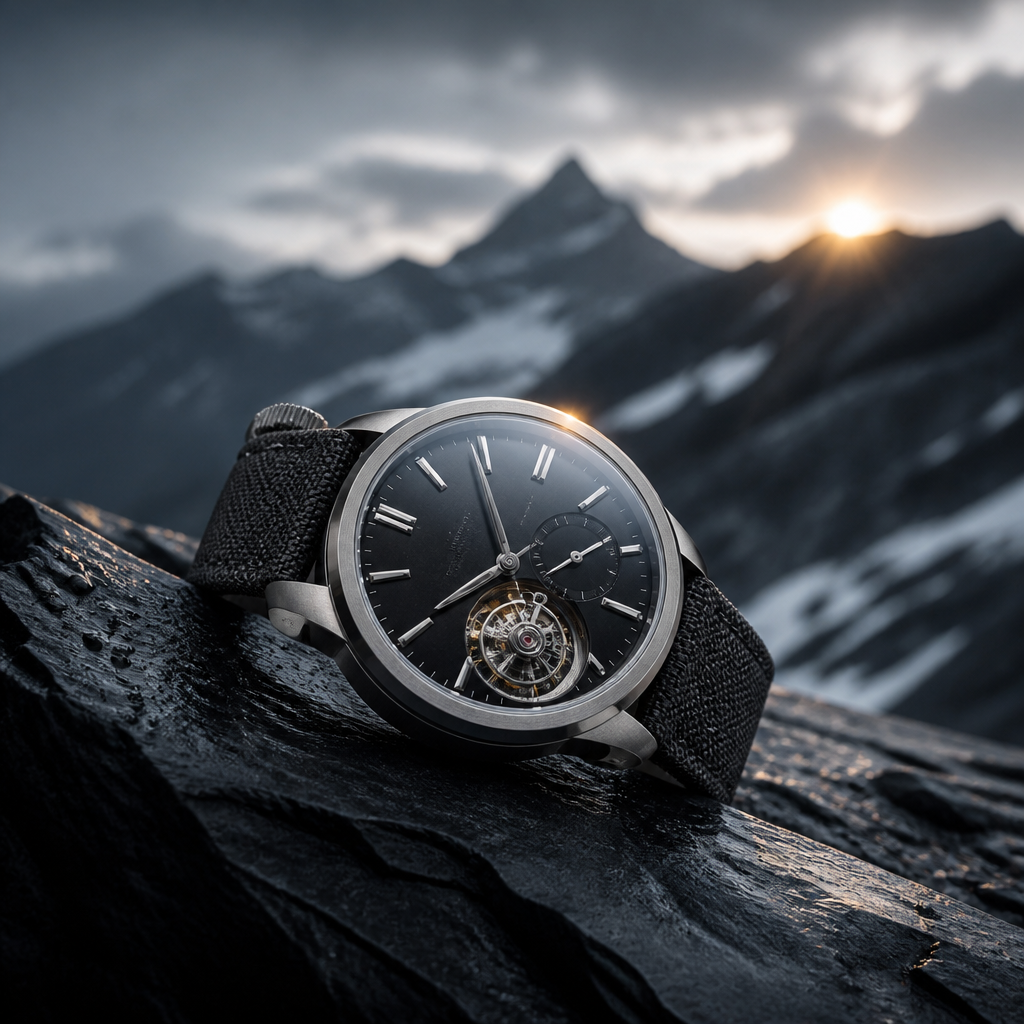
The $20 Watch That Beat the Luxury Legends
King of Watches is a three-lecture audio course that examines why watches hold such cultural and personal power, and what actually lies behind the myths of luxury timepieces. The opening lecture establishes the emotional foundation: a collector's first encounter with a legendary watch, the historical symbolism of the wristwatch, the psychology of personal adornment, and the iconic models that defined their eras. A watch, as the course frames it, is a story worn on the wrist—and understanding that allure prepares listeners for the technical and historical questions that follow. The second lecture challenges assumptions about value through a two-speaker dialogue between a narrator and a watch historian. It follows a tech entrepreneur who wears a $20 digital watch instead of a $50,000 mechanical masterpiece, using his story to unpack the quartz crisis, the rise of digital watches, the tension between cost and craftsmanship, and the consumer psychology of perceived value. The final lecture confronts the popular belief that luxury watches last forever. Starting at the moment a century-old pocket watch seizes for good, it tests each claim behind the myth against hard evidence: mechanical wear, material fatigue, the economics of regular servicing, market depreciation, and collector sentiment. By the end, listeners gain a realistic, evidence-based view of watch longevity, investment value, and the difference between what watches promise and what they deliver.
The Crown of Time: Why Watches Captivate Us
The Crown of Time: Why Watches Captivate Us
Twenty watches. That was all the team led by Tsuneya Nakamura at Seiko had finished by December 1969, after the company president pushed them to deliver a commercial quartz wristwatch within a single year. Think of the pressure in that room: hand-built machines, a deadline measured in months, and a technology nobody had ever worn on a wrist before. On December 25, 1969, Seiko released the Quartz Astron 35SQ, which the Seiko Museum describes as the world's first quartz wristwatch. I keep coming back to that detail, Jordan — not the launch, but the twenty watches. Because it tells you that the watches we treasure are never really about telling time. They're about what people are willing to build, buy, and carry, when a phone on the counter would do the job for free.
So why does a mechanical watch still pull at us? A watch, at its heart, is a portable timekeeping instrument — it carries a representation of time onto your body, so you never have to consult a fixed clock. That's from Encyclopaedia Britannica, and it's the quiet genius of the object. Inside a traditional mechanical watch, a coiled mainspring stores energy, and a balance wheel and escapement regulate how that energy escapes, tick by tick. Which means, when you strap one on, you're wearing a tiny mechanical heart. And that's the, the thing I didn't expect when I first learned this: the quartz revolution made watches more accurate, and somehow made mechanical ones more desirable, not less.
Now, here's where the quartz story gets strange, and honestly, beautiful. Seiko's path to the Astron began with a problem of sheer size. A quartz clock the company built for a broadcasting station in 1958 was about the size of a large locker. Seiko says shrinking that to a wristwatch meant reducing the scale by roughly 300,000 times. For example, that's like compressing a city bus down to something smaller than a grain of rice. And the physics underneath goes back further still: Pierre Curie discovered the piezoelectric effect in 1880 — quartz generating electrical charges under mechanical stress. In 1927, Warren A. Marrison at Bell Telephone Laboratories built an experimental quartz timekeeping machine, decades before anyone wore one.
What convinces me about this story, though, is what accuracy actually meant. The Astron's stated performance was plus or minus 0.2 seconds a day — set against mechanical wristwatches of the era, where a few seconds to a few dozen seconds of daily drift was considered normal for high-precision pieces. Its quartz oscillator vibrated at 8,192 hertz, and the launch price was 450,000 yen, which the Seiko Museum notes was comparable to some popular cars of the time. A watch that cost as much as a car. And yet, Seiko later describes quartz as helping bring accurate timekeeping within reach of more people. That's the tension worth sitting with, Jordan: the choice between mechanical and quartz isn't really about reading the time. It's about which technology you value, which story you want on your wrist.
So when you handle a watch that means something — really handle it, the way a collector does that first time — you're not holding an instrument. You're holding decisions: Kintaro Hattori opening a Tokyo shop in 1881, his company producing the Laurel in 1913, identified by Seiko as Japan's first wristwatch. A watch is time made personal, worn, and chosen. That, to me, is why the allure endures. Once you see that — the mainspring, the crystal, the people — the history and the mechanics stop being trivia. They become the reason the object matters at all.
The Minimalist Maverick: When a Cheap Digital Beats a Luxury Mechanical
Speaker 1
Okay, I have to start with the image I can't shake. A tech entrepreneur, running a street‑level repair hustle, and he's wearing a twenty‑dollar digital watch.
Speaker 2
And a collector with a fifty‑thousand‑dollar mechanical on the wrist asks him, almost offended, why. That moment is the whole lecture, honestly.
Speaker 1
So which one keeps better time?
Speaker 2
The digital. And it's not close. The Smithsonian notes Seiko's first quartz wristwatch was rated at plus or minus 0.2 seconds a day, while strong mechanicals of that period ran around fifteen seconds off.
Speaker 1
Wait.
Speaker 2
Fifteen. That's the mechanical number. The quartz advantage was, by Seiko's museum's own account, roughly a hundredfold.
Speaker 1
But the luxury one costs thousands of times more. Say the name — whose guarantee is that accuracy figure?
Speaker 2
Their watches are guaranteed to vary by no more than minus 2 to plus 2 seconds a day. A twenty‑dollar quartz can still beat that.
Speaker 1
Two thousand five hundred times the price for worse timekeeping. How does anyone defend that?
Speaker 2
Craftsmanship, mostly. Think of what's inside: a coiled mainspring, a balance wheel regulating the escape of energy, and in an automatic, a rotor spun by the wearer's arm to rewind it.
Speaker 1
So it's a tiny machine. That's, that's genuinely impressive. But is the machine worth the gap?
Speaker 2
As performance, no. As story, maybe. The pressure on the entrepreneur was real, though — his peers read watches as signals, and his choice read as indifference.
Speaker 1
And yet he had his reasons, right? Concrete ones.
Speaker 2
Concrete ones. Alarms, timers, a calendar that fixes itself. For example, Casio's 1974 Casiotron showed hours, minutes, seconds, month, date, and day — and its calendar automatically adjusted for months of different lengths.
Speaker 1
A mechanical can't do that without a raft of extra gears.
Speaker 2
Right. And TAG Heuer lists forty to seventy hours of power reserve when fully wound — leave an automatic in a drawer and it stops. His digital just kept going.
Speaker 1
Hold on. Doesn't the digital die too? Batteries—
Speaker 2
Eventually, yes, and TAG Heuer describes quartz battery life as several years. But some avoid even that — Citizen's Eco‑Drive converts light into energy and can run more than six months on a full charge.
Speaker 1
So functionally the cheap watch wins on nearly every axis. Why do buyers still pay?
Speaker 2
Perceived value, and I mean that precisely. Peers signal through objects, and scarcity — manufactured or historical — inflates what something seems worth, independent of what it does.
Speaker 1
But the Watch Historian in that room dismissed the digital outright. Was that pure snobbery?
Speaker 2
At first, yes. But when pressed, heritage and craftsmanship turned out to be stories, not measurable superiority. He couldn't show a performance test that favored the mechanical.
Speaker 1
So how does a quartz watch actually work? I haven't fully, what's the word, internalized it.
Speaker 2
An electrical circuit sustains a quartz crystal's vibration, because piezoelectricity works both ways — the field bends the crystal, the vibrating crystal makes a signal. The circuit counts those signals.
Speaker 1
And the frequency everyone mentions?
Speaker 2
A typical modern quartz crystal vibrates at 32,768 hertz, divided down to one pulse per second. That pulse drives hands through a stepping motor — or a display.
Speaker 1
Which is where digital comes in. Same engine?
Speaker 2
Exactly — digital is a display, not a mechanism. The 1972 Hamilton Pulsar paired quartz timekeeping with red LED digits that lit up when you pressed a button.
Speaker 1
You had to press a button to see the time.
Speaker 2
You did. George Thiess and colleagues at ElectroData, a small firm in Garland, Texas, developed it with a Hamilton division.
Speaker 1
So where does the quartz crisis fit? The Swiss must have felt this.
Speaker 2
They did — quartz, much of it from Seiko, took market share and jobs from Swiss mechanical makers, and the industry recovered by repositioning the mechanical as luxury rather than instrument.
Speaker 1
One thing bugs me. Is quartz accuracy, you know, perfect forever?
Speaker 2
No — and this matters. NIST researchers ran a thirty‑day study measuring quartz oscillators and found accuracy varies with the oscillator, temperature, vibration, even humidity. Crystals age and drift.
Speaker 1
So the twenty‑dollar watch isn't magical either. It's, it's good enough.
Speaker 2
Good enough, and honest about it. COSC even certifies both kinds as chronometers — ISO 3159 testing for mechanicals, separate requirements for quartz.
Speaker 1
Then what would actually settle that room — the entrepreneur versus the historian?
Speaker 2
Evidence anyone could go find. Refer to the Rolex guarantee, the accuracy comparison from the Smithsonian, and the TAG Heuer maintenance schedule — a mechanical overhaul every five to six years.
Speaker 1
And on the other side, the Casio heritage page, the Pulsar in the Smithsonian's collection.
Speaker 2
A watch is a choice about which story you want on your wrist. Both men were telling one. One of them paid fifty thousand dollars for his.
When Time Ran Out: Testing the Myth of the ‘Forever’ Luxury Watch
In 1927, a British swimmer named Mercedes Gleitze crossed the English Channel wearing a gold Rolex Oyster on her wrist, and the swim lasted more than ten hours. Rolex says the watch emerged unscathed. That moment, Jordan, is where the myth of the forever watch was born in public. A watch that survived the sea. Before that, Rolex's earlier watch had to be pulled from an outer case just to wind it, which made it almost unusable. The Oyster fixed that with a screw-down bezel, case back, and winding crown. But notice the exact wording. It was a design innovation, not a guarantee that seals would remain effective indefinitely. The myth grew anyway.
Now, let me be fair to the believers, because their side deserves its strongest form. UNESCO describes the craftsmanship of mechanical watchmaking as including the design, manufacture, and repair of mechanical watches. So the craft of keeping these machines alive is real, protected, human. That's the strongest version of forever: not the watch, but the people who can revive it. And servicing works. Rolex recommends servicing roughly every ten years. Omega suggests a complete service every five to eight, depending on how you use the watch. Maintained that way, a movement genuinely can outlive its owner. I, I want to grant that fully.
So where does the argument crack? The parts nobody photographs. Think of the gaskets, the little seals between the case and the crown, pushers, and crystal. Omega says these deteriorate over time and must be replaced to maintain water resistance. That means your water resistance is conditional, not permanent, and gasket aging or one accidental shock can end it. This is the part the polite version of the conversation leaves out, so I'll say it plainly: an old watch's stated depth rating is not an assurance of anything. Omega advises a water resistance check once a year, even though full service comes far less often.
What convinces me the decay problem is real is how much engineering has been thrown at it. Rolex introduced the Twinlock winding crown in 1953 with a double-seal system to reinforce water resistance, layering defense onto the design. The Submariner, created in 1953, was guaranteed waterproof to a depth of 100 metres. And magnetism? Omega warns that ordinary watches should avoid strong magnetic sources, while its Master Chronometer movements withstand fields up to 15,000 gauss, verified through eight tests set by METAS, the Swiss Federal Institute of Metrology. For example, that testing covers accuracy, magnetic resistance, power reserve, and water resistance of the complete watch. Each innovation is an admission that the previous seal was, at some point, going to fail.
Now, the deeper failure of the myth, Jordan. Forever assumes nothing can kill the thing, and history already disproved that. Switzerland's own Federal Department of Foreign Affairs calls the 1970s quartz challenge a crisis for an industry then largely making mechanical watches. Japanese quartz watches became more accurate and cheaper than Swiss mechanicals. The Seiko Museum reports Swiss watch companies fell from more than 1,600 in 1970 to fewer than 600 by the mid-1980s. Employment fell from 90,000 people to 33,000. The Swatch became part of the rescue. Luxury status did not, could not, guarantee survival. What survived was what people chose to keep alive.
So go back to that swimmer in the Channel, the gold watch on her wrist, more than ten hours in cold water. What I see now is different from what the myth saw. Not an object that conquered time, but a sealed machine, at its best that day, on its way to needing care. A forever watch is really a promise of attention, renewed every ten years or so. The craft exists, UNESCO now protects it, and that, honestly, is the truer comfort. The watch doesn't last forever, Jordan. The decision to keep it running can.