
The Mahjong Project: Heritage in Play
Beyond the Tiles: An Introduction
Beyond the Tiles: An Introduction
Welcome to your journey through The Mahjong Project: Heritage in Play, starting with Beyond the Tiles: An Introduction. A Christmas game in 2019 changed everything. Nicole Wong, a multimedia storyteller and producer based in Oakland, California, sat at a family table and realized no one could agree on the rules — because the rules had never been written down. They existed only in memory, passed mouth to mouth across generations, and were quietly disappearing. So Wong did something urgent: she grabbed Post-It notes and started documenting every hand, every exception, every scoring nuance her family played by. That act of frantic notation became The Mahjong Project, launched that same year as part instructional guide, part oral history — a race against forgetting.
Here is what makes Wong's framing so deliberate, Anvesha: she positions herself explicitly as a student, not a master. That choice is not humility for its own sake. It is a structural argument. When you approach a subject as a learner, you ask the questions an expert has stopped asking. Wong's book, "Mahjong: House Rules from Across the Asian Diaspora," teaches the game from setup through scoring while simultaneously showcasing mahjong culture across time — but the real excavation is personal. Through the project, Wong uncovered that her great-grandparents had immigrated from China to New Zealand in the early 1900s. The tiles were not just a game. They were a paper trail her family never knew existed.
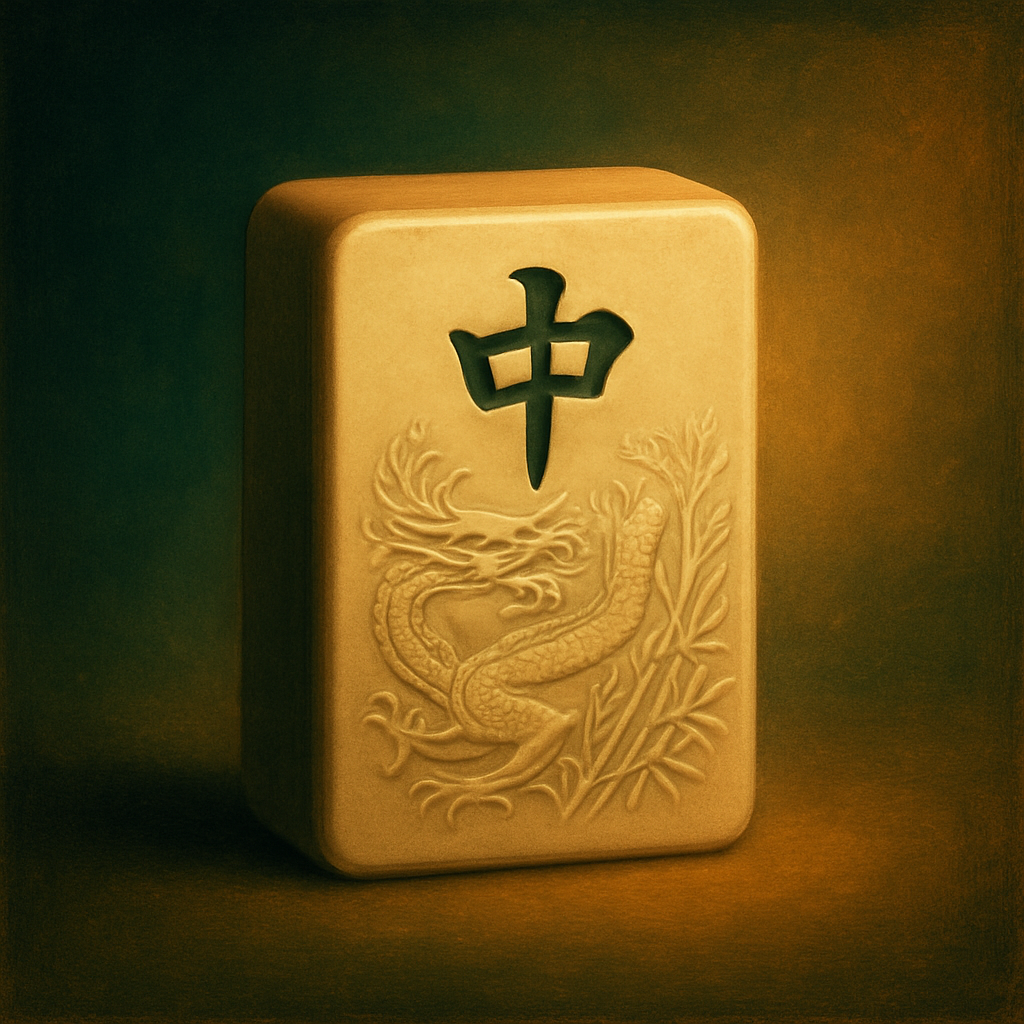
The physical tiles themselves carry enormous narrative weight. Mahjong uses 136 tiles — bamboo, bone, and character suits — and each player begins a hand holding 13, racing to complete sets, runs, and a matched pair. That tactile reality matters. The clatter of tiles shuffled across a table is not background noise in Wong's telling; it is a recurring sensory anchor, a sound that migrant families carried from Guangdong to San Francisco to Auckland, reproducing a piece of home in foreign rooms. Mahjong originated during China's late Qing dynasty, a period of profound instability, and spread to America in the 1920s and 1930s, where it was deliberately marketed with elite associations to distance it from Chinese immigrant labor stereotypes — a fact historian Annelise Heinz documents in "Mahjong: A Chinese Game and the Making of Modern American Culture." The game arrived carrying both culture and camouflage.
The rules themselves become a metaphor, and this is where Wong's project gets philosophically sharp. A complete game requires at least four hands across four rounds, with the Banker role rotating unless the Banker wins and holds position. That structure — rotating authority, earned advantage, collective memory of who held power last — mirrors exactly how family dynamics operate. Experienced players, Wong learned firsthand, will intentionally withhold tiles a newcomer needs to win. New players betray their hand by visibly grouping tiles, letting opponents read their intentions. Sound familiar? The game board, Anvesha, is a compressed map of every family dinner you have ever sat through — strategy, silence, and the quiet politics of who knows the rules and who is still learning them. Amy Tan understood this: in "The Joy Luck Club," four immigrant women form a mahjong club to raise their spirits, and when Jing-mei takes her mother's seat at the table, it becomes the novel's most loaded act of inheritance.
The key takeaway from Wong's work is this: Mahjong is not the subject of the book — it is the method. The physical act of playing, the clatter of tiles, the memorized house rules that differ from every other family's house rules — all of it is the emotional labor of reconstructing heritage that was never formally recorded. Wong transforms a competitive game board into what she calls a map of the human heart, and she does it by staying a student, asking the questions that grief and distance make urgent. The tiles are real. The history they carry is realer still.
The Sound of Displacement
Speaker 1
Alright, so last time we established that mahjong is really the method in Wong's book — the tiles are a paper trail, not just a game. I want to stay in that territory but go deeper into something more visceral: the sounds. Because Wong keeps returning to the physical clatter of tiles, and I think there's more there than atmosphere.
Speaker 2
There really is. And that's the right thread to pull. The sound of tiles — that specific clatter when you shuffle them across a table — is what the diaspora community calls the 'sound of displacement.' It's not a metaphor Wong invented; it's language that already existed in the community. The sound carries both loss and continuity simultaneously.
Speaker 1
How does a sound carry both of those things at once? That feels like a contradiction.
Speaker 2
Think about it this way. Wong's family immigrated to California in 1989, and their mahjong set sat unused for years. The silence of that set is itself a kind of displacement — the game couldn't be played because the people who knew the rules were scattered or gone. When the tiles finally clatter again, that sound is simultaneously a reminder of what was lost and proof that something survived the crossing.
Speaker 1
So the set being unused is almost louder than the set being played.
Speaker 2
Exactly. And Wong traces this back to how the project actually started — not from the 2019 Christmas game we talked about last time, but from earlier conversations with her parents about family memories tied to mahjong. Those conversations unlocked things. She learned that her great-grandmothers were among the earliest Chinese immigrants to New Zealand in the 1920s. That history only surfaced because the tiles gave everyone permission to talk.
Speaker 1
So the game is functioning as a kind of... interview technique? A way to get people to open up?
Speaker 2
More than that — it's a linguistic bridge. When you're playing, your hands are occupied, the stakes are low, and the shared vocabulary of the game creates a safe container for memory. Wong describes learning her grandparents' competitive 'cheekiness' at the table — a side of them she'd never seen. The game revealed personality that displacement had buried under the performance of survival.
Speaker 1
That's striking. And it connects to something Anvesha might find interesting — the idea that private spaces matter here. The parlor, the kitchen table. What happens when mahjong moves into public spaces?
Speaker 2
That's where it gets complicated. Annelise Heinz, whose work on mahjong and American culture is essential here, documents how the game's public visibility in the 1920s actually created vulnerability for Chinese immigrant communities. The tiles carried Chinese imagery — bamboo, characters, dragons — and in public, that imagery fed Orientalist fantasies. The game became exotic spectacle rather than living culture.
Speaker 1
Heinz is the cultural historian who keeps coming up in this material. What's her specific lens?
Speaker 2
Her book examines mahjong as a lens for race, class, gender, and Orientalism in 20th-century America. She tracks the contradictions: the game was simultaneously American and foreign, ancient and modern, respectable and dissolute. Joseph Park Babcock, who popularized a simplified American version in the 1920s after learning the game in China, essentially stripped it of complexity to make it palatable — which is itself a form of cultural erasure.
Speaker 1
So simplification as a kind of violence against the original form.
Speaker 2
Wong would say yes. And Heinz adds another layer — Jewish American women adopted mahjong heavily during this period, partly because Orientalist views framed the East as feminine and luxurious. So you have a Chinese game being used to perform a certain kind of aspirational identity by communities who were themselves navigating exclusion. The game absorbed everyone's displacement, not just one group's.
Speaker 1
How does Wong challenge the assumption that this is just a game, then? Because that's the core argument she has to win.
Speaker 2
She does it through accumulation. The book teaches setup, scoring, and cultural variations — but every rule is embedded in a personal narrative. Over 600 million people play mahjong worldwide. That number only means something when you understand that each of those games is being played by slightly different rules, rules that exist only in memory. Wong's project collects those house rules globally, turning oral tradition into documented record.
Speaker 1
And the resurgence among younger players — Millennials and Gen Z — does that change the stakes?
Speaker 2
It raises them. Because younger players are often reconnecting with a game their grandparents played but never taught them. The gap is generational and linguistic. When they find Wong's project, they're not just learning rules — they're recovering a ritual that was interrupted. That's why the book's publication in April 2025 landed the way it did. It arrived exactly when that hunger was peaking.
Speaker 1
So for our listener, what's the thing to hold onto from this lecture?
Speaker 2
The parlor is a sanctuary. When diaspora families gather around a mahjong table, the clatter of tiles creates a sensory anchor — a sound that says 'we are still here, we still know this.' The game preserves oral history not by recording it, but by creating the conditions under which people remember. Wong's project understands that. The tiles don't just carry the game. They carry the sound of every room where the game was ever played.
The Architecture of a Hand
One year of mahjong play raises a child's processing speed index by 11 points — a finding that researchers documented in a peer-reviewed study, and one that Nicole Wong would find deeply unsurprising. Because the game is, at its core, a construction project. Fourteen tiles. Four sets. One pair. That architecture is not arbitrary. It is the minimum viable structure for a complete thing — and Wong uses it, precisely and deliberately, as a blueprint for what a coherent identity requires when the original materials have been scattered across oceans.
Previously, we explored how mahjong serves as a metaphor for identity, focusing on the game's strategic elements and adaptability. Now consider what those tiles are actually doing structurally. A winning hand demands four sets and one pair, what players call the eyes. A set is a pung — three identical tiles; a chow — three consecutive tiles of the same suit; or a kong — four identical tiles, which earns you an extra draw from the wall. Each structure has a different logic.
Pungs reward repetition and certainty. Chows reward sequence and progression. Kongs reward accumulation at the cost of revealing strength. Wong uses these mechanics to illustrate the strategic adaptability required in identity-building, Anvesha. The pung is the family story you've heard so many times it feels like fact. The chow is the generational arc — grandparent to parent to you — a sequence that only makes sense when all three tiles are present. The kong is the overcollected detail, the obsessive documentation, the Post-It notes from that 2019 Christmas game.
And the pair — the eyes — is the self-image you need to anchor everything else. Without it, the hand cannot win. Without a stable sense of who you are, the rest of the structure collapses.
Here is where Wong's argument gets genuinely counterintuitive. The game runs on imperfect information. You hold 13 tiles; you see only discards. Optimal play, which draws on Nash equilibrium logic, requires balancing offense — building toward your own hand — against defense — avoiding discards that complete an opponent's set. Bluffing is real. Players discard tiles to mislead. And here is the counterintuitive lesson Wong extracts: the player who commits too early to a perfect hand loses most often. Rigidity is the enemy.
The player who adapts — who abandons a near-complete chow when the discards signal danger — survives longer and wins more. Wong applies this directly to cultural identity, and this is the pivot that makes the book more than a game guide. The idea of cultural purity — the belief in a singular, unchanging identity — is akin to clinging to a rigid strategy in mahjong, which often leads to failure. It feels like loyalty. It functions like paralysis.
American Mahjong, Anvesha, exemplifies adaptability: it includes joker tiles as wilds, expanding strategic possibilities and reflecting the fluid nature of identity. Wong does not treat that as corruption of the original form. She treats it as honest documentation of how diaspora identity actually works — adaptive, hybrid, and still winning.
The pivotal scene in the book arrives when Wong sits with her mother and finally assembles a complete hand using her family's house rules — rules she had spent months reconstructing from memory and conversation. She expects to feel triumph. What she feels instead is grief. The hand is complete, but the people who taught those rules are gone or aging. The architecture is sound; the builders are disappearing. That moment reframes the entire project. A perfect hand, Wong realizes, is not a destination.
It is a record of everyone who helped you draw the right tiles. So here is what to carry forward, Anvesha: the mechanics of mahjong — fourteen tiles, four sets, one pair — are not just game rules in Wong's hands. They are a structural argument about identity itself. You cannot build a complete hand from identical tiles alone. You need pungs and chows and kongs. You need repetition and sequence and accumulation. And you need the eyes — that grounded, honest self-image — to hold it all together.
The key lesson is this: the player who embraces adaptability and strategic change is the one most likely to succeed. Fragmented origins, honestly assembled, are not a deficit. They are the architecture.
The Voices in the Shuffling
Speaker 1
Alright, so last time we landed on this idea that a perfect hand is a record of everyone who helped you draw the right tiles — grief and architecture at the same time. I keep thinking about who those people actually are in Wong's telling. Because it feels like the book is quietly building toward something about women specifically.
Speaker 2
It is, and that's the right instinct. The title of this lecture — 'The Voices in the Shuffling' — highlights the pivotal role women play in the cultural transmission of mahjong. Wong's book emphasizes how women have been instrumental in customizing and maintaining the game, serving as cultural custodians.
Speaker 1
How many generations are we actually talking about at this table? Because that changes the weight of what's being passed down.
Speaker 2
Wong documents at least three generations present or represented — her grandmothers, her parents, herself. And that span matters enormously. Her great-grandmothers were among the earliest Chinese immigrants to New Zealand in the 1920s. Her parents immigrated to California in 1989 and had no one to play with, so the family set sat unused in the garage for decades. Wong is the generation that finally reopens the box. Three generations of silence, then sound again.
Speaker 1
That silence in the garage — it keeps coming up. Why does the unused set carry so much weight in the narrative?
Speaker 2
Because the set's silence is a record of displacement. When Wong's parents arrived in California, the community that would have made the game possible — the four players, the shared rules, the language — wasn't there. The tiles couldn't function without that social infrastructure. So the garage becomes a kind of archive of interrupted belonging.
Speaker 1
And when the game does restart, what changes? What does Wong actually learn that she couldn't have learned any other way?
Speaker 2
She learns who her grandparents actually were, not just who they performed being. She describes discovering their cheekiness, their competitive rapport, their smug pride in winning — sides of them that displacement had buried under the performance of survival. The game gave them permission to be themselves again. That's not a small thing.
Speaker 1
So the table is functioning as a kind of truth space. Why there specifically? Why not a dinner table or a living room conversation?
Speaker 2
Because the game creates what you might call structured distraction. Your hands are occupied, the stakes are low enough to be playful, and the shared vocabulary of tiles gives everyone a neutral subject. Annelise Heinz, whose work on mahjong as a cultural artifact is essential here, frames the table as a site where social hierarchies get temporarily suspended. The mahjong table becomes a space where women assert their agency, challenging traditional roles and hierarchies, a pattern seen across diaspora communities.
Speaker 1
Heinz keeps coming up in this material. What's her specific contribution to this lecture's argument?
Speaker 2
Her book examines mahjong as a lens for race, class, gender, and respectability in 20th-century America. She documents how the game traveled across ethnic lines — Chinese immigrant communities, then Jewish American women in the 1920s, each group using the table as a space to negotiate identity outside the gaze of dominant culture. The table becomes a room of one's own, to borrow a phrase. Female agency exercised through a game that the outside world dismissed as leisure.
Speaker 1
That's a sharp reframe. And what about the flower tiles? Because Wong spends real time on those, and I suspect there's more there than decoration.
Speaker 2
Much more. Mahjong tiles include flower and season tiles — plum, orchid, chrysanthemum, bamboo, and the four seasons — and they're optional bonus tiles, not required for a winning hand. Wong reads them as the hidden lives of the women at the table. They add value without being structurally necessary. They're beautiful and easy to overlook. And in many family traditions, the flower tiles were the ones women customized, painted, or replaced when a set was damaged. They marked ownership without announcing it.
Speaker 1
So the women are literally inscribed in the tiles themselves.
Speaker 2
Exactly. And that connects to something Wong is doing throughout the book — recovering authorship. The house rules that differ from family to family, the scoring variations, the exceptions that exist only in memory — those were almost always maintained by women. The matriarchs were the rule-keepers. Wong's project is, in part, an act of attribution.
Speaker 1
There's also a gambling dimension here that I want to understand better, because it seems counterintuitive. How does gambling function in the narrative — is it a problem or something else entirely?
Speaker 2
It's something else entirely, and this is one of Wong's more counterintuitive moves. Small-stakes gambling at the mahjong table — a few coins per hand — historically functioned as community infrastructure. It kept people coming back, created reciprocal obligation, and ensured the game was taken seriously enough to be played well. For immigrant women with limited access to public economic life, that small circulation of money was also a form of financial agency. The table was one of the few spaces where they controlled transactions.
Speaker 1
That reframes gambling as mutual investment rather than vice.
Speaker 2
Wong would say it was always both, and that the moral panic around it — which Heinz also documents — was partly about controlling spaces where women and immigrants operated outside supervision. The game was called dissolute precisely when it was most empowering.
Speaker 1
And the resurgence among younger players — Millennials and Gen Z — does that change who holds this matriarchal power now?
Speaker 2
It redistributes it. Younger players are often reconnecting with a game their grandmothers played but never formally taught them. Wong's project — the book, the website where global players share house rules and family stories — becomes the new transmission mechanism. The matriarchal knowledge that lived in memory now lives in documentation. The voices in the shuffling get a written record.
Speaker 1
So for Anvesha and everyone following this course, what's the thing to hold onto from this lecture?
Speaker 2
The mahjong table is a site of female empowerment, where women have historically customized the game and maintained its traditions, acting as cultural custodians. Their contributions have preserved and adapted the game across generations. Wong's project is the act of finally saying so out loud.
The Final Hu: Reclaiming the Project
The word 'hu' means one thing in mahjong: you have won. You call it out loud, claim the discarded tile, and the hand is complete. But Nicole Wong, whose book documents mahjong rules across the Asian diaspora, uses that single syllable to mean something far larger. Calling 'hu' is not an ending. It is a declaration that the assembly is finished — for now. And that distinction, Anvesha, is the philosophical spine of everything The Mahjong Project builds toward.
While previous lectures explored the mahjong table as a site of female authorship, let's now focus on the broader implications of heritage as a dynamic process. A complete mahjong game runs at least four hands across four rounds, each named after a wind: East, South, West, North. The Banker holds position if they win; rounds extend indefinitely when dominance is earned. That structure is not incidental.
Wong uses it to argue that heritage has no fixed endpoint. The game does not stop because someone wins one hand. It continues, reshuffles, and demands new assembly. In Republican-era China, reformers criticized mahjong for moral decay and urban idleness; a 1924 Japanese publication illustrated Beijing mahjong games as equivalent to opium use. The game survived every moral panic because the communities playing it understood something the critics missed: the table was infrastructure, not vice.
Wong's conclusion emphasizes that heritage is an ongoing, creative process, akin to assembling a winning hand in mahjong, reflecting continuous cultural evolution. Sets include pungs, three identical tiles, and kongs, four identical tiles that must be displayed and earn you an extra draw from the wall. The last 14 tiles are always reserved, never revealed. Some knowledge, Wong acknowledges, stays permanently out of reach.
That admission matters. Wong's journey with mahjong highlights the dynamic nature of heritage, documenting global variations and family stories that illustrate cultural evolution. In graphic novels like The Shadow Hero, mahjong symbolizes community bonds and underworld ties in Chinatown settings — proof that the game absorbs every context it enters. Mahjong crossed social boundaries by the 1920s, attracting players from upper echelons in China, Japan, and the West simultaneously.
The game symbolizes cultural adaptation, reflecting its integration into various societal contexts, including postwar politics in Taiwan. It spread to America as part of modern cultural transnationalism, its American version incorporating jokers and altered rules — diverging from Chinese originals, yes, but not dying. Adapting. Wong's project collects those adaptations without judgment, because the point was never purity. The point was continuity. And continuity, Anvesha, requires players willing to sit down and shuffle again.
So here is what The Mahjong Project ultimately argues, and what you should carry out of this course: heritage is not a museum piece behind glass. It is a game in progress. You call 'hu' when your hand is complete — but the tiles go back into the wall, the winds rotate, and the next hand begins. Wong's book, her website collecting global house rules, her recovered family history — none of it is an archive. It is an ongoing game. The project was never finished.
It was always just your turn to play.