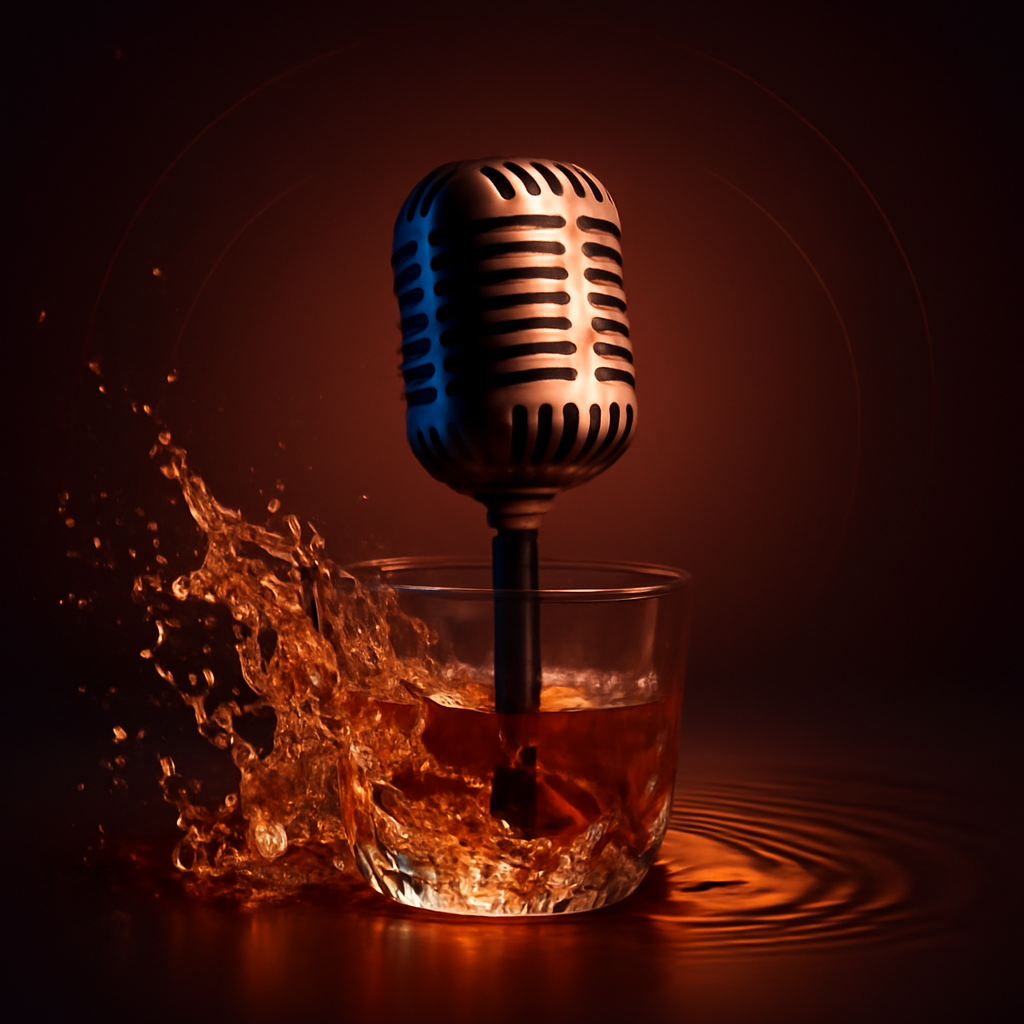
The Shot That Changed Media
The Psychology of the Party
Oral History and the Hip-Hop Archive
The Double-Edged Sword: Dealing With Controversy
The Creator Playbook: Lessons in Authenticity
Beyond the Airhorn: The Future of Media

Transcript
SPEAKER_1: In this lecture, let's explore how Drink Champs reshaped the media landscape, altering power dynamics and influencing how artists control their narratives. Because Drink Champs didn't just change one show—it changed the power map. SPEAKER_2: That's the right frame. Drink Champs marked a shift in media power, allowing artists to bypass traditional PR gatekeepers. Artists no longer had to route their stories through a publicist, a magazine editor, or a morning-show booker. They could walk into a room with peers and speak directly to millions. SPEAKER_1: So when we say 'PR gatekeeper,' what exactly is being bypassed? SPEAKER_2: an artist wants to rehabilitate their image or tell a complicated story. They go through a publicist who pitches a controlled sit-down. The outlet assigns a journalist. The journalist has fifteen minutes and a word count. By the time the story publishes, it's been filtered three times. Drink Champs removed all three filters in one move. SPEAKER_1: And the mechanism is the host's cultural fluency, right? Not just the informal setting. SPEAKER_2: Exactly. The show illustrates how cultural fluency and shared experiences can replace traditional journalistic methods, creating more authentic conversations. With N.O.R.E. bringing direct experience as a recording artist and DJ EFN bringing work across DJing, mixtape production, artist management, and radio, the conversation has both performer and industry perspective. SPEAKER_1: Mm-hmm. And that's what other shows picked up on. Creator-led and insider-led formats can operate on that same cultural logic. SPEAKER_2: people who lived the culture hosting conversations about the culture. That means lived experience and shared references become part of the interview method. In that model, cultural fluency helps generate questions a generic interview template might miss. The insider credential does the work that a journalist's credential used to do—except it produces a different kind of conversation. SPEAKER_1: So what's the actual mechanism by which one long-form appearance can reshape an artist's public image? Because that sounds almost too powerful. SPEAKER_2: a long-form conversation gives an artist enough time to provide context, correct a narrative, and share personal recollections that may not appear in formal biographies, discographies, or news reports. In a short interview, the artist answers the question asked. In a long one, they answer questions nobody thought to ask. That's where image shifts happen—not in the prepared statement, but in the unguarded hour three. SPEAKER_1: But that same power cuts the other way. We spent a whole lecture on the Ye episode. One sitting can damage a reputation just as fast as it can repair one. SPEAKER_2: And that's the risk that comes with this format becoming powerful enough to matter. This format's power to reshape reputations in a single sitting gives it significant editorial influence, challenging traditional journalism's role. The REVOLT partnership in 2017 amplified that reach significantly, moving the show from podcast culture into television distribution. SPEAKER_1: Wait—but why would a less polished platform become more trusted by guests than a legacy outlet? That seems counterintuitive. SPEAKER_2: It does. But the answer is ownership and alignment. Legacy outlets prioritize advertisers and institutional reputations, while Drink Champs aligns with cultural authenticity and artist trust. Guests trust that the hosts aren't trying to catch them in something—because the hosts have skin in the same game. That alignment is more valuable to a veteran artist than any prestige masthead. SPEAKER_1: So ownership changes the power relationship entirely. Not just for the hosts—for the guests too. SPEAKER_2: For everyone in the ecosystem. When artists can choose platforms that are culturally aligned, they reclaim narrative control. And when creators own their format, their brand, their archive—they're not dependent on a network's editorial calendar. That independence is what makes the model durable. SPEAKER_1: Now, the medium itself has grown enormously. Edison Research reported that 55% of Americans twelve and older consumed podcasts monthly in 2025, and 40% weekly. That's a mass medium. SPEAKER_2: And 51% had watched a video podcast at some point in 2025. YouTube was the most-used service for podcast listening among weekly listeners, at 33%. Nielsen found podcasts accounted for 19% of U.S. ad-supported audio time among adults overall—and 32% among adults eighteen to thirty-four. The audience is there. The question is what creators do with that reach. SPEAKER_1: Which brings us to what the future actually requires. Because it's not just audio anymore. SPEAKER_2: Not even close. Creators increasingly need the full conversation, a watchable visual version, searchable excerpts, short clips, transcripts, and durable archival access. The format has to live in multiple places simultaneously. And the archive has to be preserved with enough context that it remains useful long after the episode's promotional cycle ends. SPEAKER_1: So the closing idea—'the culture is best protected by those who created it'—what does that mean in practical terms for anyone building in this space? SPEAKER_2: [inhale] It means three things. Build trust before you record—consent, transparency, and shared purpose aren't bureaucratic steps, they're what makes the conversation worth having. Design for multiple forms of access so the work reaches people across platforms and time. And preserve the conversation with enough context that future listeners can interpret it responsibly. Drink Champs connected celebration, oral history, controversy, branding, and ownership into one model. The takeaway for our listener is that those elements aren't separate choices—they're one integrated practice.