
Transcript
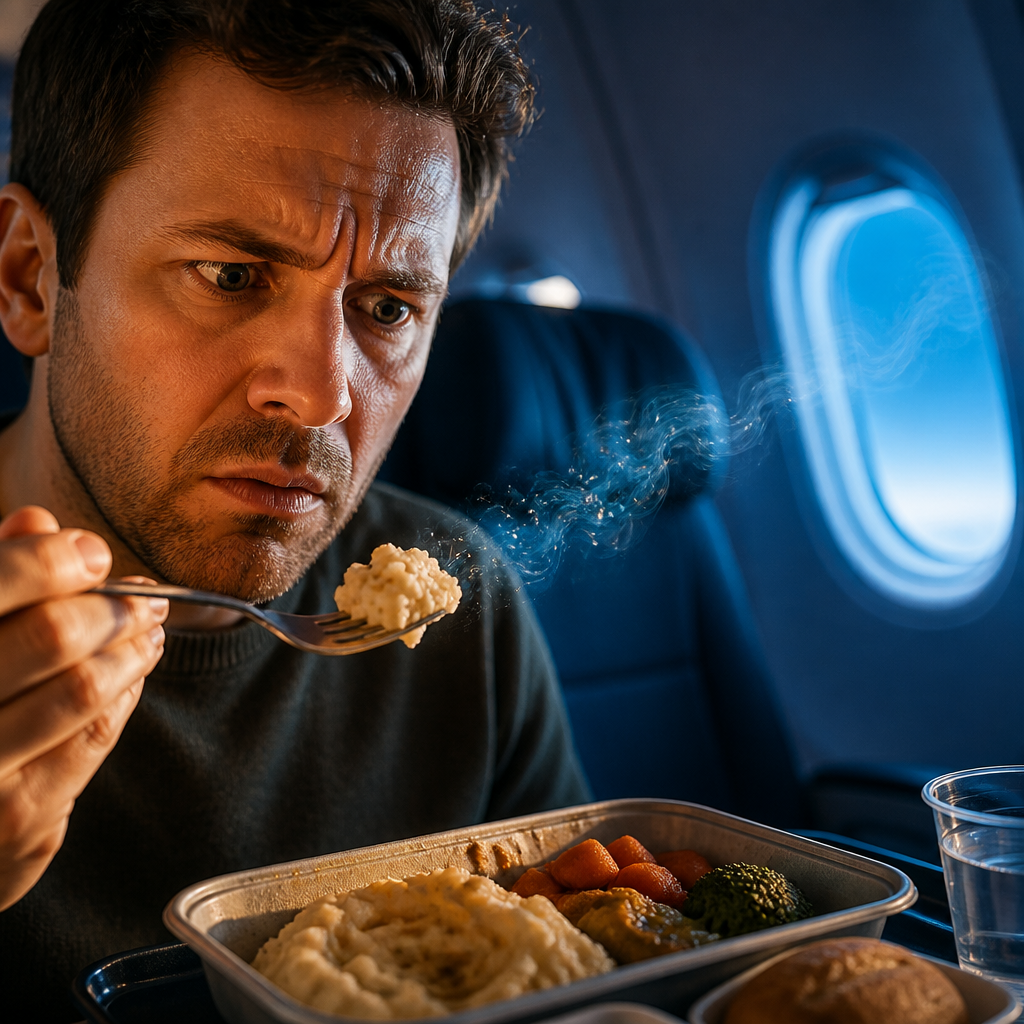
Your sweet and salty taste sensitivity can drop by roughly 30% the moment you reach cruising altitude. That's not a cooking problem. It's a sensory one, Charlie. Think of your nose like a precision instrument. Cabin humidity sits around 10% to 20% — drier than most deserts. That dryness parches your nasal passages, and since smell drives a large share of what you call taste, food immediately seems flatter and blander. Now, pressure plays a role too. The cabin is pressurized, but still below sea level pressure. That shift further dulls sweet and salty perception specifically. Sour, bitter, and spicy flavors? Far less affected. That's why heavily spiced dishes and tomato juice hold up so well at altitude — their savory, umami-rich profiles actually survive the sensory gauntlet. Here's what surprises most people, Charlie: engine noise makes it worse. A 2015 study found loud simulated cabin noise suppresses sweetness while amplifying umami. Your ears are quietly editing your meal. The takeaway is this: airplane food isn't just a logistics problem. Your meal was chilled, reheated in dry aircraft ovens, then eaten in a cabin stripping 15 to 30 percent of your flavor perception. The food changed less than you did, Charlie.