
Transcript
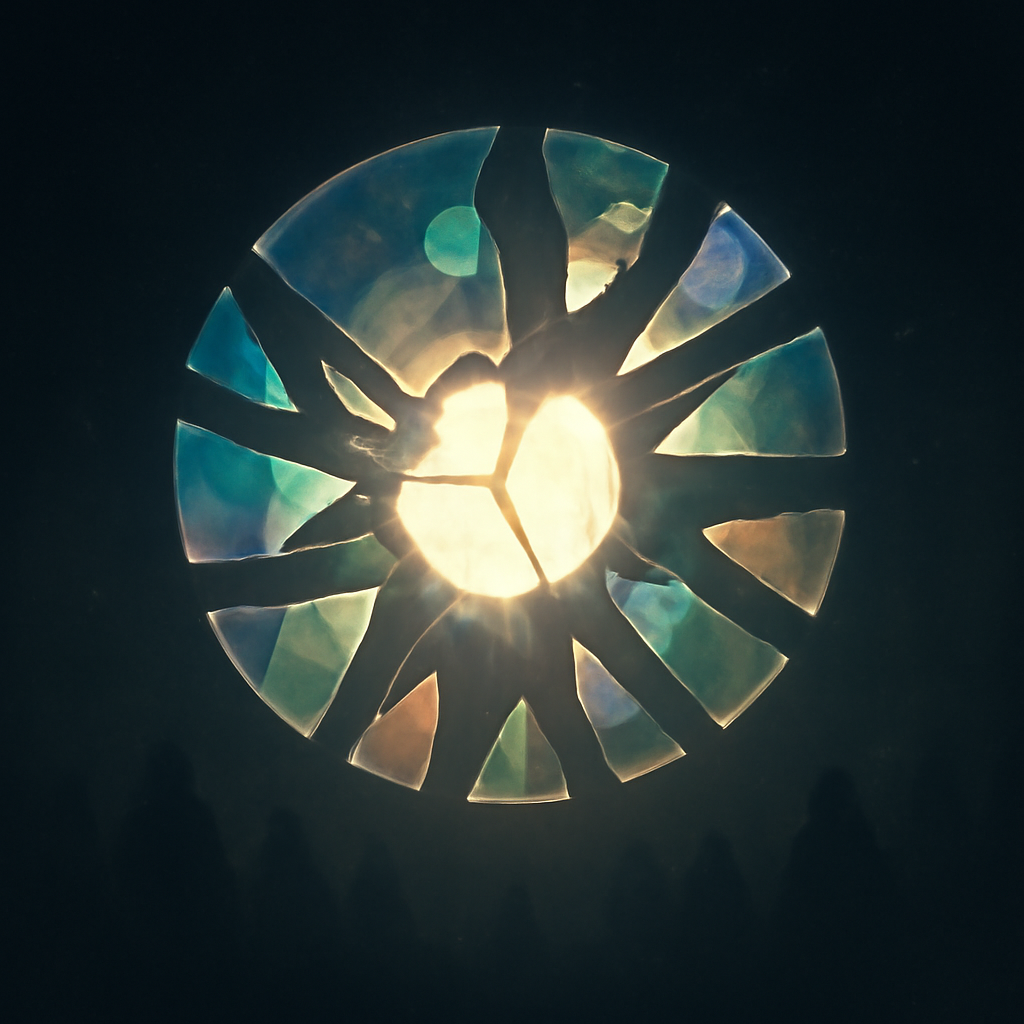
SPEAKER_1: So after looking at all those fragments — merged, active, Splintered, barely visible — the question that's been sitting underneath this whole conversation is: what could actually fracture the original prism? Because the Shards didn't do it. The Shards are the result. Something else made the break possible. SPEAKER_2: And this is where you have to make a category distinction, because it's easy to assume Dawnshards are just bigger Shards. Like, if a Shard is a piece of divine power, maybe a Dawnshard is a really large piece. That's the wrong model entirely. SPEAKER_1: Right. The Shards are what came after the break. Dawnshards are something older — they're described in the text as the four primal Commands that Adonalsium used to create all things. Not pieces of the god. The verbs the god used to make the glass in the first place. SPEAKER_2: There's a line in the Dawnshard novella that lands this cleanly. A character tells Rysn: 'The Dawnshards are Commands, Rysn. The will of a god.' Not power. Not substance. Commands. The distinction matters because it means Dawnshards predate the Shattering — they're the creative grammar of the cosmere, and then they were turned around and used as the weapon. SPEAKER_1: Which is a strange thing to sit with. The tool that built the prism is also the tool that shattered it. SPEAKER_2: And Brandon Sanderson has confirmed directly — this is a Words of Brandon, not inference — that there are exactly four Dawnshards. Not sixteen, not one per Shard. Four. After the Shattering, they lost their original forms and were placed on different planets. SPEAKER_1: So the weapon dispersed. Which is part of why the Cosmere's post-Shattering history looks the way it does — the Shards are out there operating, but the Commands that made the break possible are scattered and mostly hidden. SPEAKER_2: The one concrete case we have is Rysn. In the Dawnshard novella, she travels to Aimia — a place that's been deliberately kept off-limits — and she accidentally absorbs the Dawnshard that had been hidden there, guarded by a group called the Sleepless. Once she absorbs it, she doesn't just carry it. She becomes it. That's how Dawnshards work: a person can absorb one, and at that point they are considered to be the Dawnshard. SPEAKER_1: And the one she absorbed is the Dawnshard of CHANGE. The text describes it as the will and knowledge of a deity demanding that something change, adapt, or become something new. Which is about as primal as a Command gets. SPEAKER_2: There's a detail worth flagging here, though. Rysn's Dawnshard is described as currently impotent within her. She holds it, she is it, but it isn't actively doing what a Dawnshard at full capacity could do. And one of the confirmed effects of bearing this particular Dawnshard is something called the Torment — an inability to intentionally do harm or violence to another. Rysn experiences it. So does Sigzil, who also bears this Dawnshard at a later point. SPEAKER_1: So the Command of CHANGE, when it's inside a person, also constrains them. The will of a god demanding transformation — and the cost of carrying that is that you can't be an instrument of destruction. SPEAKER_2: Which tells you something about what these Commands are. They're not neutral tools. They have their own logic, their own pressure on whoever holds them. [short pause] That's actually a parallel to the Shard/Vessel dynamic, but it's not the same thing. A Shard reshapes your thinking toward its Intent over time. A Dawnshard seems to impose a more immediate, structural constraint. SPEAKER_1: Now — and this is where we have to be honest about the edge of what's confirmed — CHANGE is the only Dawnshard with a firm textual name. There are three others. We know they exist. We know they were used at Yolen. We know they're out there somewhere. But the names that circulate in the fandom for the other three — things like Unite, Survive, Exist, Inspire — those are theory. Some of them are well-reasoned theory, but they don't have the same textual grounding that CHANGE does. SPEAKER_2: There's also a popular idea that the four Dawnshards map neatly onto four groups of four Shards each — like each Command governed a cluster of the original sixteen. It's an attractive framework. It might even be right. But it's not confirmed, and the segment plan is clear: treat it as theory until there's a firm source. SPEAKER_1: So what you're left with is this. The prism — one divine source — was fractured by four primal Commands into sixteen Intent-carrying beams. The beams have been colliding and recombining ever since. Some have shattered further. Two pairs have merged. And the Commands themselves are still out there, mostly hidden, mostly quiet, with one of them currently sitting impotent inside a Rosharan merchant who didn't go looking for it. SPEAKER_2: That's the deep structure of the Cosmere's backstory. It's not just that a god was killed. It's that the killing was done with the god's own creative grammar, and the aftermath — the Shards, the Vessels, the Splinterings, the mergers — is the long institutional consequence of that founding violence. Offices with mandates. Succession crises. And four Commands that made creation possible, still unresolved, still the most dangerous unknowns on the map. SPEAKER_1: The prism remains broken. Some beams have recombined. Some have scattered into fragments too small to hold their original shape. And the oldest Commands — the ones that cut the glass — are still out there, waiting for Dragonsteel to tell us the rest.