Strategic Relationships, Time, and Money Management
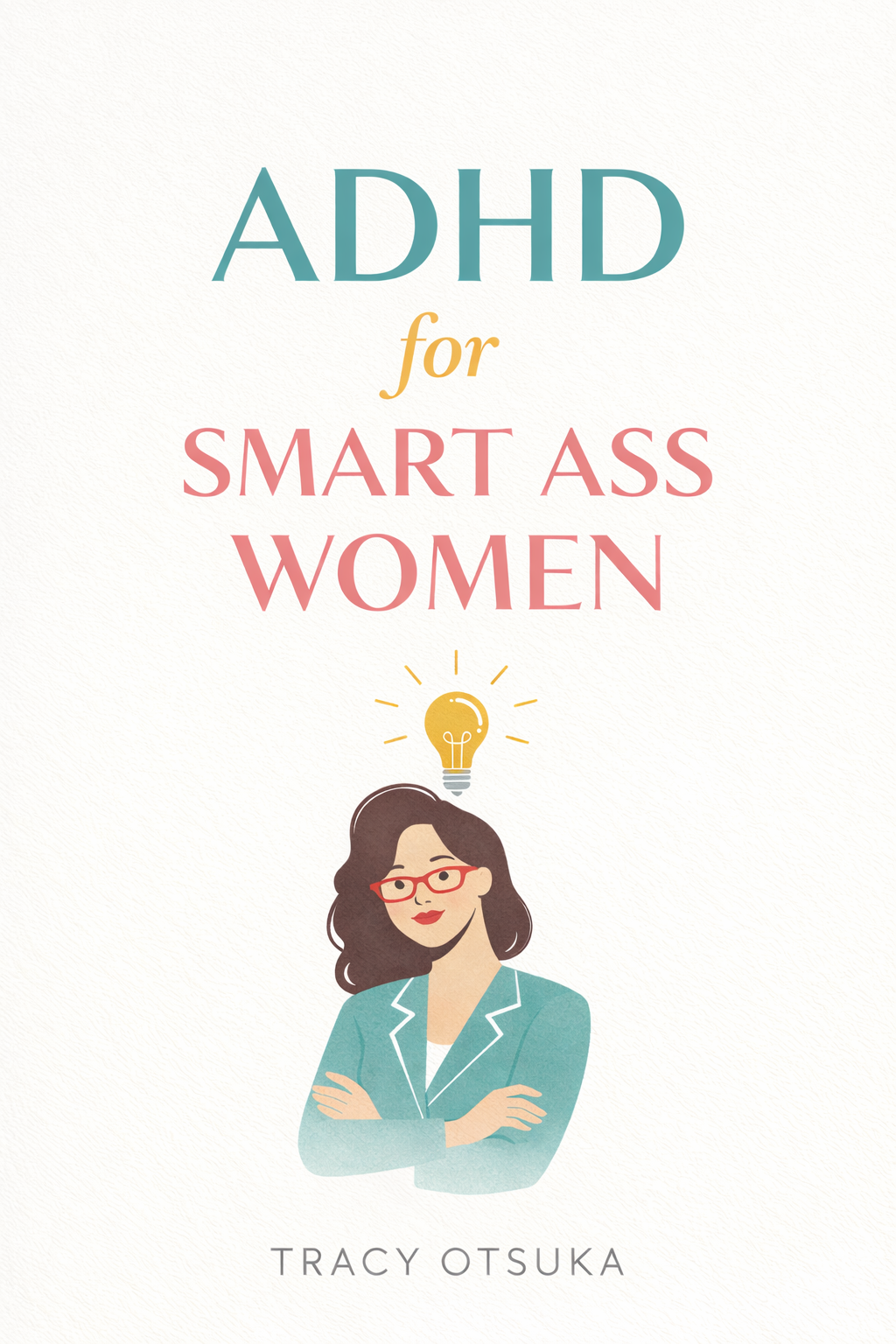
ADHD for Smart Ass Women by Tracy Otsuka
Foundations: Defining ADHD and the Unique Challenges Women Face
Transforming Challenges Into Superpowers
Discovering Purpose and Harnessing Strengths
Navigating Emotions and Overcoming Overthinking
Strategic Relationships, Time, and Money Management
Holistic Wellness: Movement, Nutrition, Sleep, and Learning

Transcript
Last time we explored how emotional intensity stems from neurobiological differences, not character flaws. Now the author tackles the interconnected challenges of emotional dysregulation, overthinking, overwhelm, and self-doubt that create a vicious cycle for women with ADHD. These difficulties compound each other, requiring an integrated toolkit rather than isolated fixes. Women with ADHD experience emotions more intensely due to the intersection of ADHD neurobiology and societal conditioning that punishes emotional expression. The author introduces the 'name it to tame it' approach, which leverages neuroscience by engaging the prefrontal cortex to dampen amygdala activation. Using an emotions wheel provides nuanced vocabulary beyond basic terms like angry or sad, creating more precise emotional awareness. Somatic approaches acknowledge that trauma and emotions are stored in the body, not just the mind. Progressive muscle relaxation, body scanning, and the STOP technique—Stop, Take a breath, Observe, Proceed with intention—interrupt automatic reactions and create space for choice. Tracking triggers and patterns through simple logging helps women anticipate challenging situations and prepare appropriate responses. Self-compassion practices counter the harsh self-criticism that intensifies emotional dysregulation in ADHD women. Kristin Neff's three components—self-kindness, common humanity, and mindfulness—provide a framework for treating yourself with the same understanding you'd offer a friend. The concept of 'repair' after emotional incidents gives women permission to circle back with others to explain, apologize, and communicate needs. Emotional management isn't about achieving perfect control but developing awareness and choice in how you respond. The author emphasizes that overthinking leads to overwhelm, which triggers self-doubt, which fuels more overthinking—a pattern particularly problematic for ADHD brains that generate more thoughts and connections than neurotypical brains. Concrete techniques for interrupting this cycle include the 5-Minute Rule, where you set a timer to either take action or redirect attention. Thought Download externalizes racing thoughts onto paper, creating distance and revealing patterns that aren't visible when thoughts swirl internally. Decision Deadlines force action with available information rather than seeking perfect certainty that never arrives. The author categorizes decisions into reversible, low-stakes, and high-stakes types, helping women conserve mental energy by recognizing that most decisions don't warrant the same level of analysis. The concept of 'good enough' decision-making challenges the perfectionist mindset many smart women with ADHD develop as a coping mechanism. Taking imperfect action beats remaining stuck in analysis paralysis, where intelligence generates too many options and considerations. Brain dumps free up working memory by systematically categorizing items into controllable versus uncontrollable and immediate versus delayed actions. Decision protocols—pre-made rules for recurring choices like work uniforms and meal planning—eliminate unnecessary deliberation that depletes cognitive resources more rapidly in ADHD brains. The 'Good Enough' principle provides a three-step process: identify minimum requirements for success, set time limits for decisions, and commit to the first option meeting those criteria. For self-doubt, evidence-based thinking challenges negative self-assessments by systematically examining actual accomplishments, feedback, and successes rather than relying on feelings. Keeping a success log provides concrete documentation that counters the negativity bias in ADHD memory, where failures are recalled more readily than successes. The author emphasizes that confidence comes from building actual skills and having concrete evidence of capability, not from affirmations or positive thinking. These strategies work together as an integrated system, with self-compassion as the foundational practice underlying all techniques, recognizing that ADHD brains require different strategies rather than more willpower or self-criticism.