
Transcript
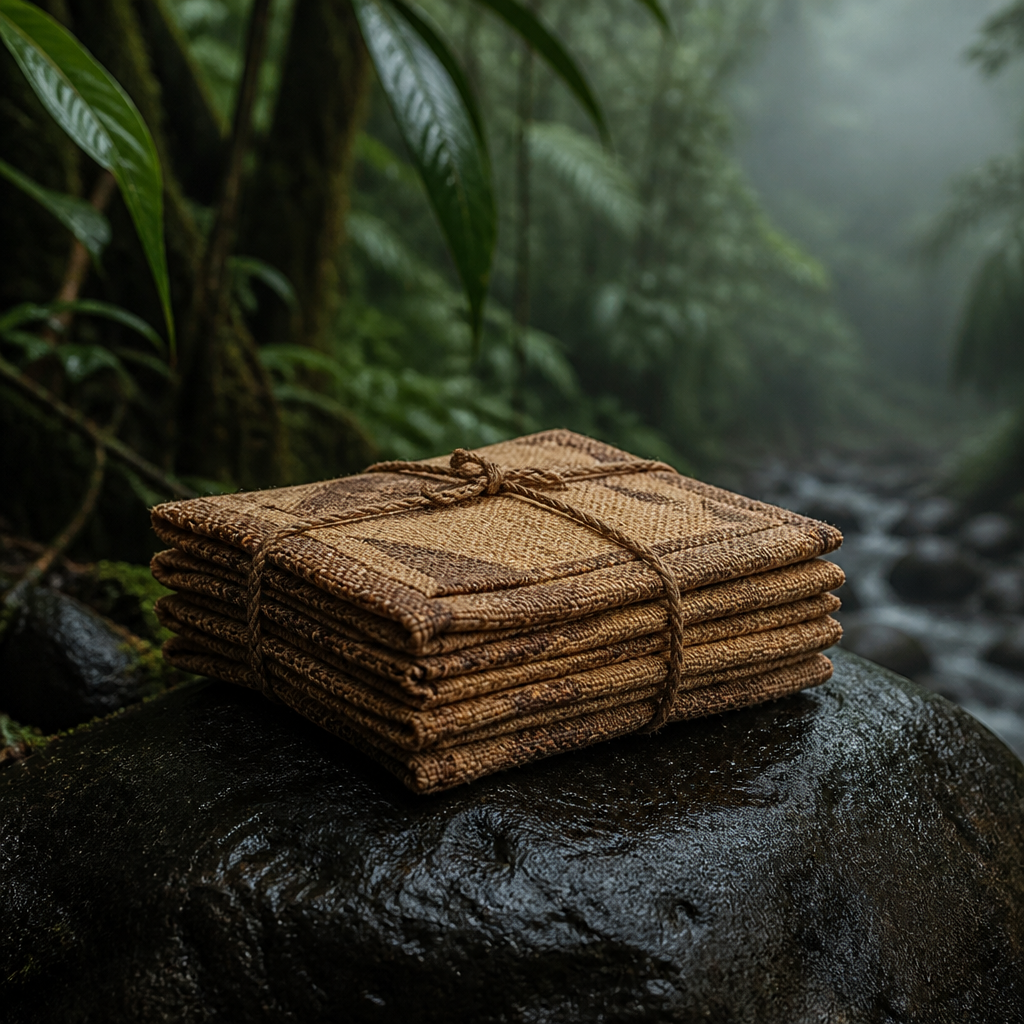
A piece of cloth changed hands, and a marriage became possible. That single transaction — a bolt of hand-woven palm-fiber fabric passing between kin groups in the Chambira Basin of Peruvian Amazonia — carried more social weight than any price tag could measure. Bartholomew Dean's research on the Urarina people makes this vivid. The cloth in question is called kachina, and Dean argues it is not a commodity in any ordinary sense. It is social wealth: an object that encodes labor, identity, and obligation all at once. That distinction is the engine of everything you are about to hear, Bartholomew. The raw material behind kachina comes from one of Amazonia's most ecologically significant plants. The Mauritia flexuosa palm — known locally as the aguaje — grows up to 35 meters tall in swampy forest zones called aguajales. These are not casual stands of trees. They are dense, flooded ecosystems, and harvesting fiber from them demands real physical effort and navigational knowledge. Urarina women are the ones who hold that knowledge. They locate the palms, extract the young leaf fibers, and begin a transformation process that is anything but simple. Think of it like this: the aguaje palm is the raw ore, and the weaver is the refinery. Nothing useful comes out without skilled, sustained human labor at every stage. That labor is where identity gets made. To produce the characteristic white kachina cloth, weavers boil the raw fibers to strip out chlorophyll and impurities. Then they sun-dry the fibers and twist them by hand into thread. Now, the weaving itself happens on a backstrap loom — a portable device that uses the weaver's own body weight as the tensioning mechanism. The loom travels with her. It requires no fixed infrastructure, only her body and her skill. The key idea here is that the technology is inseparable from the person using it. A Urarina woman's competence at the loom is not just a craft skill; it is a marker of her social standing, her maturity, and her capacity to participate in the exchange networks that hold her community together. Dean treats this not as background detail but as a central analytical point: the weaver and the cloth are mutually constituting. That brings us to what kachina actually does in Urarina social life. Historically, palm-fiber cloth functioned as a primary currency — used to settle debts and fulfill brideservice obligations between kin groups. For example, when a man entered into a brideservice arrangement, cloth moved between households as part of the moral accounting that structured the relationship. Remember, if you have followed Dean's work on uxorilocality and brideservice, you already know that Urarina marriage is not a single event but an ongoing negotiation of labor and obligation. Kachina is the material form that negotiation takes. It is what makes abstract social debt visible and transferable. Dean draws on the concept of the "total social phenomenon" — a term from Marcel Mauss — to capture how a single object like kachina simultaneously operates in economic, ritual, kinship, and political registers at the same time. The cloth is never just cloth. Here is the takeaway, Bartholomew, and it matters for everything that follows in this course. Kachina is social wealth precisely because its value cannot be reduced to a single register. It is not a commodity waiting to be priced. It is not purely a gift either. It sits at the intersection of gendered labor, kinship obligation, and community identity. The Urarina women who produce it are not simply making fabric; they are producing the social fabric itself. Dean's framework of multiple regimes of value is built on this foundation: the same object can mean radically different things depending on who holds it, who receives it, and under what conditions it moves. That instability — that capacity for value to shift — is what makes kachina so analytically powerful, and so vulnerable when it encounters outside market forces. The next lectures will trace exactly how that encounter unfolds.