
Transcript
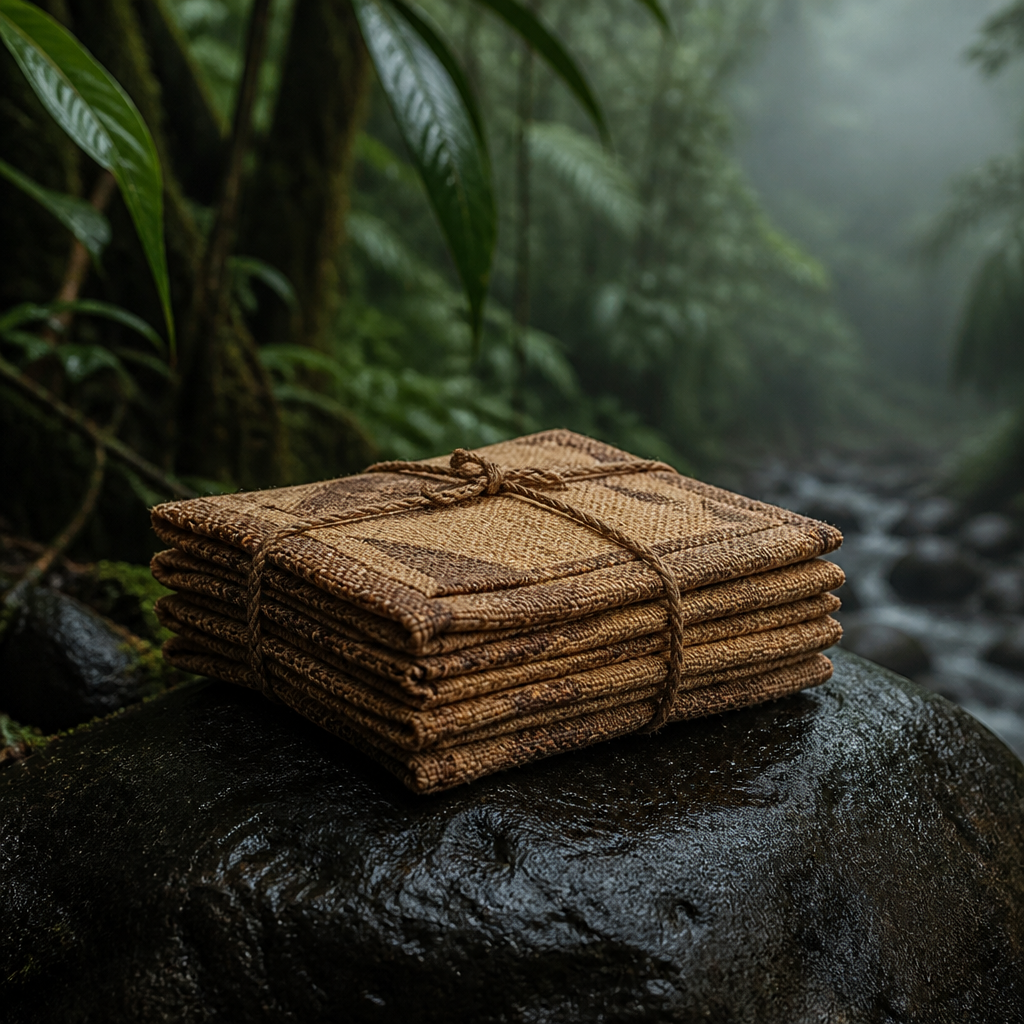
A Urarina woman finishes a length of palm-fiber cloth. She has boiled the fibers, dried them, twisted them into thread, and worked the backstrap loom for days. Now the cloth sits in her household. And here is the tension: that same cloth might seal a marriage alliance this week and settle a trader's debt the next. Same object. Completely different logic. That is the paradox Dean places at the center of his analysis. Kachina is not one thing. It is many things simultaneously, and the question is how it holds together without collapsing into just a commodity. In Lecture 2, we explored how unequal exchange is structural, with river traders setting terms and Urarina households having limited leverage. The cloth produced by women often cleared debts without equivalent return, highlighting real asymmetry. But Dean's argument does not stop at exploitation. He pushes further. The question he raises is this: why do Urarina women keep producing kachina, generation after generation, even knowing the risks? The answer is more interesting than simple necessity. Dean distinguishes between inalienable wealth, which carries social identity, and alienable goods, which are commodities. Kachina exists between these categories. Inside Urarina communities, it functions as inalienable wealth. It stabilizes marriages, honors kinship obligations, and connects the living to the deceased. But when it crosses into trade with outside merchants, it gets treated as a commodity with a price. The cloth does not change. The regime it enters does. Here is something counterintuitive. Dean argues that palm-fiber wealth accrues value through circulation rather than through a single fixed price. That means the cloth gains meaning each time it moves. A piece of kachina that has passed through a brideservice arrangement, settled a debt with in-laws, and then been offered to a trader carries a social history. That history is not erased by the market transaction. It persists. And crucially, the Urarina have culturally prescribed ways of estimating equivalent values in exchange. There is no single common measure. Value is negotiated each time, in context. That flexibility is not a weakness. It is a buffer. Dean highlights that Urarina women's production of palm-fiber goods is central, not background labor. Women control fiber preparation, loom skills, and production timing, exercising authority. For example, a woman who produces high-quality kachina holds real leverage in household negotiations about when cloth moves and where it goes. Her labor is not simply extracted. It is also exercised. Dean's framework insists that understanding this gendered agency is essential to understanding how the whole system works. So why does continued participation in trade sometimes preserve autonomy rather than destroy it? Because the cloth functions as a buffer zone between Urarina society and the regional economy. Families can engage traders on their own terms, at least partially, precisely because kachina retains internal value. Withdrawing from trade entirely would sever access to tools, salt, and other goods. Engaging on purely commodity terms would hollow out the cloth's social meaning. The Urarina navigate between those two dangers. The persistence of weaving challenges any assumption that market incorporation automatically erases Indigenous cultural systems. Dean's article in *Museum Anthropology* provided anthropology a precise tool for this kind of analysis. The takeaway, Bartholomew, is this: palm-fiber cloth is better understood as a map of power relations than as a textile or a trade good. It shows you who produces, who controls circulation, who profits, and who absorbs the cost. And it does all of that as it moves through multiple regimes of value. That is what multiple regimes of value means in practice. The kachina holds the tension. And so do the women who make it.