
Transcript
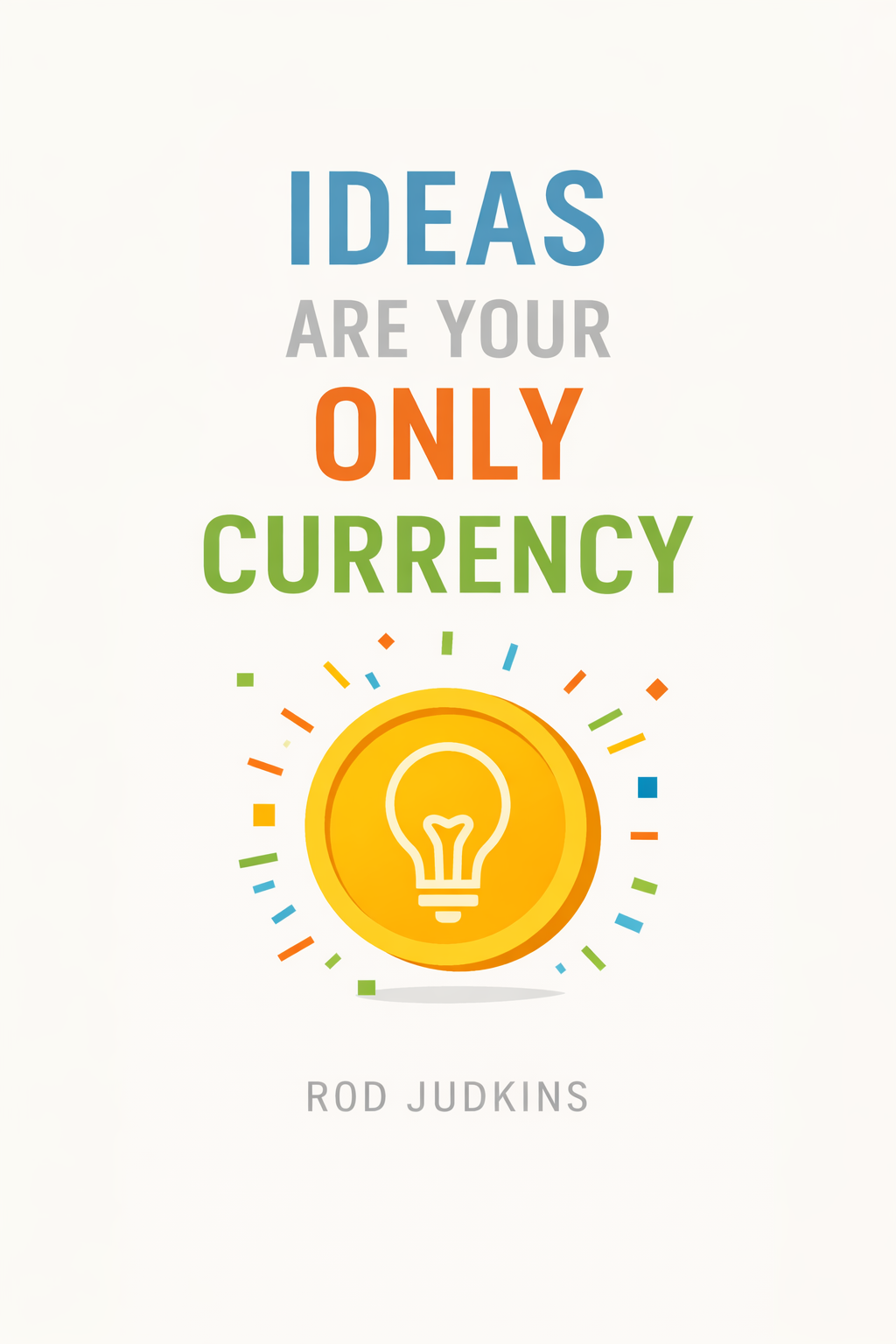
Welcome to Ideas Are Your Only Currency by Rod Judkins — a book that could permanently reshape how you think about your own potential. Most people assume creativity is a rare gift, reserved for a lucky few, but this book makes a case so counterintuitive it stops you cold. Judkins is a painter who has exhibited at Tate Britain and the Royal Academy, and he spent decades turning that studio experience into a science of original thinking. Rod Judkins built his career across painting, illustration, writing, and consulting — and that breadth is not accidental. The author argues that creativity is not confined to any single domain; the same principles that generate original ideas in art apply equally to science and business. This cross-disciplinary conviction is the engine driving everything in the book. His position at Central Saint Martins, part of the University of the Arts London, places him at the center of contemporary creative education. There, the question of what separates highly creative individuals from those who struggle is not abstract — it is observable every day. Judkins has taught creative thinking there for more than twenty years, watching structured practice transform not just what students produce, but how they perceive the world. The author's consulting work extends well beyond academia into the corporate world, where he advises organizations on innovation and unconventional problem-solving. This means his insights are tested in environments where creative thinking is measured in practical outcomes, not just artistic merit. His ideas carry weight precisely because they have been pressure-tested in both the studio and the boardroom. At the philosophical core of the book sits a direct challenge to one of the most persistent myths about creativity. Judkins argues that creativity is a skill and a mindset — one cultivated through deliberate practice and a willingness to question established norms. In his view, no one is born creative or uncreative; the difference is made by how you choose to think. The author contends that ideas are the most valuable currency in the modern world — more consequential than capital, credentials, or connections. The ability to generate, refine, and communicate original ideas represents a decisive advantage in virtually any field. Understanding who Judkins is and where these convictions come from is essential context for everything that follows. Welcome to Ideas Are Your Only Currency by Rod Judkins — a book that could permanently reshape how you think about your own potential. Most people assume creativity is a rare gift, reserved for a lucky few, but this book makes a case so counterintuitive it stops you cold. Judkins is a painter who has exhibited at Tate Britain and the Royal Academy, and he spent decades turning that studio experience into a science of original thinking. Rod Judkins built his career across painting, illustration, writing, and consulting — and that breadth is not accidental. The author argues that creativity is not confined to any single domain; the same principles that generate original ideas in art apply equally to science and business. This cross-disciplinary conviction is the engine driving everything in the book. His position at Central Saint Martins, part of the University of the Arts London, places him at the center of contemporary creative education. There, the question of what separates highly creative individuals from those who struggle is not abstract — it is observable every day. Judkins has taught creative thinking there for more than twenty years, watching structured practice transform not just what students produce, but how they perceive the world. The author's consulting work extends well beyond academia into the corporate world, where he advises organizations on innovation and unconventional problem-solving. This means his insights are tested in environments where creative thinking is measured in practical outcomes, not just artistic merit. His ideas carry weight precisely because they have been pressure-tested in both the studio and the boardroom. At the philosophical core of the book sits a direct challenge to one of the most persistent myths about creativity. Judkins argues that creativity is a skill and a mindset — one cultivated through deliberate practice and a willingness to question established norms. In his view, no one is born creative or uncreative; the difference is made by how you choose to think. The author contends that ideas are the most valuable currency in the modern world — more consequential than capital, credentials, or connections. The ability to generate, refine, and communicate original ideas represents a decisive advantage in virtually any field. Understanding who Judkins is and where these convictions come from is essential context for everything that follows.