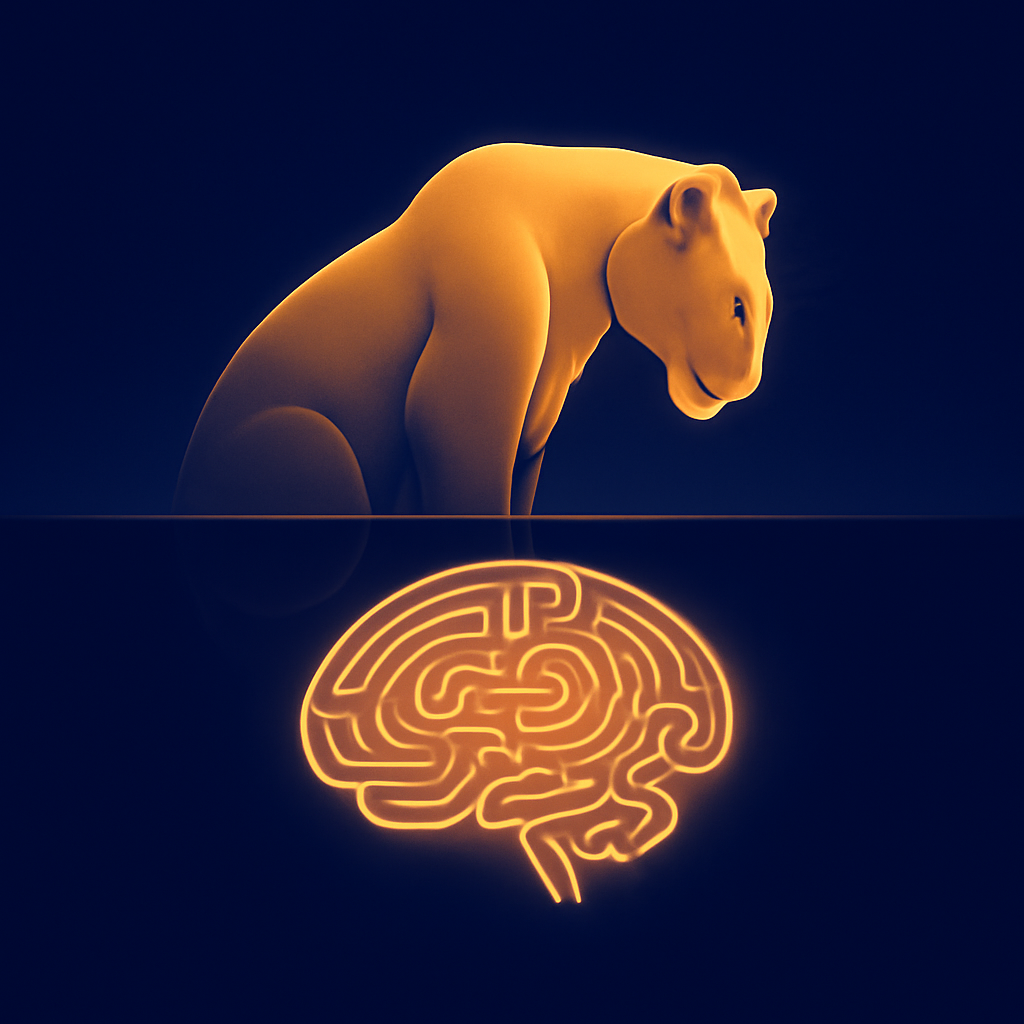
The Nala Phenomenon: Decoding the 'Come-Hither' Look
Quadrupeds vs. Anthros: The Architecture of Fantasy
Into the Dark Corners: The Internet's Collective Id
The Psychology of the Fictional Crush
Silicon Claws: The Rise of AI Furry Art
Beyond the Taboo: Validation and Reality

Transcript
SPEAKER_1: Last time, we explored how internet anonymity allows people to process feelings without shame, setting up today's focus on the psychological mechanisms behind fictophilia. Because we haven't actually asked: what is happening in the brain when someone develops a genuine crush on a fictional character? SPEAKER_2: Right, and this phenomenon is known as fictophilia, where individuals develop sustained romantic or sexual feelings for fictional characters. Not a metaphor. Not just 'really liking a movie.' Genuine emotional architecture. SPEAKER_1: So, what are the psychological mechanisms at play here? SPEAKER_2: The primary framework here is parasocial relationships. A parasocial relationship is a one-sided bond — the audience member feels genuine connection, but the character can't reciprocate. Research specifically identifies parasocial love as a form where those feelings include romantic or sexual qualities. SPEAKER_1: Mm-hmm. Nala exemplifies this as she's warm, loyal, and emotionally available in the story, yet unable to reciprocate feelings. SPEAKER_2: Exactly. Research shows that parasocial romance can offer perceived benefits similar to real relationships, like emotional comfort and inspiration. Emotional comfort, a sense of being understood, even inspiration. But there are also distinctive costs: no genuine reciprocity, no ability to negotiate the relationship with the character. SPEAKER_1: So not a substitute for everything, but not nothing either. SPEAKER_2: Right. And a systematic review found that identification with a character — feeling psychologically connected to their experiences or perspective — tends to precede or facilitate the parasocial bond. So for someone who saw themselves in Nala's loyalty or courage, the emotional attachment follows almost naturally. SPEAKER_1: And what about the super-stimulus concept? SPEAKER_2: Yes, animators create exaggerated signals, not realistic lions. Nala's eyes are larger than a real lion's, more expressive, more symmetrical. Her emotional availability is constant and legible in a way real animals aren't. These are what researchers call supernormal stimuli — features that exceed what you'd find in nature but trigger the brain's response systems more intensely because of that excess. SPEAKER_1: [short pause] So the brain isn't being fooled into thinking she's real. It's responding to signals that are more intense than real. SPEAKER_2: Exactly. And that's why the uncanny valley doesn't apply here. The uncanny valley is the discomfort people feel when something looks almost human but not quite. Nala avoids it by being stylized enough to read as animated — nobody mistakes her for a real lion — but expressive enough to feel emotionally relatable. She sits in a sweet spot. SPEAKER_1: So what our listener might be wondering is — does having a fictional crush say something diagnostic about a person? Like, does it reveal something about their psychology in a clinical sense? SPEAKER_2: a fictional crush does not by itself establish someone's diagnosis, personality type, or morality. It doesn't predict whether someone would act on it in any real-world sense. What it does reflect is attachment orientation — how someone generally relates to closeness and connection — and that's actually pretty universal territory. SPEAKER_1: And fantasy involvement amplifies it, right? The more imaginatively someone engages with a character, the stronger the bond can get. SPEAKER_2: Yes — research on this finds that fantasy involvement increases the intensity of romantic parasocial relationships, partly because it encourages deeper imaginative engagement. For example, someone who writes fan fiction about Nala, or role-plays scenarios involving her, is reinforcing those neural pathways in a way that passive viewing doesn't. SPEAKER_1: Wait — but that raises something. Counterintuitively, could the fact that she's obviously fictional actually make the attraction feel safer for some people? SPEAKER_2: That's a real finding. Because a fictional character can't reject you, can't be complicated by real-world power dynamics, can't be harmed by your feelings. The psychological object of attraction — her design, her voice, her narrative role, her perceived courage — exists entirely in imagination. That can feel genuinely manageable in a way real attraction sometimes doesn't. SPEAKER_1: [chuckle] Which is almost the opposite of how people usually frame it — like fictional crushes are a failure to engage with reality. But the research suggests they can actually support identity exploration. SPEAKER_2: They can. Research describes these bonds as potentially supporting exploration of identity and new experiences. Now, the key idea is that this does not collapse the ethical line. A fictional character cannot provide consent or participate in a real relationship — that's fundamental. And the fantasy must stay entirely separate from real animals, who cannot give informed consent under any framework. SPEAKER_1: Today's takeaway is about distinguishing layers — emotional resonance, aesthetic attraction, and real-world intent are distinct, as research shows. SPEAKER_2: That's it. And for everyone following along, those layers are better handled without mockery or automatic diagnosis. They require honest, careful distinction. Next time, we're getting into how generative AI has changed the volume and the ethics of this content — because that's a genuinely new chapter in this story.