Turning Desire Into Power, Action, and Fearless Mastery
Think and Grow Rich! By Napoleon Hill & Rosa Lee Beeland

Transcript
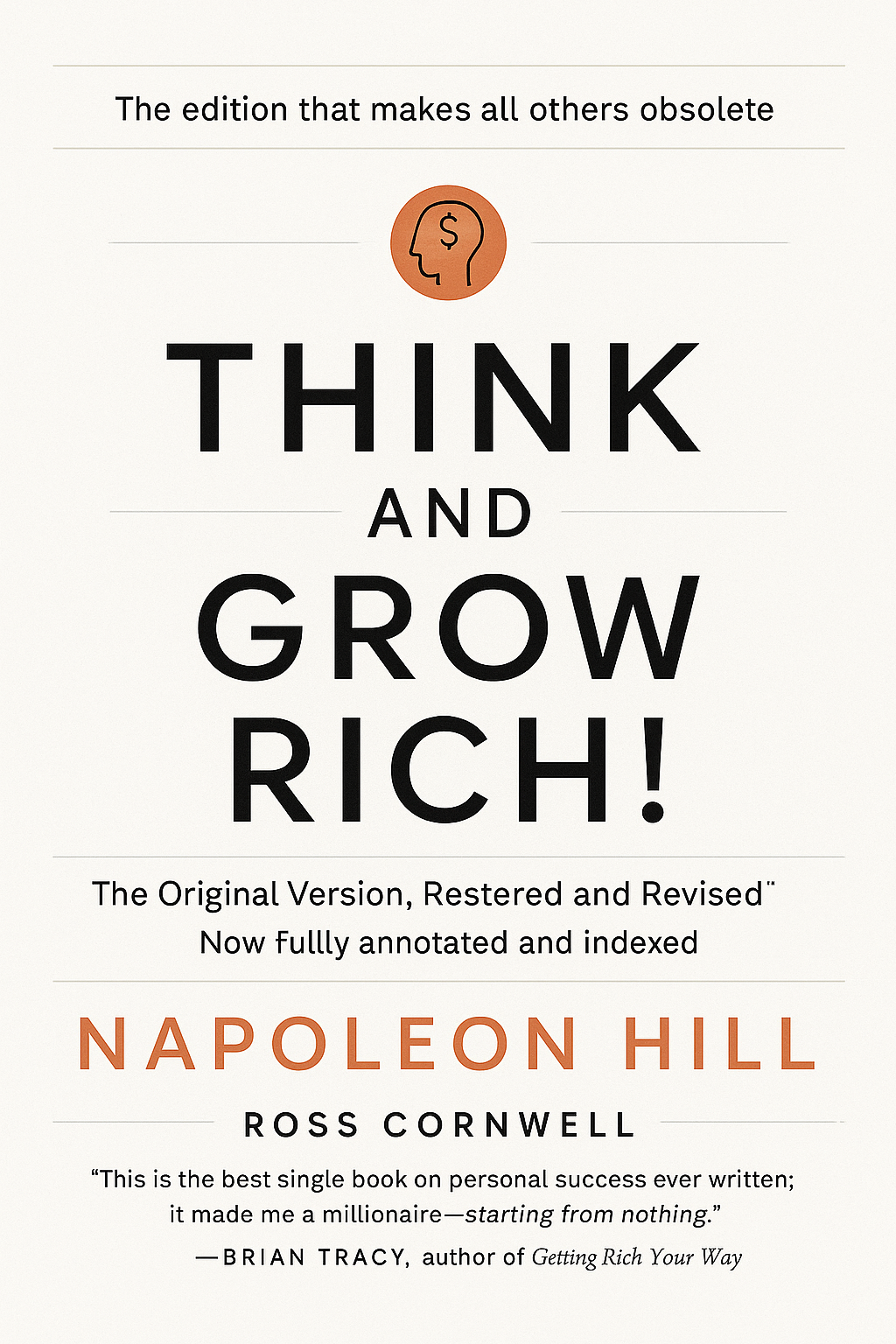
The mind is not a passive observer of circumstance — according to the author, it is the primary architect of material reality. This claim sits at the heart of a book built on over twenty years of research into America's most successful industrialists. The author insists that thoughts, combined with purpose, persistence, and burning desire, tend to transmute themselves into physical results. The author grounds this argument in the story of Edwin C. Barnes, a man who arrived at Edison's laboratory with no money, no connections, and no credentials. He carried only one asset: an unshakeable mental image of becoming Edison's business partner. In the book's view, that single mental commitment set everything else in motion. Barnes was given a menial job first and waited years before his real opportunity appeared. When Edison's own salesmen failed to promote the Ediphone dictating machine, Barnes seized the moment decisively. He became the exclusive U.S. distributor, earned a fortune, and secured the partnership he had always envisioned. The author presents Barnes's path — desire, faith, persistence, opportunity recognition, decisive action — as a reproducible template, not an exceptional case. The subconscious mind, in this view, functions as a transmission mechanism between conscious desire and real-world results. Repeated emotional impressions of a specific goal cause the subconscious to work automatically, sharpening perception and attracting cooperation. The most actionable content arrives in a precise six-step method the author outlines. Fix an exact monetary figure; decide what you will give in return; set a definite date; create a plan and begin immediately. Write a clear statement combining all of this, then read it aloud twice daily — morning and night — while feeling yourself already in possession of the result. The author draws a sharp distinction between a weak wish and a burning desire: the former is passive and vague, the latter is specific, intense, and backed by persistent action. Two examples reinforce this point powerfully. The author's own son Blair was born without ears, yet the author refused to accept permanent deafness — and Blair eventually developed functional hearing. Henry Ford demanded his engineers produce a V-8 engine after they declared it impossible. They failed repeatedly, yet Ford refused to abandon the goal. The author contends that in both cases, a burning desire held over time produced outcomes that contradicted expert consensus — and that this pattern is available to anyone willing to apply the same mental discipline. The author contends that the difference between success and failure is not talent, education, or opportunity. It is the intensity and persistence of desire — and crucially, that desire can be deliberately cultivated. This is the book's most radical and actionable claim. The author is equally clear that readiness and mental attitude are prerequisites for recognizing the book's central secret. That secret is never handed to the reader directly but must be discovered through genuine engagement with the material. This design reflects a core belief: the mind must be prepared before it can receive and act on transformative ideas. The principles outlined, according to the author, function regardless of external economic conditions. Individuals built fortunes during the Great Depression, which the author cites as evidence that circumstance is secondary to internal discipline. External reality, in this view, is downstream of mental commitment. The author's final point sharpens everything that came before. Success and failure diverge not at talent or opportunity, but at the intensity and persistence of desire. Crucially, the author argues that desire itself can be deliberately cultivated through consistent mental practice. The six-step method is the author's practical tool for that cultivation. Write an exact statement of your goal, what you will give in return, and your target date — then read it aloud twice daily with full emotional conviction. The author draws a hard line between a weak wish and a burning desire. A wish is passive and vague; a burning desire is specific, intense, and backed by action. That distinction, in the author's view, is the real engine of achievement.