Why Owning the Whole Business Matters
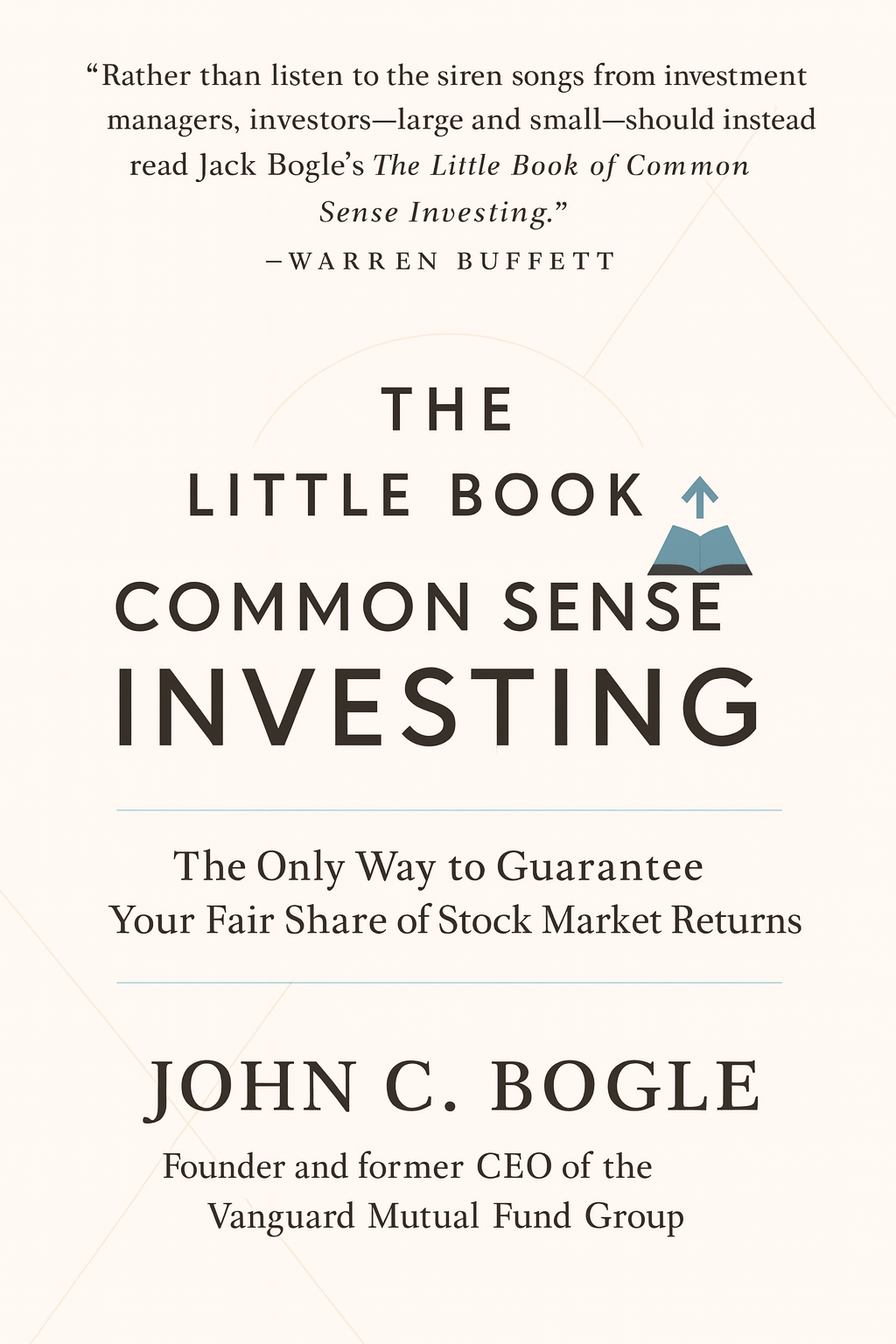
The Little Book of Common Sense Investing by John C. Bogle
Why Owning the Whole Business Matters
Rational Exuberance – The Illusion of Out-Performance
The Grand Illusion of Fees and Taxes
When Good Times End – The Perils of Active Management
Choosing Winners the Simple Way
Focus on the Lowest-Cost Funds – The Majesty of Simplicity
Bond & Money-Market Funds – Extending the Index Philosophy
Beyond the Basics – ETFs, Graham’s View, and the Path Forward

Transcript
Welcome to The Little Book of Common Sense Investing by John C. Bogle — a book that will permanently change how you think about building wealth in the stock market. Most investors believe that picking winning stocks or hiring expert fund managers is the path to superior returns, but this book reveals a mathematical truth that makes that strategy nearly impossible to win. Your guide is the visionary who founded The Vanguard Group in 1974 and created the world's first index mutual fund in 1975, revolutionizing investing for millions. Bogle opens with the Gotrocks Family parable, an elegant story that exposes how financial intermediation systematically destroys investor wealth. The Gotrocks collectively own all of corporate America and initially capture 100% of dividends and earnings growth, but when they start trading shares among themselves, they must hire helpers — stockbrokers, money managers, consultants — each extracting fees and commissions. The insight is mathematically irrefutable: as a group, investors collectively are the market, so before costs they earn the market return, but after costs they must underperform by exactly the amount paid to intermediaries. Every dollar paid to financial helpers is a dollar that cannot compound over time, and these intermediaries merely redistribute returns while taking a substantial cut without adding value to aggregate performance. This explains why the vast majority of actively managed funds fail to beat their benchmarks — not from lack of skill, but because the costs of active management create a mathematical headwind nearly impossible to overcome consistently. The parable's power lies in its simplicity: the helpers add nothing to what American business produces, yet they claim a permanent share of investor returns. Bogle then provides the analytical framework distinguishing sustainable wealth creation from ephemeral speculation through a critical formula: Total Return equals Investment Return (dividend yield plus earnings growth) plus Speculative Return (changes in price-earnings ratios). Historical analysis of the twentieth century reveals that investment return — approximately 9% annually from roughly 4.5% dividend yields and 4.5% earnings growth — accounted for virtually all of the market's 10.4% average annual return from 1900 to 2000. Speculative return contributed only about 0.5% annually over this century-long period, despite creating enormous volatility in shorter timeframes; while P/E ratios can double or halve over years, they inevitably revert toward historical norms, making speculation a zero-sum game. The author advocates for rational exuberance — being rationally exuberant about the productive capacity of American business to generate earnings and dividends, which represents real wealth creation, while avoiding irrational exuberance about speculative price changes driven by shifting sentiment. The 1990s bull market exemplifies this distinction: P/E expansion contributed substantially to returns during that decade, but these speculative gains reversed in the early 2000s bear market when ratios contracted. From 1995 to 2005, investment return remained stable at 7-8% annually while total return fluctuated wildly due to the speculative component, proving that only investment return is reliable and sustainable over time. Individual investors cannot control or reliably predict speculative returns, but they can capture the investment return of the overall market with near certainty by holding low-cost index funds long-term. The costs of active management — expense ratios, transaction costs, and tax inefficiency — typically consume 2-3% of returns annually, representing an enormous drag on wealth accumulation that compounds devastatingly over decades. By minimizing costs and avoiding futile pursuit of speculative gains, index fund investors position themselves to capture the full investment return of corporate America, which has proven remarkably consistent and generous over extended periods, making low-cost indexing the optimal strategy for most investors.