Beyond the Basics – ETFs, Graham’s View, and the Path Forward
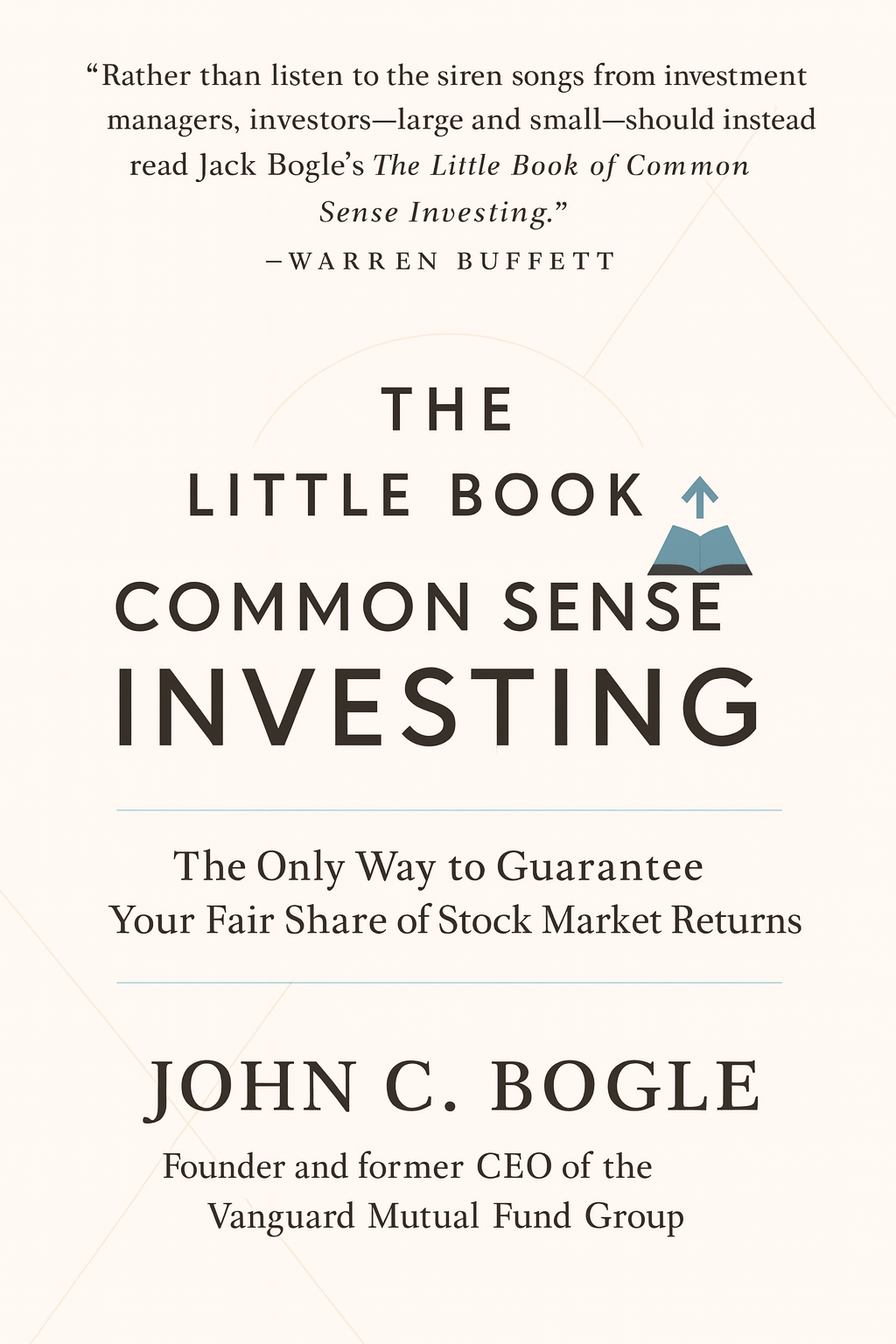
The Little Book of Common Sense Investing by John C. Bogle
Why Owning the Whole Business Matters
Rational Exuberance – The Illusion of Out-Performance
The Grand Illusion of Fees and Taxes
When Good Times End – The Perils of Active Management
Choosing Winners the Simple Way
Focus on the Lowest-Cost Funds – The Majesty of Simplicity
Bond & Money-Market Funds – Extending the Index Philosophy
Beyond the Basics – ETFs, Graham’s View, and the Path Forward

Transcript
SPEAKER_1: Alright, last time we established that the simplest, lowest-cost index fund provides the most reliable path to capturing market returns. But here's what I'm stuck on—the author now tackles ETFs, and the message seems... contradictory. Are they good or bad? SPEAKER_2: It's both. ETFs embody the promise and peril of indexing. Broad-market index ETFs share all the fundamental advantages—low costs, diversification, tax efficiency. But their structure enables intraday trading that transforms them from investment vehicles into trading instruments. SPEAKER_1: Wait, how does structure change behavior? The underlying holdings are the same, right? SPEAKER_2: Correct, but the ability to trade throughout the day encourages speculation. The average ETF holding period is alarmingly short—often measured in months or days rather than years. That contradicts the buy-and-hold philosophy essential to successful indexing. SPEAKER_1: So the problem isn't the ETF itself, it's how people use it? SPEAKER_2: Exactly. And the proliferation of specialized, narrowly focused ETFs tracking specific sectors, leveraged strategies, exotic instruments—those encourage speculation rather than investment. They serve the financial industry's profit interests, not investors' wealth-building goals. SPEAKER_1: What about the behavior gap? How much worse is it for ETFs? SPEAKER_2: The difference between fund returns and actual investor returns due to poor timing and excessive trading is often wider for ETFs than traditional mutual funds. Despite these concerns, disciplined investors using broad-market index ETFs in a buy-and-hold strategy can benefit from their tax efficiency, particularly in taxable accounts. SPEAKER_1: Okay, but the author also brings in Benjamin Graham. How does the father of security analysis validate index investing? SPEAKER_2: Graham's intellectual evolution is fascinating. Examining his writings across multiple editions of The Intelligent Investor, the author shows Graham grew increasingly skeptical about investors' ability to consistently outperform through stock selection. SPEAKER_1: Give me the actual progression. What changed? SPEAKER_2: By the 1972 fourth edition, Graham questioned whether the effort required to beat the market was worthwhile for most investors. He suggested defensive investors should be content with a simple cross-section of leading stocks—essentially describing index investing before index funds existed. SPEAKER_1: And after that? SPEAKER_2: In a 1976 interview shortly before his death, Graham explicitly stated he was no longer an advocate of elaborate techniques of security analysis. He recommended that investors simply buy a representative list of stocks and hold them. SPEAKER_1: So Graham's core principles—minimizing costs, avoiding speculation, recognizing the limits of outsmarting the market—align perfectly with index fund philosophy? SPEAKER_2: Precisely. His intellectual honesty and willingness to adapt based on changing market conditions validated the approach. It's not a rejection of his earlier work, but an evolution based on evidence. SPEAKER_1: Which brings us to the relentless rules of humble arithmetic. What makes this mathematical certainty rather than theory? SPEAKER_2: All investors collectively must earn the market's gross return. But after costs, the average actively managed dollar must underperform the average passively managed dollar by the cost differential. It's inescapable. SPEAKER_1: Okay, but what's the actual magnitude? How much does a 2 percent cost differential matter? SPEAKER_2: It can consume nearly half of cumulative returns over a 50-year investment lifetime. Comprehensive data across multiple time periods and asset classes confirms that approximately 80 percent of actively managed funds fail to beat their benchmarks over 10-year periods, rising to nearly 90 percent over 20 years. SPEAKER_1: And past performance? SPEAKER_2: Virtually worthless for predicting future results. Yesterday's winners frequently become tomorrow's losers. Survivorship bias masks the disappearance of 30 to 50 percent of funds over 10 to 15 year periods due to poor performance. SPEAKER_1: So for someone ready to embrace indexing, what's the practical path forward? SPEAKER_2: For tax-deferred retirement accounts, it's straightforward—switch to index funds immediately since no tax consequences exist. Build a simple portfolio around total stock market and total bond market index funds based on individual circumstances. SPEAKER_1: What about taxable accounts? That's where it gets complicated, right? SPEAKER_2: Investors must weigh immediate capital gains taxes against long-term benefits. Potentially transition gradually by directing new contributions to index funds, selling positions with losses first, or holding appreciated positions until tax-efficient opportunities arise. SPEAKER_1: I'll admit, the logic is airtight when you lay it out like that. For someone reading this, the takeaway is pretty stark: these principles aren't subject to debate—they represent fundamental truths. SPEAKER_2: Right. And the high-stakes insight is this: the decision to embrace index investing is about taking control of one's financial future through a strategy grounded in common sense, empirical evidence, and the immutable arithmetic of investing. It's not brilliance—it's discipline and alignment with market reality.