Bond & Money-Market Funds – Extending the Index Philosophy
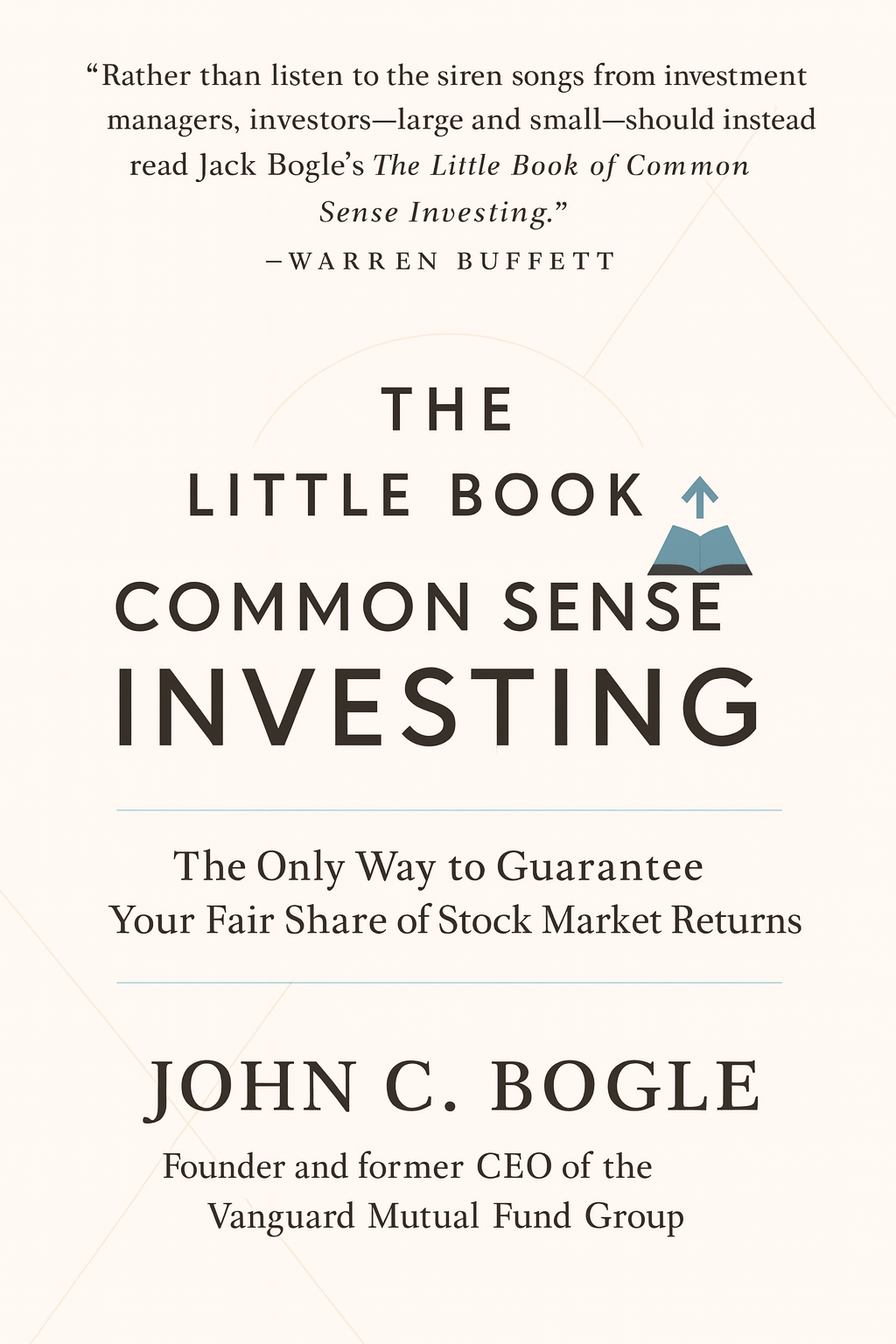
The Little Book of Common Sense Investing by John C. Bogle
Why Owning the Whole Business Matters
Rational Exuberance – The Illusion of Out-Performance
The Grand Illusion of Fees and Taxes
When Good Times End – The Perils of Active Management
Choosing Winners the Simple Way
Focus on the Lowest-Cost Funds – The Majesty of Simplicity
Bond & Money-Market Funds – Extending the Index Philosophy
Beyond the Basics – ETFs, Graham’s View, and the Path Forward

Transcript
Last time we established that cost control represents the one factor entirely within investor control, delivering superior results through straightforward market participation rather than complex active strategies. The author now extends this core philosophy into fixed-income investing, where the case for low-cost indexing becomes even more compelling due to bond returns' inherently lower and more predictable nature. When bonds return 5 percent annually compared to stocks' 10 percent, a 1 percent expense ratio consumes 20 percent of gross returns rather than 10 percent, making cost discipline absolutely critical in fixed-income portfolios. Bogle presents evidence from the 20-year period ending in 2005, showing the Vanguard Total Bond Market Index Fund returned 7.4 percent annually while the average actively managed bond fund delivered only 6.6 percent, a difference of 0.8 percentage points attributable almost entirely to cost advantages. The bond market's high efficiency makes it nearly impossible for active managers to consistently identify mispriced securities or successfully time interest rate movements, eliminating the primary justifications for active management. Excessive portfolio turnover rates exceeding 200 percent annually generate substantial transaction costs and tax inefficiencies that further erode returns, compounding the damage from high expense ratios. The case becomes even more clear-cut with money market funds, where expenses represent essentially the only factor differentiating performance since all funds invest in similar short-term, high-quality debt instruments and maintain stable one-dollar net asset values. During periods when money market instruments yield 4 percent, a fund charging 0.20 percent delivers 3.80 percent to investors while one charging 0.80 percent delivers only 3.20 percent, a difference representing 15 percent of gross returns. The lowest-cost fund automatically wins because gross returns are virtually identical across all money market offerings, making manager selection trivial. Having established the overwhelming importance of costs in fixed-income indexing, the author turns his attention to a growing threat: alternative index funds claiming to beat traditional market-cap-weighted indexes while maintaining the indexing label. Fundamentally weighted index funds, which weight stocks by factors such as sales, cash flow, dividends, and book value rather than market capitalization, represent the most prominent example of this trend. Proponents point to the FTSE RAFI U.S. 1000 Index outperforming the S&P 500 by 2.1 percentage points annually from 2000 to 2006, but Bogle exposes the fundamental flaw: this outperformance occurred during a specific period when value stocks dramatically outperformed growth stocks following the technology bubble. When examining the full market cycle from 1979 to 2006, the performance advantage essentially disappears, with fundamental indexing delivering returns nearly identical to traditional market-cap weighting. These alternative strategies represent active management disguised as indexing because they are deliberate bets on specific market factors rather than true passive market exposure, introducing significant tracking error and style risk. The author argues forcefully that these approaches violate the core principles making traditional indexing successful: cost minimization, tax efficiency, and elimination of active bets on unpredictable market factors. The risks and costs of alternative indexing approaches undermine their appeal and contradict indexing's fundamental advantages, with fundamentally weighted funds typically charging expense ratios of 0.40 to 0.60 percent compared to as low as 0.05 percent for basic S&P 500 index funds. These funds generate higher portfolio turnover as they regularly rebalance to maintain their alternative weighting schemes, creating additional transaction costs and tax consequences for investors in taxable accounts. Most critically, these strategies introduce the possibility of substantial underperformance during periods when their particular tilt falls out of favor, exactly the kind of active risk that traditional indexing eliminates. Bogle concludes that while fundamental indexing and similar approaches may have merit as deliberate value-oriented investment strategies, they should not be confused with true indexing that provides reliable market exposure. Whether investing in bond funds, money market funds, or equity index funds, the principle remains constant: the simplest, lowest-cost, market-cap-weighted index fund provides the most reliable path to capturing market returns. The predictable, lower-return nature of fixed-income investments makes this cost discipline even more critical than in equity investing, where higher returns can partially offset the damage from excessive fees.