13 min • 3 lectures
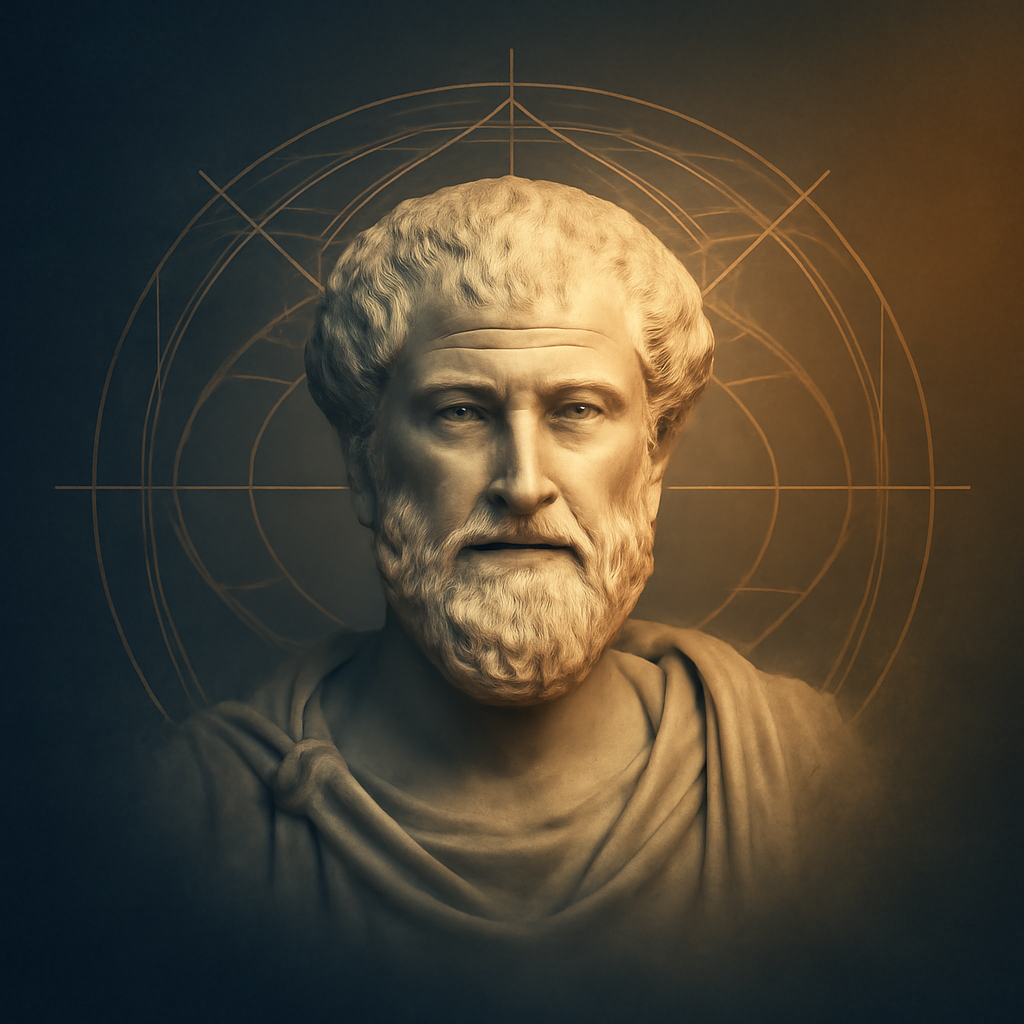
This course examines Aristotle's philosophy across three lectures. The first lecture contrasts Aristotle's realism with Plato's idealism and explains the Four Causes—Material, Formal, Efficient, and Final—using examples like a bronze statue and a seed. It introduces Teleology, the idea that everything has a purpose, and shows how empirical observation grounds his later ethics. The second lecture presents a dialogue on Nicomachean Ethics, defining Eudaimonia as an activity of the soul in accordance with virtue. It details the Golden Mean between extremes, such as courage between cowardice and recklessness, and explains habituation, the process of becoming virtuous through repeated action. The third lecture links individual virtue to the Polis, describing humans as Zoon Politikon who require community and Philia to reach full potential. It covers Aristotle's invention of the Syllogism and his systematic categorization of knowledge, then summarizes his lasting influence on logic, science, and the pursuit of a balanced life.

