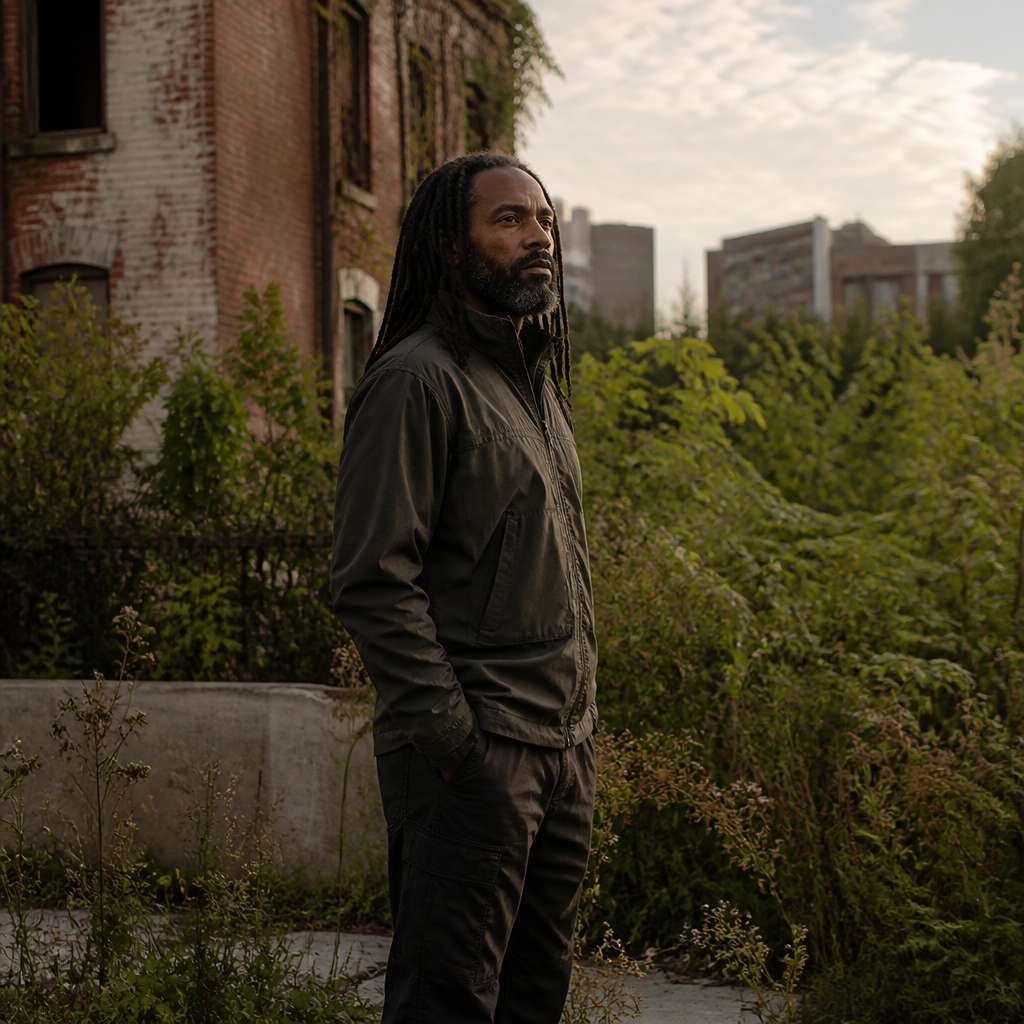
Natural Discipline: The MOVE Lifestyle
The Teachings of John Africa: Life, System, and Resistance
The Seed of Resistance: Who Was John Africa?
The Core Dichotomy: 'Life' vs. 'The System'
The Guidelines: The Written Blueprint
Radical Equality: Species and Hierarchy
The Name Africa: Identity and Unity
Natural Discipline: The MOVE Lifestyle
Education and the Un-Learning Process
The Rejection of Modern Medicine
The Critique of Institutional Racism
Anti-Capitalism and Shared Resources
Animal Liberation: Kinship Beyond Human Limits
The Power of the Collective Voice
The Technology Trap
State Conflict: 1978 and 1985
The Philosophy of Resistance
Absolutism and the Risks of Belief
Anarcho-Primitivism and Global Context
The Legacy of 'Life' Today

Transcript
Picture a house in West Philadelphia. No electric lights. No refrigerator hum. Wood burning in the fireplace. People eating raw food straight from the earth. Children learning not from textbooks but from the rhythms of communal life. That was a MOVE household in Powelton Village. And it wasn't accidental. Every detail was doctrine. In previous discussions, we explored the symbolic significance of adopting the name Africa. So the question is: what did that refusal look like in daily life? What did MOVE people actually do with their bodies, their food, their hair, their time? The answer is more demanding than most people expect. For MOVE, diet was a core tenet of their belief system, not merely a lifestyle choice. Members adopted a strict raw food diet — uncooked, unprocessed, as close to the earth as possible. Refined sugar, processed salt, cooked meals — all rejected. John Africa taught that processed food weakened the body's natural alignment with Life. That means eating a bag of chips wasn't just unhealthy. It was a form of submission to the System. Drugs, alcohol, and tobacco were refused on the same grounds. Sobriety wasn't about wellness culture. It was about maintaining the clarity and strength that resistance required. Think of John Africa himself as the model. Followers described him as someone who constantly moved, exercised, and burned energy. That wasn't incidental. Physical toughness was part of the teaching. The body, kept strong and uncontaminated, became a form of protest. Communal labor reinforced this. Members shared homes, resources, and daily responsibilities as a single family unit. No one was exempt. Work was collective. Rest was earned. IZ, this is where the philosophy stopped being abstract and became something you felt in your muscles. Members embraced natural grooming, wearing dreadlocks and avoiding commercial grooming products. Simple, functional clothing replaced mainstream fashion. No cosmetics. No chemical treatments. This wasn't aesthetic rebellion for its own sake. It was a rejection of beauty standards built on racial assimilation and consumer dependency. The same logic extended to waste. Members composted food scraps and returned organic material to the earth rather than placing it in trash containers. For MOVE, garbage bins were a System invention. The earth was the destination. Home births were common, with community support, as hospitals were viewed with skepticism. Children were not taught conventional reading and writing. Members described literacy as synthetic education — knowledge misaligned with natural, experiential understanding. John Africa's advocacy for simple living and technological rejection predated the mainstream 'degrowth' discourse. [short pause] That is a striking observation. A man dictating teachings in early-1970s Philadelphia was articulating ideas that academic economists would formalize much later. Here is the counterintuitive truth, IZ. MOVE's call for natural living required extraordinary discipline. Instinct, left uncultivated, drifts toward comfort. The System offers comfort constantly. Rejecting it demanded daily, deliberate effort — in what you ate, how you moved, how you raised your children, how you wore your hair. Remember: MOVE members practiced a rigorous, ascetic lifestyle designed to purge what they called systemic toxins. That included processed foods, drugs, alcohol, and the entire apparatus of modern convenience. The body, in John Africa's teaching, was nature's instrument. And an instrument neglected by artificial comfort loses its ability to resist.