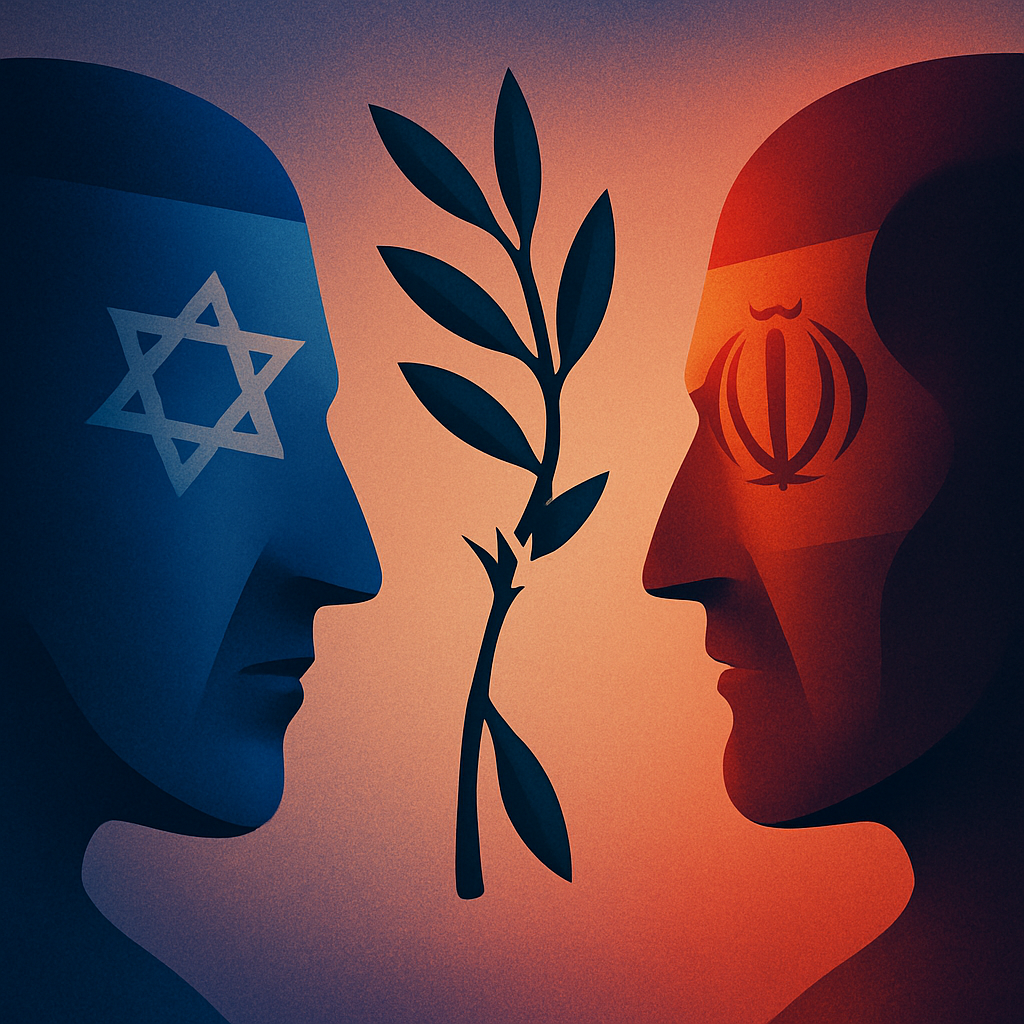
Out of the Shadows: The Great Regional Rivalry
The Axis of Resistance: Beyond the Proxies
Iron Dome vs. Hypersonic Hope: The Arms Race
The Nuclear Threshold: Red Lines and Deadlines
The Invisible Front: Cyber Warfare and Intelligence
Global Shockwaves: Oil, Trade, and Superpowers
Domestic Pressures: The Home Fronts
The Road Ahead: Escalation or New Equilibrium?

Transcript
SPEAKER_1: Alright, so last time we established that April 2024 was the moment Iran crossed from shadow warfare into direct missile exchanges — the era of plausible deniability is over. But what I keep coming back to is: the proxies didn't disappear when that happened, did they? SPEAKER_2: Not even close. And that's exactly the right thread to pull. The direct strikes were a statement, but Iran's regional network — what Tehran calls the Axis of Resistance — is still the backbone of its strategy. These aren't backup options. They're the primary architecture. SPEAKER_1: So how big is this network, actually? Our listener might be picturing one or two militia groups, but I suspect the reality is much larger. SPEAKER_2: Much larger. We're talking about Hezbollah in Lebanon, the Houthis in Yemen, multiple Iraqi Shia militias — the Islamic Resistance in Iraq alone claimed 23 drone and rocket attacks on US bases on April 2nd, 2026 — and Palestinian Islamic Jihad in Gaza. At minimum, six to eight distinct armed organizations across four countries, all operating under varying degrees of Iranian coordination. SPEAKER_1: Varying degrees — that's interesting. How does Tehran actually control them? Is it money, weapons, ideology? SPEAKER_2: All three, but the proportions differ. Hezbollah is the most integrated — analysts estimate Iran funds roughly 70 percent of its operating budget. Weapons transfers, training, and ideological alignment through the concept of Wilayat al-Faqih, guardianship of the Islamic jurist, create a deep institutional bond. The Houthis are more ideologically autonomous but depend heavily on Iranian ballistic missiles and drones — the US State Department confirmed Russia and China also supply them, but Iran is the primary weapons pipeline. SPEAKER_1: So if Hezbollah is that dependent on Iranian funding, Tehran has a real lever. But why would Iran ever let these groups act independently? What's the strategic logic there? SPEAKER_2: This is where it gets genuinely clever. Independent action gives Tehran deniability. If a Hezbollah missile hits an Israeli warship — and on April 5th, Hezbollah launched anti-ship cruise missiles at an Israeli vessel 68 nautical miles off Lebanon's coast — Iran can say it didn't order that. But the pressure on Israel is real. Tehran gets the strategic benefit without the formal accountability. SPEAKER_1: So the proxies function as a buffer, not just a trigger. SPEAKER_2: Exactly how some analysts frame it. They absorb Israeli and American military attention, stretch Israeli defense resources across multiple fronts simultaneously, and force Jerusalem to fight on four or five geographic axes at once. That's exhausting and expensive — remember, intercepting one night of Iranian missiles cost over a billion dollars. Now multiply that across Yemen, Lebanon, and Iraq simultaneously. SPEAKER_1: Speaking of Yemen — can the Houthis realistically sustain a blockade of the Bab el-Mandeb Strait? Because that's a chokepoint for something like 12 percent of global trade. SPEAKER_2: Sustainment is the right question. Militarily, they've demonstrated the capability — repeated missile salvos at southern Israel, anti-ship operations in the Red Sea. But their supply chain is the vulnerability. If Iran's weapons pipeline gets disrupted, Houthi operational tempo drops. And that pipeline is under serious pressure right now. The IDF destroyed 70 percent of Iran's steel production capacity on April 3rd — steel critical for ballistic missile casings. That's not a symbolic strike. That degrades what Tehran can ship to Sanaa. SPEAKER_1: That's a detail I hadn't connected. So hitting Iran's industrial base directly affects what the Houthis can do months from now. SPEAKER_2: Precisely. And the same logic applies to the broader Axis. The IDF struck Iran's largest petrochemical plant and multiple Tehran airports on April 6th, targeting fighter jets and missile infrastructure. US Secretary of Defense Hegseth stated on March 31st that these strikes have caused widespread desertions and frustration inside Iranian military leadership. You degrade the center, and the periphery weakens over time. SPEAKER_1: And yet Iran is still refusing ceasefire talks. On April 6th, Reuters reported Tehran rejected a temporary ceasefire, demanding a complete end to fighting, and even insisted on safe passage through the Strait of Hormuz as a condition. SPEAKER_2: Which tells you how much leverage they believe they still hold. The Hormuz demand is significant — roughly 20 percent of global oil transits that strait. Threatening it is Tehran signaling that economic pain runs both directions. Meanwhile, Iran informed mediators it won't meet US officials in Islamabad — the Wall Street Journal called it a dead end as of April 3rd. SPEAKER_1: And then April 6th brought something almost unprecedented — the IDF assassinated Supreme Leader Khamenei. How does the Axis of Resistance function when its ideological anchor is gone? SPEAKER_2: That is the open question right now. The IDF confirmed F-15s carried out the strike, and IDF forces are now actively hunting Iranian ballistic missile crews. Khamenei was the theological and political glue holding the Wilayat al-Faqih framework together. Without him, the ideological coherence that binds Hezbollah and the IRGC could fracture — or harden into something more unpredictable. SPEAKER_1: More unpredictable how? SPEAKER_2: Decentralized. If central command collapses, individual proxy commanders make their own calls. That's actually more dangerous in some ways — no one to negotiate with, no one to pull back the Houthis or the Iraqi militias. President Trump warned on Easter Sunday of strikes on Iran's energy infrastructure if no ceasefire materializes, and with a Tuesday deadline he called final, the next 48 hours are critical. SPEAKER_1: A fourth casualty was confirmed in Haifa from an Iranian missile barrage on April 6th — an elderly couple and their son among the dead, 56 injured in Israel in just 24 hours. For Artin and everyone following this, what's the single thing they should carry forward from today? SPEAKER_2: This: while direct strikes have now begun, Iran's regional proxies remain essential to its strategy of strategic patience and regional deterrence. Even as Tehran's own infrastructure burns and its leadership is targeted, the Axis of Resistance gives Iran the ability to keep fighting on multiple fronts simultaneously. The proxies aren't a sideshow — they're the reason this conflict doesn't end quickly, no matter what happens in Tehran.