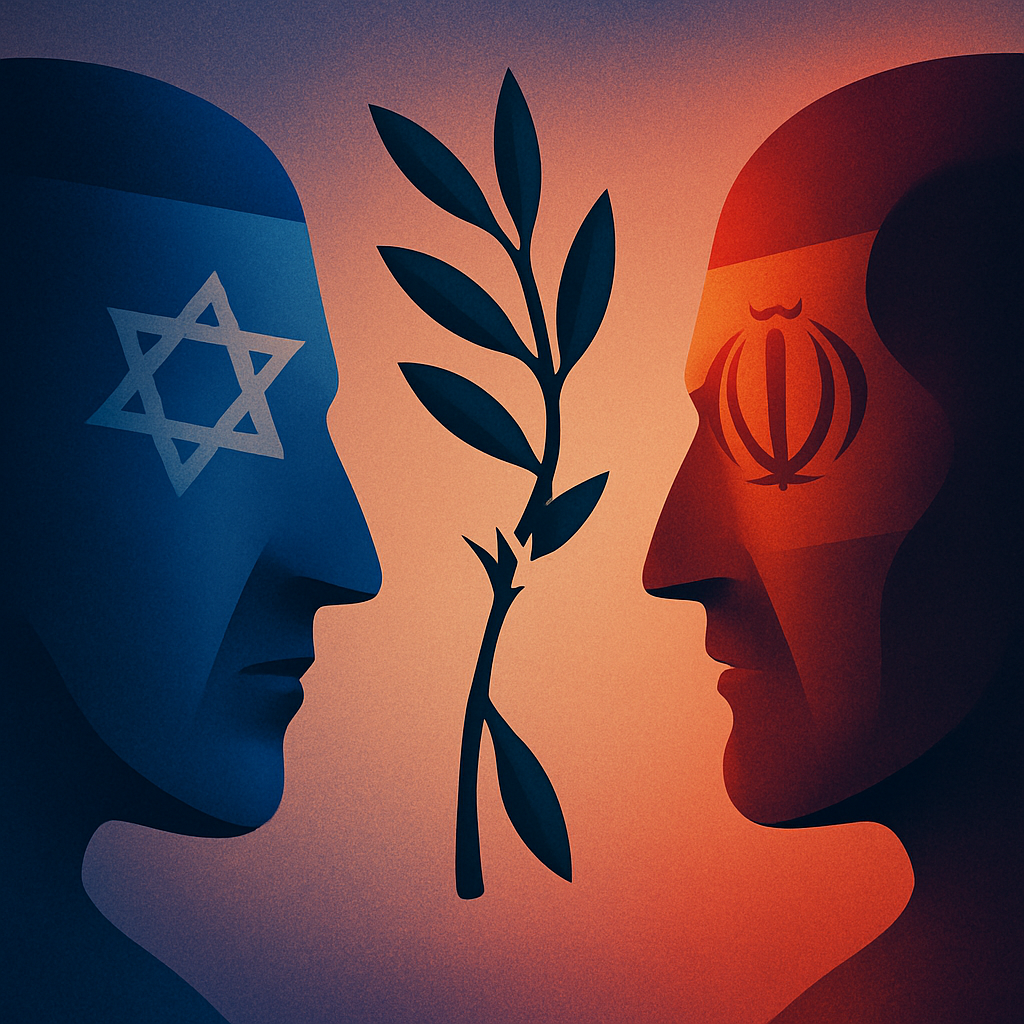
Out of the Shadows: The Great Regional Rivalry
The Axis of Resistance: Beyond the Proxies
Iron Dome vs. Hypersonic Hope: The Arms Race
The Nuclear Threshold: Red Lines and Deadlines
The Invisible Front: Cyber Warfare and Intelligence
Global Shockwaves: Oil, Trade, and Superpowers
Domestic Pressures: The Home Fronts
The Road Ahead: Escalation or New Equilibrium?

Transcript
SPEAKER_1: Alright, so last time we established that the arms race math is brutal — a twenty-thousand-dollar Iranian drone forces a three-million-dollar Israeli interceptor. But I've been sitting with something even bigger: underneath all the missiles and proxy networks, there's a nuclear question that seems to be driving everything. SPEAKER_2: That's exactly the right instinct. The conventional war is real and deadly, but it's almost a surface layer. The nuclear question is central to the geopolitical tensions, with international diplomatic efforts focusing on preventing Iran from acquiring nuclear weapons. The IAEA plays a crucial role in monitoring Iran's nuclear activities, and global powers are actively engaged in diplomatic maneuvers to address this threat. SPEAKER_1: How are international organizations responding to Iran's enrichment levels? SPEAKER_2: The IAEA has documented Iran's enrichment reaching 84 percent at Fordow, close to weapons-grade. This has prompted increased diplomatic efforts by the international community to prevent further escalation. Analysts estimated Iran's breakout time — the sprint from current stockpile to enough fissile material for one weapon — at somewhere between two weeks and three months. SPEAKER_1: Two weeks to three months. That's... that's not a distant threat. That's essentially now. SPEAKER_2: Which is precisely why the IDF struck Sharif University of Technology in Tehran on April 6th. AP News confirmed that strike was specifically linked to Iran's ballistic missile and nuclear weapons program. You don't hit a university unless you believe the research happening there is weapons-relevant. That's a very deliberate signal about what Israel considers a legitimate target. SPEAKER_1: With the JCPOA no longer in effect, how has the international diplomatic landscape shifted? SPEAKER_2: The absence of the JCPOA has led to a lack of structured diplomatic engagement, prompting global powers to seek alternative diplomatic solutions to curb Iran's nuclear ambitions. The absence of the JCPOA didn't cause this war, but it removed every structural brake on Iran's nuclear acceleration. SPEAKER_1: So what's Israel's specific red line? Is it a percentage? A timeline? Because 'no nuclear weapons' sounds clear, but the actual trigger must be more precise. SPEAKER_2: Israel's doctrine has always been: Iran cannot achieve a deliverable nuclear weapon, full stop. But the operational red line is breakout capability — the moment Iran has enough enriched material that a weapon becomes a matter of assembly, not physics. The Jerusalem Post confirmed on April 5th that the US and Israel have a joint plan to strike strategic Iranian sites if no nuclear deal is reached. That plan exists precisely because both governments believe breakout is imminent, not theoretical. SPEAKER_1: Here's what I keep wondering — could this conventional war actually be giving Iran cover to advance its nuclear program while everyone's watching the missiles? SPEAKER_2: That concern is real and it's been raised by nonproliferation analysts. The logic goes: while the IDF is hunting IRGC commanders and missile crews, Iran's nuclear scientists at dispersed, hardened facilities could be accelerating enrichment. The IAEA chief Rafael Grossi flagged something alarming on April 6th — a recent strike landed just 75 meters from the Bushehr nuclear plant. That's how close the conventional and nuclear dimensions are getting to each other physically. SPEAKER_1: Seventy-five meters. That's a near-miss on a nuclear facility. What happens if a strike actually hits one? SPEAKER_2: Radiological release, regional contamination, and a complete collapse of whatever international consensus still exists around this conflict. It would also hand Iran a propaganda victory of enormous proportions. Grossi's warning wasn't accidental — it was a public signal to both sides that the margin for error is gone. SPEAKER_1: Trump claimed on April 6th that Iran has already conceded on nuclear weapons — that Iranian negotiators have 'immunity from death' and talks are happening. Is that credible given everything else we're seeing? SPEAKER_2: It's complicated. Iran simultaneously rejected a 45-day ceasefire mediated by Pakistan, Egypt, and Türkiye — IRNA confirmed they're demanding a permanent end to the war, not a pause. And Trump's Tuesday, April 8th deadline threatens strikes on power plants and bridges if the Strait of Hormuz stays closed. Those two tracks — negotiation and escalation — are running in parallel, which is either sophisticated pressure or a recipe for catastrophic miscommunication. SPEAKER_1: How do global powers view the potential of a nuclear-armed Iran in terms of regional stability? SPEAKER_2: While some argue it could lead to mutual deterrence, the international consensus is that it would trigger regional proliferation and destabilize the geopolitical balance, prompting urgent diplomatic interventions. Deterrence requires a stable, rational decision-maker on both ends. That's not what exists in Tehran right now. SPEAKER_1: And IDF sources admitted on April 5th they don't even know how many ballistic missiles Iran has left. So Israel is making these high-stakes decisions with incomplete intelligence. SPEAKER_2: That admission is extraordinary. You're conducting strikes on nuclear-adjacent facilities, you've assassinated the Supreme Leader, and you don't have a reliable count of the remaining arsenal. That's the definition of operating at the edge of what intelligence can support. SPEAKER_1: So for Artin and everyone following this — what's the single thing they should carry forward from today? SPEAKER_2: This: Iran's proximity to weapons-grade enrichment is not a background condition — it is the primary engine of Israeli military doctrine and the reason this war is happening at this intensity, right now. Every strike on a university, every deadline from Washington, every rejected ceasefire traces back to one calculation: the window to prevent a nuclear-armed Iran is measured in weeks, not years. That's what makes the next 48 hours genuinely historic.