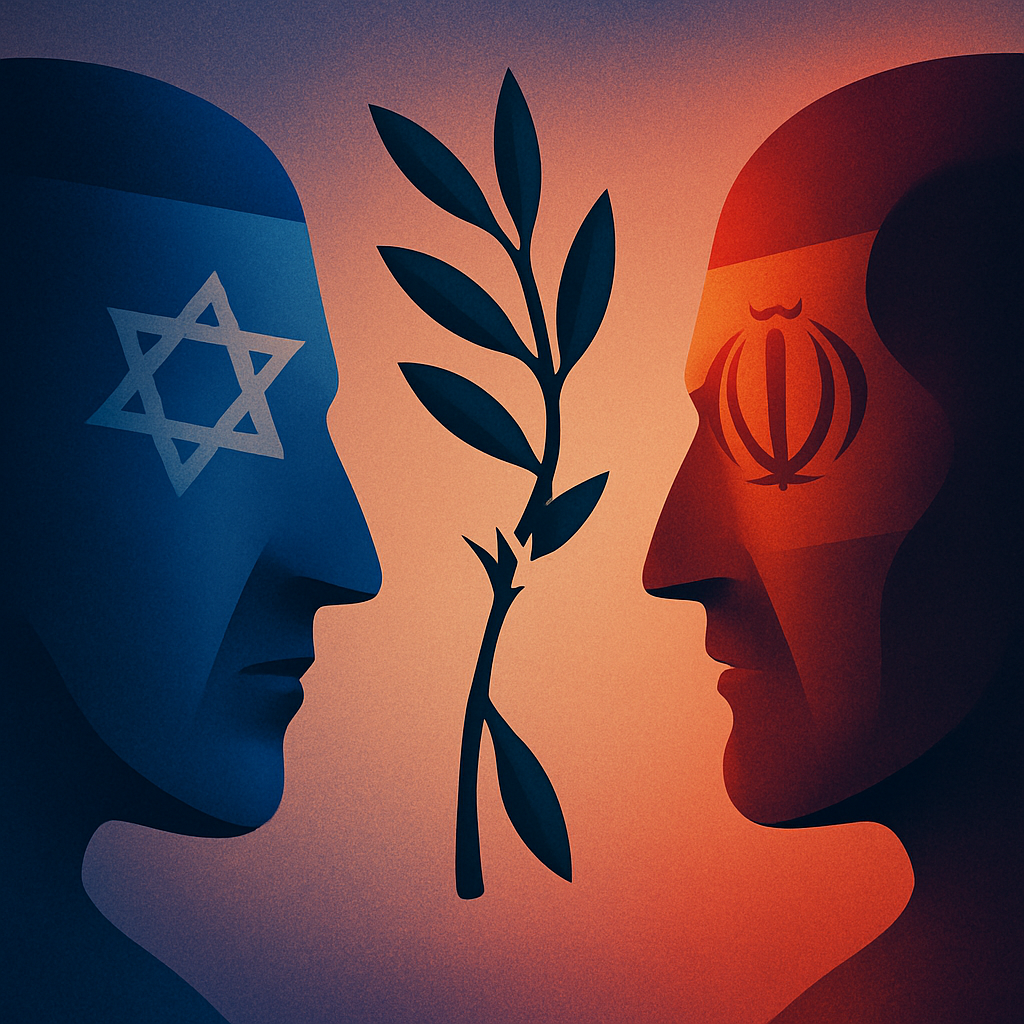
Out of the Shadows: The Great Regional Rivalry
The Axis of Resistance: Beyond the Proxies
Iron Dome vs. Hypersonic Hope: The Arms Race
The Nuclear Threshold: Red Lines and Deadlines
The Invisible Front: Cyber Warfare and Intelligence
Global Shockwaves: Oil, Trade, and Superpowers
Domestic Pressures: The Home Fronts
The Road Ahead: Escalation or New Equilibrium?

Transcript
Over a thousand Israelis defied active missile alerts to protest in Tel Aviv's Habima Square on April 5, 2026 — while Iranian ballistic missiles were still in the air. Mistaclim confirmed seventeen were arrested. Israel's High Court ruled the same day that Home Front Command cannot blanket-ban gatherings of a thousand people, even during wartime. That ruling, Artin, is extraordinary. It means the Israeli judiciary is actively constraining the government's emergency powers while the country is absorbing live missile strikes. Last lecture focused on the global economic impacts of controlling the Strait of Hormuz. But here's what that misses: the pressure dial on both governments runs through their own populations, not just their militaries. On the Israeli side, the Jerusalem Post confirmed Iran launched over ten missiles in three waves targeting central Israel on April 5 and 6, triggering alarms in Jerusalem. Four people died in Haifa — an elderly couple in their eighties, their son in his forties, a woman in her mid-thirties — Reuters reported. Nine more were injured in a separate Haifa strike on April 5, including an 82-year-old man in serious condition, per Home Front Command documentation. Home Front Command is now extending warning times for dozens of northern communities including the Golan Heights, the Times of Israel confirmed — a tacit admission that reaction windows are shrinking dangerously. Simultaneously, the IDF suspended an entire reserve battalion after soldiers attacked a CNN crew near Tayasir in the West Bank, with Chief of Staff Eyal Zamir stating publicly it does not align with IDF values, Mistaclim reports. That suspension, mid-war, signals internal military discipline fracturing under sustained operational pressure. Protests also drew three hundred participants each in Jerusalem and Haifa on April 5. Home Front Command proposed easing restrictions and a gradual return to in-person schooling starting the following week — contingent on 48 hours of security stability, the Times of Israel noted. Artin, that proposal tells you something critical: the government knows it cannot sustain civilian lockdown conditions indefinitely without losing domestic legitimacy. On the Iranian side, the pressure is structural and existential. The IDF eliminated Asghar Bagheri, Commander of the Quds Force's Special Operations Unit 840, in a Tehran strike on April 5, the IDF announced. US Secretary of Defense Hegseth had already stated that strikes caused widespread desertions inside Iranian military leadership. An Iranian official confirmed the Strait of Hormuz opens only when damages are paid through tolls, the Jerusalem Post reported — a negotiating position that signals Tehran is using economic leverage precisely because its military options are degrading. Meanwhile, US, Iran, and mediators are pushing a 45-day ceasefire framework, Axios confirmed via the Jerusalem Post, even as Trump's deadline for an Iranian deal approaches with strike targets already selected. Here is the synthesis, Artin. Domestic political pressures and social unrest in both nations are active inputs into military timing and intensity. Israel's judiciary is limiting emergency powers mid-war. Its military is suspending battalions for conduct violations. Its civilians are protesting under missile alerts. Iran is losing senior commanders faster than it can replace them, watching its industrial base burn, and using a chokepoint toll demand as its primary remaining lever. The key takeaway: when domestic pressure reaches a threshold neither government can absorb, it forces military decisions — escalation or negotiation — on a timeline driven by politics, not strategy. That is the most underestimated force shaping what happens next.