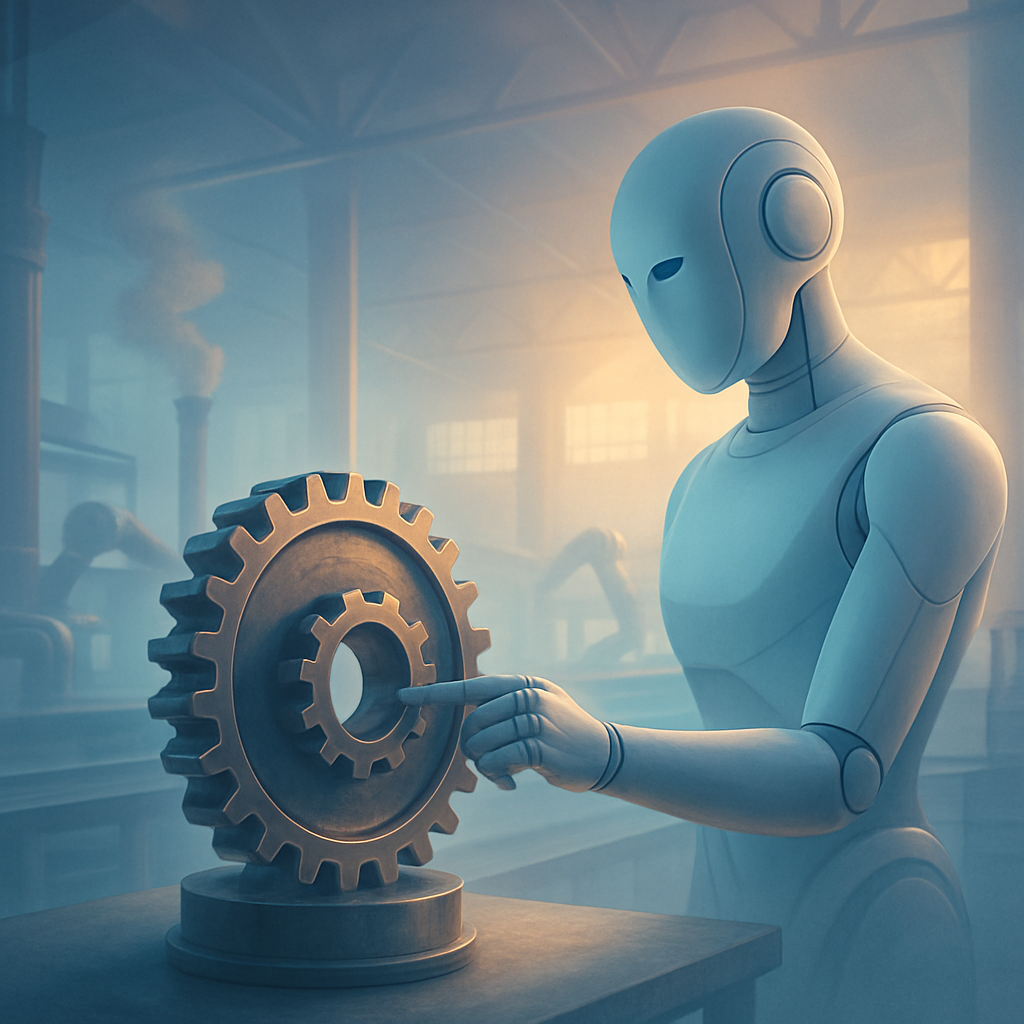
The Intelligent Factory: AI and the Fourth Industrial Revolution
28 min • 6 lectures
This audio course examines the transition of manufacturing from rule-based automation to data-driven autonomy. We analyze how artificial intelligence shifts operations from reactive to proactive models. A primary focus is predictive maintenance, which utilizes industrial IoT sensors and machine learning to identify equipment failure patterns before they occur. This methodology significantly reduces operational downtime and increases cost-efficiency in high-volume industrial environments. The course also explores the role of computer vision and convolutional neural networks in real-time quality inspection. By replacing manual sampling with constant automated visual supervision, factories can achieve higher precision and maintain a zero-defect production standard throughout the assembly line. The curriculum further explores the integration of virtual and physical systems through digital twins. These virtual replicas allow manufacturers to simulate various production scenarios and optimize workflows without risking real-world assets. We also discuss collaborative robotics, or cobots, which use force-feedback sensors to work safely alongside human operators. This synergy allows machines to handle repetitive, high-precision tasks while humans focus on complex troubleshooting and adaptation. The final sections address the ethical and professional requirements of the Fourth Industrial Revolution, emphasizing data literacy and workforce upskilling. This series provides a clear roadmap for implementing intelligent systems that prioritize both industrial efficiency and sustainable human-centric practices.
The Intelligent Factory: From Automation to Autonomy
Predictive Maintenance: Hearing the Whisper Before the Break
The Eyes of Production: Computer Vision and Quality Control
Cobots and Characters: The Human-Robot Synergy
Digital Twins: Mirroring the Physical World
The New Industrialist: Skills, Ethics, and the Path Ahead
