
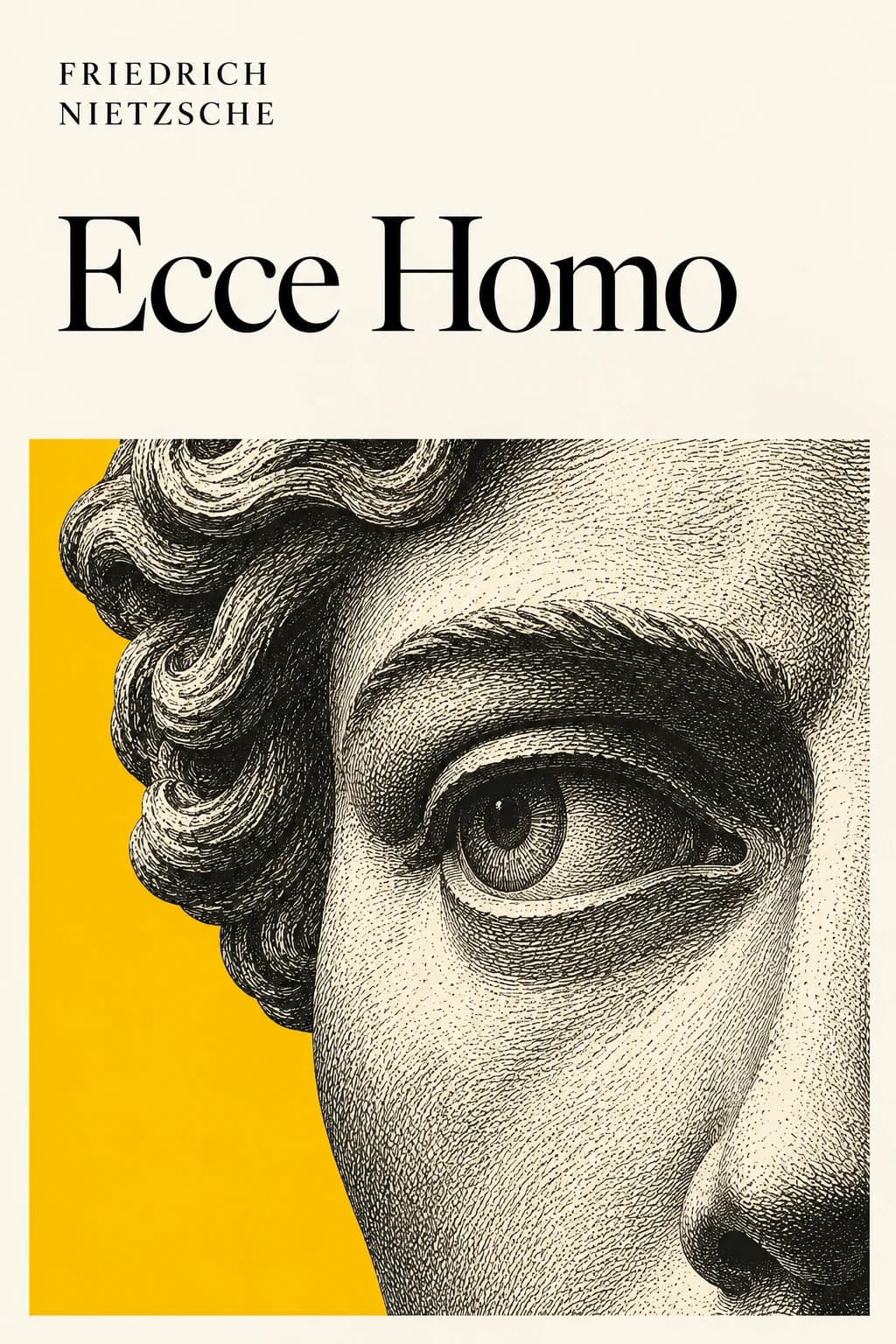
Ecce Homo
Written 1888; published 1908
Nietzsche rereads his life and books through an audacious literary self-portrait.
Ecce Homo
Listen your way
Create audio summary ↗Review your voice and settings in SUN before generating.
In Nietzsche’s life
When it was written
- Written
- October–November 1888; later revisions
- Publication
- 1908
Nietzsche looks back over his books and constructs a provocative intellectual self-portrait. The manuscript is prepared before his collapse but published long afterward.
“I am not a man, I am dynamite.”
What it’s about
Ecce Homo combines autobiography, self-interpretation, and theatrical exaggeration. Nietzsche presents the circumstances of his thinking while asking how one becomes what one is.
Key ideas
- 1
Becoming oneself
A life can acquire a pattern that was not consciously planned.
- 2
Reading the works
Nietzsche offers retrospective interpretations of his earlier books.
- 3
Self-presentation
Provocation and irony shape the autobiographical voice.
Who it’s for
- Readers exploring Nietzsche’s thought
- Anyone interested in philosophy, culture, and the history of values
Other books by Friedrich Nietzsche
View all 26 works →
If you liked this
Wrote a book? List it on SUN and get paid.
Earn from every summary, course and narration made from your book. Non-exclusive — you keep your rights.