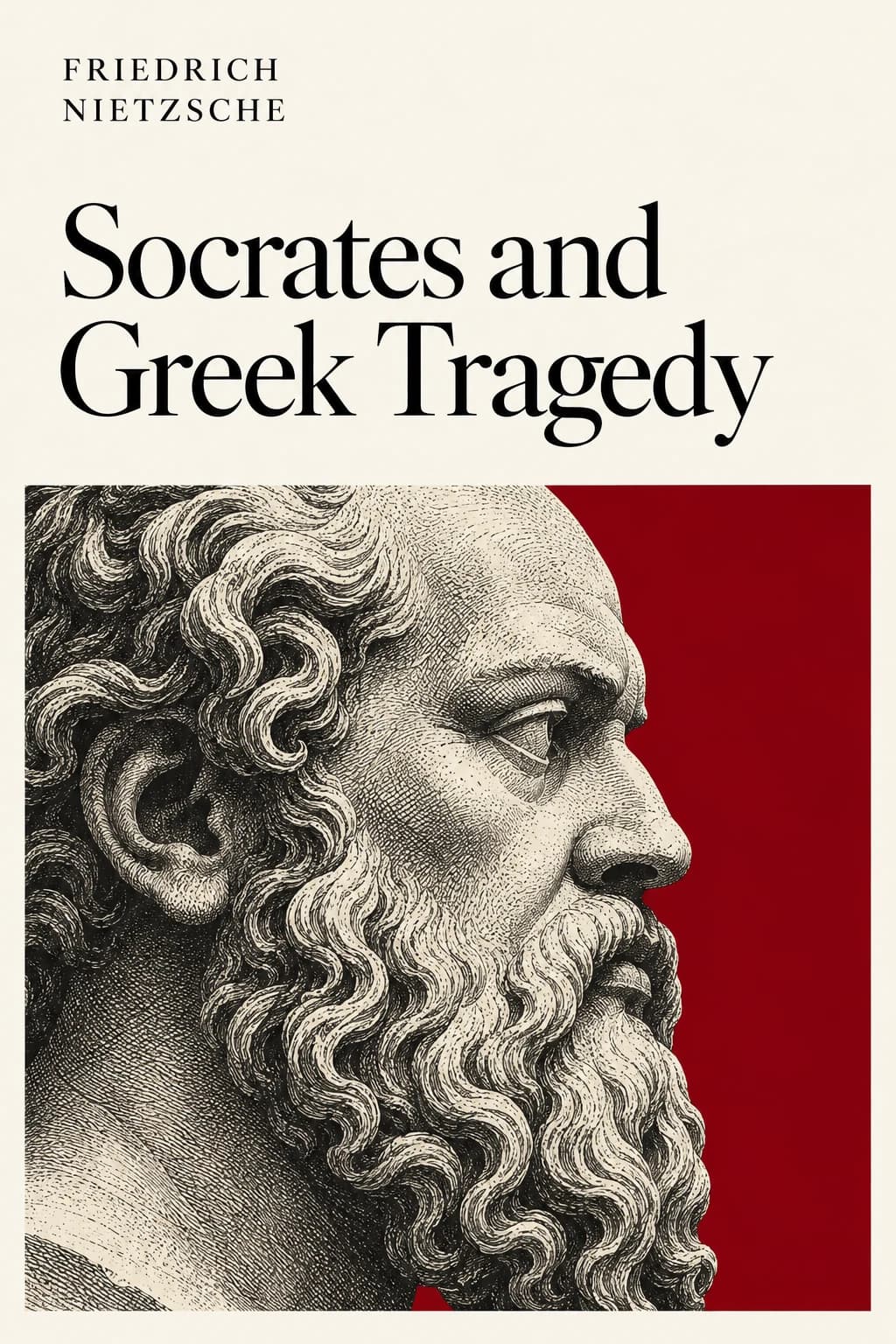
Socrates and Greek Tragedy
The struggle between tragic art and Socratic confidence in reason.
Socrates und die griechische Tragödie
Listen your way
Create audio summary ↗Review your voice and settings in SUN before generating.
In Nietzsche’s life
When it was written
- Written
- 1870–1871
- Publication
- Private printing, 1871
Reworking his 1870 lectures, Nietzsche argues that the rise of Socratic rationalism transforms the conditions that made Greek tragedy possible.
“It died by suicide, as the result of an insoluble conflict.”
Original German
sie starb durch Selbstmord, in Folge eines unlösbaren Confliktes
What it’s about
Nietzsche connects the transformation of Greek tragedy with Euripides and Socrates. This privately printed text expands themes from his 1870 lecture Socrates and Tragedy.
Key ideas
- 1
Socratic optimism
The belief that knowledge can correct existence challenges tragic wisdom.
- 2
Euripides on stage
Drama becomes more self-conscious and argumentative.
- 3
Music and tragedy
The relation between music and dramatic image is central to Nietzsche’s early aesthetics.
Who it’s for
- Readers exploring Nietzsche’s thought
- Anyone interested in philosophy, culture, and the history of values