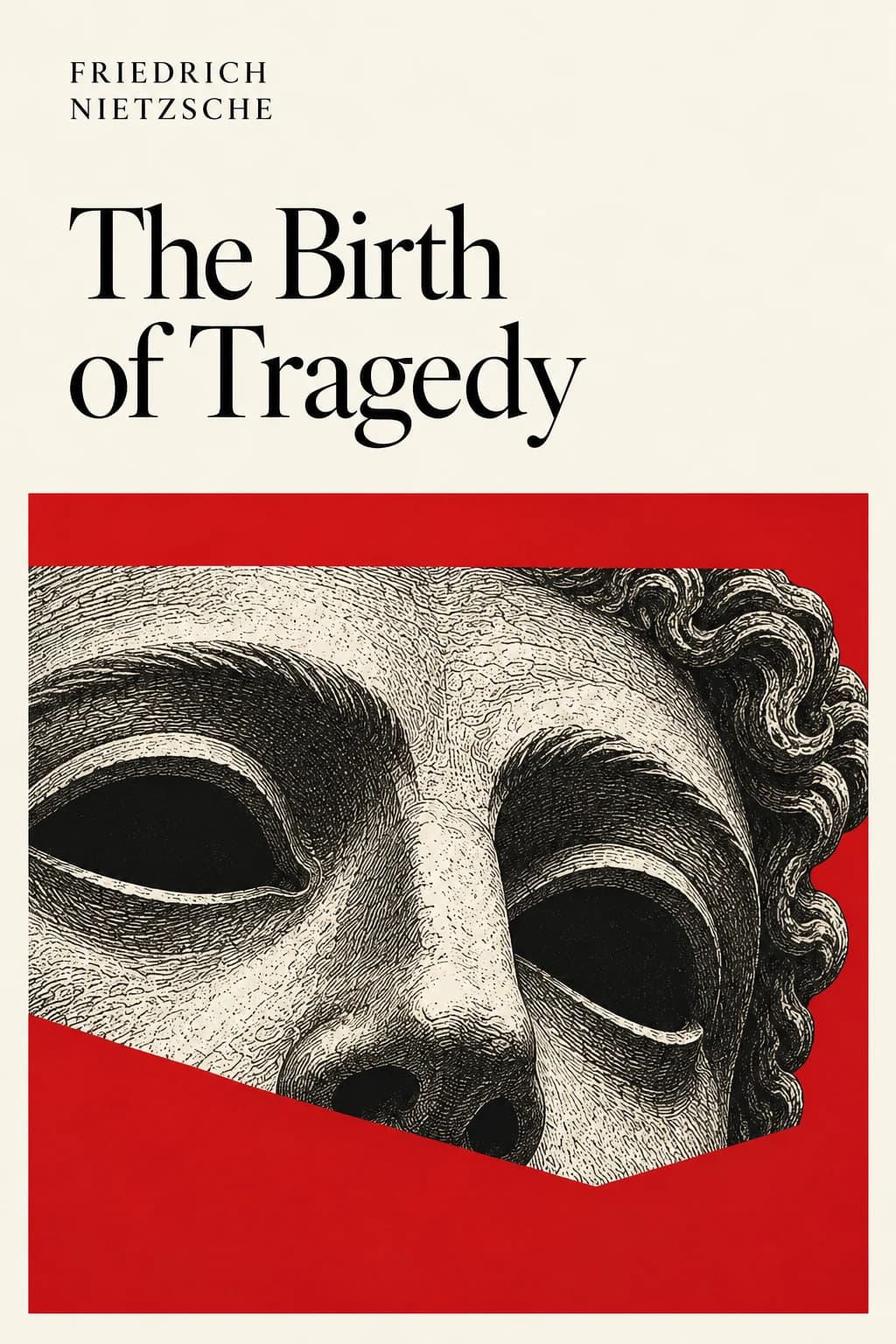
The Birth of Tragedy
Why a culture capable of seeing life’s suffering still needs art.
Die Geburt der Tragödie
Listen your way
Create audio summary ↗Review your voice and settings in SUN before generating.
In Nietzsche’s life
When it was written
- Written
- 1869–1871
- Publication
- 1872; new preface, 1886
His first major book brings Greek tragedy, Schopenhauer, and Wagner together in an account of how art makes suffering bearable.
“for only as an æsthetic phenomenon is existence and the world eternally justified”
What it’s about
Nietzsche interprets Greek tragedy through the encounter between Apollonian form and Dionysian intensity. He traces its decline to a growing faith in rational explanation and initially looks to Wagner for a cultural renewal.
Key ideas
- 1
Apollo and Dionysus
Form and ecstatic experience meet in tragic art.
- 2
The limits of reason
Socratic optimism promises more than knowledge can deliver.
- 3
Affirming existence
Tragedy confronts suffering through artistic creation.
Who it’s for
- Readers exploring Nietzsche’s thought
- Anyone interested in philosophy, culture, and the history of values