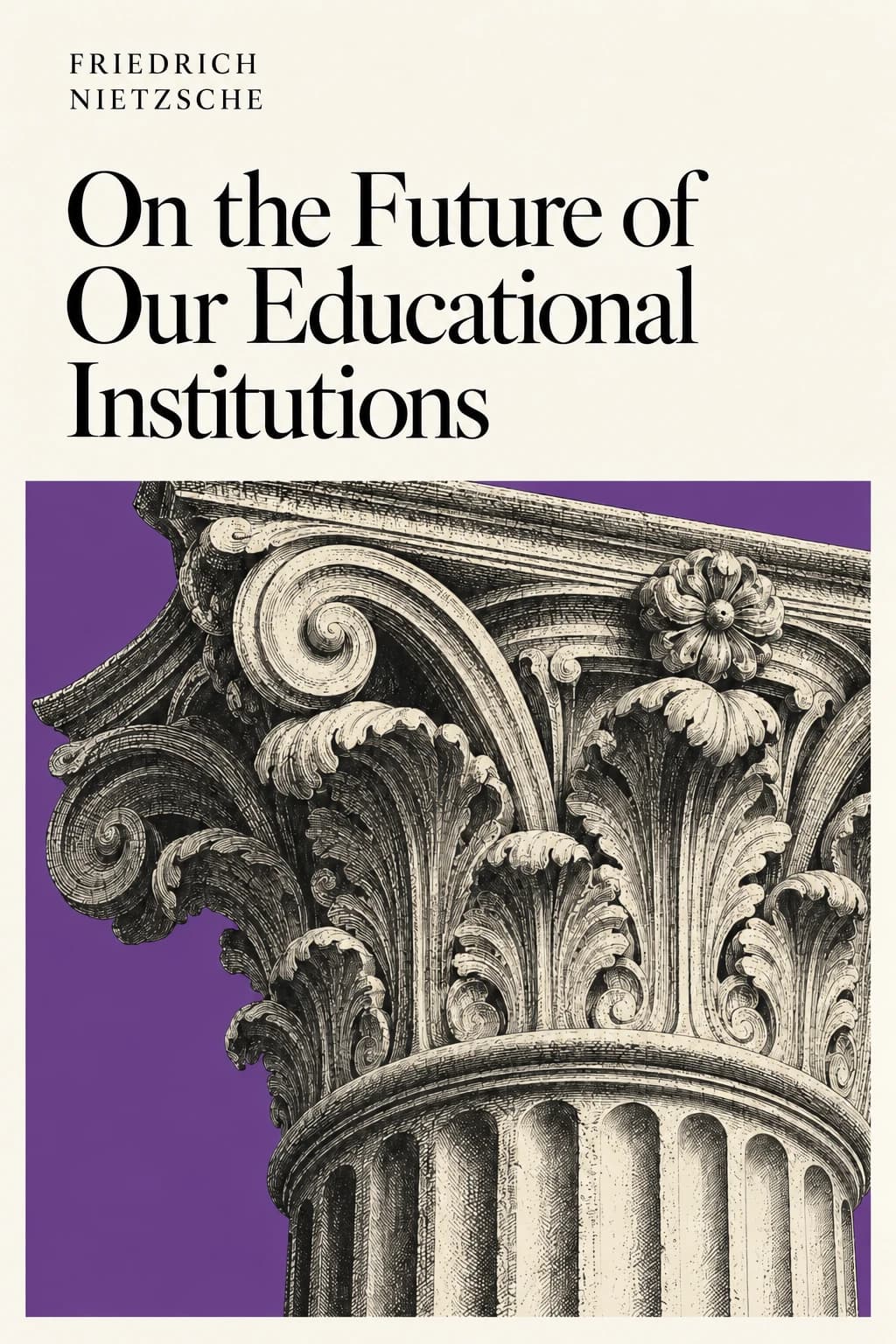
On the Future of Our Educational Institutions
Five lectures on education, culture, and the pressures of modern institutions.
Über die Zukunft unserer Bildungsanstalten
Listen your way
Create audio summary ↗Review your voice and settings in SUN before generating.
In Nietzsche’s life
When it was written
- Written
- January–March 1872
- Publication
- Five lectures, 1872; published posthumously
Five public lectures question mass education, narrow specialization, and whether institutions can cultivate an independent intellectual life.
“he must be calm and must read without haste”
What it’s about
Through a staged conversation, Nietzsche questions an education organized around utility, expansion, and professional preparation. The surviving lecture series is unfinished.
Key ideas
- 1
Culture and utility
Education is diminished when its value is measured only by economic usefulness.
- 2
Language and discipline
Careful engagement with language is a foundation of cultural formation.
- 3
Teachers and independence
Education needs demanding guides and room for intellectual growth.
Who it’s for
- Readers exploring Nietzsche’s thought
- Anyone interested in philosophy, culture, and the history of values