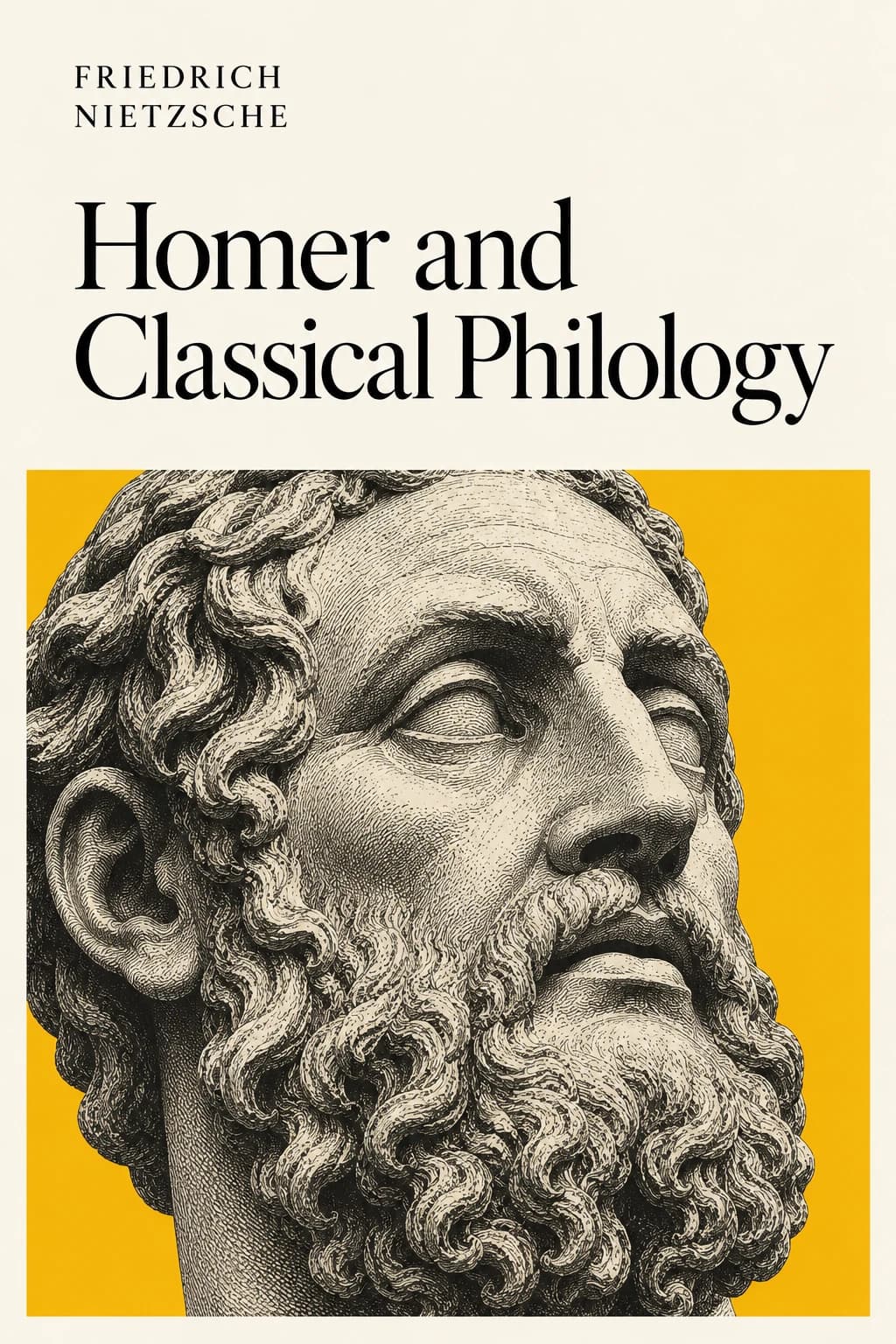
Homer and Classical Philology
An inaugural lecture about Homer, authorship, and the purpose of classical scholarship.
Homer und die klassische Philologie
Listen your way
Create audio summary ↗Review your voice and settings in SUN before generating.
In Nietzsche’s life
When it was written
- Written
- 1869
- Publication
- Lecture and publication, 1869
Nietzsche’s inaugural lecture of 28 May 1869 asks how the study of ancient texts can become a philosophical encounter with culture.
“What was philology has become philosophy.”
Original Latin
Philosophia facta est quæ philologia fuit.
What it’s about
Nietzsche asks how the name Homer came to stand for a poetic tradition. He argues that philology needs both historical rigor and an overarching philosophical understanding of antiquity.
Key ideas
- 1
The Homeric question
The unity of a poem does not by itself settle the identity of its author.
- 2
Scholarship and art
Philology combines history, the study of language, and aesthetic judgment.
- 3
A philosophical horizon
Detailed scholarship gains direction from a larger account of culture.
Who it’s for
- Readers exploring Nietzsche’s thought
- Anyone interested in philosophy, culture, and the history of values