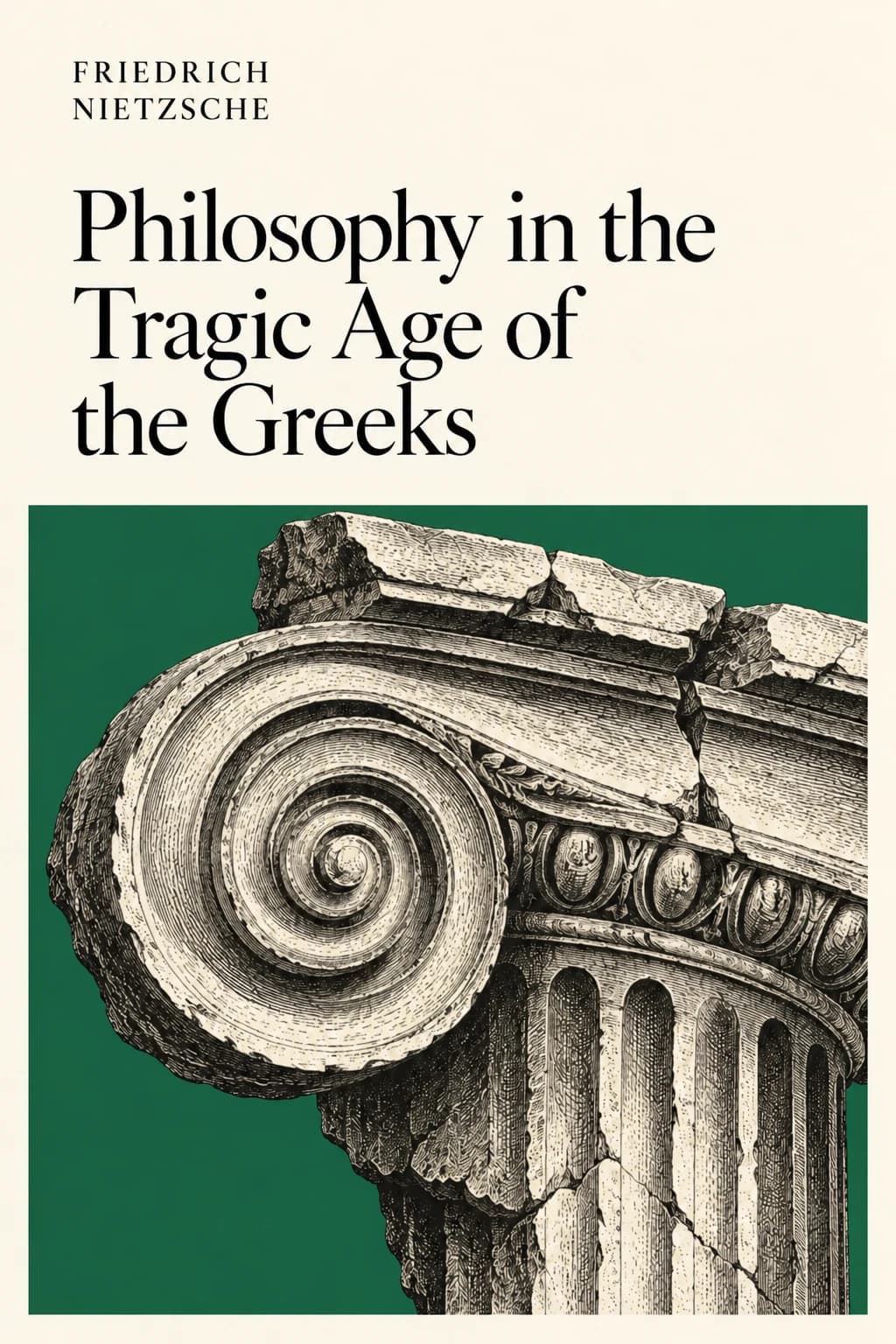
Philosophy in the Tragic Age of the Greeks
Portraits of the early Greek philosophers as distinctive ways of living and thinking.
Die Philosophie im tragischen Zeitalter der Griechen
Listen your way
Create audio summary ↗Review your voice and settings in SUN before generating.
In Nietzsche’s life
When it was written
- Written
- 1873
- Publication
- Unfinished manuscript; published posthumously
The early Greek philosophers appear as distinctive human characters. Nietzsche follows the personality expressed in a philosophical system as well as its doctrines.
“Other nations have their Saints, the Greeks have Sages.”
What it’s about
Nietzsche reads the pre-Socratics through the personalities and creative visions expressed in their philosophies. The unfinished work moves from Thales through Anaxagoras.
Key ideas
- 1
Philosophical character
A thinker’s outlook can express a distinctive temperament.
- 2
Becoming and unity
The early Greeks offer rival accounts of change and the world as a whole.
- 3
Thinking as creation
Philosophy shapes a vision rather than merely collecting facts.
Who it’s for
- Readers exploring Nietzsche’s thought
- Anyone interested in philosophy, culture, and the history of values