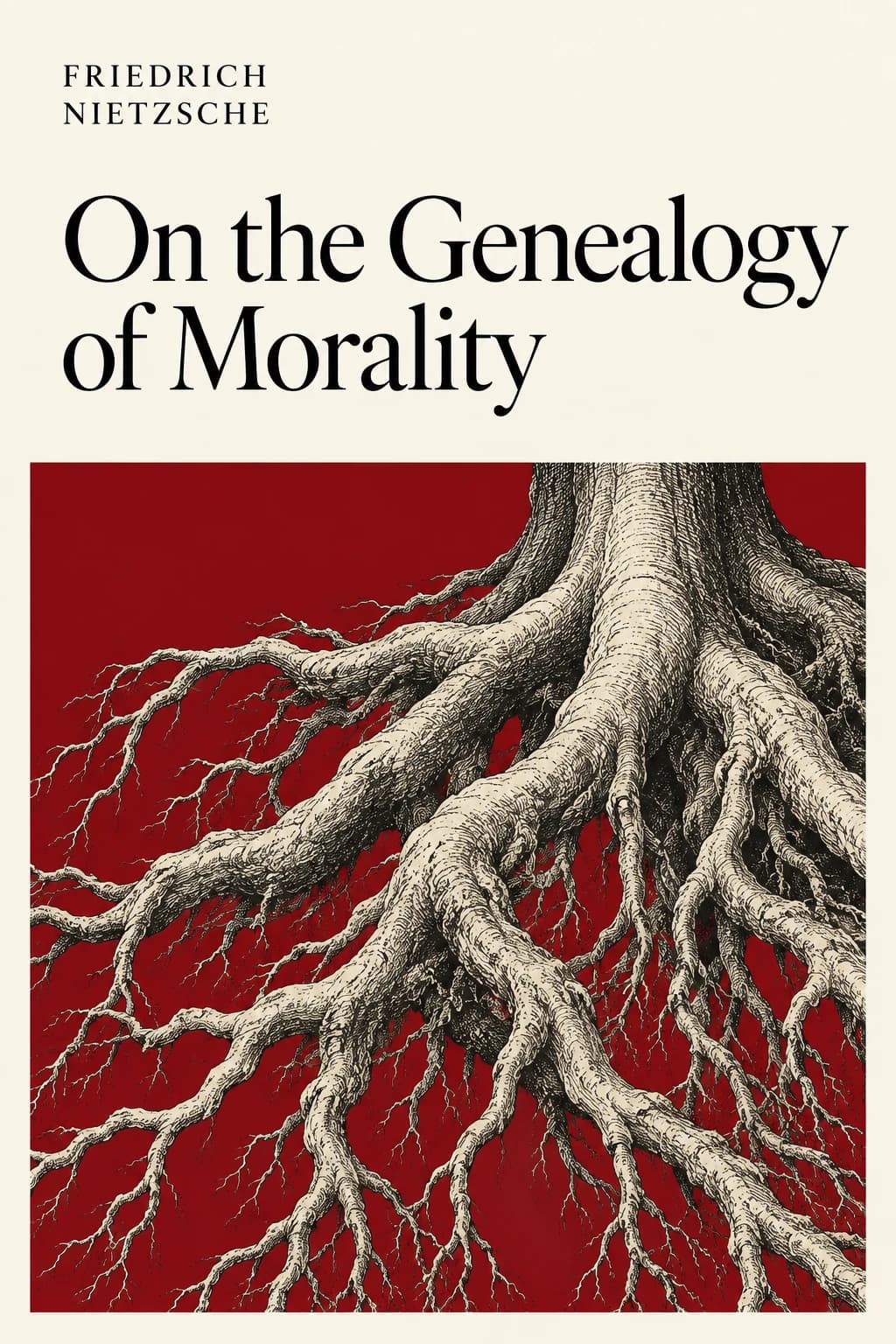
On the Genealogy of Morality
Three essays on the formation of moral values, guilt, and ascetic ideals.
Zur Genealogie der Moral
Listen your way
Create audio summary ↗Review your voice and settings in SUN before generating.
In Nietzsche’s life
When it was written
- Written
- July 1887
- Publication
- 1887
Three essays reconstruct the making of moral values, guilt, and ascetic ideals. The preface turns the question of knowledge back upon the knower.
“We are unknown, we knowers, ourselves to ourselves”
What it’s about
Nietzsche offers provocative genealogies of moral evaluation. He asks what different values do for the forms of life that uphold them, rather than treating their authority as self-evident.
Key ideas
- 1
Ressentiment
Reactive feeling helps explain a reversal of moral values.
- 2
Guilt and bad conscience
Obligation and inward-directed drives are linked to moral psychology.
- 3
The ascetic ideal
Giving suffering a meaning can sustain life while also turning against it.
Who it’s for
- Readers exploring Nietzsche’s thought
- Anyone interested in philosophy, culture, and the history of values