Written in Turin and Sils Maria in 1888, this short, witty polemic is Nietzsche’s reckoning with Richard Wagner, the composer who had once been his closest friend and the hero of his first book. Presented as a letter from Turin, it praises the lightness and southern clarity of Bizet’s Carmen and sets it against Wagner’s heavy, redemptive and theatrical art.
Behind the jokes lies a serious diagnosis. Nietzsche treats Wagner as a symptom of modern decadence: an actor rather than a musician, a master at stimulating tired nerves, and a seducer who dressed world-denial in beautiful sound. Two postscripts and an epilogue widen the attack to Brahms, to German taste and to the contradictory values of the modern soul.
Taste reveals a culture’s physiological condition, and Wagner’s huge success shows how much modern Europe craves stimulants for exhaustion.
2
Theatrical effect
Wagner was above all a great actor who made music serve spectacle and effect, so that it ceased to aim at truth.
3
A former allegiance
The polemic is also a reckoning with Nietzsche’s own past, since he admits he was a decadent who had to recover from Wagner.
4
Mediterranean music
Bizet’s Carmen stands for light, precise, southern art that treats love as fate and assumes an intelligent listener.
5
Decadent style
In a decadent work life no longer animates the whole: overcharged details break loose while the larger form falls apart.
Summary by chapter
The Case of Wagner in 6 chapters, in our own words.
Preface: A Letter from Turin, May 1888
The Case of Wagner is subtitled “A Musician’s Problem” and presented as a letter from Turin, written in May 1888, under the motto “ridendo dicere severum,” a twist on a phrase of Horace, saying something serious through laughter. Nietzsche opens by explaining why he writes. It is not only malice, he says, that makes him praise Bizet at Wagner’s expense. Turning his back on Wagner was for him a kind of fate, and learning to like anything else afterward was a triumph. Nobody, he claims, had been more dangerously involved in Wagnerism, had defended himself more stubbornly against it, or had been more glad to be free of it.
“
I am just as much a child of my age as Wagner—i.e., I am a decadent. The only difference is that I recognised the fact, that I struggled against it.
Friedrich Nietzsche
The background is a famous friendship. In his twenties Nietzsche had been a frequent guest of Richard and Cosima Wagner at Tribschen, near Lucerne, and his first book, The Birth of Tragedy, had celebrated Wagner as the rebirth of Greek tragedy. By the late 1870s the two men had drifted apart, and Wagner died in 1883. The preface turns this personal history into a philosophical one. What does a philosopher demand of himself first and last? To overcome his age in himself and become “timeless.” His hardest battle is therefore with whatever in him makes him a child of his time.
Nietzsche admits that he too is a child of his age, a decadent, like Wagner. The difference is that he recognized it and fought it. His deepest concern, he says, has always been the problem of decadence; good and evil are only one part of it. Whoever learns to read the signs of decline also understands morality and what hides behind its holiest names: impoverished life, the will to nothingness, great exhaustion. To carry out this task he had to take sides against everything sick in himself, including Wagner, Schopenhauer and modern humanity as a whole.
That is why the greatest event of his life took the form of a recovery, and why he can say that Wagner belongs only to his diseases. Yet he insists that Wagner is indispensable to the philosopher. The philosopher must be the bad conscience of his age, and for that he needs its best knowledge. Through Wagner, Nietzsche writes, modernity speaks its most intimate language and conceals neither its good nor its evil. Understand what is good and bad in Wagner, and you have nearly calculated the value of modernity. “Wagner is modernity in concentrated form,” and so, he concludes, we must first be Wagnerians.
Chapter 1
Bizet, Carmen and the Opera of Redemption (§1–3)
The first section begins in high spirits. Yesterday, Nietzsche writes, he heard Bizet’s masterpiece for the twentieth time and did not run away. Carmen makes him a better philosopher, more patient, happier. Bizet’s orchestration is the only one he can still bear. Wagner’s, by contrast, he calls the sirocco, a hot wind that makes him break out in a disagreeable sweat. Bizet’s music is light, graceful and elegant; it “does not sweat.” It is refined yet popular, it builds and completes, and it stands in contrast to the polyp in music, Wagner’s “endless melody.” Above all it assumes that the listener is intelligent, while Wagner repeats himself until we give in and believe him.
“
"All that is good is easy, everything divine runs with light feet": this is the first principle of my æsthetics.
Friedrich Nietzsche
Bizet’s music also redeems, Nietzsche says, though not in Wagner’s way. It is a farewell to the damp north and the fog of the Wagnerian ideal. From Mérimée’s story it inherits logic in passion and inexorable necessity, and from the south a dry, clear atmosphere. Its cheerfulness is African; fate hangs over it, and its happiness is short and sudden. Its love is love translated back into nature: not the love of a “cultured girl,” no Senta-sentimentality, but love as fate, cynical, innocent and cruel, whose means is war and whose basis is the deadly hatred of the sexes. He cites Don José’s last cry over Carmen’s body as the purest expression of love’s tragic irony.
Nietzsche admits that the playfulness has a polemical purpose. “Il faut méditerraniser la musique,” music must be made Mediterranean. In §3 he turns to Wagner’s favorite theme, redemption. Someone always wants to be saved in Wagner’s operas, and Nietzsche lists the cases with mock solemnity. Innocence prefers to save interesting sinners (Tannhäuser); the eternal wanderer is saved by marrying (The Flying Dutchman); corrupt old women prefer chaste young men (Kundry in Parsifal); young hysterics like to be saved by their doctor (Lohengrin); and even the Almighty, having compromised himself morally, is finally redeemed by a free spirit and immoralist (the Ring).
Under the jokes lies a serious complaint. Lohengrin forbids all questioning, which makes Wagner the advocate of the Christian command to believe. The redemptive woman of the Flying Dutchman, Nietzsche says, is in reality the ruin of the artist, who is corrupted when he is adored and treated as a god. He recalls how prudish Germany disapproved of Goethe for his sensuality, and suggests that Wagner set that history to music, saving Goethe in a way that also took the side of the “cultured woman”: a prayer saves him, and a cultured woman draws him out of the mire. Goethe himself, asked what danger hangs over romantics, answered that they choke on chewing over moral and religious absurdities. In short, Nietzsche concludes: Parsifal.
Chapter 2
The Ring, Schopenhauer and the Artist of Decadence (§4–6)
Section 4 retells the history of the Ring as Wagner’s own redemption. For half his life, Nietzsche says, Wagner believed in revolution as only a Frenchman could. He looked for it in myth and found his typical revolutionary in Siegfried, the child of adultery and incest, who follows only his first impulse, strikes down old gods and frees Brünnhilde. All evil comes from old contracts, customs and morals; free love will usher in a golden age. Then Wagner’s ship ran onto a reef, Schopenhauer’s philosophy. He was ashamed of having set optimism to music, so he reinterpreted the shipwreck as the goal of the voyage and translated the Ring into Schopenhauer’s language. Brünnhilde, instead of singing of free love and a socialist utopia, now had to study the fourth book of The World as Will and Representation.
“
It was the philosopher of decadence who allowed the artist of decadence to find himself.
Friedrich Nietzsche
With §5 Nietzsche says he becomes serious. Is Wagner a man at all, he asks, or a disease? He has made music sick. What surprises Nietzsche is not that the Germans misunderstand him but that Paris and St. Petersburg, cities of psychologists, do not see that Wagner belongs to Europe’s decadence and is its leading figure. The failure to resist him is itself a symptom: weakened instincts are drawn to what harms them, as the exhausted are drawn to what exhausts them further. Wagner’s art, Nietzsche says, is full of hysteria, convulsive feeling and overstimulated sensibility, and his heroes and heroines could fill a hospital ward.
Wagner, in this diagnosis, is the modern artist par excellence, the Cagliostro of modernity, because he combines the three great stimulants of the exhausted: brutality, artifice and innocence, or idiocy. He knows how to whip tired nerves back to life, and he is a master of hypnotic tricks. His success with nerves, and therefore with women, Nietzsche writes, has turned the whole world of ambitious musicians into disciples of his secret art. Only with sick music can one make money today, and the great theaters live on Wagner. The diagnosis is medical in vocabulary throughout: Nietzsche even says, in French, that Wagner is a neurosis.
Section 6 is a satire. Nietzsche imagines Wagner’s success taking human form as a kindly music professor advising young composers. It is easier to write bad music than good, he tells them, and if it is also more profitable and more Wagnerian, so much the better. Beauty is for the few; aim instead at the sublime and the overwhelming. Above all, no thoughts, but the chaos before thought, which makes people wonder. Melody is immoral. Passion is cheap, and ugliness on the tightrope of enharmonic modulation will pass for depth. Be idealists, sigh devoutly, and let everyone believe that salvation is found in our music alone.
Chapter 3
Wagner the Actor (§7–12)
Beneath the jokes, Nietzsche says in §7, lies the decline of art and of the artist: the musician is becoming an actor, and his art is turning into a talent for lying. He gives a definition of decadent style that has become famous. In a decadent work, life no longer lives in the whole. The word becomes sovereign and leaps out of the sentence, the sentence overshadows the page, and the page gains life at the expense of the whole. It is anarchy of the atoms, in morals “freedom of the individual,” in politics “equal rights for all.” Wagner, unable to create organic forms, made a principle of his weakness. Yet Nietzsche praises him sincerely as the greatest miniaturist in music, a master of melancholy and tiny, tender phrases of five to fifteen bars that nobody knows.
“
That the stage should not become master of the arts. That the actor should not become the corrupter of the genuine. That music should not become an art of lying.
Friedrich Nietzsche
Section 8 makes the central claim. Wagner was not instinctively a musician but a great actor, the most astonishing theatrical genius the Germans ever had, an incomparable “histrio.” He belongs to some other history than that of music, and to compare him with Beethoven is blasphemy. He increased music’s power of speech enormously and is the Victor Hugo of music as language, but as music, apart from the theater, much of it is bad. He calculates only effects. Nietzsche quotes the actor’s rule attributed to Talma: whatever is to seem true must not be true. Wagner’s music, he concludes, is never true.
Even Wagner’s dramas are built like an actor’s, Nietzsche argues in §9. He starts from a scene of overwhelming effect and works backward, caring little for plot or psychological logic. Strip the heroines of their mythic costume and they are almost indistinguishable from Madame Bovary; Wagner’s problems are those of little Parisian decadents. Section 10 mocks Wagner’s prose writings as a school of shrewdness and their three principles: whatever Wagner cannot do is bad; he could do much more but his principles forbid it; whatever he can do no one can do after him. Wagner needed literature because he could only compose in fragments, and so he became, Nietzsche says, Hegel’s heir: music as “Idea,” full of infinite meaning for German youths who love fog and Wotan, god of bad weather.
Section 11 places Wagner historically: he marks the rise of the actor in music. In declining civilizations, wherever the mob decides, authenticity becomes useless and only the actor can kindle enthusiasm. Nietzsche grants that Wagner gave performers a new conscience and stricter standards, but he links the Wagnerian stage to the obedience of the new German Empire: what it needs above all are Germans, obedient men with long legs. The letter ends in §12 with three demands, stated without irony: that the theater should not become master of the arts, that the actor should not corrupt the genuine, and that music should not become an art of lying.
Postscript and Second Postscript
The first postscript quotes from what Nietzsche calls an unprinted essay, “What Wagner has cost us,” and repeats a refrain: one pays dearly for having been a Wagnerian. He honors the stubborn instinctive resistance Wagner met among Germans for much of his life. At Wagner’s funeral, he recalls, the Munich Wagner Society laid a wreath reading “Salvation to the Saviour!”, and many quietly altered it to “Salvation from the Saviour.” He then counts the costs to culture: the arrogance of the lay art-enthusiast, contempt for disciplined training in favor of the cult of genius, and worst of all “theatrocracy,” the belief that the theater should rule over the arts. Bayreuth, he says, is grand opera, and not even good opera.
“
If Wagner's name represents the ruin of music, just as Bernini's stands for the ruin of sculpture, he is not on that account its cause.
Friedrich Nietzsche
Wagner, Nietzsche continues, is a seducer on a grand scale. Everything weary, nihilistic or world-slandering in the realm of the spirit has found shelter in his art, and he flatters every Christian and Buddhist instinct of decline. Parsifal is his masterpiece in the art of seduction, and Nietzsche admits he would gladly have composed it himself. He describes the effects on young Wagnerians: a ruined sense of rhythm, a slide into idealism, and damaged nerves. He jokes that Bayreuth sounds like “bereits bereut,” already regretted, and ends with an image of Wagner as a Minotaur to whom Europe sends its finest young men and women every year.
The second postscript corrects a misunderstanding. Attacking Wagner, Nietzsche says, does not mean he wants to glorify some other musician. Decline is universal, and Wagner only accelerated a fall he did not cause. He had the innocence of decadence; he believed in it and drew all its consequences, while others hesitated. What all of them share is a decline in organizing power: imitation of grand forms that no one is strong enough to fill, an excess of vitality in small details, and more nerves than muscle. Nietzsche says he knows only one musician who could still write an organic overture, and nobody knows him; the translator’s note identifies him as his friend Peter Gast.
The postscript’s main target is Johannes Brahms, who was praised in Germany as Wagner’s opponent. Nietzsche says Brahms has the melancholy of impotence, writes out of a thirst for abundance rather than abundance itself, and is a master at copying, especially beloved by a certain kind of dissatisfied listener. Calling him Beethoven’s heir is the most cautious of euphemisms. Between Brahms and Wagner, between art that is false to itself and art that is false to us, Nietzsche prefers the second. The postscript ends darkly: since corruption has reached music’s very conditions, not even a god can save it.
Epilogue
The epilogue steps back from the narrow world of personal judgment to give Nietzsche’s notion of the modern. Every age, he says, has a measure of strength that decides which virtues it allows. An age of ascending life resists the virtues of decline; an age of decline needs those virtues and hates everything that comes from fullness and overflowing strength. Aesthetics depends on these biological conditions. There is a decadent aesthetic and a classical one, and “beauty in itself” is as much a chimera as any idealism. Judging art, in other words, always means asking what kind of life it expresses and serves.
“
Biologically, modern man represents a contradiction of values, he sits between two stools, he says yea and nay in one breath.
Friedrich Nietzsche
In morals the greatest contrast is between master morality and Christian valuations. Master morality, which he calls Roman, pagan, classical and Renaissance, is the sign language of well-turned-out, ascending life and of the will to power. It affirms and transfigures the world. Christian morality, which he says grew from morbid soil and resembles the human types of Dostoevsky’s novels, denies and impoverishes it; “world” becomes a term of abuse. Both are necessary ways of seeing, Nietzsche says, and neither can be refuted, since one cannot refute an eye disease. He refers readers to his Genealogy of Morality for the full account of this contrast.
What he objects to is the dishonesty that pretends there is no contrast at all, and Wagner was a master of it. He cast admiring glances at the noble morality of the Icelandic sagas while preaching the gospel of the lowly and the need for redemption. Nietzsche admires the modesty of Christians who go to Bayreuth. The need for redemption, he says, is the most honest expression of decadence, whereas noble morality is rooted in a triumphant yes to oneself, and all beautiful and great art shares its essence, which is gratitude.
The Bayreuth kind of falsehood is not unique, Nietzsche concludes. It belongs to the whole age, summed up in the hybrid ideal of the “Christian gentleman.” Modern man is biologically a contradiction of values. He sits between two stools and says yes and no in the same breath, carrying in his body values and moralities of opposite origin. That is why Wagner could live among us, and why Nietzsche called him the Cagliostro of modernity. A diagnosis of the modern soul must begin with an incision into this tangle of contradictory instincts, and the case of Wagner is its most instructive specimen. The essay, Nietzsche ends, was inspired by gratitude.
Who it’s for
Opera lovers curious about Wagner through the eyes of his sharpest critic
Readers interested in the famous friendship and rupture between Nietzsche and Wagner
Anyone exploring the idea that art reveals the health or sickness of an age
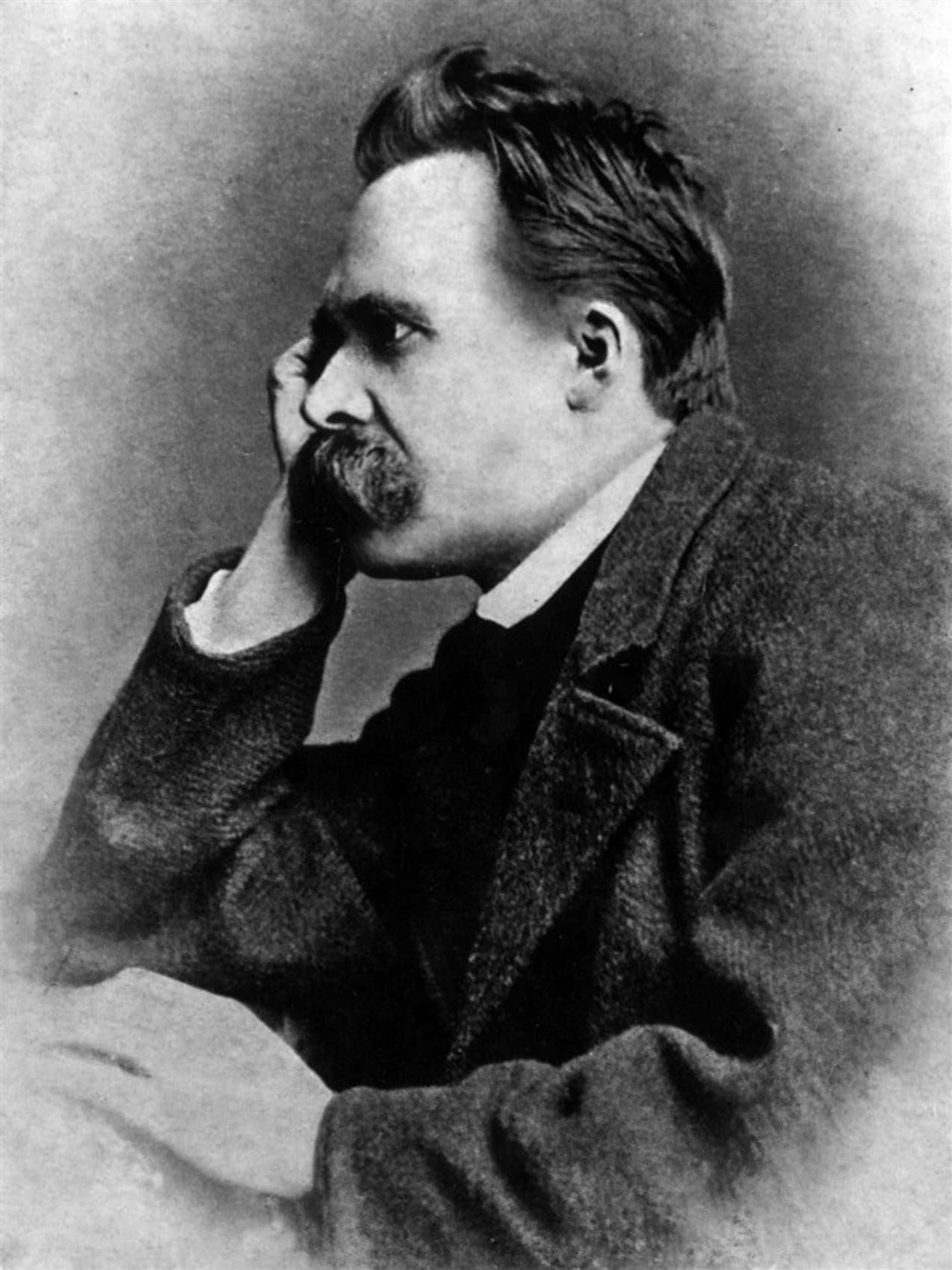
Friedrich Nietzsche was born on 15 October 1844 in Röcken, a village near Leipzig in Prussian Saxony, the son of a Lutheran pastor who died when Friedrich was four. He studied theology and then classical philology at Bonn and Leipzig, and in 1869, at just 24 and before he had formally completed his doctorate, he was appointed professor of classical philology at the University of Basel. There he became a close friend of Richard Wagner, whose music and cultural ambitions shaped his first book, The Birth of Tragedy, in 1872.
Chronic illness forced Nietzsche to give up his professorship in 1879. For the next decade he lived on a small pension, moving between the Swiss Alps, the Italian Riviera and Turin, and wrote the books for which he is best known: Daybreak, The Gay Science, Thus Spoke Zarathustra, Beyond Good and Evil, On the Genealogy of Morality and the works of 1888. In January 1889 he suffered a mental collapse in Turin from which he never recovered, and he died in Weimar on 25 August 1900.
After his collapse his sister, Elisabeth Förster-Nietzsche, took control of his papers and published selections from his notebooks, most famously The Will to Power, shaping his reputation in ways later scholars rejected. The critical edition by Giorgio Colli and Mazzino Montinari restored his texts. His ideas about the death of God, the will to power, eternal recurrence, the Übermensch and the genealogy of values went on to influence existentialism, psychoanalysis, modern literature and much of twentieth-century philosophy.
The Case of Wagner is a short polemic Nietzsche wrote in 1888, five years after Richard Wagner’s death, presented as a letter from Turin. Once Wagner’s close friend and champion, Nietzsche now treats him as a symptom of modern decadence. He contrasts Wagner’s heavy, redemptive, theatrical music with the lightness and southern clarity he hears in Bizet’s Carmen. He argues that Wagner was a great actor rather than a true musician, that his art stimulates exhausted nerves, and that his success reveals the sickness of modern culture. Two postscripts and an epilogue extend the critique to Brahms, to German taste and to the contradictions of the modern soul.
What is the main idea of The Case of Wagner?
The main idea is that art can be read as a symptom of the health or sickness of a culture, and that Wagner’s art is the most complete expression of modern decadence. Nietzsche argues that Wagner made music serve theatrical effect, that he flattered the craving of tired people for stimulation and redemption, and that he dressed Christian and Schopenhauerian world-denial in seductive sound. Because Wagner concentrates modernity so completely, understanding him is a way of diagnosing the age. The book is also Nietzsche’s reckoning with himself, since he admits that he too was a decadent who had to recover from Wagner.
What are the key takeaways from The Case of Wagner?
First, Nietzsche sees decadence, the decline of life, as the central problem behind morality and art. Second, he holds up Bizet’s Carmen as a model of light, clear, Mediterranean music. Third, Wagner’s operas revolve around redemption, which Nietzsche treats as a sign of weariness. Fourth, Wagner’s turn to Schopenhauer transformed the Ring into a story of renunciation. Fifth, Wagner is an actor whose music aims at effect rather than truth. Sixth, decadent style breaks the whole into overstimulated parts. Finally, modern man is a contradiction of values, and Wagner’s art embodies that contradiction.
Why did Nietzsche break with Wagner?
Nietzsche was close to Wagner from 1868 and celebrated him in The Birth of Tragedy (1872) and in the fourth Untimely Meditation, Richard Wagner in Bayreuth (1876). He grew disillusioned at the first Bayreuth Festival in 1876, with its nationalist and social spectacle, and he increasingly opposed Wagner’s Christian turn in Parsifal and his anti-Semitism and German chauvinism. Their philosophical paths also diverged as Nietzsche moved away from Schopenhauer. In The Case of Wagner he presents the break as a recovery from an illness and a personal act of self-overcoming, not merely a quarrel about taste.
Why does Nietzsche praise Bizet’s Carmen?
Nietzsche uses Carmen as the opposite of Wagner. He praises its lightness, precision and elegance, its southern dryness and clarity, and the way it assumes the listener is intelligent. He admires its picture of love as fate, cruel, innocent and natural, rather than the sentimental, redemptive love of Wagner’s heroines. He also admits that his praise has a polemical edge, and in the preface he says it is not only malice that makes him praise Bizet. Carmen stands for the Mediterranean ideal he wanted for music: “Il faut méditerraniser la musique.”
What does Nietzsche mean by decadence in The Case of Wagner?
Decadence for Nietzsche means a decline of life, a weakening and disorganization of the instincts. In the preface he calls it the problem that has occupied him most, and says morality itself is often a sign of it. In art, decadence shows in a style where life no longer animates the whole: details become overcharged while the larger structure falls apart. Decadents are drawn to what harms them and to stimulants for their exhausted nerves. Nietzsche counts himself among the decadents of his age, but says that, unlike Wagner, he recognized his decadence and fought it.
Is The Case of Wagner worth reading?
Yes, especially for readers interested in music, aesthetics or Nietzsche’s late thought. It is short, witty and often very funny, with brilliant satire of Wagner’s plots and followers, and it contains some of Nietzsche’s most influential ideas about decadence, style and art as a symptom. It is also one-sided and polemical, so readers should not take it as a balanced verdict on Wagner’s music, which Nietzsche himself admits still moved him. Read alongside Nietzsche contra Wagner and The Birth of Tragedy, it tells the story of one of the most famous friendships and fallings-out in cultural history.
Who should read The Case of Wagner?
It suits readers who love opera or Wagner, whether they admire him or not, and want to see him through the eyes of his most brilliant critic. It is also valuable for students of aesthetics who are interested in the idea that taste reveals physiology and culture. Readers of Nietzsche’s other late works, such as Twilight of the Idols and The Antichrist, will recognize its themes of decadence and Christian morality. Some knowledge of Wagner’s operas helps, since Nietzsche refers constantly to Tannhäuser, Lohengrin, Tristan, the Ring and Parsifal, but the main argument is easy to follow without it.
How long does it take to read The Case of Wagner?
The Ludovici translation, with its preface, two postscripts and epilogue, runs to about 13,000 words, so at an average pace of 250 words per minute it takes under an hour. The main essay is divided into twelve short sections and can easily be read in a single sitting. Readers who want to follow every reference to Wagner’s operas and to the musical culture of the 1880s may want more time. A summary like this one covers the whole argument in about fifteen minutes.
How does The Case of Wagner relate to Nietzsche contra Wagner?
The Case of Wagner was written in 1888 and published that year. A few months later, in December 1888, Nietzsche assembled Nietzsche contra Wagner, a short dossier of passages taken and revised from his earlier books to show that his opposition to Wagner was long-standing and not a sudden change. The Case of Wagner is a new, continuous polemic with Bizet as its foil, while Nietzsche contra Wagner is a retrospective selection. Together with the earlier Richard Wagner in Bayreuth, they trace Nietzsche’s path from Wagner’s champion to his sharpest critic.