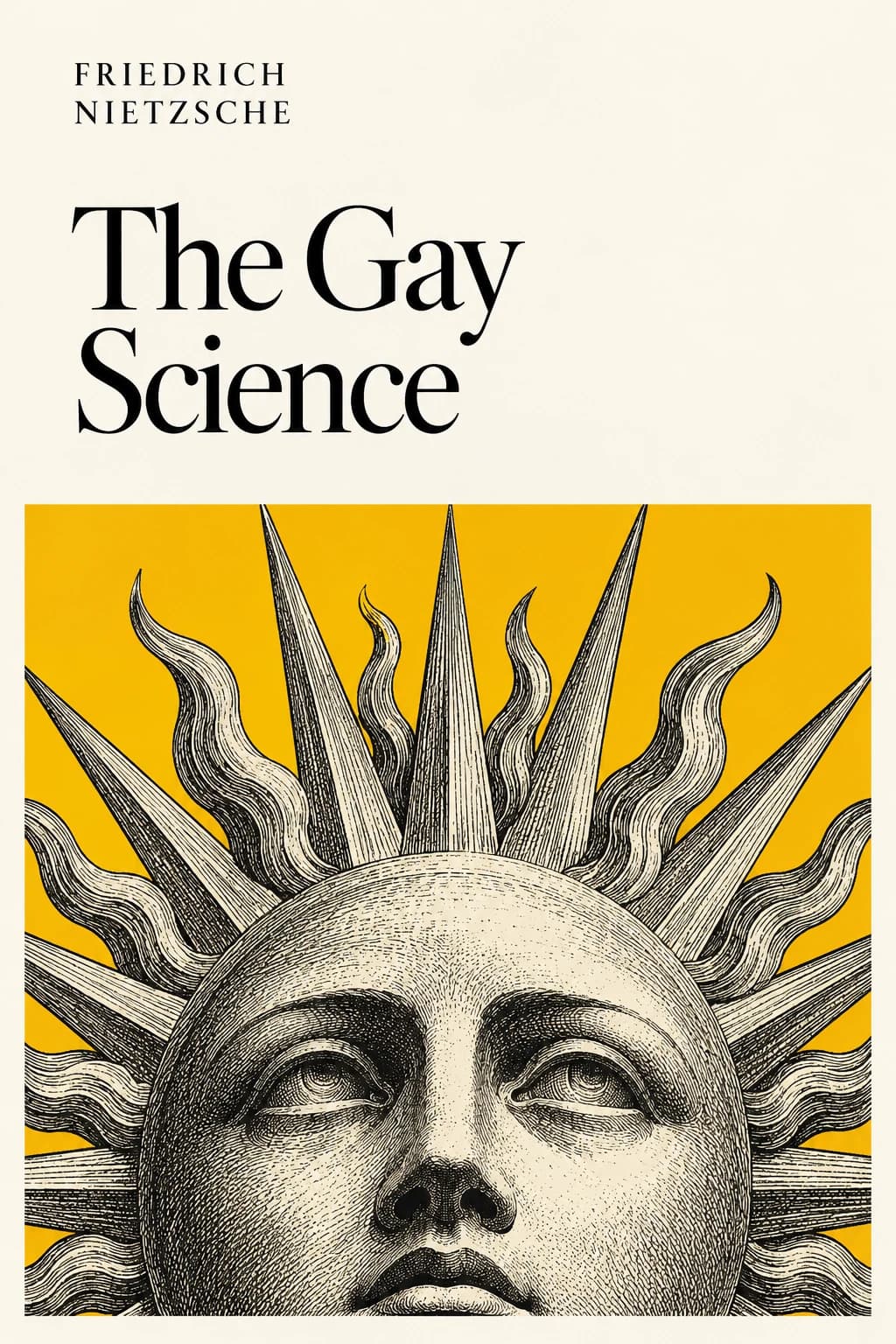
The Gay Science
Experiments in joyful inquiry after the loss of inherited certainties.
Die fröhliche Wissenschaft
Listen your way
Create audio summary ↗Review your voice and settings in SUN before generating.
In Nietzsche’s life
When it was written
- Written
- 1881–1882; expanded 1886–1887
- Publication
- 1882; expanded edition, 1887
The first edition experiments with affirmation, art, and the death of God. Its ending opens toward Zarathustra; a fifth book follows in 1887.
“Thou shalt become what thou art.”
What it’s about
Nietzsche joins aphorism, poetry, and psychological criticism to ask how one might live without guaranteed foundations. The work introduces the madman’s announcement of the death of God and a formulation of eternal recurrence.
Key ideas
- 1
The death of God
The erosion of religious authority changes the task of creating values.
- 2
Eternal recurrence
A thought experiment tests one’s relationship to the whole of life.
- 3
Joyful inquiry
Knowledge can be pursued with play, courage, and self-questioning.
Who it’s for
- Readers exploring Nietzsche’s thought
- Anyone interested in philosophy, culture, and the history of values